
- Cat. No.
- A12105
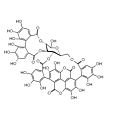
Punicalagin
Punicalagin is an ellagitannin, a type of phenolic compounds. It is a highly active carbonic anhydrase inhibitor.
Search by product name, CAS, target or catalog number. Press Down Arrow to reach product suggestions, Tab to move between links, and Escape to close suggestions.
Carbonic anhydrase (CA) inhibitors block zinc enzymes that interconvert carbon dioxide and bicarbonate. The enzyme was purified from red blood cells in 1933 and shown to speed up the hydration of carbon dioxide. Humans express many CA isoforms, which regulate pH, ion transport, fluid secretion and respiration. CA IX, cloned in 1994 as a tumor-associated protein, is induced by hypoxia in many solid tumors. Most inhibitors are sulfonamides that bind the active-site zinc, from the parent benzenesulfonamide to dorzolamide, brinzolamide and diclofenamide. DTP348 is a CA IX inhibitor that is also described as a radiosensitizer. Indisulam, another sulfonamide, is also studied as a molecular glue that degrades RNA-binding motif protein 39 (RBM39).
Punicalagin is an ellagitannin, a type of phenolic compounds. It is a highly active carbonic anhydrase inhibitor.
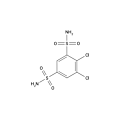
Synonyms: Diclophenamide
Diclofenamide (or dichlorphenamide) is a sulfonamide and a carbonic anhydrase inhibitor of the meta-Disulfamoylbenzene class.
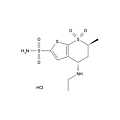
Synonyms: Trusopt; Cosopt
Dorzolamide HCl is a carbonic anhydrase inhibitor. It is an anti-glaucoma agent and topically applied in the form of eye drops. Dorzolamide HCl is used to lower increased intraocular pressure in open-angle glaucoma and ocular hypertension.
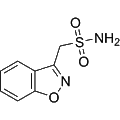
Synonyms: AD 810; CI 912
Zonisamide is an orally active inhibitor of carbonic anhydrases, demonstrating Ki values of 35.2 nM for human carbonic anhydrase II and 20.6 nM for human carbonic anhydrase V. This compound exhibits neuroprotective properties by promoting anti-apoptotic mechanisms and enhancing manganese superoxide dismutase (MnSOD) expression. Additionally, Zonisamide has been shown to upregulate Hrd1 expression, which contributes to improved cardiac function in animal models of cardiac hypertrophy. Research applications include investigations into seizures, Parkinson's disease, and cardiac hypertrophy.
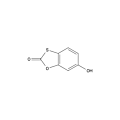
Synonyms: thioxolone
Tioxolone is an anti-acne preparation.
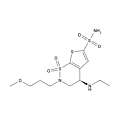
Synonyms: Azopt
Brinzolamide is a carbonic anhydrase inhibitor.
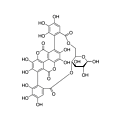
Punicalin is a highly active carbonic anhydrase inhibitor.
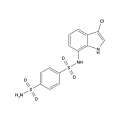
Synonyms: E7070
Indisulam (E7070) is a carbonic anhydrase inhbitor, is also a novel synthetic sulfon-amide that targets the G1 phase of the cell cycle.
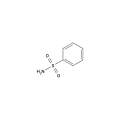
Benzenesulfonamide ia an inhibitor of carbonic anhydrases.
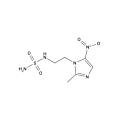
DTP348 is an oral dual CAIX inhibitor/ radiosensitizer.
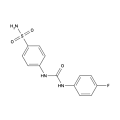
Synonyms: NSC 213841
U-104 is a novel ureido-sulfonamide inhibitor of Carbonic Anhydrase IX (CAIX).
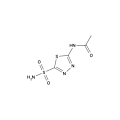
Synonyms: Diamox
Acetazolamide, a potent carbonic anhydrase (CA) inhibitor, is commonly used in clinical practice as an immediate and readily available option for acute reduction of intraocular pressure(IOP).
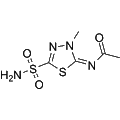
Synonyms: L584601
Methazolamide is an orally active inhibitor of carbonic anhydrase, demonstrating a Ki of 14 nM for human carbonic anhydrase II. This compound effectively reduces intraocular pressure and exhibits neuroprotective properties, including the ability to inhibit neuronal apoptosis. Methazolamide is applicable in research concerning ophthalmic diseases, such as glaucoma, and cerebrovascular conditions, including subarachnoid hemorrhage.
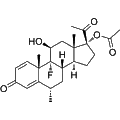
Fluorometholone acetate is a synthetic glucocorticoid corticosteroid that functions as a potent inhibitor of carbonic anhydrase (CA). It displays inhibition with IC50 values of 2.18 μM for human carbonic anhydrase I (hCA-I) and 17.5 μM for human carbonic anhydrase II (hCA-II). This compound exhibits significant anti-inflammatory properties, making it valuable for research in external ocular inflammation and related therapeutic applications.
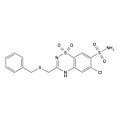
Synonyms: Benzothiazide; Dihydrex; Aquatag; Diucen; Exna; Edemax; Foven; Dytide
Benzthiazide is a long-acting diuretic and a hypertension agent. Benzthiazide is an inhibitor of carbonic anhydrase 9 (CA9), with Kis of 8.0, 8.8 and 10 nM for CA9, CA2 and CA1, respectively. Benzthiazide also suppresses proliferation of cancer cells.
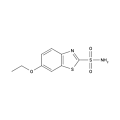
Synonyms: Ethoxyzolamide; Ethoxazolamide; Cardrase; Ethamide
Ethoxzolamide is a carbonic anhydrase inhibitor with Ki of 1 nM.
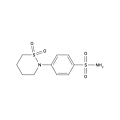
Sultiame is a carbonic anhydrase inhibitor, widely used as an antiepileptic drug.
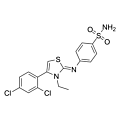
EMAC10101d is a potent and selective inhibitor of Carbonic Anhydrase Isoform toward hCA II with an inhibitory activity in the low nanomolar range. Ki of 8.1 nM
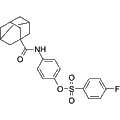
Enpp/Carbonic anhydrase-IN-2 is a potent inhibitor of ecto-nucleotide pyrophosphatase/phosphodiesterase (Enpp) and carbonic anhydrases, exhibiting IC50 values of 1.13 µM for NPP1, 1.07 µM for NPP2, 0.74 µM for NPP3, 0.33 µM for CA-IX, and 0.68 µM for CA-XII. This compound demonstrates significant antiproliferative effects on cancer cells while maintaining low cytotoxicity toward normal cell lines. Additionally, Enpp/Carbonic anhydrase-IN-2 has been shown to induce apoptosis, making it a valuable tool for cancer biology research and therapeutic development.
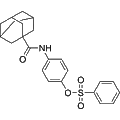
Enpp/Carbonic Anhydrase-IN-1 is a potent inhibitor of ecto-nucleotide triphosphate diphosphohydrolase (ENPP) and carbonic anhydrase, exhibiting IC50 values of 1.36 μM for NPP1, 1.35 μM for NPP2, 3.00 μM for NPP3, 0.88 μM for CA-II, and 1.02 μM for CA-IX. This compound demonstrates significant antiproliferative effects on cancer cells while displaying low cytotoxicity to normal cells. Additionally, Enpp/Carbonic Anhydrase-IN-1 has been shown to induce apoptosis, making it a valuable tool for cancer research and therapeutic investigations.
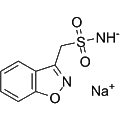
Synonyms: AD 810 sodium; CI 912 sodium
Zonisamide sodium is a potent carbonic anhydrase inhibitor, effectively targeting hCA II and hCA V with Kis of 35.2 nM and 20.6 nM, respectively. This compound exhibits neuroprotective properties by promoting anti-apoptotic mechanisms and enhancing the expression of manganese superoxide dismutase (MnSOD). Additionally, Zonisamide sodium has been shown to upregulate Hrd1, contributing to improved cardiac function in animal models of cardiac hypertrophy. Its diverse biological activities make it suitable for investigations related to seizures, Parkinson's disease, and cardiovascular research.
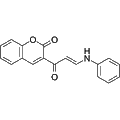
hCAIX/XII-IN-5 is a selective inhibitor of carbonic anhydrases IX and XII, demonstrating Ki values of 93.9 nM and 85.7 nM, respectively. This compound exhibits notable anti-proliferative effects on cancer cells, leading to cell cycle delay and the induction of apoptosis. hCAIX/XII-IN-5 is a valuable tool for elucidating the roles of carbonic anhydrases in cancer biology and for developing targeted therapeutic strategies.
Out of stock
All 3 sizes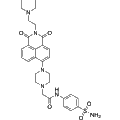
CA IX-IN-2 is a potent inhibitor of carbonic anhydrase, specifically targeting CA IX, CA XII, and CA II with IC50 values of 5.6, 7.4, and 430 nM, respectively. This compound demonstrates significant biological activity by inhibiting the proliferation of various cancer cell lines, including HCT-116, SW480, MDA-MB-231, and MCF-7, with IC50 values ranging from 14.63 to 29.33 μM. CA IX-IN-2 disrupts the cell cycle by arresting it at the G1/S phase, induces apoptosis, and affects mitochondrial functions, including mitochondrial membrane potential and ROS levels. Additionally, it shows promise in reducing cell migration and exhibits antitumor efficacy in preclinical mouse models.
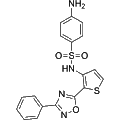
hCAIX-IN-12 is a selective human carbonic anhydrase IX (hCAIX) inhibitor, demonstrating an IC50 of 0.74 μM for hCAIX and 10.78 μM for carbonic anhydrase II (CAII). This compound exhibits significant antiproliferative effects and promotes apoptosis in cancer cells, along with increasing reactive oxygen species (ROS) production. hCAIX-IN-12 is primarily utilized in research related to colorectal cancer (CRC), providing potential therapeutic insights into tumor growth regulation and oxidative stress responses.
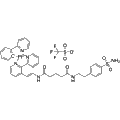
hCAIX-IN-13 is a potent inhibitor of carbonic anhydrase IX (CAIX) with an IC50 value of 6.57 μM. This compound demonstrates significant anti-proliferative effects on cancer cells, inducing apoptosis and thereby offering potential therapeutic insights for cancer research. Its ability to target CAIX makes it a valuable tool for investigating the role of this enzyme in tumor biology and cancer progression.
Out of stock
All 3 sizes