- Cat. No.
- A13112
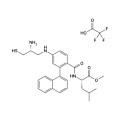
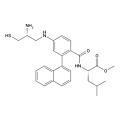
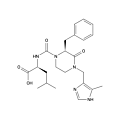
GGTI-2418
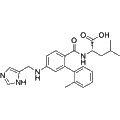
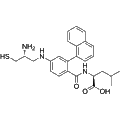
GGTI-2418 is a synthetic peptidomimetic inhibitor of geranylgeranyltransferase I (GGTase I) that appears to induce apoptosis by downregulating several pivotal oncogenic and tumor survival pathways.
Search by product name, CAS, target or catalog number. Press Down Arrow to reach product suggestions, Tab to move between links, and Escape to close suggestions.
Protein prenyltransferase inhibitors here mainly target geranylgeranyltransferase type I (GGTase-I). Prenyltransferases attach isoprenoid lipids to C-terminal cysteines, which anchors small GTPases and other proteins to membranes. Farnesyltransferase and GGTase-I were shown in 1991 to share a common alpha subunit, while their beta subunits select a 15-carbon or 20-carbon chain. GGTase-I modifies Rho family GTPases ending in a cysteine-aliphatic-aliphatic-X (CAAX) motif with a C-terminal leucine. Rab GTPases are instead modified by Rab geranylgeranyltransferase (GGTase-II), whose escort protein was linked in 1992 to the choroideremia gene. GGTI298 and GGTI-2418 are CAAX peptidomimetic inhibitors of GGTase-I, and BAY-593 is a more recent GGTase-I inhibitor. Inhibitors of protein farnesylation are listed separately under Farnesyl Transferase.
GGTI-2418 is a synthetic peptidomimetic inhibitor of geranylgeranyltransferase I (GGTase I) that appears to induce apoptosis by downregulating several pivotal oncogenic and tumor survival pathways.
Synonyms: GGTI 298
GGTI298 Trifluoroacetate is a CAAZ peptidomimetic geranylgeranyltransferase I (GGTase I) inhibitor, which can inhibit Rap1A with IC50 of 3 μM; little effect on Ha-Ras with IC50 of >20 μM.
GGTI298 is a CAAZ peptidomimetic geranylgeranyltransferase I (GGTase I) inhibitor, strongly inhibiting the processing of geranylgeranylated Rap1A with little effect on processing of farnesylated Ha-Ras, with IC50 values of 3 and > 20 μM in vivo, respectively.
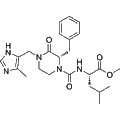
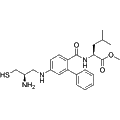
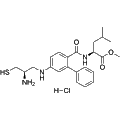
GGTI-2154 hydrochloride is a potent and selective inhibitor of geranylgeranyltransferase I (GGTase I), exhibiting an IC50 of 21 nM. It demonstrates over 200-fold selectivity for GGTase I compared to farnesyltransferase (FTase), which has an IC50 of 5600 nM. This compound is utilized in cancer research to explore the role of GGTase I in tumorigenesis and related signaling pathways.
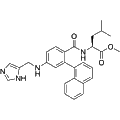
GGTI-2417 is a selective inhibitor of GGTase I, targeting geranylgeranylation processes within cells. This compound has been shown to inhibit Cdk2-mediated phosphorylation of p27Kip1 at Thr187, resulting in the accumulation of p27Kip1 in the nucleus. Additionally, GGTI-2417 induces apoptosis in breast cancer cells, making it valuable for research in cancer biology and therapeutic applications.
GGTI-2154 is a potent and selective inhibitor of geranylgeranyltransferase I (GGTase I), exhibiting an IC50 of 21 nM. This compound demonstrates over 200-fold selectivity for GGTase I relative to farnesyltransferase (FTase), with an IC50 of 5600 nM. GGTI-2154 is valuable for research related to cancer, particularly in studying the role of protein geranylgeranylation in tumorigenesis and cancer progression.
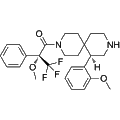
BAY-593 is an orally active inhibitor of geranylgeranyltransferase I (GGTase-I), targeting the post-translational modification critical for protein function. This compound effectively disrupts YAP1/TAZ signaling pathways, which are often associated with cancer progression. BAY-593 has demonstrated potential antitumor activity, making it a valuable tool for research into cancer biology and therapeutic interventions.
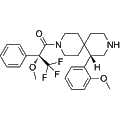
(7S)-BAY-593 is a potent inhibitor of geranylgeranyltransferase I (GGTase-I), specifically the S-enantiomer of BAY-593. This compound effectively disrupts YAP1/TAZ signaling pathways, demonstrating significant antitumor activity in animal models. It serves as a valuable tool for cancer research, particularly in studies focused on the regulation of the Hippo signaling pathway and its implications in tumorigenesis.
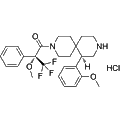
BAY-593 hydrochloride is a potent GGTase-I inhibitor, effectively disrupting YAP1/TAZ signaling pathways. This compound demonstrates significant antitumor activity in preclinical models, making it a valuable tool for cancer research. Its oral bioavailability enhances its application in vivo, facilitating studies on the mechanistic role of GGTase-I in tumor biology and potential therapeutic strategies.
GGTI-286 is a selective inhibitor of geranylgeranyl transferase I (GGTase I) with an IC50 of 2 μM, demonstrating 25-fold increased potency compared to its methyl ester derivative. It effectively inhibits the geranylgeranylation of Rap1A while displaying a lower impact on the farnesylation of H-Ras, with IC50 values of 2 μM and >30 μM, respectively. Additionally, GGTI-286 shows strong inhibition of oncogenic K-Ras4B stimulation, with an IC50 of 1 μM, making it a valuable tool for research in cancer biology and signaling pathways.
Out of stock
All 3 sizes
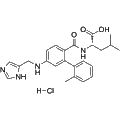
GGTI-286 hydrochloride is a selective inhibitor of geranylgeranyltransferase I (GGTase I) with a potency that is 25-fold greater than the methyl ester of FTI-276 (IC50 = 2 μM). This compound demonstrates a strong preference for inhibiting the geranylgeranylation of Rap1A over the farnesylation of H-Ras in NIH3T3 cells (IC50s = 2 μM and >30 μM, respectively). Additionally, GGTI-286 hydrochloride effectively inhibits the stimulation of oncogenic K-Ras4B, with an IC50 of 1 μM, making it a valuable tool for research in cancer biology and signal transduction pathways.
GGTI-297 is an inhibitor of geranylgeranyl transferase I (GGTase-1), exhibiting IC50 values of 56 nM for GGTase-1 and 203 nM for farnesyl transferase (FTase). This compound specifically inhibits the geranylgeranylation of the protein Rap1A, effectively disrupting its processing while leaving the farnesylated protein H-Ras unaffected. GGTI-297 is valuable for research applications focused on protein prenylation and its implications in cellular signaling pathways.
GGTI-2147 is a potent inhibitor of geranylgeranyl transferase I (GGTase I). It effectively blocks the geranyl-geranylation of the small GTPase Rap1A, leading to a reduction in Rac1 activity and mitigation of OGD/R-induced neuronal apoptosis. This compound is valuable for research into neurodevelopmental disorders, including autism, depression, and schizophrenia.
Out of stock
All 4 sizes