
- Cat. No.
- A12270
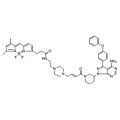
PCI-33380
PCI-33380 is an irreversible Bruton's Tyrosine Kinase (BTK) inhibitor (fluorescent probe).
In stock
View Details
Search by product name, CAS, target or catalog number. Press Down Arrow to reach product suggestions, Tab to move between links, and Escape to close suggestions.
All Dyes is the single product list for the Fluorescent Dyes, Probes & Stains section. Many dyes here have no application or dye-family subcategory, so the list is the broadest way to browse the range. It suits searches by product name when the required dye is already known. Examples range from the near-infrared cyanine indocyanine green and the ratiometric calcium indicator Fura-2 pentapotassium to the nucleic acid stains Hoechst 33258 trihydrochloride and SYBR Green II. Classical stains such as hematoxylin, reactive labeling dyes and enzyme substrates are listed alongside them. For selection by task or by core structure, the parent Fluorescent Dyes, Probes & Stains page groups dyes by application and dye family.
PCI-33380 is an irreversible Bruton's Tyrosine Kinase (BTK) inhibitor (fluorescent probe).
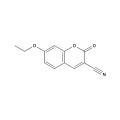
Synonyms: 7-Ethoxycoumarin-3-carbonitrile
3-Cyano-7-ethoxycoumarin is a fluorogenic substrate suitable for the continuous determination of cytochrome P450 mixed-function monooxygenases. It is a fluorescent probe useful in microsomal dealkylase studies.
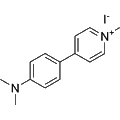
IDT307 is a fluorescent substrate targeting the dopamine transporter (DAT). As an analog of the organic cation MPP+, it exhibits specific fluorescent properties that enable the visualization of DAT activity in various biological contexts. This compound is valuable for research applications focusing on dopamine signaling, drug interactions, and neurodegenerative disease models.
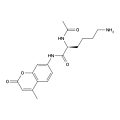
Synonyms: Hexanamide
Ac-Lys-AMC (Hexanamide), also termed MAL, is a fluorescent substrate for histone deacetylase HDACs.
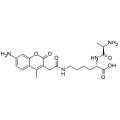
D-Ala-Lys-AMCA is a known proton-coupled oligopeptide transporter 1 (PEPT1) substrate that emits blue fluorescence. D-Ala-Lys-AMCA may be transported into liver cancer cells and Caco-2 cells based on fluorescence analysis.

Synonyms: FDG
Fluorescein di(β-D-galactopyranoside) is a fluorogenic substrate for β-galactosidase (λex=485 nm, λem=535 nm).
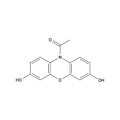
ADHP is a fluorogenic peroxidase substrate (λex=530 nm, λem=590 nm).
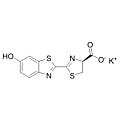
D-Luciferin potassium salt is the substrate of luciferases that catalyze the production of light in bioluminescent insects.
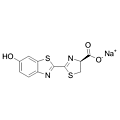
Synonyms: D-(-)-Luciferin sodium salt; Firefly luciferin sodium salt
D-Luciferin sodium salt is the substrate of luciferases that catalyze the production of light in bioluminescent insects.
Hydroxystilbamidine bis(methanesulfonate), a dye capable of binding to both DNA and RNA, has been found to be a powerful inhibitor of cellular ribonucleases.
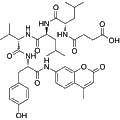
Suc-Leu-Leu-Val-Tyr-AMC is a fluorogenic substrate.
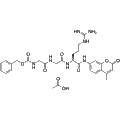
Z-Gly-Gly-Arg-AMC acetate is a thrombin-specific fluorogenic substrate for testing of thrombin generation in PRP and platelet-poor plasma (PPP).
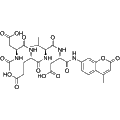
Ac-DEVD-AMC is a fluorescent substrate of caspase-3/caspase-7. When treating Ac-DEVD-AMC with cell lysate, Ac-DEVD-AMC releases amino-4-methylcoumarin (AMC) for fluorescence detection, with an excitation wavelength of 380 nm and an emission wavelength of 460 nm.
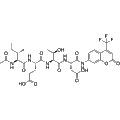
Ac-IETD-AFC is a fluorogenic substrate of caspase-8, caspase-3, caspase-10, and granzyme B.
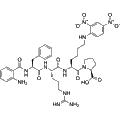
Abz-FR-K(Dnp)-P-OH is an angiotensin I-converting enzyme (ACE) substrate and an internally quenched fluorogenic substrate for real time fluorescent assay.
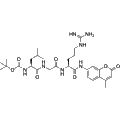
Boc-Leu-Gly-Arg-AMC is a fluorogenic AMC substrate for the convertases. Boc-Leu-Gly-Arg-AMC can be used in enzymatic assays.
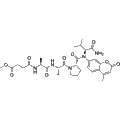
MeOSuc-AAPV-AMC is a fluorogenic substrate for human leukocyte and porcine pancreatic elastase (Km: 362 μM, Ex=380 nm, Em=460 nm).
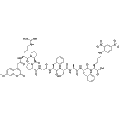
Mca-(ala7,lys(dnp)9)-bradykinin is a sensitive fluorogenic substrate for ECE-1 (endothelin-converting enzyme-1). The incorporation of a (7-methoxycoumarin-4-yl)acetyl (Mca) fluorescent group and a 2,4-dinitrophenyl (Dnp) quenching group has resulted in a large fluorescence increase upon substrate cleavage.
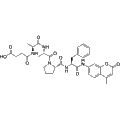
Synonyms: Suc-Ala-Ala-Pro-Phe-AMC
Suc-AAPF-AMC is an α-chymotrypsin fluorogenic substrate for the quantitative determination of chymotrypsin activity.
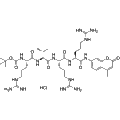
Synonyms: Boc-RVRR-AMC
Boc-Arg-Val-Arg-Arg-AMC hydrochloride (Boc-RVRR-AMC) is a synthetic fluorogenic substrate that is efficiently cleaved by furin.
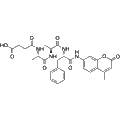
Suc-Ala-Ala-Phe-AMC is a fluorogenic chymotrypsin substrate, can be hydrolyzed by endopeptidase. Suc-Ala-Ala-Phe-AMC has been used in both in vivo assays of the acrosome reaction and in vitro enzyme assays.
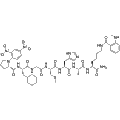
Synonyms: Dnp-P-Cha-G-Cys(Me)-HA-K(Nma)-NH2
MMP-1/MMP-9 Substrate, Fluorogenic is a highly sensitive substrate specifically designed for the detection of matrix metalloproteinases MMP-1 and MMP-9. Upon cleavage by these enzymes, it emits fluorescence with excitation and emission wavelengths at 340 nm and 440 nm, respectively. This substrate is ideal for research applications involving extracellular matrix remodeling, cancer metastasis studies, and the assessment of tissue remodeling processes.
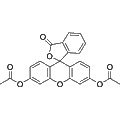
Synonyms: 3,6-Diacetoxyfluoran; Di-O-acetylfluorescein
Fluorescein diacetate is a fluorogenic substrate that functions as a cell-permeable esterase substrate. Upon cleavage by cellular esterases, it yields fluorescein, which is highly fluorescent and allows for the visualization of viable cells. This compound is particularly useful in studies involving hGSTP1-1 and can be applied in assays for cell viability and drug response.
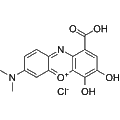
Gallocyanine chloride is a DKK1 inhibitor that targets the DKK1/LRP6 interaction, exhibiting an IC50 of 6.38 μM. This compound is relevant for research into Alzheimer's disease and related neurodegenerative tauopathies, as it activates the Wnt signaling pathway and promotes β-catenin accumulation. Additionally, Gallocyanine chloride demonstrates anti-metastatic, anti-inflammatory, and anti-fibrotic properties, and can serve as a fluorescent probe for the detection of superoxide anion radicals.
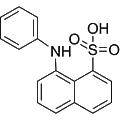
Synonyms: ANSA; 8-Anilino-1-naphthalenesulfonic acid
ANS (8-Anilino-1-naphthalenesulfonic acid) is a competitive inhibitor of thyroxine binding globulin (TBG), exhibiting a Ki value of 2.09×10^6 M^-1. This compound is utilized in radioimmunoassays to enhance detection sensitivity by displacing bound triiodothyronine (T3) and facilitating its recognition by antibodies. Additionally, ANS serves as a fluorescent probe, selectively binding to hydrophobic regions of proteins, particularly membrane proteins, allowing for real-time monitoring of protein conformational dynamics through fluorescence changes. Its applications extend to biochemical research and the development of antibacterial materials.