
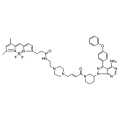
- Cat. No.
- A12270
PCI-33380
PCI-33380 is an irreversible Bruton's Tyrosine Kinase (BTK) inhibitor (fluorescent probe).
In stock
View Details
Search by product name, CAS, target or catalog number. Press Down Arrow to reach product suggestions, Tab to move between links, and Escape to close suggestions.
All Dyes is the single product list for the Fluorescent Dyes, Probes & Stains section. Many dyes here have no application or dye-family subcategory, so the list is the broadest way to browse the range. It suits searches by product name when the required dye is already known. Examples range from the near-infrared cyanine indocyanine green and the ratiometric calcium indicator Fura-2 pentapotassium to the nucleic acid stains Hoechst 33258 trihydrochloride and SYBR Green II. Classical stains such as hematoxylin, reactive labeling dyes and enzyme substrates are listed alongside them. For selection by task or by core structure, the parent Fluorescent Dyes, Probes & Stains page groups dyes by application and dye family.
PCI-33380 is an irreversible Bruton's Tyrosine Kinase (BTK) inhibitor (fluorescent probe).

Hydroxystilbamidine bis(methanesulfonate), a dye capable of binding to both DNA and RNA, has been found to be a powerful inhibitor of cellular ribonucleases.
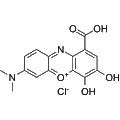
Gallocyanine chloride is a DKK1 inhibitor that targets the DKK1/LRP6 interaction, exhibiting an IC50 of 6.38 μM. This compound is relevant for research into Alzheimer's disease and related neurodegenerative tauopathies, as it activates the Wnt signaling pathway and promotes β-catenin accumulation. Additionally, Gallocyanine chloride demonstrates anti-metastatic, anti-inflammatory, and anti-fibrotic properties, and can serve as a fluorescent probe for the detection of superoxide anion radicals.
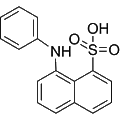
Synonyms: ANSA; 8-Anilino-1-naphthalenesulfonic acid
ANS (8-Anilino-1-naphthalenesulfonic acid) is a competitive inhibitor of thyroxine binding globulin (TBG), exhibiting a Ki value of 2.09×10^6 M^-1. This compound is utilized in radioimmunoassays to enhance detection sensitivity by displacing bound triiodothyronine (T3) and facilitating its recognition by antibodies. Additionally, ANS serves as a fluorescent probe, selectively binding to hydrophobic regions of proteins, particularly membrane proteins, allowing for real-time monitoring of protein conformational dynamics through fluorescence changes. Its applications extend to biochemical research and the development of antibacterial materials.
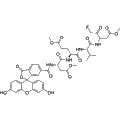
Fluorescein-6-carbonyl-Asp(OMe)-Glu(OMe)-Val-DL-Asp(OMe)-fluoromethylketone is a potent and cell-permeable inhibitor of caspase-3, acting through irreversible binding to the activated form in apoptotic cells. This reagent exhibits significant fluorescence, allowing for quantitative analysis via flow cytometry, microwell plate readers, or fluorescence microscopy. Its application is crucial for studying apoptosis and characterizing caspase-3 activity in various biological systems.
Out of stock
All 3 sizes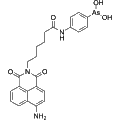
PAO-Nap is a selective thioredoxin reductase (TrxR) inhibitor modified with a naphthalimide fluorophore linked via aminocaproic acid. This compound induces oxidative stress-mediated apoptosis in HL-60 cells, making it a valuable tool for studying apoptotic pathways and oxidative stress mechanisms in cancer research. Its unique fluorescent properties also facilitate real-time monitoring of cellular responses to TrxR inhibition.
Out of stock
All 3 sizes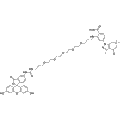
HS-27 is a fluorescently-tethered inhibitor targeting Heat Shock Protein 90 (Hsp90), facilitating the assessment of surface Hsp90 expression on intact tissue specimens. Comprising core elements of SNX-5422 linked through a PEG spacer to a fluorescein derivative, HS-27 selectively binds to ectopically expressed Hsp90. This reagent is particularly valuable in breast cancer research, providing a tool for applications involving visualization and treatment strategies.
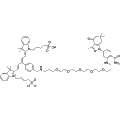
HS-131 is a dye-tethered inhibitor that targets heat shock protein 90 (Hsp90). This compound exhibits the ability to selectively bind to and inhibit Hsp90, facilitating the detection of oncogene-driven breast cancers across various molecular subtypes. HS-131 is a valuable research tool for studying the role of Hsp90 in cancer biology and for developing novel therapeutic strategies targeting breast cancer.
Out of stock
All 3 sizes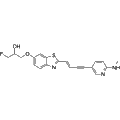
α-Synuclein aggregate binder 1 is a selective inhibitor of α-synuclein aggregation, targeting pathological fibril formation associated with neurodegenerative diseases. This compound serves as a fluorescent probe for optical imaging, with an excitation wavelength of 900 nm and a detection range of 500-550 nm. Additionally, it can be labeled with 18F for use in positron emission tomography (PET) imaging, facilitating visual diagnosis of brain lesions and advancing research into the mechanisms underlying conditions like Parkinson's disease and Lewy body dementia.
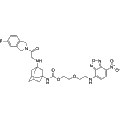
DPP-8/9 probe-1 is a selective inhibitor targeting Dipeptidyl Peptidase DPP8/9, designed for use in fluorescence microscopy. This fluorescent probe features a nitrobenzoxadiazole (NBD) tag, demonstrating high affinity for DPP8/9 with an IC50 of 15 nM, while showing minimal activity against related S9 family members (IC50 of 210 nM). DPP-8/9 probe-1 enables visualization of active DPP8/9 in vitro, making it a valuable tool for studying the biological functions and pathways associated with this enzyme in research settings.
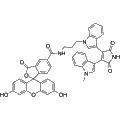
FIM-1 is a fluorescent probe specifically targeting protein kinase C (PKC), functioning as an ATP-competitive catalytic site inhibitor. This compound exhibits notable inhibitory effects on PKC activity, making it valuable for mitochondrial staining in various biological research applications. Researchers can utilize FIM-1 to explore signaling pathways involving PKC and to investigate mitochondrial dynamics and functions in cellular contexts.
Out of stock
All 3 sizes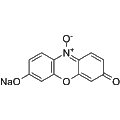
Synonyms: Diazoresorcinol sodium
Resazurin sodium is a non-toxic, stable redox indicator that targets bacterial activity through its membrane-permeable properties. It serves as a vital tool for assessing cell viability, proliferation, and toxicity in various cell types, including human, plant, animal, bacterial, and fungal cells. Upon reduction, Resazurin sodium transforms into Resorufin, a highly fluorescent compound, enabling sensitive detection and quantification of cellular processes under fluorescent microscopy or spectrophotometry.
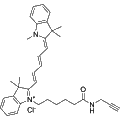
Synonyms: Alkyne-Cy5
Cyanine5 alkyne is a fluorescent dye that functions as an OXPHOS inhibitor, targeting mitochondrial respiration. This compound is primarily utilized in click chemistry applications, allowing for the labeling of azide-containing proteins and analysis of post-translational modifications, including glycosylation. Additionally, Cyanine5 alkyne has demonstrated potential to inhibit the growth of cancer stem cells, making it a valuable tool in cancer research and cellular biology studies.
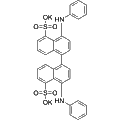
Bis-ANS dipotassium is a fluorescent probe that targets tubulin, acting as a microtubule inhibitor. It exhibits a binding affinity with tubulin characterized by a Kd of 2 μM. This compound serves as a potent biphasic modulator of protein liquid-liquid phase separation (LLPS), promoting LLPS at low concentrations while suppressing it at elevated concentrations. Its unique properties make it valuable for studying microtubule dynamics and phase separation mechanisms in cellular processes.
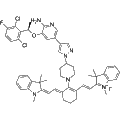
IR-Crizotinib is a near-infrared dye-conjugated NF-κB-inducing kinase (NIK) inhibitor that effectively crosses the blood-brain barrier. This compound demonstrates selective fluorescent localization in intracranial glioblastoma (GBM) models, with an IC50 of 3.381 μM. In addition to its fluorescent capabilities, IR-Crizotinib inhibits growth and invasion of glioma cells both in vitro and in vivo, making it a valuable tool for cancer research and therapeutic development.
Out of stock
All 3 sizes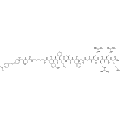
L2P4 is an EBNA1 inhibitor that effectively targets the Epstein-Barr virus (EBV) nuclear antigen 1, disrupting EBNA1 homodimer formation. This peptide-based fluorescent probe selectively inhibits the growth of EBV-positive tumors and exhibits cytotoxic effects in EBV-positive C666-1 cells, with an LC50 of 46.4 μM. L2P4 is valuable for research applications focused on understanding EBV-associated malignancies and exploring potential therapeutic strategies.
Out of stock
All 3 sizes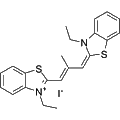
3,3'-Diethyl-9-methylthiacarbocyanine iodide is a cyanine dye that functions as a tau aggregation inhibitor, exhibiting an IC50 value of 0.28 μM for tau proteins. It interferes with the proper functioning of the microtubule cytoskeleton, making it valuable for studies investigating tau pathologies. This compound is particularly relevant in Alzheimer's disease research, enabling the exploration of therapeutic strategies targeting tau aggregation.
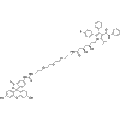
Atrovastatin-PEG3-FITC is a KRAS-PDEδ interaction inhibitor that serves as a valuable tool in the study of KRAS signaling pathways. This compound can function as a ligand in fluorescence anisotropy assays, enabling researchers to investigate protein-protein interactions and their implications in cancer biology. Its application aids in understanding the role of KRAS in various malignancies and exploring potential therapeutic interventions.
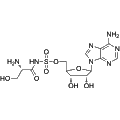
SerSA is a selective inhibitor of seryl-tRNA synthetases, effectively targeting EcSerRS, SaSerRS, and HsSerRS with IC50 values of 0.21, 0.23, and 2.17 μM, respectively. This compound serves as a valuable chemical probe for investigating the role of seryl-tRNA synthetases in cellular processes. Its ability to modulate aminoacyl-tRNA synthesis highlights its potential in pharmaceutical research and studies on translation-related pathways.
Out of stock
All 3 sizes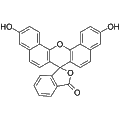
Synonyms: Naphthafluorescein
Naphthofluorescein is a potent inhibitor of HIF-1 through the inhibition of HIF prolyl-hydroxylase activity. It effectively suppresses Mint3-dependent HIF-1 signaling and glycolytic activity in cancer cells and macrophages while exhibiting low cytotoxicity in vitro and negligible adverse effects in vivo. Additionally, Naphthofluorescein serves as a fluorescent pH-sensitive probe, making it suitable for functional Cerenkov imaging applications.
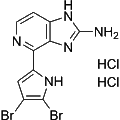
Ageladine A dihydrochloride is a potent matrix metalloproteinase (MMP) inhibitor derived from the marine sponge Agelas nakamurai, exhibiting anti-angiogenic properties. It effectively targets multiple MMPs, including MMP-1, MMP-2, MMP-8, MMP-9, MMP-12, and MMP-13, with varying IC50 values indicating strong inhibitory effects. Additionally, Ageladine A dihydrochloride functions as a pH-sensitive, membrane-permeable fluorescent dye, emitting blue-green fluorescence upon UV excitation, making it a valuable tool for monitoring intracellular pH changes in biological research.
Out of stock
All 3 sizes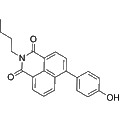
UGT1A1-IN-1 is a non-competitive inhibitor of UGT1A1, effectively disrupting the 1-O-glucuronidation process mediated by this enzyme. With an IC50 and Ki value of 1.33 μM and 5.02 μM, respectively, this compound interacts with the UGT1A1 ligand-binding site, similar to bilirubin. UGT1A1-IN-1 is reactive in human liver microsomes, making it a valuable tool for investigating bilirubin metabolism disorders and can also serve as a fluorescent probe substrate for further research applications.
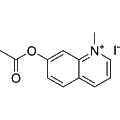
Synonyms: AMQI
7-Acetoxy-1-methylquinolinium iodide is a fluorogenic substrate specifically targeting cholinesterase. Upon hydrolysis, it emits fluorescence at 410 nm when excited at 320 nm, facilitating the detection and identification of cholinesterase inhibitors. This compound is widely utilized in fluorometric assays, contributing significantly to biochemical research and drug discovery efforts focused on cholinergic pathways.
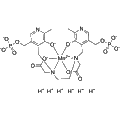
Mangafodipir is a hepatocellular-specific contrast agent that serves as an effective inhibitor of chemotherapy-induced peripheral neuropathy (CIPN) and conditions related to oxidative stress. This agent demonstrates the ability to facilitate imaging while maintaining the efficacy of chemotherapeutic agents, making it valuable in research focused on liver function and disease. Mangafodipir's unique properties position it as a significant tool in studying hepatic cellular responses in various pathological contexts.
Out of stock
All 3 sizes