DNA Stain

DNA stains are fluorescent dyes that bind double-stranded DNA to label cell nuclei and chromatin. The listed products are mainly bisbenzimide dyes of the Hoechst family, which bind the minor groove of DNA at adenine-thymine (A-T) rich sequences. Bound dye fluoresces blue under ultraviolet excitation, so nuclei stand out clearly against the surrounding cytoplasm. Hoechst dyes stain both fixed and living cells without permeabilization. They serve as nuclear counterstains in fluorescence microscopy and as DNA content probes in cell cycle analysis. Condensed, brightly stained chromatin also helps to identify apoptotic nuclei. Hoechst 33258 trihydrochloride is the parent dye, listed with the related bisbenzimide HOE 33187 and related compounds such as Hoechst 33258 analog.

Items 26-48 of 48

  • 2-Di-1-ASP
    Cat. No.
    A22705

    2-Di-1-ASP

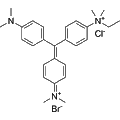
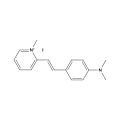
    2-Di-1-ASP (Compound 18a) is a mono-stryryl dye, and widely used as mitochondrial stain and groove-binding fluorescent probes for double-stranded DNA. 2-Di-1-ASP is selective for G-quadruplex (G4) and double-stranded DNA.

    50 mg
    $20.00
    100 mg
    $35.00
    All 4 sizes
  • Hoechst 33342 trihydrochloride
    Cat. No.
    A24508

    Hoechst 33342 trihydrochloride

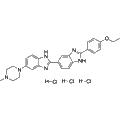
    Hoechst 33342 trihydrochloride is a cell-permeable fluorescent dye from the Hoechst series, widely used as a live-cell nuclear marker. It binds preferentially to the minor groove of A/T-rich regions in double-stranded DNA, resulting in enhanced fluorescence intensity. Although it can associate with various nucleic acids, its fluorescence is significantly stronger upon binding to A/T-rich DNA. Hoechst 33342 is suitable for labeling live cells, and its fluorescence intensity increases with rising solution pH.

    50 mg
    $36.00
    100 mg
    $62.00
    All 3 sizes
  • DFHBI-1T
    Cat. No.
    A24509

    DFHBI-1T

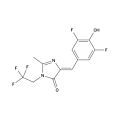
    DFHBI-1T is a membrane-permeable fluorescent probe activated by RNA aptamers, with excitation/emission maxima at 472/507 nm. It specifically binds to aptamers such as Spinach, Spinach2, iSpinach, and Broccoli, resulting in bright fluorescence with low background signal. DFHBI-1T is commonly used for live-cell imaging of RNA.

    5 mg
    $90.00
    10 mg
    $155.00
    All 4 sizes
  • Propidium Iodide
    Cat. No.
    A24597

    Propidium Iodide

    Synonyms: PI

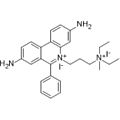
    Propidium Iodide (PI) is a nuclear staining agent that stains DNA. Propidium Iodide is an analogue of ethidine bromide that emits red fluorescence upon embedding in double-stranded DNA. Propidium Iodide cannot pass through living cell membranes, but it can pass through damaged cell membranes to stain the nucleus. Propidium Iodide has a fluorescence wavelength of 493/617 nm and a wavelength of 536/635 nm after Mosaic with DNA. Propidium Iodide is commonly used in the detection of apoptosis (apoptosis) or necrosis (necrosis), and is often used in flow cytometry analysis.

    5 mg
    $25.00
    10 mg
    $30.00
    All 7 sizes
  • Thiazole Orange
    Cat. No.
    A24618

    Thiazole Orange

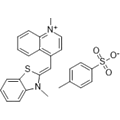
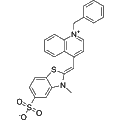
    Thiazole Orange is a fluorescent dye primarily designed for nucleic acid detection. It exhibits significant fluorescence enhancement upon binding to DNA and RNA, making it ideal for applications such as biomolecular detection, gel staining, and reticulocyte analysis. This dye permeates living cell membranes and can be detected using ultraviolet or blue light, with an excitation maximum at 510 nm (also excitable at 488 nm and 470 nm) and an emission maximum at 527 nm.

    50 mg
    $30.00
    100 mg
    $55.00
    All 4 sizes
  • DAPI dilactate
    Cat. No.
    A24764

    DAPI dilactate

    Synonyms: 4',6-Diamidino-2-phenylindole dilactate

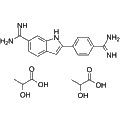
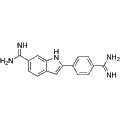
    DAPI dilactate is a potent fluorescent dye primarily known for its strong binding affinity to DNA, specifically targeting the AT base pairs in the minor groove of double-stranded DNA. This binding significantly enhances fluorescence intensity, making it a valuable tool for applications in fluorescence microscopy to quantify DNA based on fluorescence signals. While DAPI is effective for staining both live and fixed cells, it does not penetrate intact cell membranes. Additionally, DAPI serves as an inhibitor of acid-sensing ion channel 3 (ASIC3), blocking its function, and is useful in research focused on chronic pain treatments (Ex/Em = 356/451 nm).

    5 mg
    $100.00
    10 mg
    $165.00
    All 5 sizes
  • Thiazole orange dimer YOYO 1
    Cat. No.
    A24873

    Thiazole orange dimer YOYO 1

    Synonyms: YOYO 1

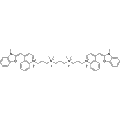
    Thiazole orange dimer YOYO 1 is a fluorescent dye that specifically targets DNA for staining applications. As a tetracationic homodimer of oxazole yellow, it exhibits minimal fluorescence in solution but significantly enhances its emission upon binding to double-stranded DNA via diintercalation, resulting in a fluorescence intensity increase of over 3200-fold. This remarkable amplification of fluorescence makes YOYO 1 an invaluable tool for various research applications, including nucleic acid quantification and visualization in molecular biology and genetic studies.

    25 mg
    $1,275.00
    50 mg
    $1,625.00
    All 3 sizes
  • 7-Aminoactinomycin D
    Cat. No.
    A24908

    7-Aminoactinomycin D

    Synonyms: 7-AAD

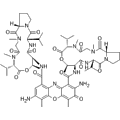
    7-Aminoactinomycin D (7-AAD) is a cell-impermeant fluorescent DNA stain that primarily targets and binds to GC-rich regions of DNA. This compound is often utilized in flow cytometry and fluorescence microscopy to assess cell viability and apoptosis. Additionally, 7-AAD exhibits antibacterial properties, expanding its utility in various biological research applications.

    1 mg
    $135.00
    5 mg
    $395.00
    All 3 sizes
  • Hoechst 34580 tetrahydrochloride
    Cat. No.
    A24923

    Hoechst 34580 tetrahydrochloride

    Synonyms: HOE 34580 tetrahydrochloride

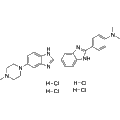
    Hoechst 34580 tetrahydrochloride is a nuclear marker dye that selectively targets A/T-rich double-stranded DNA. This compound exhibits enhanced fluorescence intensity when bound to nucleic acids, making it valuable for live cell labeling applications. As the pH of the solution increases, the fluorescence intensity of Hoechst 34580 also increases, providing a reliable tool for studying cellular dynamics, DNA distribution, and nuclear morphology in real-time. This reagent is particularly useful in research focused on amyloid-β and related neurodegenerative processes.

    5 mg
    $50.00
    10 mg
    $75.00
    All 5 sizes
  • DAPI
    Cat. No.
    A24944

    DAPI

    Synonyms: 4',6-Diamidino-2-phenylindole

    DAPI (4',6-Diamidino-2-phenylindole) is a fluorescent DNA dye that selectively binds to the AT base pairs in the minor groove of double-stranded DNA, enhancing fluorescence intensity approximately 20-fold upon binding. This property makes DAPI suitable for applications in fluorescence microscopy, allowing for quantification of DNA based on fluorescence intensity. Additionally, DAPI's ability to penetrate intact cell membranes enables its use in staining both live and fixed cells. DAPI also acts as an inhibitor of acid-sensing ion channel 3 (ASIC3), potentially contributing to research in chronic pain treatment (Ex/Em = 356/451 nm).

    5 mg
    $320.00
    10 mg
    $540.00
    All 4 sizes
  • 2-Aminopurine
    Cat. No.
    A24948

    2-Aminopurine

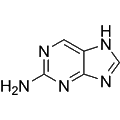
    2-Aminopurine is a fluorescent analog of guanosine and adenosine, functioning as a DNA structure probe. Its insertion into oligonucleotides results in significant fluorescence quenching due to stacking interactions with adjacent natural bases. This property makes 2-Aminopurine an invaluable tool for investigating nucleic acid structure and dynamics in various research applications.

    50 mg
    $25.00
    100 mg
    $30.00
    All 3 sizes
  • CellTracker Blue CMF2HC Dye
    Cat. No.
    A24951

    CellTracker Blue CMF2HC Dye

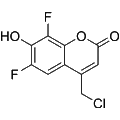
    CellTracker Blue CMF2HC Dye is a fluorescent dye primarily used for visualizing and tracking live cells. It emits a blue fluorescence when excited at wavelengths between 450-460 nm, making it suitable for applications such as two-channel nucleic acid sequencing. Additionally, this dye facilitates the rapid assessment of microbial antibiotic sensitivity, providing valuable insights for microbiological research.

    1 mg
    $75.00
    5 mg
    $185.00
    All 6 sizes
  • SYBR green I chloride
    Cat. No.
    A24969

    SYBR green I chloride

    Synonyms: NucGel Green I Nucleic Acid Gel Stain; Green I Nucleic Acid Gel Stain

    SYBR Green I Chloride is a versatile nucleic acid stain that primarily interacts with double-stranded DNA. It exhibits high fluorescence upon binding, making it an essential tool in quantitative PCR, gel electrophoresis, and various molecular biology applications. This dye is useful for visualizing and quantifying nucleic acids in research studies, enabling the analysis of gene expression, pathogen detection, and other genomic investigations. Additionally, its properties facilitate studies in cell biology and diagnostics, supporting a broad spectrum of scientific research and clinical applications.

    5 mg
    $70.00
    10 mg
    $115.00
    All 5 sizes
  • Methyl Green
    Cat. No.
    A24972

    Methyl Green

    Methyl Green is a non-intercalating fluorescent dye that targets DNA by selectively binding to the major groove. It exhibits high affinity, resistance to photobleaching, and stable fluorescence emission, making it suitable for various applications. Methyl Green can be utilized for fluorescent labeling of nuclei in embryonic tissues or cells, as well as for DNA staining and assessing cell activity in gel electrophoresis. Its fluorescence peaks are observed at 633 nm and 677 nm, enabling direct measurement through microscopy and flow cytometry.

    100 mg
    $25.00
    500 mg
    $40.00
    All 3 sizes
  • 5-HMSiR-Hochest
    Cat. No.
    A43708

    5-HMSiR-Hochest

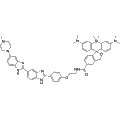
    5-HMSiR-Hoechst is a fluorescent dye designed for DNA probing, combining the characteristics of Hoechst 33258 with spontaneously blinking far-red hydroxymethyl silicon-rhodamine (HMSiR). This reagent effectively stains living cells, allowing for comprehensive visual analysis of cellular structures. With an excitation/emission wavelength of 640 nm/675 nm, it is suitable for advanced fluorescence imaging applications in various biological research studies.

    1 mg
    $790.00
    5 mg
    $2,445.00
    All 3 sizes
  • Br-DAPI
    Cat. No.
    A43741

    Br-DAPI

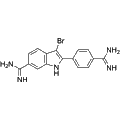
    Br-DAPI is a fluorescent DNA stain that selectively binds to the minor groove of double-stranded DNA, particularly targeting AT-rich regions. This compound enhances fluorescence intensity approximately 20-fold upon binding, making it suitable for quantifying DNA concentration via fluorescence microscopy. Additionally, Br-DAPI can penetrate intact cell membranes, allowing for staining of both live and fixed cells, thus facilitating various applications in cell biology and molecular research. Store away from light to maintain stability.

    1 mg
    $90.00
    5 mg
    $165.00
    All 6 sizes
  • Hoechst 33342 analog trihydrochloride
    Cat. No.
    A43898

    Hoechst 33342 analog trihydrochloride

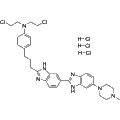
    Hoechst 33342 analog trihydrochloride is a fluorescent DNA stain that preferentially binds to A/T-rich regions of double-stranded DNA. This compound is utilized in live cell imaging due to its ability to enhance fluorescence intensity when binding to nucleic acids, making it ideal for cellular labeling applications. The fluorescence signal can be further increased by adjusting the pH of the solution. Proper storage away from light is essential to maintain its effectiveness.

    Out of stock

    All 3 sizes
  • SYTO9
    Cat. No.
    A44784

    SYTO9

    SYTO9 is a green fluorescent nucleotide dye that selectively binds to nucleic acids, with excitation at 485 nm and emission at 498 nm for DNA and 501 nm for RNA. This dye exhibits the ability to penetrate intact cell membranes of viable bacteria, with increased permeability observed in compromised membranes. SYTO9 is commonly utilized in fluorescence microscopy, flow cytometry, and fluorometric assays in microbiology, enabling applications in bacterial viability assessment, cell imaging, and quantification of microbial populations.

    5 mg
    $250.00
    10 mg
    $450.00
    All 5 sizes
  • Cy5 maleimide
    Cat. No.
    A44787

    Cy5 maleimide

    Synonyms: Cyanine5 maleimide

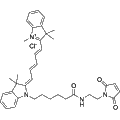
    Cy5 maleimide is a cyanine-based fluorescent dye that covalently binds to thiol groups in proteins and other biomolecules. Characterized by its long wavelength emission, high extinction coefficient, and excellent water solubility, Cy5 maleimide is ideal for applications in fluorescence microscopy, flow cytometry, and other labeling techniques. The straightforward mixing reaction facilitates efficient labeling of proteins and antibodies, making it a valuable tool for various biological research applications, including immunoassays and in vivo imaging studies.

    1 mg
    $45.00
    5 mg
    $105.00
    All 6 sizes
  • CY5-N3
    Cat. No.
    A44818

    CY5-N3

    Synonyms: Sulfo-Cyanine5-azide

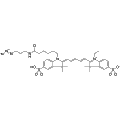
    CY5-N3 (Sulfo-Cyanine5-azide) is a cell-permeable fluorescent dye, with excitation and emission wavelengths of 646 nm and 662 nm, respectively. This compound is designed for use in live cell imaging applications, enabling visualization of cellular processes in real time. CY5-N3 can be utilized effectively in Click chemistry reactions for conjugating with various biomolecules, facilitating enhanced imaging strategies in biological research.

    1 mg
    $90.00
    5 mg
    $220.00
    All 6 sizes
  • Toluidine blue (ZnCl2)
    Cat. No.
    A44886

    Toluidine blue (ZnCl2)

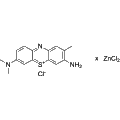
    Toluidine blue (ZnCl2) is a basic thiazine dye that serves as a valuable biochemical assay reagent. It displays a deep bluish-purple color, effectively staining nucleic acids such as DNA and RNA, along with mast cells, cartilage, and connective tissues. By targeting acidic components, including sulfated and carboxylated mucopolysaccharides, Toluidine blue (ZnCl2) is widely utilized in histology, cytology, and pathology to enhance diagnostic capabilities. This dye is typically applied to tissue sections before microscopic analysis, and can be differentiated using an acidic alcohol solution, offering a reliable staining method for various research applications.

    50 mg
    $20.00
    100 mg
    $30.00
    All 3 sizes
  • Biotin-aniline
    Cat. No.
    A54571

    Biotin-aniline

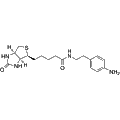
    Biotin-aniline is a highly reactive probe targeting RNA and DNA, functioning effectively as a novel APEX2 substrate. Its unique properties allow for the labeling of proteins through miniSOG, making it an advantageous tool for capturing subcellular transcriptomes in living cells. Biotin-aniline offers superior spatial specificity, facilitating advanced studies in cellular dynamics and gene expression analysis.

    1 mg
    $25.00
    5 mg
    $60.00
    All 6 sizes
  • Oxazole yellow
    Cat. No.
    B11326

    Oxazole yellow

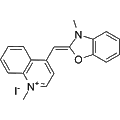
    Oxazole Yellow is a fluorescent dye designed to intercalate within double-stranded DNA, enhancing its green fluorescence upon binding. This property allows for effective detection of cell apoptosis in various biological research applications. Its limited luminescence in aqueous environments makes it particularly useful in assays where specificity for nucleic acids is essential. Researchers can utilize Oxazole Yellow to investigate cellular processes and monitor biochemical pathways associated with DNA.

    Out of stock

    All 3 sizes

Items 26-48 of 48

Added to your cart

View Cart Checkout

    Loading...