
Trametinib (GSK1120212): MEK Inhibitor Mechanism, DMSO Solubility, Storage and Research Use
A working guide to trametinib (GSK1120212, JTP-74057): how this allosteric MEK inhibitor blocks both MEK activity and MEK activation, how to dissolve and store it, the concentrations published work uses, and why it is usually paired with dabrafenib.
Technical guide from Adooq Bioscience · Product: Trametinib (GSK1120212, JTP-74057), Cat. No. A11029 · Last reviewed: 2026-11
Trametinib at a glance
| Property | Value |
|---|---|
| Common name | Trametinib; development codes GSK1120212 and JTP-74057; also GSK212 |
| CAS | 871700-17-3 (free compound) |
| Molecular formula | C26H23FIN5O4 |
| Molecular weight | 615.4 g/mol |
| Class | Allosteric, ATP-noncompetitive MEK1/MEK2 inhibitor |
| Targets | MEK1 and MEK2, with cell-free IC50 values of 0.92 nM and 1.8 nM on the A11029 datasheet |
| Second mechanism | Blocks RAF-dependent activation of unphosphorylated MEK, not only the activity of already-phosphorylated MEK |
| Solubility | DMSO 19 mg/mL (30.87 mM) with warming; insoluble in water and ethanol |
| Typical pathway readout | Cellular phospho-ERK IC50 in the low nanomolar range, 0.8 nM in SK-MEL-28 and 1.8 nM in HCT-116 |
| Typical in vitro range | 1 nM to 1 µM, with 1-100 nM covering most published cell work |
| Typical in vivo use | 0.1-5 mg/kg/day by oral gavage in mice; the maximum tolerated dose in one xenograft study was 5 mg/kg, with 3 mg/kg typically observed as the MTD |
| Storage | Powder at -20 °C, desiccated, stable for about 36 months; DMSO stocks at -20 °C for no more than one month |
| Second catalog form | Trametinib (DMSO solvate), CAS 1187431-43-1, C28H29FIN5O5S, 693.53 g/mol. This is the solid form used as the drug substance |
| Originator | Japan Tobacco, then developed by GlaxoSmithKline and now Novartis |
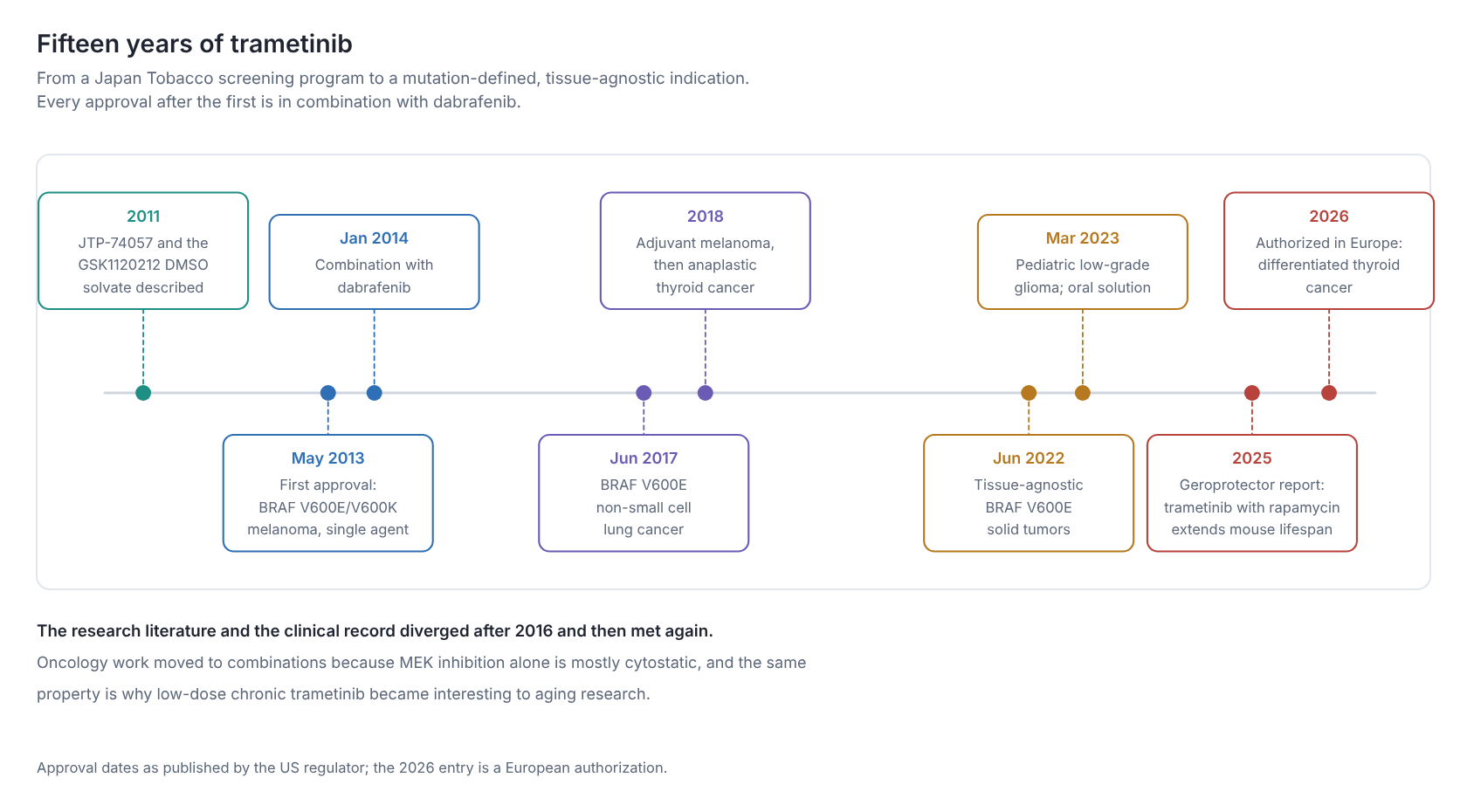
| Clinical status | Approved as Mekinist, first in BRAF V600E/V600K melanoma in May 2013, and since then mostly in combination with dabrafenib |
Trametinib is the MEK inhibitor that works at single-digit nanomolar concentrations in cells and does not lose potency to pathway feedback the way earlier MEK inhibitors do. That is a consequence of chemistry rather than marketing: it inhibits MEK and also prevents RAF from switching MEK on. For bench work the practical consequences are a very low working concentration, a stock dilution that needs two steps rather than one, and a compound that is easy to overdose in a cell assay.
1. What trametinib (GSK1120212, JTP-74057) is
1.1 One molecule, several codes
Trametinib was discovered at Japan Tobacco as JTP-74057, licensed to GlaxoSmithKline where it became GSK1120212 (sometimes written GSK-1120212 or GSK212), and is now marketed by Novartis as Mekinist. All of those names refer to the same molecule. Papers from 2011 and 2012 use the development codes; later work uses the international nonproprietary name. Adooq supplies it as Trametinib (GSK1120212, JTP-74057), catalog number A11029, in sizes from 5 mg to 500 mg and as a ready-made 10 mM solution in DMSO.
Searches for "trametinib MEK inhibitor" are usually someone checking the class before ordering. Trametinib is an allosteric MEK1/MEK2 inhibitor, not an ATP-competitive kinase inhibitor, not a RAF inhibitor, and not an ERK inhibitor. It acts one step below RAF and one step above ERK in the RAS-RAF-MEK-ERK cascade.
1.2 Structure and physical properties
| Property | Trametinib (A11029) | Trametinib DMSO solvate (A21450) |
|---|---|---|
| CAS | 871700-17-3 | 1187431-43-1 |
| Formula | C26H23FIN5O4 | C28H29FIN5O5S |
| Molecular weight | 615.4 | 693.53 |
| What it is | The free compound | A 1:1 crystalline complex with dimethyl sulfoxide |
| 10 mM stock from 5 mg | 0.8125 mL | 0.7209 mL |
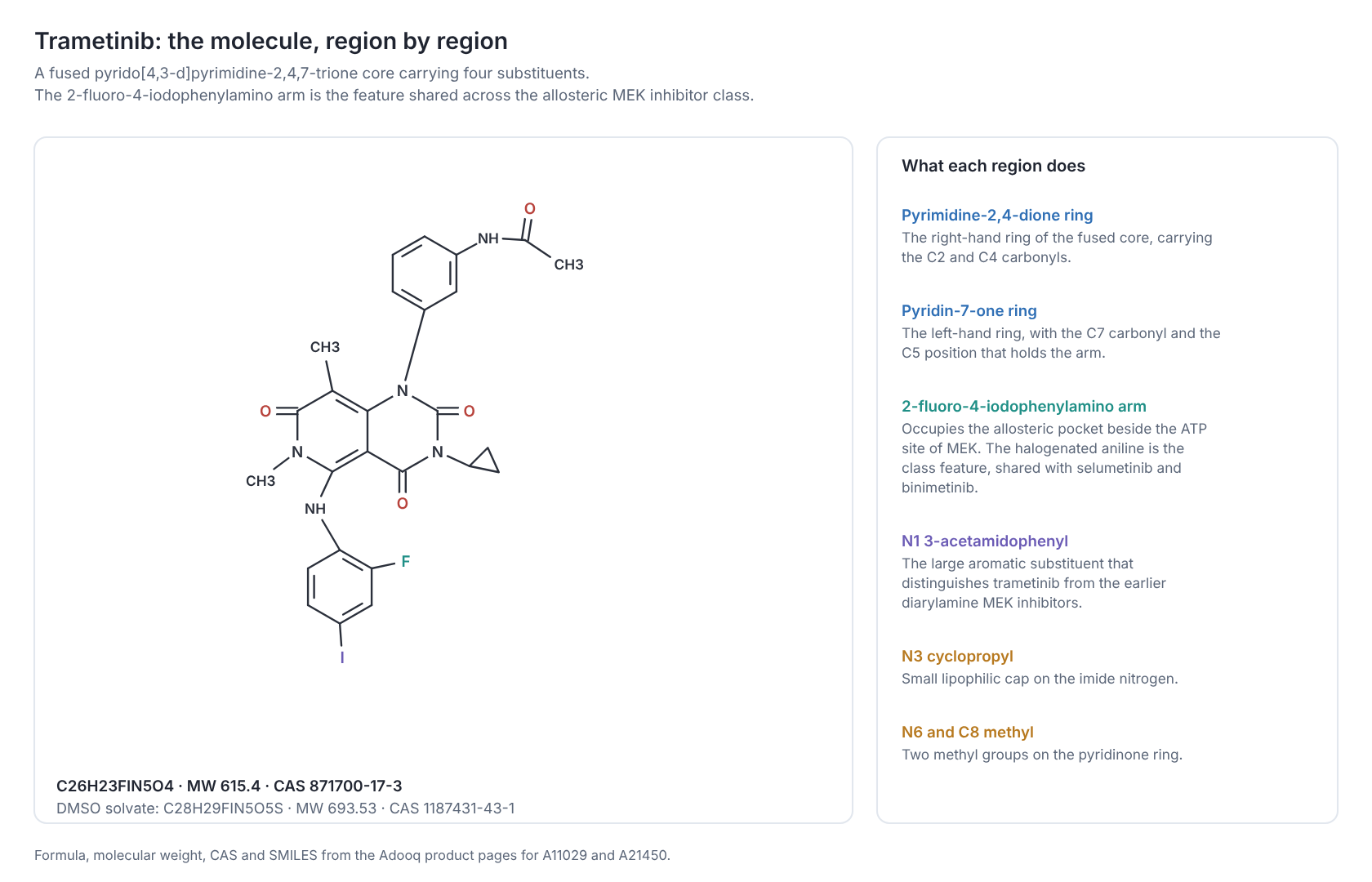
The molecule is a pyrido[4,3-d]pyrimidine-2,4,7-trione: a bicyclic core carrying N6- and C8-methyl groups, an N3-cyclopropyl group, a 3-acetamidophenyl group at N1, and a 2-fluoro-4-iodoaniline arm at C5. That iodoaniline arm is the recognizable feature of the whole MEK inhibitor class, and it is the part that sits in the allosteric pocket next to the ATP site. The SMILES string and a rendered structure are on the product page.
Two numbers matter for planning an experiment. Molecular weight 615.4 means a 10 mM stock is 6.154 mg/mL, so a 5 mg vial makes 0.81 mL of 10 mM stock. And because cellular potency is in the low nanomolar range, that 10 mM stock is five to six orders of magnitude above your working concentration, which is the single most common source of error with this compound. See the solubility section for the two-step dilution that avoids it.
1.3 The two solid forms, and why the drug is a DMSO solvate
Trametinib exists in the catalog as two distinct solids, and they are not interchangeable on the balance.
- Trametinib, catalog number A11029, is the free compound at 615.4 g/mol.
- Trametinib (DMSO solvate), catalog number A21450, is a crystalline complex that carries one molecule of dimethyl sulfoxide per molecule of trametinib, at 693.53 g/mol.
The DMSO solvate is not a laboratory curiosity. It is the form that was selected during development, because it crystallizes reproducibly, and the active ingredient of the marketed tablet is described as trametinib dimethyl sulfoxide. For the bench that means two things. The potency is identical, because the same molecule is released on dissolution. The molarity is not: weighing out the solvate and using 615.4 as the molecular weight overstates your concentration by 13%. Use 693.53 for A21450 and 615.4 for A11029, and record which catalog number a given stock came from.
2. Trametinib mechanism of action
2.1 Where it acts
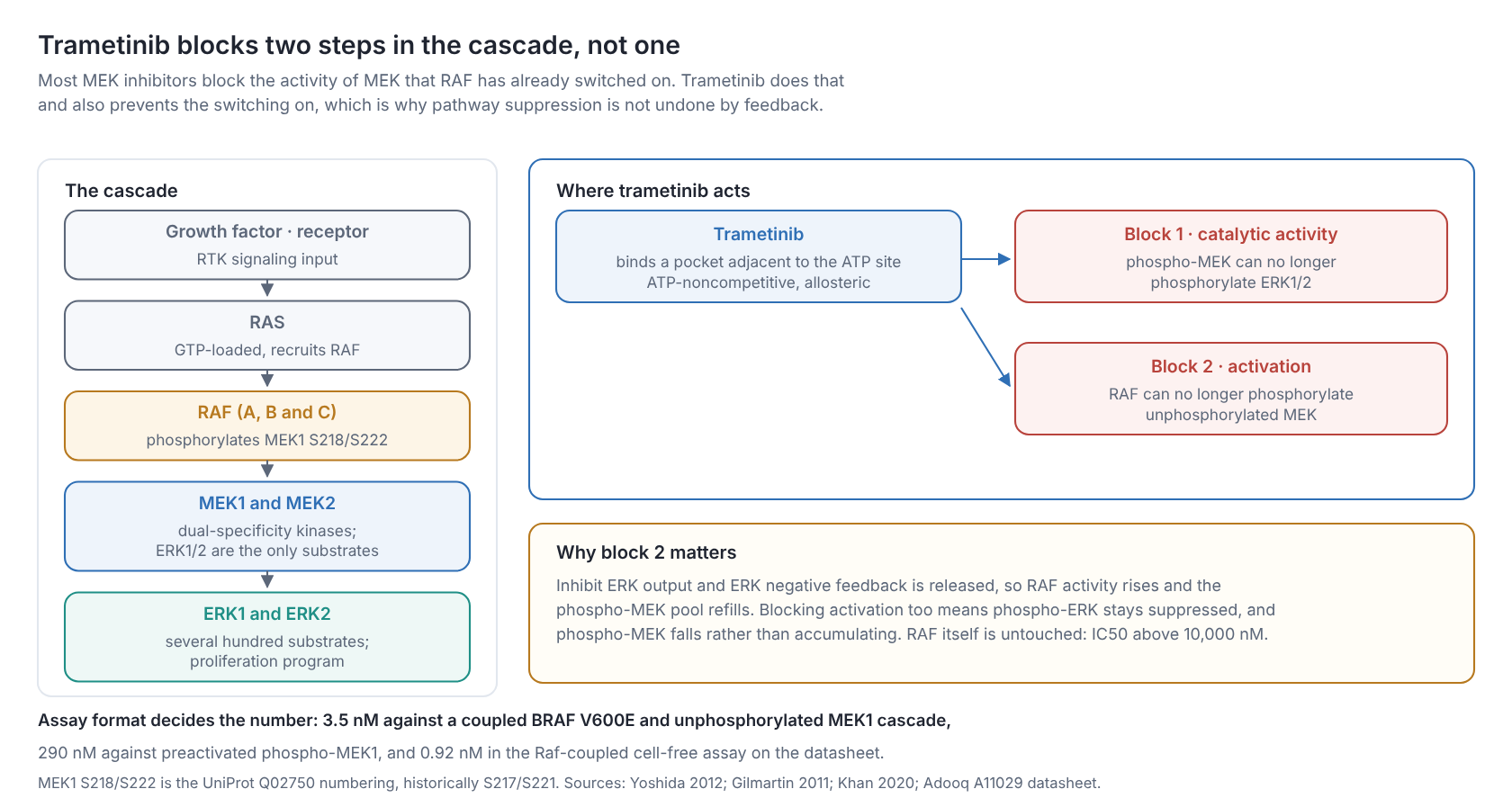
Growth factor signaling runs through RAS, which recruits and activates RAF, which phosphorylates MEK1 and MEK2 on two serines in the activation loop, which phosphorylate ERK1 and ERK2, which then phosphorylate several hundred substrates and drive the transcriptional program that makes cells proliferate. MEK1 and MEK2 are dual-specificity kinases whose only well-established substrates are ERK1 and ERK2, which makes them an unusually clean point of intervention: block MEK and you block ERK output, with no parallel branch to compensate for inside the cascade [1], [2]. The step above is less simple: RAF activity is controlled by dimerization and by scaffolds, and that control is what makes a RAF inhibitor behave differently from a MEK inhibitor [3].
Trametinib binds a hydrophobic pocket adjacent to the ATP site of MEK rather than the ATP site itself, so inhibition is ATP-noncompetitive and does not fall off when cellular ATP rises.
2.2 The feature that separates trametinib from earlier MEK inhibitors
Most MEK inhibitors block the catalytic activity of MEK that has already been switched on by RAF. Trametinib does that and also prevents RAF from switching MEK on in the first place. Gilmartin and colleagues put it directly: the compound inhibits MEK1/2 kinase activity and prevents RAF-dependent MEK phosphorylation, producing prolonged inhibition of phospho-ERK1/2 [4]. The distinction is visible in the assay numbers reported by Yoshida and colleagues, who compared coupled and preactivated formats side by side [5].
| Assay format | What it measures | Trametinib IC50 |
|---|---|---|
| BRAF V600E with unphosphorylated MEK1, coupled to ERK2 phosphorylation | Inhibition of MEK activation plus activity | 3.5 nM |
| BRAF V600E with unphosphorylated MEK2, coupled | Same, MEK2 | 5.3 nM |
| Truncated CRAF with unphosphorylated MEK1, coupled | Same, CRAF-driven | 11 nM |
| Preactivated phospho-MEK1 phosphorylating ERK2 | Inhibition of activity alone | 290 nM |
| Preactivated phospho-MEK2 phosphorylating ERK2 | Inhibition of activity alone | 190 nM |
| BRAF or CRAF phosphorylating myelin basic protein | Any direct RAF inhibition | over 10,000 nM |
Two conclusions follow directly from that table. Trametinib is roughly 50- to 80-fold more potent against the coupled activation cascade than against preactivated MEK, which is the signature of an activation inhibitor. And it has no measurable activity against RAF itself, so any effect you see is downstream of RAF.
This is also why the IC50 you quote depends entirely on the assay you ran. The widely cited 0.92 nM and 1.8 nM figures, quoted for MEK1 and MEK2 on the product datasheet, come from a cell-free Raf-coupled format, and catalog listings do not always agree on which enzyme each value belongs to; a preactivated-MEK format on the same compound gives a number two orders of magnitude higher. When comparing your value with a published one, match the assay before concluding anything.
2.3 Why the mechanism matters in cells
Inhibiting ERK output relieves the negative feedback that ERK normally exerts on the pathway above it, which raises RAF activity and regenerates phospho-MEK. An inhibitor that only blocks the activity of phospho-MEK loses ground as that pool refills. An inhibitor that also blocks the RAF-to-MEK step does not, which is the mechanistic argument for the durable pathway suppression trametinib shows in cells; Gilmartin and colleagues reported suppression of phospho-ERK1/2 persisting for more than 24 hours in xenograft tissue [4]. Kawasaki and colleagues illustrate the feedback itself in a defined model: in HEK293 cells engineered to express ErbB2 and ErbB3, 30 nM trametinib blocked phorbol-ester-induced ERK activation and the ERK-mediated phosphorylation of ErbB2 on Thr-677, and prevented the feedback loss of receptor tyrosine phosphorylation [6].
2.4 What the crystal structures show
Khan and colleagues solved X-ray structures of MEK bound to the scaffold protein KSR (kinase suppressor of RAS) with several MEK inhibitors, including trametinib, and found a binding mode that had not been anticipated: trametinib engages KSR directly at the KSR-MEK interface, and KSR remodels the allosteric pocket that the inhibitor occupies, which changes both binding and drug residence time [7]. In the same work, trametinib bound the KSR-MEK complex while disrupting the related RAF-MEK complex, through interface residues that differ between the two sub-complexes. The authors used that insight to design an analog, trametiglue, with enhanced interfacial binding and less adaptive resistance.
For a research guide the practical reading is this. Trametinib is not simply a molecule that sits in a pocket on an isolated kinase; what it does depends on which complex MEK is in. That is a plausible structural explanation for the two-step block described above, and it is also a caution: a biochemical assay with purified MEK alone does not reproduce the complexes the compound meets in a cell.
3. Why researchers choose trametinib
Four reasons, each with a practical consequence.
- It shuts the pathway down at low nanomolar concentrations. Cellular phospho-ERK IC50 values of 0.8 nM in BRAF V600E SK-MEL-28 melanoma cells and 1.8 nM in KRAS G13D HCT-116 colorectal cells [8] mean you can suppress ERK with a concentration far below anything that could plausibly hit a second target. For a pathway experiment that is worth more than potency for its own sake.
- The suppression is sustained. Because it blocks MEK activation as well as MEK activity, pathway output does not creep back over a few hours of treatment the way it can with activity-only inhibitors.
- It is the reference MEK inhibitor in the clinical literature. If your model is meant to speak to a BRAF V600E setting, trametinib is the compound the clinical datasets were generated with, which makes the comparison direct.
- It is orally active in mice at well-characterized doses. A 21-day daily oral schedule across 0.1 to 5 mg/kg has published tumor growth inhibition values, which is a useful starting grid rather than a guess.
If you only need "a MEK inhibitor" for a pathway control and have no reason to match the clinical literature, U0126 or mirdametinib (PD0325901) may suit better and cost less; see the comparison section.
4. Research applications and published experimental designs
The compound's catalog entry lists 18 publications that used Adooq material, and the designs below are drawn from the published literature on the compound, including those papers where possible.
4.1 Pathway suppression as a readout
The core in vitro experiment is not a viability curve, it is a phospho-ERK curve.
Design. Treat for 1 to 2 h across 0.01 to 100 nM, then blot or ELISA for phospho-ERK1/2 against total ERK1/2. Phospho-MEK is a useful second lane, with the caveat below.
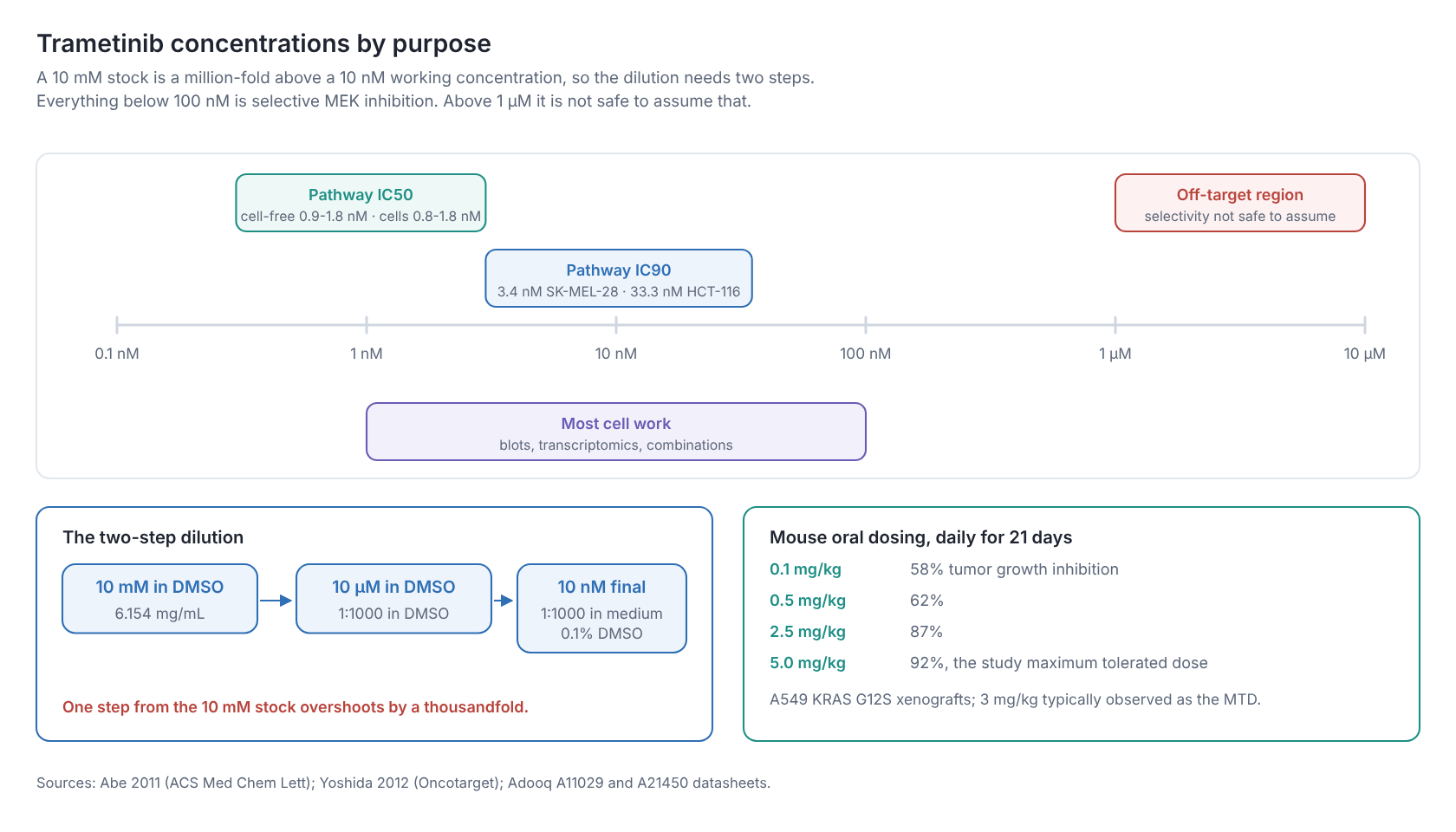
Anchors from the literature. In paired 72-hour assays, cellular phospho-ERK IC50 was 0.8 nM in SK-MEL-28 and 1.8 nM in HCT-116, while the concentrations needed for 90% pathway inhibition were 3.4 nM and 33.3 nM respectively [8]. The IC50 values are nearly the same; the IC90 values differ tenfold. Growth inhibition tracked the deeper suppression, needing about 85% phospho-ERK inhibition in SK-MEL-28 and about 90% in HCT-116 to reach 50% growth inhibition. If you measure only at IC50 you will conclude the two lines are equally sensitive, which they are not.
The phospho-MEK caveat. Because trametinib prevents RAF from phosphorylating MEK, phospho-MEK falls rather than accumulating. Yoshida and colleagues saw that decrease clearly in HT-29 cells after 24 h, while in ACHN cells basal phospho-MEK was too low to score a decrease, and a high concentration of a comparator MEK inhibitor raised phospho-MEK instead [5]. Phospho-MEK direction is therefore informative, but only in a line with a detectable basal signal.
4.2 Viability and proliferation
Viability potency varies over three orders of magnitude across cell lines, and much of that spread is assay duration rather than biology. Values reported on the Adooq product page activity table for A11029, compiled from the cited literature (PMIDs 32305784 and 33445154), make the point:
| Cell line | Driver | Readout | Value | Assay |
|---|---|---|---|---|
| HL-60 | NRAS Q61L | IC50 | 3 nM | 96 h, ATP luminescence |
| MDA-MB-231 | KRAS G13D, BRAF G464V | IC50 | 18 nM | 96 h, ATP luminescence |
| HCT-116 | KRAS G13D | IC50 | 19 nM | 96 h, ATP luminescence |
| MDA-MB-231 | as above | GI50 | 25 nM | 72 h, DAPI staining |
| A549 | KRAS G12S | IC50 | 460 nM | 96 h, ATP luminescence |
| HCT-116 | KRAS G13D | IC50 | 1,160 nM | 24 h, ATP luminescence |
| DLD-1 | KRAS G13D | IC50 | 1,340 nM | 24 h, ATP luminescence |
The same HCT-116 line gives 19 nM at 96 h and 1,160 nM at 24 h, a 60-fold difference from the clock alone. MEK inhibition is largely cytostatic in most lines, so a short assay measures how fast cells stop dividing rather than how many die. Run 72 to 96 h with a time-zero plate if you want a number comparable with the published ones, and state the duration whenever you report an IC50.
4.3 In vivo designs
Trametinib is dosed orally, and the published grid is unusually complete. In A549 KRAS G12S xenografts in female athymic nude mice, daily oral dosing for 21 days gave 58% tumor growth inhibition at 0.1 mg/kg, 62% at 0.5 mg/kg, 87% at 2.5 mg/kg and 92% at 5.0 mg/kg; 5 mg/kg was the maximum tolerated dose in that study, with 3 mg/kg typically observed as the MTD. The vehicle was 0.5% hydroxypropyl methylcellulose with 0.1% Tween 80 in water at pH 8.0 [8].
Monotherapy is not always enough. In mice bearing canine M5 oral mucosal melanoma xenografts, oral trametinib at 1.5 mg/kg daily did not significantly reduce tumor size against vehicle, while the dual PI3K/mTOR inhibitor NVP-BEZ235 at 30 mg/kg delayed growth and the combination inhibited growth more strongly than either alone [9]. That pattern, modest alone and strong in combination, recurs throughout the MEK inhibitor literature and is the reason most current work is combination work.
For dosing preparation the Adooq datasheet gives 2 mg/mL in 4% DMSO plus corn oil, which is a practical alternative to an aqueous suspension when the dose volume is small. Check the arithmetic before you use it: at 2 mg/mL, a 3 mg/kg dose in a 25 g mouse is 37.5 µL, comfortably inside the usual 10 mL/kg gavage limit, but a 5 mg/kg dose in a 30 g mouse is 75 µL and the oil vehicle is viscous, so draw and deliver slowly.
One more design point for brain work: trametinib is a substrate of both P-glycoprotein and BCRP at the blood-brain barrier, which limits its central nervous system distribution in mice and means a plasma concentration that suppresses phospho-ERK in a flank tumor does not predict the same suppression in an intracranial one [10].
4.4 Adaptive resistance and feedback
Because ERK inhibition relieves feedback, a MEK inhibitor reorganizes the signaling network it is applied to, and that reorganization is itself a common object of study. Standard designs are a time course of phospho-ERK, phospho-MEK, phospho-AKT and receptor tyrosine kinase phosphorylation over 1 to 72 h; an RNA-sequencing or proteomic comparison at 24 h; and a resistance derivation experiment in which cells are cultured in escalating concentrations for weeks and the surviving population is sequenced. The clearest tissue-specific case is BRAF V600E colorectal cancer, where EGFR-driven feedback reactivation of the pathway blunts BRAF plus MEK inhibition; Corcoran and colleagues reported a response rate of only about 12% for dabrafenib plus trametinib in that setting, which is why colorectal cancer is carved out of the tissue-agnostic approval and why EGFR blockade was added to later regimens [11]. Early clinical resistance to combined BRAF and MEK inhibition is otherwise dominated by MAPK reactivation rather than by bypass pathways, which is why those blots are the right first panel [12]. The genetic routes are well cataloged in melanoma [13], and MEK1 mutations alone can confer resistance to both MEK and BRAF inhibition [14].
4.5 Autophagy and metabolic rewiring
Blocking the RAF-MEK-ERK axis elicits autophagy that protects the cell from the inhibitor, which is one of the most productive combination ideas to come out of MEK inhibitor biology. Kinsey and colleagues showed in pancreatic ductal adenocarcinoma models that MEK1/2 inhibition activates the LKB1-AMPK-ULK1 axis and that adding an autophagy inhibitor produces synergistic antiproliferative effects in vitro and tumor regression in patient-derived xenografts, with comparable responses in NRAS-mutant melanoma and BRAF-mutant colorectal models [15]. Designs use LC3-II and p62 blots, LC3 puncta imaging, and an autophagy flux arm with bafilomycin A1 or chloroquine.
4.6 MEK inhibition as a general pathway tool
Trametinib's selectivity makes it a general ERK-pathway tool, used well beyond the BRAF-mutant settings it was developed for, and the papers citing Adooq material reflect that: ALK-rearranged lung cancer resistance mechanisms [16] and acute myeloid leukemia signaling inside oncology, tryptophan metabolism and osteoarthritis and chondrocyte signaling outside it. In any of those settings the dose-ranging logic is the same: find the concentration that suppresses phospho-ERK by more than 90% and work at or just above it.
5. Trametinib and rapamycin: the MEK plus mTOR combination
The pairing of trametinib with sirolimus (rapamycin) appears in two quite different literatures, and people searching for it usually want one or the other.
In cancer models, MEK inhibition and mTOR inhibition are combined because the two pathways cross-regulate: blocking ERK output relieves feedback that can raise PI3K-AKT-mTOR signaling, and mTORC1 blockade removes the translational arm that MEK inhibition alone leaves intact. The canine melanoma experiment above is a version of this, using a dual PI3K/mTOR inhibitor rather than rapamycin itself. Designs usually run both agents at or below their single-agent IC50 and read synergy on a Bliss or Loewe surface, with phospho-ERK, phospho-S6 and phospho-4E-BP1 as the pathway readouts proving both arms were actually engaged.
The same logic, with a different partner, is behind one of the most reproducible trametinib combinations: Koyama and colleagues found that low-dose trametinib raised BCL-xL in KRAS-mutant colorectal cancer cells and so created its own resistance, and that adding a BCL-xL antagonist produced a specific antitumor effect [17], which is the cell-line counterpart of the synthetic lethality between MEK and BCL-xL inhibition reported by Corcoran and colleagues [18]. The same logic has since been extended to pancreatic ductal adenocarcinoma with EGFR inhibition as a third arm [19].
In aging research, the combination became a reference geroprotective regimen in 2025. Trametinib was fed in the diet at 1.44 mg/kg of diet from six months of age, rapamycin at 42 mg/kg of diet on alternate weeks, and the two were also given together [20]. The reported median lifespan gains were:
| Regimen | Female median | Male median |
|---|---|---|
| Trametinib alone | +7.2% | +10.2% |
| Rapamycin alone, intermittent | +17.4% | +16.6% |
| Both together | +34.9% | +27.4% |
The authors describe the combination as additive rather than synergistic, and report reduced liver tumors in both sexes and reduced spleen tumors in males, less tissue inflammation, and a blunted age-related rise in brain glucose uptake. Two points matter for anyone reading that work as a protocol. The trametinib exposure is chronic and low, in the diet rather than by gavage, which is a different regimen from any oncology study. And the readouts are inflammation, transcriptional signatures and tumor burden at necropsy, not tumor volume over weeks.
Both literatures share a practical problem worth stating. Rapamycin and trametinib are both DMSO-dissolved and both potent, so a combination experiment easily drifts past 0.1% final DMSO. Prepare a single combined vehicle control at the exact DMSO concentration of the double-agent well, not one control per agent.
6. Trametinib solubility, DMSO and working concentration
6.1 Solubility
| Solvent | Reported solubility |
|---|---|
| DMSO | 19 mg/mL (30.87 mM), with warming |
| Water | Insoluble |
| Ethanol | Insoluble |
DMSO is the only practical solvent. "With warming" is not decoration: dissolution at room temperature is slow, and a cloudy stock that looks fine in a microcentrifuge tube will precipitate on dilution into medium.
"Trametinib DMSO" is an ambiguous search, and the two meanings are both covered here: dimethyl sulfoxide as the solvent, described in this section, and the DMSO solvate as a solid form, described in §1.3. If you are weighing the solvate, use 693.53 g/mol.
6.2 Making a stock solution
- Equilibrate the vial to room temperature before opening, so that cold powder does not draw moisture.
- Add anhydrous DMSO to the mass, aiming for 10 mM, which is 6.154 mg/mL for A11029 and well under the 19 mg/mL maximum.
- Warm gently to 37 °C and vortex until the solution is completely clear. Do not accept a faintly hazy stock.
- Aliquot into single-use volumes of 5 to 20 µL. The compound tolerates freeze-thaw poorly, and a month in solution at -20 °C is the stated limit.
- Record the catalog number and lot against the aliquot box, because the two solid forms have different molecular weights.
Final solution volumes for a 10 mM stock, from the product page:
| Vial | 10 mM | 5 mM | 1 mM |
|---|---|---|---|
| 1 mg | 0.1625 mL | 0.325 mL | 1.625 mL |
| 5 mg | 0.8125 mL | 1.625 mL | 8.125 mL |
| 10 mg | 1.625 mL | 3.25 mL | 16.25 mL |
Those volumes apply to the free compound A11029 (MW 615.4). For the DMSO solvate A21450 (MW 693.53), a 10 mM stock takes 0.7209 mL of DMSO per 5 mg.
A pre-made 10 mM in 1 mL DMSO solution is also listed on the product page, which is worth considering for a long time course where stock-to-stock variation would be hard to distinguish from biology.
6.3 The dilution that goes wrong
This is the single most common error with trametinib. A 10 mM stock and a 10 nM working concentration are a million-fold apart. Pipetting 1 µL of 10 mM stock into 1 mL of medium gives 10 µM, a thousand times the intended concentration, and at 10 µM a MEK inhibitor is no longer a selective tool.
Use two steps. Dilute the 10 mM DMSO stock 1:1000 in DMSO to make a 10 µM intermediate, then add that intermediate to medium at 1:1000 for a 10 nM final concentration and 0.1% final DMSO. For a dose-response series, build the whole series in DMSO at 1000× and add a fixed volume to every well, so that DMSO is identical across the plate.
6.4 Choosing a working concentration
| Application | Concentration | Notes |
|---|---|---|
| Phospho-ERK suppression, sensitive lines | 1-10 nM, 1-2 h | Above the cellular IC50, at or above IC90 in sensitive lines |
| Phospho-ERK suppression, resistant lines | 10-100 nM, 1-2 h | IC90 can be 30 nM or higher; verify by blot rather than assuming |
| Proliferation and viability curves | 0.1 nM - 1 µM, 72-96 h | Eight to ten points; include a time-zero plate |
| Mechanistic blots and transcriptomics | 10-100 nM, 24 h | Enough for near-complete pathway suppression in most lines |
| Combination screening | One-quarter to one-half of the single-agent IC50 of each agent | Synergy is invisible when either agent already kills |
| Pathway control in a non-cancer model | 10-50 nM | Confirm suppression in your own cells before interpreting a phenotype |
| In vivo, mouse, oral | 0.1-5 mg/kg/day | Published 21-day grid; 3 mg/kg is typically observed as the MTD |
Keep final DMSO at or below 0.1%, and at or below 0.05% for primary cells, neurons and stem cells. Above roughly 1 µM, selectivity is no longer a safe assumption for any compound in this class, and a phenotype that only appears there needs a second, structurally unrelated MEK inhibitor to support it.
7. Storing GSK1120212, handling and documents
7.1 Storage
| Form | Condition | Keep for |
|---|---|---|
| Powder | -20 °C, desiccated, protected from light | About 36 months |
| DMSO stock | -20 °C, single-use aliquots | One month |
| Working dilution in medium | Prepare fresh | Do not store |
"Storing GSK1120212" has one answer that matters above the others: desiccated. The powder is handled dry, DMSO is strongly hygroscopic, and water in a stock is what turns a clear solution into a cloudy one after three freeze-thaw cycles. Keep the vial with desiccant, equilibrate it to room temperature before opening, and close it promptly.
Two further points. The iodinated aromatic ring makes light protection sensible, so use amber tubes or wrap the box. And because a month is the stated stock limit, a study running longer than that needs either fresh aliquots made from powder or the pre-made DMSO solution, with the change recorded.
7.2 Documents, including the SDS
Three documents are linked at the top of the product page and are the right source for anything a safety officer will ask about:
- Datasheet, with the physical data, reported solubility and storage in one page.
- SDS, the safety data sheet, with hazard classification, handling, personal protective equipment, spill response and disposal.
- Handling instructions, covering reconstitution and aliquoting.
Searches for "trametinib SDS" are nearly always a laboratory safety requirement rather than a scientific question, so two notes on using it. A safety data sheet is specific to the supplier and the lot, because classification depends on composition and on purity, so file the SDS for the material you actually hold rather than one downloaded for a different catalog number; the free compound and the DMSO solvate are separate entries with separate documents. And whatever the classification says, trametinib is a potent kinase inhibitor active at nanomolar concentrations, so weigh the powder in a containment enclosure and treat the dust as the hazard that matters.
All material is for laboratory research use only and is not sold to patients.
8. Molecules commonly used alongside trametinib
| Molecule | Role in the experiment |
|---|---|
| Dabrafenib (GSK2118436A) | BRAF V600E inhibitor; the standard partner, see §10 |
| Dabrafenib mesylate | Salt form of the same compound, for aqueous dosing work |
| Vemurafenib (PLX4032) | First-generation BRAF inhibitor; historical comparator |
| Encorafenib (LGX 818) | Longer-residence BRAF inhibitor; the third BRAF chemotype |
| Sirolimus (rapamycin) | mTORC1 inhibitor; the MEK plus mTOR arm, see §5 |
| Everolimus (RAD001) | Rapamycin analog with better solubility behavior |
| SCH772984 | ERK1/2 inhibitor; distinguishes MEK-dependent from ERK-dependent effects |
| Ulixertinib (BVD-523, VRT752271) | Second ERK inhibitor chemotype for the same purpose |
| Navitoclax (ABT-263) | BCL-2/BCL-xL inhibitor; converts MEK-inhibitor cytostasis toward apoptosis in RAS-mutant models, see the navitoclax guide |
| Bafilomycin A1 | Autophagy flux blocker for the LC3 arm of §4.5 |
| Chloroquine diphosphate | Lysosomal autophagy inhibitor; the combination arm |
| U0124 | Structurally matched inactive analog of U0126, for experiments that use U0126 |
| Trametinib-13C,d3 | Stable isotope-labeled internal standard for LC-MS quantification |
| GSK1790627 | N-deacetylated metabolite of trametinib, for metabolism work |
Two of these deserve a sentence each. U0124 is the matched inactive analog of U0126, not of trametinib, so it belongs in experiments that use U0126; a trametinib experiment is controlled by a DMSO vehicle arm at the same final solvent concentration, and, where the question is on-target MEK dependence, by an ERK inhibitor arm such as SCH772984. And an isotope-labeled internal standard is what makes a tissue or plasma concentration measurement defensible in an in vivo study; without one, exposure is an assumption.
9. Limitations and things that catch people out
9.1 MEK inhibition is mostly cytostatic
In most cell lines trametinib stops proliferation rather than killing, so a 24 h viability assay underestimates it badly and an apoptosis readout may show almost nothing. If you need death, you need a second agent, which is the whole point of the combination literature.
9.2 The concentration window is narrow at the top
Below about 100 nM you have a selective MEK inhibitor. Much above 1 µM, the assumption of selectivity stops being safe for any compound in this class. A phenotype that appears only at 10 µM is not a MEK phenotype until a second, unrelated MEK inhibitor reproduces it.
9.3 Feedback rewires the network you are studying
Pathway inhibition relieves ERK-dependent negative feedback, so receptor tyrosine kinase signaling, PI3K-AKT activity and transcription all move. That is a real biological response, not an artifact, but it means a 48 h phenotype is the phenotype of a rewired cell, not of a cell with one node switched off.
9.4 RAS-mutant cells respond less well than BRAF-mutant cells
Sensitivity is not simply a question of whether the pathway is active. The depth of suppression needed for growth inhibition is greater in KRAS-mutant lines, which is visible in the IC90 gap in §4.1, and the clinical experience in RAS-mutant disease has been correspondingly harder than in BRAF V600E disease. Which MEK inhibitor you pick also matters here: Hatzivassiliou and colleagues showed that the mechanism of a given allosteric MEK inhibitor, and in particular whether it blocks feedback phosphorylation of MEK by wild-type RAF, determines its relative efficacy in KRAS-driven versus BRAF-driven cells [21]. Plan for it: a KRAS-mutant line usually needs a partner agent, not a higher trametinib concentration.
9.5 Solubility and dilution
Insoluble in water and ethanol; DMSO only; two-step dilution mandatory. Precipitation on dilution shows up as a dose-response curve that plateaus instead of reaching zero.
9.6 Two molecular weights
Covered in §1.3, and worth repeating because it is silent: 615.4 for A11029, 693.53 for A21450.
10. Dabrafenib and trametinib: why they are given together
"Dabrafenib and trametinib" is the highest-volume trametinib query there is, and the reason the pair exists is a specific mechanistic problem rather than a general preference for combinations.
10.1 The three problems a BRAF inhibitor alone has
A selective BRAF V600E inhibitor such as dabrafenib blocks mutant BRAF effectively, and then three things happen.
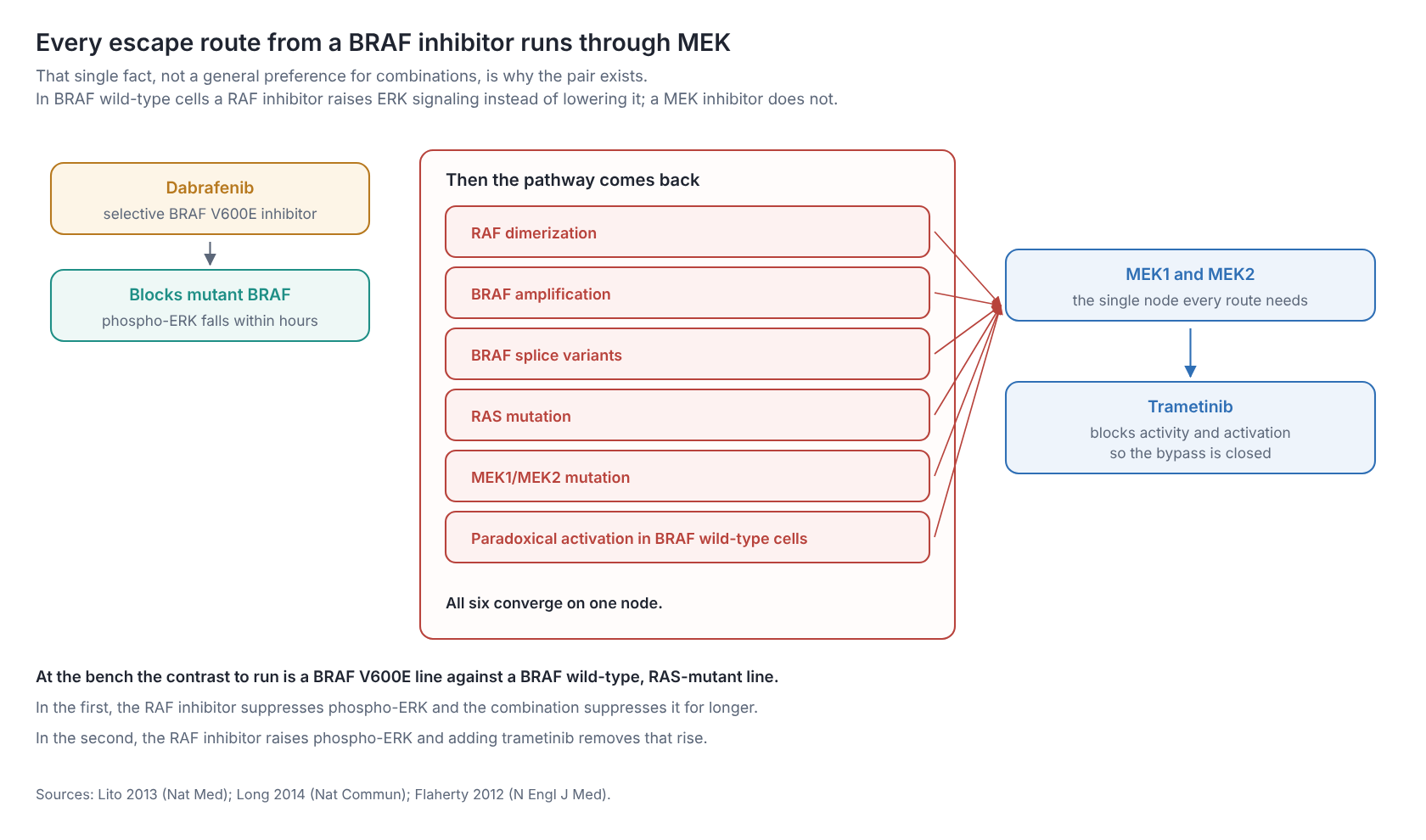
- MAPK reactivation. ERK output recovers through RAF dimerization, BRAF amplification, splice variants, RAS mutation or MEK mutation. The pathway comes back on, below the drug [22], [13].
- Paradoxical activation in wild-type cells. In cells with wild-type BRAF and active RAS, a RAF inhibitor promotes RAF dimerization and raises ERK signaling, which is the mechanism behind the keratinocyte proliferation seen with single-agent RAF inhibitors.
- Resistance arrives quickly. Nearly all of the escape routes converge on the same node.
Adding a MEK inhibitor addresses all three at once, because every one of those routes runs through MEK. Blocking the step below the point of escape closes the bypass, and in wild-type cells the MEK inhibitor suppresses the paradoxically raised signal rather than amplifying it.
10.2 What that looks like at the bench
| Design | What it shows |
|---|---|
| Phospho-ERK time course, each agent alone and combined, 1-72 h | Reactivation under BRAF inhibitor alone; sustained suppression with the combination |
| Dose matrix, 6 × 6 or larger, viability at 72 h | Synergy surface; use matched DMSO across the plate |
| Resistance derivation under single agent, then switch to the combination | Whether resistance is MAPK-dependent |
| Wild-type BRAF line with active RAS, RAF inhibitor alone and combined | Paradoxical activation and its suppression |
Practical points. Dabrafenib and trametinib are both DMSO stocks, so build the matrix as a 1000× DMSO plate. And run a BRAF wild-type, RAS-mutant line alongside the BRAF V600E line: the contrast between them is the clearest demonstration of what each agent does.
10.3 In the clinic
The combination was tested in BRAF V600-mutant melanoma and reduced the cutaneous squamous lesions seen with a RAF inhibitor alone while improving response rate and progression-free survival [23], and the randomized trials that followed established it as the standard way to use either agent. Trametinib is approved almost entirely in combination with dabrafenib, which is covered in §11.
11. Trametinib in melanoma and other BRAF V600E tumors: the clinical record
This section summarizes what the trials were and what they measured. It deliberately gives no human doses or administration details; those belong to prescribing information, not to a research guide.
11.1 Melanoma
| Trial | Design | What it established |
|---|---|---|
| METRIC [24] | Trametinib alone versus chemotherapy, BRAF V600E/V600K metastatic melanoma | Single-agent MEK inhibition improves progression-free and overall survival; the basis of the first approval in May 2013 |
| Phase 1/2 combination study [23] | Dabrafenib plus trametinib versus dabrafenib alone | Higher response rate, longer progression-free survival, fewer cutaneous squamous lesions |
| COMBI-d [25] | Dabrafenib plus trametinib versus dabrafenib plus placebo | Confirmed the combination benefit in a double-blind randomized design |
| COMBI-v [26] | Dabrafenib plus trametinib versus vemurafenib | Improved overall survival against single-agent BRAF inhibition |
| COMBI-AD [27] | Adjuvant combination after complete resection of stage III disease | Lower recurrence risk; the basis of the adjuvant approval in April 2018 |
Long-term follow-up of both the metastatic [28] and adjuvant [29] programs has been published, and the final COMBI-AD analysis, published in 2024, confirms a sustained relapse-free survival benefit [30], and the practical summary for a researcher is that a minority of patients have durable disease control while most eventually progress through MAPK reactivation, which is why resistance remains the active research question.
11.2 Beyond melanoma
| Setting | Study | Status |
|---|---|---|
| BRAF V600E non-small cell lung cancer | BRF113928 [31] | Approved with dabrafenib, June 2017 |
| BRAF V600E anaplastic thyroid cancer | ROAR basket study [32], [33] | Approved with dabrafenib, May 2018 |
| BRAF V600E solid tumors, tissue-agnostic | ROAR and NCI-MATCH subprotocol H [34] | Accelerated approval with dabrafenib, June 2022, excluding colorectal cancer |
| Pediatric low-grade glioma with BRAF V600E | Randomized pediatric trial versus chemotherapy [35] | Approved with dabrafenib, March 2023, alongside an oral solution formulation |
| BRAF V600E differentiated thyroid cancer, radioactive-iodine refractory | European regulatory review | Authorized with dabrafenib in Europe in 2026; the EMA product information was updated in May 2026 |
Two things in that table are worth drawing out. The tissue-agnostic approval means the pair is now used on the basis of a mutation rather than an organ, which is why BRAF V600E testing turns up in trial protocols across tumor types; colorectal cancer is carved out of it, because EGFR-driven feedback reactivation makes BRAF plus MEK inhibition alone insufficient there (see §4.4). And the pediatric approval came with a new oral solution, which is the sort of formulation work that rarely reaches the research literature but tells you the molecule's solubility problem is real.
11.3 What is not approved
Trametinib is not approved as a single agent outside BRAF V600E/V600K melanoma, and it is not approved in RAS-mutant disease. Combination programs in KRAS-mutant cancers have repeatedly shown that MEK inhibition alone is insufficient there, which is the clinical counterpart of §9.4 and the reason the KRAS inhibitor field went after the GTPase itself instead.
12. Similar products: the other MEK inhibitors
12.1 The comparison that matters
| Compound | Catalog | Notes |
|---|---|---|
| Trametinib (GSK1120212) | A11029 | Blocks MEK activity and MEK activation; low nanomolar in cells; the clinical reference |
| Mirdametinib (PD0325901) | A10256 | Potent, widely used, and the MEK inhibitor in the 2i embryonic stem cell formulation [36]; approved in the United States in February 2025 for NF1-associated plexiform neurofibromas |
| Selumetinib (AZD6244) | A10257 | Allosteric MEK1/2 inhibitor with a clinical literature of its own, including plexiform neurofibroma [37] |
| Binimetinib (MEK162, ARRY-438162) | A11493 | Partner of encorafenib in the third BRAF/MEK pair [38] |
| Cobimetinib (GDC-0973) | A11441 | Partner of vemurafenib in the second BRAF/MEK pair [39] |
| Avutometinib (RO5126766, CH5126766) | A14019 | RAF/MEK clamp: traps MEK in an inactive complex with RAF rather than only inhibiting it, which suppresses feedback reactivation of RAF [40]; approved in the United States in May 2025 with defactinib for KRAS-mutant low-grade serous ovarian cancer |
| Refametinib | A14104 | Earlier allosteric MEK1/2 inhibitor |
| U0126 | A39329 | The classical cell biology MEK inhibitor; micromolar, cheap, well documented |
| U0126-EtOH | A10957 | Ethanolate of the same compound |
| PD98059 | A10705 | Early MEK inhibitor; also an aryl hydrocarbon receptor antagonist, which confounds some readouts |
| SCH772984 | A12824 | ERK1/2 inhibitor, one step lower in the cascade |
Two entries in that table changed status recently, and both are worth knowing about if you are choosing a comparator. Mirdametinib was approved in February 2025 for neurofibromatosis type 1 with symptomatic plexiform neurofibromas, which makes the familiar 2i reagent a clinical compound. And avutometinib plus defactinib was approved in May 2025 for KRAS-mutant low-grade serous ovarian cancer, the first approval for the RAF/MEK clamp mechanism. Both are single-agent or non-BRAF-partner approvals, so the MEK inhibitor class is no longer only the dabrafenib-style pairings.
12.2 Picking one
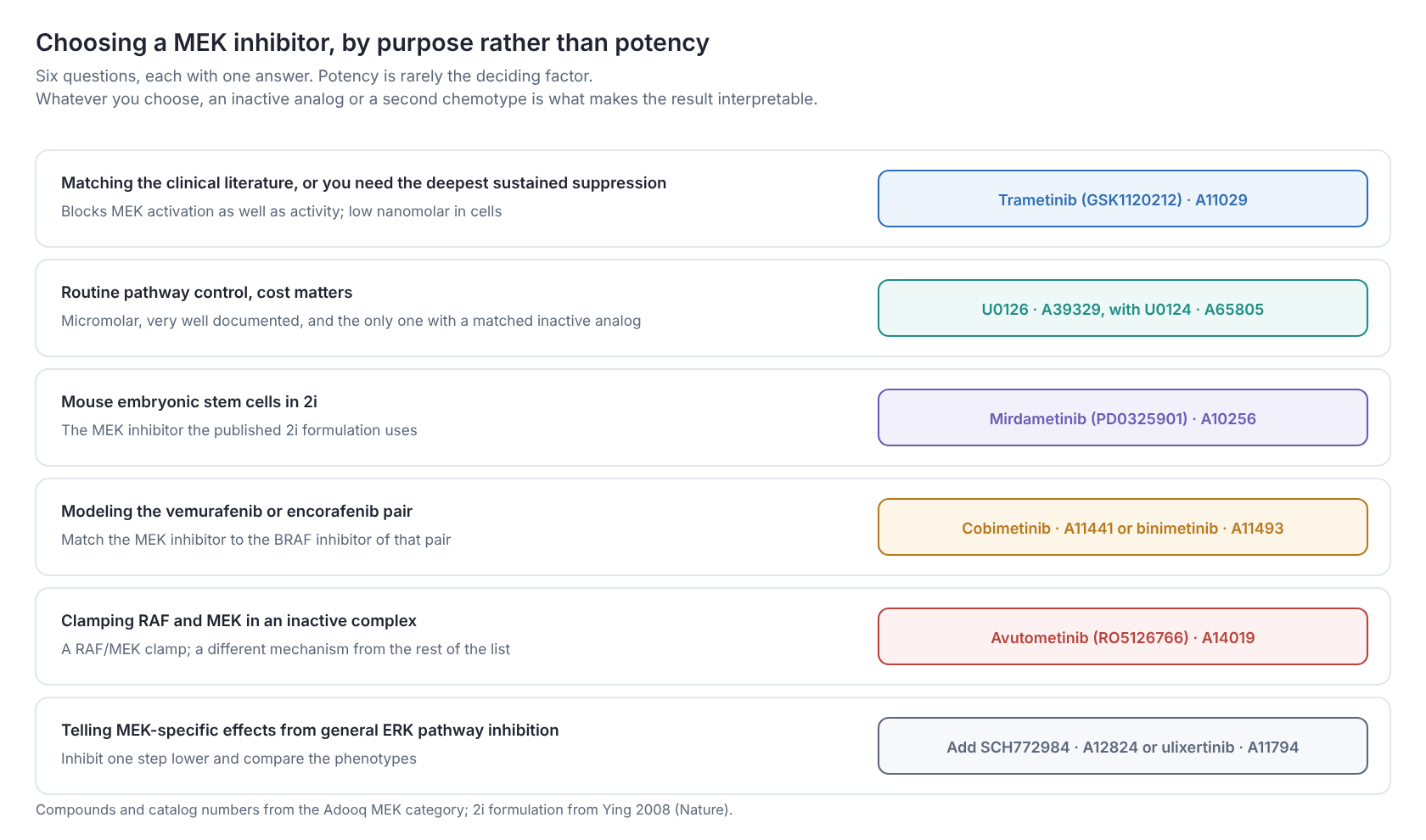
- You want the deepest, most sustained pathway suppression, or you want to match the clinical literature. Trametinib.
- You want a MEK inhibitor for a routine pathway control and cost matters. U0126, with its matched inactive analog U0124 as the negative control.
- You are culturing mouse embryonic stem cells in 2i. PD0325901, which is what the published formulation uses.
- You are modeling the vemurafenib or encorafenib pairs specifically. Cobimetinib or binimetinib respectively.
- You want to clamp RAF and MEK together in an inactive complex rather than only inhibiting MEK. Avutometinib, whose mechanism differs from the rest of the list.
- You need to know whether an effect is MEK-specific or general ERK pathway inhibition. Add an ERK inhibitor such as SCH772984 or ulixertinib.
The full list is on the MEK inhibitors category page. For the wider history of how this class was developed and why so many candidates stalled, Caunt and colleagues' review remains the readable account [41].
13. Troubleshooting
| Observation | Likely cause | What to do |
|---|---|---|
| Nothing happens at 10 nM in a line that should respond | A dilution error, or a stock that has lost potency | Recheck the arithmetic on the two-step dilution; make fresh stock from powder; blot phospho-ERK at 1 h as the ground truth |
| Everything dies at every concentration | Single-step dilution from the 10 mM stock, or DMSO above 0.5% | Rebuild the series as a 1000× DMSO plate with a matched vehicle |
| Phospho-ERK suppressed but cells keep dividing | Partial suppression; IC90 not reached | Quantify the blot; raise to the IC90 for that line, which may be 30 nM or more |
| Cells stop growing but do not die | Expected; MEK inhibition is cytostatic | Add a second agent, for example a BCL-2 family inhibitor or an autophagy inhibitor |
| Phospho-MEK rises instead of falling | A different MEK inhibitor, or a line with very low basal phospho-MEK | Trametinib lowers phospho-MEK; confirm the compound identity and check the basal signal |
| IC50 far from the published value | Assay duration, or the wrong molecular weight | Match 72-96 h with a time-zero plate; confirm whether the stock was made from A11029 or the DMSO solvate |
| Dose-response plateaus instead of reaching zero | Precipitation on dilution | Warm and clarify the stock; pre-dilute in DMSO rather than medium; keep final DMSO constant |
| Stock turns cloudy after a few weeks | Freeze-thaw and water uptake by DMSO | Single-use aliquots; anhydrous DMSO; one month maximum at -20 °C |
| Effect disappears in a KRAS-mutant line | Expected; deeper suppression needed | Check IC90 rather than IC50, and plan a combination |
| An effect at 10 µM you want to publish | Off-target territory | Reproduce it with a structurally unrelated MEK inhibitor and an ERK inhibitor before attributing it to MEK |
14. Frequently asked questions
What is trametinib (GSK1120212)?
Trametinib is an allosteric, ATP-noncompetitive inhibitor of MEK1 and MEK2, with cell-free IC50 values of 0.92 nM and 1.8 nM on the A11029 datasheet. It also prevents RAF from phosphorylating and activating MEK, which distinguishes it from MEK inhibitors that only block the activity of already-activated MEK.
What is trametinib's mechanism of action?
It binds a pocket adjacent to the ATP site of MEK, blocking phosphorylation of ERK1 and ERK2 and so shutting down ERK pathway output. Because it also blocks the RAF-to-MEK activation step, suppression is not undone by the increase in RAF activity that follows relief of ERK negative feedback.
Is trametinib soluble in DMSO? What about water?
DMSO dissolves it to 19 mg/mL (30.87 mM) with warming. It is insoluble in water and in ethanol. For mouse dosing the datasheet formulation is 2 mg/mL in 4% DMSO plus corn oil.
What is the difference between trametinib and trametinib DMSO solvate?
The solvate is a crystalline form carrying one molecule of dimethyl sulfoxide per molecule of trametinib, at 693.53 g/mol against 615.4 g/mol for the free compound. It is the form used as the drug substance. The released molecule is identical, so potency is the same, but you must use the right molecular weight when weighing.
What working concentration of trametinib should I use in cells?
1-10 nM suppresses phospho-ERK in sensitive lines, and 10 to 100 nM is the safer range in resistant ones. Most published cell work sits between 1 and 100 nM. Verify suppression by blot rather than assuming, since the concentration needed for 90% inhibition varies more than tenfold across lines.
How do I dilute a 10 mM stock to 10 nM?
In two steps. Dilute 1:1000 in DMSO to 10 µM, then 1:1000 into medium. A single step from the 10 mM stock overshoots by a thousandfold and is the most common error with this compound.
How should GSK1120212 be stored?
Powder at -20 °C, desiccated and protected from light, where it is stable for about 36 months. DMSO stocks at -20 °C for no more than one month, in single-use aliquots to avoid freeze-thaw cycles.
Where do I find the trametinib SDS?
On the product page, alongside the datasheet and the handling instructions. A safety data sheet is specific to the supplier and the material, and the free compound and the DMSO solvate have separate documents, so use the one for the catalog number you hold.
Why are dabrafenib and trametinib used together?
Every common route of escape from a BRAF inhibitor runs through MEK, and in cells with wild-type BRAF a RAF inhibitor paradoxically raises ERK signaling. Adding a MEK inhibitor closes the bypass and suppresses the paradoxical signal, which is why the pair is the standard way to use either agent.
Does trametinib work in KRAS-mutant cells?
It suppresses the pathway, but deeper suppression is needed for growth inhibition than in BRAF V600E cells, and growth inhibition is usually incomplete. In practice KRAS-mutant models need a combination rather than a higher concentration.
Why does my trametinib IC50 not match the published one?
Most often assay duration. The same HCT-116 line is reported at 0.019 µM over 96 h and 1.16 µM over 24 h. Match the duration and the readout before comparing, and state both whenever you report a value.
Can trametinib be combined with rapamycin?
Yes, and it is a common pairing in both cancer-model and aging research. Keep both agents at or below their single-agent IC50 for a synergy experiment, confirm both arms with phospho-ERK and phospho-S6, and use one combined vehicle control at the DMSO concentration of the double-agent well.
Is trametinib cytotoxic or cytostatic?
Mostly cytostatic. Cells stop dividing without dying in most lines, which is why short viability assays understate its potency and why apoptosis experiments usually need a second agent.
What is GSK1790627?
The N-deacetylated metabolite of trametinib, supplied separately as a reference compound for metabolism and pharmacokinetic work.
References
- Dhillon AS, Hagan S, Rath O, et al. MAP kinase signalling pathways in cancer. Oncogene 2007. doi
- Roskoski R Jr. MEK1/2 dual-specificity protein kinases: Structure and regulation. Biochemical and Biophysical Research Communications 2012. doi
- Lavoie H, Therrien M. Regulation of RAF protein kinases in ERK signalling. Nature Reviews Molecular Cell Biology 2015. doi
- Gilmartin AG, Bleam MR, Groy A, et al. GSK1120212 (JTP-74057) Is an Inhibitor of MEK Activity and Activation with Favorable Pharmacokinetic Properties for Sustained In Vivo Pathway Inhibition. Clinical Cancer Research 2011. doi
- Yoshida T, Kakegawa J, Yamaguchi T, et al. Identification and Characterization of a Novel Chemotype MEK Inhibitor Able to Alter the Phosphorylation State of MEK1/2. Oncotarget 2012. PMID 23237773
- Kawasaki Y, Sakimura A, Park CM, et al. Feedback control of ErbB2 via ERK-mediated phosphorylation of a conserved threonine in the juxtamembrane domain. Scientific Reports 2016. PMID 27531070
- Khan ZM, Real AM, Marsiglia WM, et al. Structural basis for the action of the drug trametinib at KSR-bound MEK. Nature 2020. doi
- Abe H, Kikuchi S, Hayakawa K, et al. Discovery of a Highly Potent and Selective MEK Inhibitor: GSK1120212 (JTP-74057 DMSO Solvate). ACS Medicinal Chemistry Letters 2011. PMID 24900312
- Wei BR, Michael HT, Halsey CHC, et al. Synergistic targeted inhibition of MEK and dual PI3K/mTOR diminishes viability and inhibits tumor growth of canine melanoma underscoring its utility as a preclinical model for human mucosal melanoma. Pigment Cell & Melanoma Research 2016. PMID 27463366
- Vaidhyanathan S, Mittapalli RK, Sarkaria JN, Elmquist WF. Factors Influencing the CNS Distribution of a Novel MEK-1/2 Inhibitor: Implications for Combination Therapy for Melanoma Brain Metastases. Drug Metabolism and Disposition 2014. doi
- Corcoran RB, Atreya CE, Falchook GS, et al. Combined BRAF and MEK Inhibition With Dabrafenib and Trametinib in BRAF V600-Mutant Colorectal Cancer. Journal of Clinical Oncology 2015. doi
- Long GV, Fung C, Menzies AM, et al. Increased MAPK reactivation in early resistance to dabrafenib/trametinib combination therapy of BRAF-mutant metastatic melanoma. Nature Communications 2014. doi
- Van Allen EM, Wagle N, Sucker A, et al. The Genetic Landscape of Clinical Resistance to RAF Inhibition in Metastatic Melanoma. Cancer Discovery 2014. doi
- Emery CM, Vijayendran KG, Zipser MC, et al. MEK1 mutations confer resistance to MEK and B-RAF inhibition. Proceedings of the National Academy of Sciences 2009. doi
- Kinsey CG, Camolotto SA, Boespflug AM, et al. Protective autophagy elicited by RAF->MEK->ERK inhibition suggests a treatment strategy for RAS-driven cancers. Nature Medicine 2019. doi
- Mizuta H, Okada K, Araki M, et al. Gilteritinib overcomes lorlatinib resistance in ALK-rearranged cancer. Nature Communications 2021. PMID 33627640
- Koyama M, Kitazawa M, Nakamura S, et al. Low-dose trametinib and Bcl-xL antagonist have a specific antitumor effect in KRAS-mutated colorectal cancer cells. International Journal of Oncology 2020. doi
- Corcoran RB, Cheng KA, Hata AN, et al. Synthetic Lethal Interaction of Combined BCL-XL and MEK Inhibition Promotes Tumor Regressions in KRAS Mutant Cancer Models. Cancer Cell 2013. doi
- Han S, Tushoski-Aleman GW, Zhang P, et al. A novel regimen for pancreatic ductal adenocarcinoma targeting MEK, BCL-xL, and EGFR. Neoplasia 2025. PMID 39541736
- Gkioni L, Nespital T, Baghdadi M, et al. The geroprotectors trametinib and rapamycin combine additively to extend mouse healthspan and lifespan. Nature Aging 2025. doi
- Hatzivassiliou G, Haling JR, Chen H, et al. Mechanism of MEK inhibition determines efficacy in mutant KRAS- versus BRAF-driven cancers. Nature 2013. doi
- Lito P, Rosen N, Solit DB. Tumor adaptation and resistance to RAF inhibitors. Nature Medicine 2013. doi
- Flaherty KT, Infante JR, Daud A, et al. Combined BRAF and MEK Inhibition in Melanoma with BRAF V600 Mutations. New England Journal of Medicine 2012. doi
- Flaherty KT, Robert C, Hersey P, et al. Improved Survival with MEK Inhibition in BRAF-Mutated Melanoma. New England Journal of Medicine 2012. doi
- Long GV, Stroyakovskiy D, Gogas H, et al. Combined BRAF and MEK Inhibition versus BRAF Inhibition Alone in Melanoma. New England Journal of Medicine 2014. doi
- Robert C, Karaszewska B, Schachter J, et al. Improved Overall Survival in Melanoma with Combined Dabrafenib and Trametinib. New England Journal of Medicine 2015. doi
- Long GV, Hauschild A, Santinami M, et al. Adjuvant Dabrafenib plus Trametinib in Stage III BRAF-Mutated Melanoma. New England Journal of Medicine 2017. doi
- Robert C, Grob JJ, Stroyakovskiy D, et al. Five-Year Outcomes with Dabrafenib plus Trametinib in Metastatic Melanoma. New England Journal of Medicine 2019. doi
- Dummer R, Hauschild A, Santinami M, et al. Five-Year Analysis of Adjuvant Dabrafenib plus Trametinib in Stage III Melanoma. New England Journal of Medicine 2020. doi
- Long GV, Hauschild A, Santinami M, et al. Final Results for Adjuvant Dabrafenib plus Trametinib in Stage III Melanoma. New England Journal of Medicine 2024. doi
- Planchard D, Besse B, Groen HJM, et al. Dabrafenib plus trametinib in patients with previously treated BRAF(V600E)-mutant metastatic non-small cell lung cancer: an open-label, multicentre phase 2 trial. The Lancet Oncology 2016. doi
- Subbiah V, Kreitman RJ, Wainberg ZA, et al. Dabrafenib and Trametinib Treatment in Patients With Locally Advanced or Metastatic BRAF V600-Mutant Anaplastic Thyroid Cancer. Journal of Clinical Oncology 2018. doi
- Subbiah V, Kreitman RJ, Wainberg ZA, et al. Dabrafenib plus trametinib in patients with BRAF V600E-mutant anaplastic thyroid cancer: updated analysis from the phase II ROAR basket study. Annals of Oncology 2022. doi
- Salama AKS, Li S, Macrae ER, et al. Dabrafenib and Trametinib in Patients With Tumors With BRAF V600E Mutations: Results of the NCI-MATCH Trial Subprotocol H. Journal of Clinical Oncology 2020. doi
- Bouffet E, Hansford JR, Garrè ML, et al. Dabrafenib plus Trametinib in Pediatric Glioma with BRAF V600 Mutations. New England Journal of Medicine 2023. doi
- Ying QL, Wray J, Nichols J, et al. The ground state of embryonic stem cell self-renewal. Nature 2008. doi
- Dombi E, Baldwin A, Marcus LJ, et al. Activity of Selumetinib in Neurofibromatosis Type 1-Related Plexiform Neurofibromas. New England Journal of Medicine 2016. doi
- Dummer R, Ascierto PA, Gogas HJ, et al. Encorafenib plus binimetinib versus vemurafenib or encorafenib in patients with BRAF-mutant melanoma (COLUMBUS): a multicentre, open-label, randomised phase 3 trial. The Lancet Oncology 2018. doi
- Larkin J, Ascierto PA, Dréno B, et al. Combined Vemurafenib and Cobimetinib in BRAF-Mutated Melanoma. New England Journal of Medicine 2014. doi
- Ishii N, Harada N, Joseph EW, et al. Enhanced Inhibition of ERK Signaling by a Novel Allosteric MEK Inhibitor, CH5126766, That Suppresses Feedback Reactivation of RAF Activity. Cancer Research 2013. doi
- Caunt CJ, Sale MJ, Smith PD, et al. MEK1 and MEK2 inhibitors and cancer therapy: the long and winding road. Nature Reviews Cancer 2015. doi