Herbicide

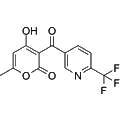
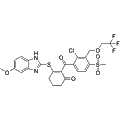
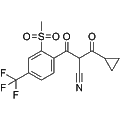
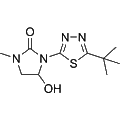
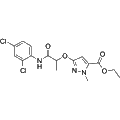
Herbicides are compounds that stop plant growth by blocking photosynthesis, amino acid synthesis or cell division. They are studied in plant biochemistry, weed resistance research and environmental analysis. Sulfonylureas such as nicosulfuron, and the triazolopyrimidine penoxsulam, inhibit acetolactate synthase (ALS), the first enzyme of branched-chain amino acid synthesis. Amicarbazone blocks electron transport at photosystem II, whereas diquat dibromide accepts electrons at photosystem I and generates reactive oxygen species. Propyzamide, a benzamide, disrupts microtubule assembly during plant cell division. Nitisinone inhibits 4-hydroxyphenylpyruvate dioxygenase (HPPD), the enzyme targeted by triketone herbicides, and is also used to study tyrosine metabolism.

Items 26-49 of 49

  • Monosulfuron
    Cat. No.
    A75371

    Monosulfuron

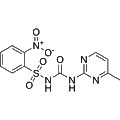
    Monosulfuron is a selective herbicide that functions as an acetolactate synthase (ALS) inhibitor, exhibiting a potent IC50 of 32 nmol/L against the CAU 3138 strain. It is primarily utilized to control a variety of broadleaf and grassy weeds in agricultural settings. Research applications include evaluating herbicide resistance mechanisms and studying the physiological effects of ALS inhibition on plant growth and development.

    5 mg
    $130.00
    10 mg
    $215.00
    All 3 sizes
  • DapL-IN-1
    Cat. No.
    A75389

    DapL-IN-1

    DapL-IN-1 is a selective inhibitor of L,L-diaminoheptanoic acid aminotransferase (DapL), demonstrating significant inhibitory effects on this target in both bacterial and plant systems. This compound’s unique mechanism of action allows for the potential design of novel biocides, including antibiotics, herbicides, and algaecides, while minimizing toxicity to non-target organisms. DapL-IN-1 exhibits varying sensitivity across different DapL homologues, providing valuable insights for future drug discovery efforts. Its interaction with residues near the active site may influence binding modes and contribute to its distinct biological activity.

    1 mg
    $235.00
    5 mg
    $590.00
    All 6 sizes
  • Arabenoic acid
    Cat. No.
    A75434

    Arabenoic acid

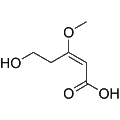
    Arabenoic acid is a natural product herbicide derived from fungi, functioning as a selective growth inhibitor. It effectively inhibits the growth of Arabidopsis thaliana, making it a valuable tool for studying plant physiology and herbicide resistance mechanisms. This compound is applicable in research focused on agricultural practices, plant growth regulation, and the development of novel herbicides.

    Out of stock

    All 3 sizes
  • Fluthiacet-methyl
    Cat. No.
    A75438

    Fluthiacet-methyl

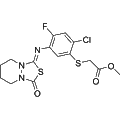
    Fluthiacet-methyl is an isoxazole herbicide that functions as a protoporphyrinogen oxidase (Protox) inhibitor. It effectively inhibits chlorophyll biosynthesis in sensitive plants, particularly in the cotyledons of velvetleaf and cotton, leading to significant electrolyte leakage. Additionally, Fluthiacet-methyl promotes the accumulation of protoporphyrin IX in cotton cotyledons, making it a valuable reagent for research into herbicide mechanisms and plant responses to chemical stressors.

    25 mg
    $495.00
    All 1 sizes
  • TKL-IN-2
    Cat. No.
    A75480

    TKL-IN-2

    TKL-IN-2 is a selective TKL inhibitor with an IC50 of 0.11 mg/L against SvTKL. This compound demonstrates strong herbicidal activity against key weeds such as Digitaria sanguinalis and Amaranthus retroflexus, while displaying safety profiles for major crops including maize, wheat, soybean, and cotton. TKL-IN-2 is valuable for research focused on developing effective weed control strategies in agricultural settings.

    Out of stock

    All 3 sizes
  • Pentoxazone
    Cat. No.
    A75492

    Pentoxazone

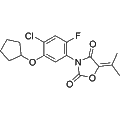
    Pentoxazone is a protoporphyrinogen IX oxidase (PPO) inhibitor that acts as an effective herbicide. By inhibiting chlorophyll and heme synthesis, it promotes the accumulation and oxidation of protoporphyrinogen IX, leading to the generation of singlet oxygen that damages cell membranes and induces cell death. Pentoxazone demonstrates significant efficacy in suppressing the fresh weight growth of various weed species, while exhibiting limited activity against weedy rice, making it a valuable tool for research into weed management in direct-seeding rice fields.

    10 mg
    $545.00
    All 1 sizes
  • Fenpyrazone
    Cat. No.
    A75497

    Fenpyrazone

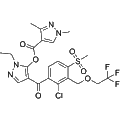
    Fenpyrazone is a selective inhibitor of 4-hydroxyphenylpyruvate dioxygenase (HPPD), serving as an effective post-emergence herbicide. This compound disrupts carotenoid biosynthesis in target plants, leading to chlorosis of new tissues and eventual necrosis, effectively controlling the growth of susceptible weed species. Fenpyrazone is particularly valuable in research focused on managing both annual monocotyledonous and dicotyledonous weeds in summer maize cultivation.

    Out of stock

    All 3 sizes
  • Flusulfinam
    Cat. No.
    A75501

    Flusulfinam

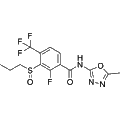
    Flusulfinam is a potent HPPD inhibitor, demonstrating an IC50 of 0.0181 μM against the HPPD enzyme in Arabidopsis thaliana. This compound effectively inhibits the catalytic activity of recombinant HPPD, leading to significant herbicidal action against various plant species, including barnyard grass (Echinochloa crus-galli) and Digitaria sanguinalis. Flusulfinam is valuable for research applications focused on herbicide development and the study of plant growth regulation.

    Out of stock

    All 3 sizes
  • Metazosulfuron
    Cat. No.
    A75507

    Metazosulfuron

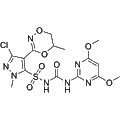
    Metazosulfuron is an acetolactate synthase (ALS) inhibitor serving as an effective herbicide. It is specifically designed for the control of pondweed (Potamogeton nodosus) and effectively prevents its regrowth in transplanted rice systems. Additionally, Metazosulfuron contributes to enhanced yields of rough rice grain, supporting agricultural productivity.

    1 mg
    $140.00
    All 1 sizes
  • Butroxydim
    Cat. No.
    A75511

    Butroxydim

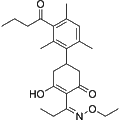
    Butroxydim is an acetyl-coenzyme A carboxylase (ACCase) inhibitor utilized as a selective herbicide. This compound effectively targets and controls herbicide-resistant populations of Hordeum leporinum, demonstrating significant efficacy against strains resistant to other ACCase inhibitors. It is therefore valuable for researchers studying herbicide resistance mechanisms and developing effective weed management strategies.

    Out of stock

    All 3 sizes
  • Carfentrazone-ethyl
    Cat. No.
    A75512

    Carfentrazone-ethyl

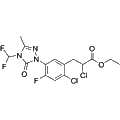
    Carfentrazone-ethyl is a selective post-emergence herbicide that acts as a protoporphyrinogen oxidase (Protox) inhibitor, exhibiting an IC50 value of 18 nM against soybean Protox. This compound effectively disrupts the biosynthesis of chlorophyll and heme, leading to the rapid death of susceptible weeds, such as ivy-leaved morning glory and velvetleaf. Its primary applications include the control of broadleaf weeds in various agricultural settings, making it a valuable tool in herbicide research and development.

    25 mg
    $105.00
    50 mg
    $165.00
    All 3 sizes
  • Flupropanate
    Cat. No.
    A75515

    Flupropanate

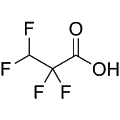
    Synonyms: 2,2,3,3-Tetrafluoropropionic acid; 3H-Tetrafluoropropionic acid

    Flupropanate is a selective herbicide that functions as a plant growth inhibitor by disrupting radicle growth and lipid biosynthesis in susceptible plants. It effectively controls Stipa weeds, including Nassella neesiana and N. trichotoma, while reducing the prevalence of the invasive species Eragrostis curvula. Flupropanate shows sensitivity to gramineous plants like ryegrass but exhibits good tolerance in species such as plantain, chicory, and some legumes. Research indicates that in Mediterranean climates, Flupropanate has minimal non-target impact on native plant communities and endangered species, demonstrating its ecological safety.

    10 mg
    $495.00
    All 1 sizes
  • Benzobicyclon
    Cat. No.
    A75694

    Benzobicyclon

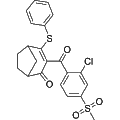
    Benzobicyclon is an effective 4-hydroxyphenylpyruvate dioxygenase (4-HPPD) inhibitor exhibiting herbicidal properties. It hydrolyzes in the presence of water to produce the active agent benzobicycline, leading to the bleaching and subsequent death of various weed species. This reagent demonstrates efficacy against grass, sedge, and broadleaf weeds, including biotypes that are resistant to sulfonylurea herbicides, making it a valuable tool for herbicide resistance research and weed management studies.

    2 mg
    $30.00
    5 mg
    $45.00
    All 6 sizes
  • Leptospermone
    Cat. No.
    A75695

    Leptospermone

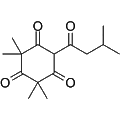
    Leptospermone is a competitive, reversible inhibitor of p-Hydroxyphenylpyruvate dioxygenase (HPPD), with an IC50 value of 12.1 μM. This compound demonstrates notable herbicidal activity characterized by its bleaching effects, making it valuable for research applications in plant physiology and herbicide development. Its inhibition of HPPD contributes to its utility in studies focused on metabolic pathways and herbicide resistance mechanisms.

    5 mg
    $150.00
    10 mg
    $250.00
    All 5 sizes
  • HPPD-IN-3
    Cat. No.
    A75696

    HPPD-IN-3

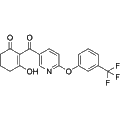
    HPPD-IN-3 is a potent inhibitor of 4-Hydroxyphenylpyruvate dioxygenase (HPPD) with an IC50 value of 10 nM, demonstrating superior efficacy compared to other HPPD inhibitors. This compound is valuable in studying the role of HPPD in various biochemical pathways and has potential applications in agricultural research and herbicide development. It serves as a key reagent for investigating metabolic processes related to phenylalanine catabolism and plant growth regulation.

    5 mg
    $295.00
    10 mg
    $485.00
    All 5 sizes
  • Fenquinotrione
    Cat. No.
    A75698

    Fenquinotrione

    Fenquinotrione is a potent HPPD (4-hydroxyphenylpyruvate dioxygenase) inhibitor, demonstrating IC50 values of 27.2 nM and 44.7 nM against HPPD in rice and Arabidopsis thaliana, respectively. This herbicide effectively controls a broad spectrum of broadleaf and sedge weeds while maintaining excellent selectivity for rice. Fenquinotrione's specificity makes it a valuable tool in agricultural research and weed management studies.

    5 mg
    $220.00
    All 1 sizes
  • HPPD-IN-4
    Cat. No.
    A75699

    HPPD-IN-4

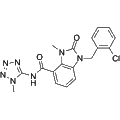
    HPPD-IN-4 is a selective inhibitor of 4-hydroxyphenylpyruvate dioxygenase (HPPD), exhibiting an IC50 value of 0.19 μM. This compound is primarily utilized in research focusing on the development of high-efficiency herbicides, helping to elucidate the role of HPPD in plant physiology and herbicide action. Its potent inhibition enhances understanding of HPPD mechanisms and potential agricultural applications.

    25 mg
    $1,275.00
    50 mg
    $1,625.00
    All 3 sizes
  • HPPD-IN-1
    Cat. No.
    A75700

    HPPD-IN-1

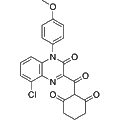
    HPPD-IN-1 is a potent inhibitor of 4-hydroxyphenylpyruvate dioxygenase (HPPD), exhibiting an IC50 of 0.248 μM against Arabidopsis thaliana HPPD. This compound demonstrates superior inhibitory activity compared to mesotrione, making it a valuable reagent in herbicide development. HPPD-IN-1 is effective in controlling a wide range of broadleaf and monocotyledonous weeds, indicating its potential application in agricultural research and crop protection strategies.

    Out of stock

    All 3 sizes
  • HPPD-IN-6
    Cat. No.
    A75701

    HPPD-IN-6

    HPPD-IN-6 is a highly selective inhibitor of hydroxyphenylpyruvate dioxygenase (HPPD) with demonstrated potent herbicidal activity. It effectively targets the growth of Echinochloa crus-galli and Leymus chinensis, including herbicide-resistant biotypes, exhibiting EC50 values ranging from 19.62 to 33.26 g of active ingredient per hectare. HPPD-IN-6 is suitable for controlling weeds in rice cultivation at application rates of 90-150 g of active ingredient per hectare and serves as a valuable reagent in herbicide development research.

    Out of stock

    All 3 sizes
  • RPA 202248
    Cat. No.
    A75702

    RPA 202248

    RPA 202248 is a potent inhibitor of p-hydroxy phenyl pyruvate dioxygenase (HPPD), serving as a degradation product of Isoxaflutole. This compound exhibits significant environmental persistence and is capable of migrating through soil matrices and macropores, contributing to subsurface drainage in agricultural environments. Its applications include research on herbicide efficacy and environmental impact assessments in agroecosystems.

    10 mg
    $165.00
    All 1 sizes
  • Buthidazole
    Cat. No.
    A77239

    Buthidazole

    Synonyms: VEL-5026

    Buthidazole is a selective herbicide that acts as a photosystem II inhibitor, targeting the photosynthetic electron transport chain. It inhibits electron transport at two distinct sites: the reducing and oxidizing sides of photosystem II, which disrupts the photosynthesis process in corn. This inhibition leads to reduced starch accumulation in bundle sheath chloroplasts and results in ultrastructural alterations in mesophyll chloroplasts, making Buthidazole a valuable tool for studying photosynthesis and weed control in agricultural research.

    25 mg
    $1,275.00
    50 mg
    $1,625.00
    All 3 sizes
  • Flurtamone
    Cat. No.
    A77856

    Flurtamone

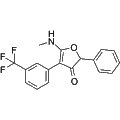
    Flurtamone is a chiral herbicide that targets plant growth through the inhibition of specific metabolic pathways. It exhibits acute toxicity to the freshwater algae Selenastrum capricornutum, making it valuable for studies on herbicidal effects and aquatic ecosystem impact. Flurtamone can be utilized in research focused on the development of sustainable agricultural practices and environmental safety assessments.

    5 mg
    $40.00
    10 mg
    $65.00
    All 5 sizes
  • Herbicidal agent 6
    Cat. No.
    A77985

    Herbicidal agent 6

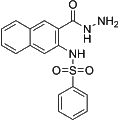
    Herbicidal agent 6 (D15) is a potent inhibitor of transketolase (TKL), specifically designed for herbicidal applications. This compound demonstrates significant herbicidal activity, effectively disrupting the metabolic pathways in target plants. Its mechanism of action positions it as a valuable tool for research in agricultural biotechnology and plant science, focusing on crop protection and weed management strategies.

    Out of stock

    All 3 sizes
  • Siderin
    Cat. No.
    A89706

    Siderin

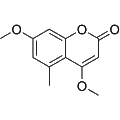
    Siderin is a potent inhibitor of Photosystem II, specifically affecting ATP synthesis and chloroplast electron transport during the process of photosynthesis in isolated spinach chloroplasts. This compound serves as a valuable tool for investigating the mechanisms of plant photosynthesis and its regulation. Siderin's ability to disrupt these critical pathways makes it essential for studying plant physiology and related biochemical processes.

    1 mg
    $335.00
    5 mg
    $875.00
    All 2 sizes

Items 26-49 of 49

Added to your cart

View Cart Checkout

    Loading...