
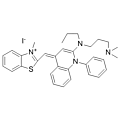
- Cat. No.
- A15072
Dye 937
Dye 937, substituted unsymmetrical cyanine dyes with selected permeability, useful in the detection of DNA in electrophoretic gels.
In stock
View Details
Search by product name, CAS, target or catalog number. Press Down Arrow to reach product suggestions, Tab to move between links, and Escape to close suggestions.
All Dyes is the single product list for the Fluorescent Dyes, Probes & Stains section. Many dyes here have no application or dye-family subcategory, so the list is the broadest way to browse the range. It suits searches by product name when the required dye is already known. Examples range from the near-infrared cyanine indocyanine green and the ratiometric calcium indicator Fura-2 pentapotassium to the nucleic acid stains Hoechst 33258 trihydrochloride and SYBR Green II. Classical stains such as hematoxylin, reactive labeling dyes and enzyme substrates are listed alongside them. For selection by task or by core structure, the parent Fluorescent Dyes, Probes & Stains page groups dyes by application and dye family.
Dye 937, substituted unsymmetrical cyanine dyes with selected permeability, useful in the detection of DNA in electrophoretic gels.
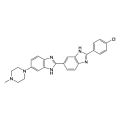
HOE 32020 is a Hoechst stain, which is a blue fluorescent dyes used to stain DNA.
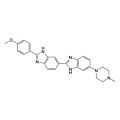
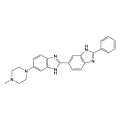
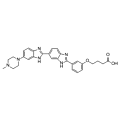
Hoechst 33258 analog is a cell dye for DNA quantitation.
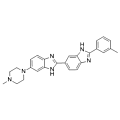
Hoechst 33258 analog 2 is a cell dye for DNA quantitation.
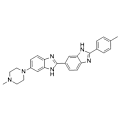
Hoechst 33258 analog 3 is a cell dye for DNA quantitation.
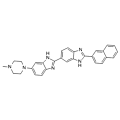
Hoechst 33258 analog 5 is a analog of Hoechst stains, which are part of a family of blue fluorescent dyes used to stain DNA.
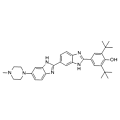
Hoechst 33258 analog 6 is a anglog of Hoechst stains(Hoechst 33258), which are part of a family of blue fluorescent dyes used to stain DNA.
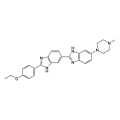
Synonyms: bisBenzimide H 33342; HOE 33342
Hoechst 33342 is a cell dye for DNA.
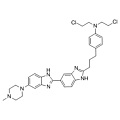
Hoechst 33342 analog is a nalog of Hoechst stains, which are part of a family of blue fluorescent dyes used to stain DNA.
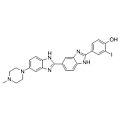
Hoechst 33342 analog 2 is a anglog of Hoechst stains, which are part of a family of blue fluorescent dyes used to stain DNA.
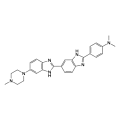
Synonyms: HOE 34580; Proamine
Hoechst 34580 is a cell dye for DNA.
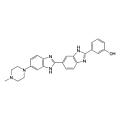
Synonyms: meta-Hoechst
HOE-S 785026 is a cell dye for DNA.
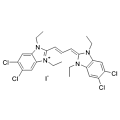
Synonyms: CBIC2
JC-1 is a dual-emission potential-sensitive probe that can be used to measure mitochondrial membrane potential.
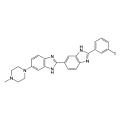
Synonyms: iodoHoechst 33258
Hoechst stains are part of a family of blue fluorescent dyes used to stain DNA.
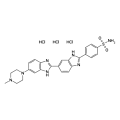
Nuclear yellow exhibits excitation/emission maxima ~335/495 nm when bound to DNA.
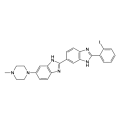
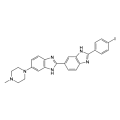
Synonyms: iodoHoechst 33258
Hoechst stains are part of a family of blue fluorescent dyes used to stain DNA. Hoechst 33258 is a cell dye for DNA quantitation.
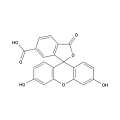
Synonyms: 6-FAM
The single isomer, 6-Carboxyfluorescein, contains a carboxylic acid that can be used to react with primary amines via carbodiimide activation of the carboxylic acid.
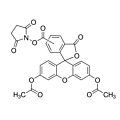
Synonyms: Carboxyfluorescein succinimidyl ester; CFDA-SE
CFSE is a fluorescent cell staining dye. CFSE is cell permeable and covalently couples, via its succinimidyl group, to intracellular molecules, notably, to intracellular lysine residues and other amine sources.
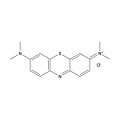
Synonyms: Basic Blue 9; Methylthioninium chloride; CI-52015
Methylene blue (Basic Blue 9) is used as a dye in chromoendoscopy, and is sprayed onto the mucosa of the gastrointestinal tract in order to identify dysplasia, or pre-cancerous lesions.
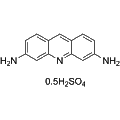
Synonyms: Proflavin hemisulfate
3,6-Diaminoacridine hemisulfate is an acridine compound that functions primarily as a broad-spectrum antimicrobial agent and a Kir3.2 potassium channel blocker. Its mechanism involves insertion into bacterial DNA, thereby disrupting replication and transcription, which ultimately leads to bacterial lysis. Additionally, this compound is utilized in research to investigate the neurological phenotype associated with Down syndrome. Due to its ability to penetrate the stratum corneum and accumulate in the cell nucleus, prolonged exposure warrants caution due to potential oncogenic effects.

Synonyms: FITC Biotin
Fluorescein biotin (FITC biotin) is a fluorescent biotin derivative and avidin and streptavidin ligand that contains a FITC fluorophore which displays excitation/emission maxima of 485/535 nm, respectively.
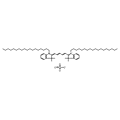
DiD perchlorate is a lipophilic cyanine dye.shown to stain HSCs.