All Dyes

All Dyes is the single product list for the Fluorescent Dyes, Probes & Stains section. Many dyes here have no application or dye-family subcategory, so the list is the broadest way to browse the range. It suits searches by product name when the required dye is already known. Examples range from the near-infrared cyanine indocyanine green and the ratiometric calcium indicator Fura-2 pentapotassium to the nucleic acid stains Hoechst 33258 trihydrochloride and SYBR Green II. Classical stains such as hematoxylin, reactive labeling dyes and enzyme substrates are listed alongside them. For selection by task or by core structure, the parent Fluorescent Dyes, Probes & Stains page groups dyes by application and dye family.

Items 2476-2500 of 2505

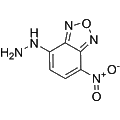
  • NBD-Hydrazine
    Cat. No.
    B11386

    NBD-Hydrazine

    NBD-Hydrazine is a fluorescent probe that reacts specifically with aldehydes and ketones, exhibiting excitation and emission maxima at 468 nm and 535 nm, respectively. This compound is instrumental in the synthesis of malondialdehyde-reactive fluorescent probes, facilitating studies related to lipid peroxidation. Additionally, NBD-Hydrazine serves as a synthetic intermediate in the development of colorimetric sensors for cupric and chronic ions, enhancing research in analytical chemistry and biosensing applications.

    1 mg
    $115.00
    2 mg
    $160.00
    All 3 sizes
  • ROX azide, 5-isomer
    Cat. No.
    B11388

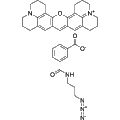
    ROX azide, 5-isomer

    ROX azide, 5-isomer is a red-emitting fluorescent dye known for its high brightness and fluorescence quantum yield. The presence of an azide group enables reactive conjugation with alkyne, BCN, and DBCO through Click Chemistry, resulting in a stable triazole linkage. This compound is widely utilized in cellular imaging and labeling applications, facilitating the study of biomolecular interactions and dynamics.

    Out of stock

    All 3 sizes
  • Carmine lithium
    Cat. No.
    B11389

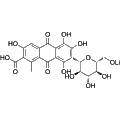
    Carmine lithium

    Carmine lithium is a natural red colorant derived from cochineal insects, classified within the coccid dye family. It is widely utilized in histological staining and as a biological marker due to its strong affinity for proteins and tissues. This reagent is essential for various research applications, including microscopy and cell imaging, enabling detailed visualization of biological samples.

    25 mg
    $1,275.00
    All 1 sizes
  • BP Fluor 430 DBCO
    Cat. No.
    B11390

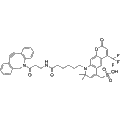
    BP Fluor 430 DBCO

    BP Fluor 430 DBCO is a fluorescent dye that reacts with azides through a copper-free click chemistry mechanism, resulting in stable triazole formations without the need for copper catalysts or elevated temperatures. This dye exhibits bright, photostable green fluorescence, with optimal excitation at 432 nm and an emission peak at 539 nm, remaining pH independent across a broad pH range. BP Fluor 430 DBCO is suitable for various labeling applications in bioimaging and bioconjugation, although it is not recommended for staining intracellular components of fixed and permeabilized cells due to potential high background fluorescence.

    Out of stock

    All 3 sizes
  • BP Fluor 405 picolyl azide
    Cat. No.
    B11391

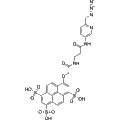
    BP Fluor 405 picolyl azide

    BP Fluor 405 Picolyl Azide is a fluorescent dye designed for enhanced detection in bioconjugation reactions, utilizing a copper-chelating motif to increase local Cu(I) concentrations. This innovative reagent significantly accelerates the copper-catalyzed azide-alkyne cycloaddition (CuAAC) reaction rate while minimizing the required copper catalyst concentration by at least tenfold. The incorporation of the picolyl azide moiety allows for greater sensitivity in alkyne detection, making it particularly advantageous for applications involving low-abundance targets or those requiring amplified signal intensity. This makes BP Fluor 405 an essential tool for researchers focusing on advanced fluorescent labeling techniques.

    Out of stock

    All 3 sizes
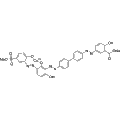
  • Direct brown 95
    Cat. No.
    B11392

    Direct brown 95

    Direct Brown 95 is a synthetic dye primarily utilized for coloring fabrics in the textile industry. Its applications extend to histology and cytology, where it aids in the differentiation of various cell types. Moreover, this dye serves as a molecular marker, enhancing the detection of nucleic acids such as DNA and RNA in laboratory analyses.

    25 mg
    $35.00
    50 mg
    $55.00
    All 4 sizes
  • Leucocrystal violet-d6
    Cat. No.
    B13355

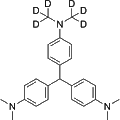
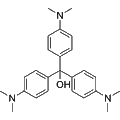
    Leucocrystal violet-d6

    Leucocrystal violet-d6 is a deuterium-labeled variant of Leucocrystal violet, a triphenylmethane dye. This reagent is primarily utilized for the spectrophotometric detection of antimony in various environmental and biological samples. Its stable isotope labeling enhances the accuracy and reliability of analytical measurements, facilitating research in environmental monitoring and biochemical analysis.

    1 mg
    $130.00
    All 1 sizes
  • Boc-Leu-Ser-Thr-Arg-AMC
    Cat. No.
    B19348

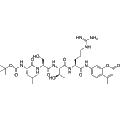
    Boc-Leu-Ser-Thr-Arg-AMC

    Boc-Leu-Ser-Thr-Arg-AMC is a fluorogenic substrate designed for the detection of protease activity. Its amino acid sequence is optimized for specificity, enabling enhanced fluorescence upon cleavage by various proteases. This compound serves as a valuable tool for studying proteolytic processes in biochemical research and assays.

    1 mg
    $225.00
    5 mg
    $785.00
    All 2 sizes
  • Tozuleristide
    Cat. No.
    B19417

    Tozuleristide

    Tozuleristide is a tumor-targeting agent covalently linked to a near-infrared fluorescent dye, indocyanine green (ICG). This compound exhibits the ability to effectively penetrate the blood-brain barrier, making it particularly useful in the visualization of brain tumors. Tozuleristide is applicable in research focused on fluorescence-guided surgery (FGS), enhancing surgical precision and tumor resection outcomes.

    Out of stock

    All 3 sizes
  • Karanjachromene
    Cat. No.
    B19523

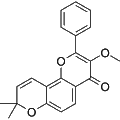
    Karanjachromene

    Karanjachromene is a fluorescent pyranoflavonoid derived from the seed oil of Pongamia pinnata. This compound exhibits significant biological activity as a photostable fluorescent probe. Its unique fluorescent properties make it valuable for various research applications, including cellular imaging and studying biological interactions in live cell systems.

    Out of stock

    All 3 sizes
  • BIBD-300
    Cat. No.
    B19727

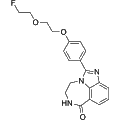
    BIBD-300

    BIBD-300 is a high-affinity PARP-1 imaging agent designed for precise localization of tumors. It effectively delineates C6 and U87MG tumor models, making it a valuable tool for research in the diagnostic imaging of various cancers, including breast, prostate, glioma, and liver cancers. This selective targeting enhances the potential for improved cancer detection and monitoring in preclinical studies.

    25 mg
    $1,410.00
    50 mg
    $1,880.00
    All 3 sizes
  • Filricianine
    Cat. No.
    B19772

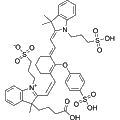
    Filricianine

    Filricianine is a diagnostic imaging agent that primarily targets the vascular system. It enhances visualization and characterization of blood vessels and tissue perfusion in various imaging modalities, including magnetic resonance imaging (MRI). This reagent is utilized in clinical settings for assessing vascular integrity and diagnosing related conditions, providing critical support in patient management and treatment planning.

    Out of stock

    All 3 sizes
  • Relmapirazin
    Cat. No.
    B20230

    Relmapirazin

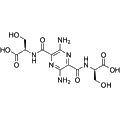
    Synonyms: MB-102

    Relmapirazin is a fluorescent tracer agent primarily utilized for the real-time measurement of glomerular filtration rate (GFR). It facilitates the accurate assessment of kidney function in both preclinical and clinical research settings. Its ability to provide real-time tracking of renal filtration processes enhances the study of kidney diseases and nephrotoxicity in pharmacological research.

    25 mg
    $1,275.00
    50 mg
    $1,625.00
    All 3 sizes
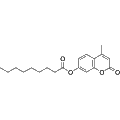
  • 4-Methylumbelliferyl nonanoate
    Cat. No.
    B20329

    4-Methylumbelliferyl nonanoate

    4-Methylumbelliferyl nonanoate is a fluorogenic substrate specifically designed for the detection of esterases. Upon hydrolysis, it produces 4-methylumbelliferone, which exhibits bright blue fluorescence. This compound is widely utilized in studying esterase activity in various biological samples and can help in elucidating enzyme kinetics and substrate specificity in research applications.

    100 mg
    $95.00
    250 mg
    $160.00
    All 3 sizes
  • Solvent red 52
    Cat. No.
    B21299

    Solvent red 52

    Synonyms: Fluorescent red H5B

    Solvent Red 52 is a fluorescent dye primarily utilized for its vibrant red color in various applications. It exhibits strong absorbance and fluorescence properties, making it suitable for use in the dyeing of plastic materials and other substrates. Additionally, this compound can be employed in biological research settings for tracking and visualizing cellular processes.

    10 mg
    $250.00
    25 mg
    $360.00
    All 3 sizes
  • Toluidine Blue
    Cat. No.
    B21300

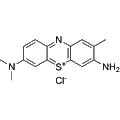
    Toluidine Blue

    Synonyms: Toluidine Blue O

    Toluidine Blue, an alkaline quinonimine dye, demonstrates a strong affinity for acidic tissue components, effectively staining nuclei blue and polysaccharides purple. This reagent exhibits heterostaining properties, enabling visualization of mast cells, mucins, and chondrocytes. Additionally, Toluidine Blue is employed in the histological analysis of plant tissues and is utilized as a diagnostic aid for identifying malignant lesions, including cancerous tissues. Its versatile staining capabilities make it a valuable tool in both medical and botanical research applications.

    100 mg
    $25.00
    200 mg
    $30.00
    All 7 sizes
  • 1,4-Bis(mesitylamino)anthraquinone
    Cat. No.
    B21301

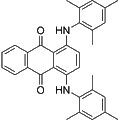
    1,4-Bis(mesitylamino)anthraquinone

    1,4-Bis(mesitylamino)anthraquinone is a multifunctional dye with notable applications in biological research. This compound serves as a vital tool for observing and analyzing cellular structures, tracking biomolecules, and evaluating cell functions. Its versatility extends to distinguishing cell types, detecting biomolecules, studying tissue pathology, and monitoring microorganisms. Beyond fundamental research, this dye is also employed in various clinical diagnostics and traditional textile dyeing, as well as in innovative areas such as functional textile processing, food pigmentation, and dye-sensitized solar cells.

    100 mg
    $20.00
    1 g
    $50.00
    All 2 sizes
  • Solvent violet 9
    Cat. No.
    B21321

    Solvent violet 9

    Solvent Violet 9 is a DNA binding dye that intercalates between base pairs in double-stranded DNA. It exhibits fluorescence upon binding, making it useful for visualizing nucleic acids in various applications, including gel electrophoresis and fluorescence microscopy. This compound serves as an important tool for researchers studying DNA interactions, quantification, and overall nucleic acid analysis.

    100 mg
    $55.00
    250 mg
    $100.00
    All 5 sizes
  • OrangeIV
    Cat. No.
    B21451

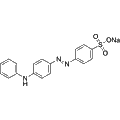
    OrangeIV

    OrangeIV is an azo dye known for its vibrant coloration and versatility in chemical applications. It plays a significant role in click chemistry, facilitating the formation of diverse chemical structures through covalent bonding. OrangeIV is widely utilized in various research contexts, including organic synthesis and the development of fluorescent probes.

    Out of stock

    All 3 sizes
  • 4-Amino-3-hydroxynaphthalene-1-sulfonic acid
    Cat. No.
    B21483

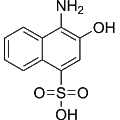
    4-Amino-3-hydroxynaphthalene-1-sulfonic acid

    4-Amino-3-hydroxynaphthalene-1-sulfonic acid is a fluorescent dye that exhibits notable optical properties, making it suitable for various imaging applications. This compound can form polypyrrole (PPy) conducting films in combination with pyrrole, thereby facilitating studies in electrochemistry. Its unique fluorescence characteristics allow for enhanced detection and visualization in biochemical assays.

    25 mg
    $20.00
    50 mg
    $25.00
    All 4 sizes
  • Disperse violet 8
    Cat. No.
    B21515

    Disperse violet 8

    Disperse violet 8 is a fluorescent dye that exhibits strong absorbance and emission properties in the violet spectrum. It is widely utilized in biological research for labeling and imaging applications, allowing for the visualization of cellular components and processes. This compound is particularly valuable in studies involving fiber dyeing and the assessment of tissue samples.

    25 mg
    $1,275.00
    50 mg
    $1,625.00
    All 3 sizes
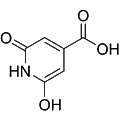
  • Citrazinic acid
    Cat. No.
    B21527

    Citrazinic acid

    Citrazinic acid is a weakly fluorescent compound that exhibits optical properties influenced by its aggregation states and surrounding chemical environment. At elevated concentrations, Citrazinic acid tends to form dimers, which can significantly impact its fluorescence characteristics. This compound is useful for studies requiring fluorescence detection and can aid in understanding molecular interactions and environmental effects on fluorescence properties.

    10 g
    $20.00
    25 g
    $30.00
    All 2 sizes
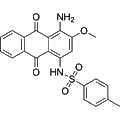
  • Disperse red 86
    Cat. No.
    B21566

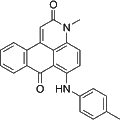
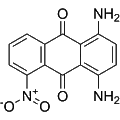
    Disperse red 86

    Disperse Red 86 is a fluorescent dye primarily targeting anthraquinone derivatives. Exhibiting vibrant red fluorescence, this compound is widely utilized in various applications including biological imaging, textile dyeing, and cosmetic formulations. Its ability to provide strong coloration and stability makes it an essential reagent for research in fluorescence microscopy and material sciences.

    25 mg
    $1,275.00
    50 mg
    $1,625.00
    All 3 sizes
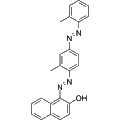
  • Sudan IV
    Cat. No.
    B21568

    Sudan IV

    Synonyms: Solvent Red 24; C.I. 26105

    Sudan IV is a fat-soluble disazo dye that functions as an agonist of the aryl hydrocarbon receptor (AhR), activating downstream signaling pathways and inducing the expression of CYP1A1. This compound enhances CYP1A1 gene transcription through the formation of AhR-ARNT heterodimers and binding to xenobiotic response elements (XREs) in DNA, thereby increasing drug-metabolizing enzyme activity. Sudan IV is utilized in research to investigate the toxicity mechanisms associated with industrial dyes and to explore the effects of serum protein interactions, such as with bovine serum albumin (BSA), on in vivo distribution. Additionally, it serves as a stain for lipids, triglycerides, and lipoproteins in frozen tissue sections.

    100 mg
    $20.00
    500 mg
    $30.00
    All 4 sizes
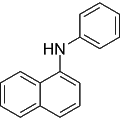
  • N-Phenylnaphthalen-1-amine
    Cat. No.
    B21659

    N-Phenylnaphthalen-1-amine

    N-Phenylnaphthalen-1-amine functions as a fluorescence probe targeting odorant-binding proteins (OBP) with a dissociation constant of 1.67 μM. This compound fluoresces strongly when incorporated into the inner phospholipid bilayer of Gram-negative bacteria, making it useful for assessing outer membrane permeability. With an excitation wavelength of 337 nm and an emission wavelength of 407 nm, N-Phenylnaphthalen-1-amine serves as a valuable tool in the study of membrane dynamics and protein interactions.

    1 mg
    $20.00
    25 g
    $25.00
    All 5 sizes

Items 2476-2500 of 2505

Added to your cart

View Cart Checkout

    Loading...