All Dyes

All Dyes is the single product list for the Fluorescent Dyes, Probes & Stains section. Many dyes here have no application or dye-family subcategory, so the list is the broadest way to browse the range. It suits searches by product name when the required dye is already known. Examples range from the near-infrared cyanine indocyanine green and the ratiometric calcium indicator Fura-2 pentapotassium to the nucleic acid stains Hoechst 33258 trihydrochloride and SYBR Green II. Classical stains such as hematoxylin, reactive labeling dyes and enzyme substrates are listed alongside them. For selection by task or by core structure, the parent Fluorescent Dyes, Probes & Stains page groups dyes by application and dye family.

Items 2451-2475 of 2505

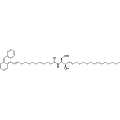
  • C10 AV Ceramide (d18:1/10:0)
    Cat. No.
    B11360

    C10 AV Ceramide (d18:1/10:0)

    Synonyms: Anthrylvinyl ceramide; AV Ceramide; AV Ceramide (d18:1/10:0)

    C10 AV Ceramide (d18:1/10:0) is a fluorescent probe designed to measure CERT-mediated lipid transfer. The anthrylvinyl (AV) group functions as a fluorescent label attached to the amide-linked acyl chain of the ceramide molecule, facilitating visualization within cellular membranes. Its anthrylvinyl component localizes to the hydrophobic region of the lipid bilayer, enhancing the study of lipid dynamics and transport mechanisms in biological systems. This reagent is valuable for research in cell biology and membrane dynamics.

    Out of stock

    All 3 sizes
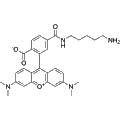
  • LysoFP-NH2
    Cat. No.
    B11361

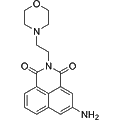
    LysoFP-NH2

    LysoFP-NH2 is a lysosomal-targeted fluorescent probe characterized by its amino acid functionalized derivatives. This compound selectively detects nitric oxide (NO) levels within lysosomes of living cells, making it a valuable tool for studying lysosomal function and dynamics. Its applications extend to various research areas, including cell biology, pharmacology, and toxicology, providing insights into lysosomal signaling pathways and cellular responses.

    1 mg
    $95.00
    5 mg
    $290.00
    All 3 sizes
  • 6-TAMRA cadaverine
    Cat. No.
    B11362

    6-TAMRA cadaverine

    6-TAMRA cadaverine is a fluorescent dye primarily utilized for oligonucleotide labeling and automated DNA sequencing. The amino group (NH2) exhibits reactivity with carboxylic acids, activated NHS esters, and carbonyls, including ketones and aldehydes. This versatility makes 6-TAMRA cadaverine a valuable tool for various molecular biology applications, facilitating the visualization and characterization of nucleic acids.

    Out of stock

    All 3 sizes
  • R6G azide, 5-isomer
    Cat. No.
    B11363

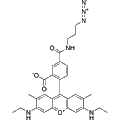
    R6G azide, 5-isomer

    R6G azide, 5-isomer is a xanthene-derived fluorescent dye characterized by a terminal azide group. This compound can undergo Click Chemistry with alkynes, BCN, and DBCO, forming a stable triazole linkage. Its unique structure and fluorescent properties make it suitable for a range of applications, including bioimaging and labelling studies in chemical research.

    Out of stock

    All 3 sizes
  • Pinacyanol chloride
    Cat. No.
    B11364

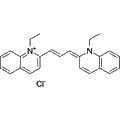
    Pinacyanol chloride

    Synonyms: Quinaldine blue

    Pinacyanol chloride is a cyanine dye primarily utilized for its staining properties. It exhibits strong affinity for cellular components, making it effective in staining chromosomes in histological studies and bacteria in biochemical assays. This reagent is instrumental in enhancing the visualization of cell structures, aiding researchers in cellular and microbiological investigations.

    Out of stock

    All 3 sizes
  • Disperse orange 3
    Cat. No.
    B11365

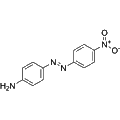
    Disperse orange 3

    Disperse Orange 3 is a monoazo fluorescent dye known for its notable absorption peak at 415 nm. This compound contains two aromatic rings, with one ring featuring an amino group and the other being modified with a nitro group. Disperse Orange 3 is primarily utilized in biological staining and imaging applications, making it suitable for research involving cell visualization and assay development.

    25 mg
    $50.00
    50 mg
    $70.00
    All 5 sizes
  • Difluorocarboxyfluorescein NHS Ester, 6-isomer
    Cat. No.
    B11366

    Difluorocarboxyfluorescein NHS Ester, 6-isomer

    Difluorocarboxyfluorescein NHS Ester, 6-isomer is an amine-reactive fluorescent dye known for its enhanced photostability and lower pKa (approximately 4.7), which renders its fluorescence largely pH insensitive within physiological ranges. This dye is particularly suitable for the labeling of proteins, peptides, and nucleotides, offering significant improvements in resolution during HPLC purification when utilizing a single isomer. Researchers benefit from the dye's favorable characteristics in various applications, enabling precise tracking and analysis of biomolecules in complex biochemical studies.

    Out of stock

    All 3 sizes
  • BP Fluor 532 azide plus
    Cat. No.
    B11367

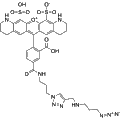
    BP Fluor 532 azide plus

    BP Fluor 532 Azide Plus is a fluorescent dye featuring a terminal azide group, primarily used in click chemistry applications. With a maximum absorption at 532 nm and emission at 554 nm, this compound exhibits robust fluorescence properties. Its unique structure incorporates a copper-chelating system, facilitating the formation of stable copper complexes that function as both reactants and catalysts in CuAAC (Copper-catalyzed Azide-Alkyne Cycloaddition) reactions, making it ideal for a variety of biological and chemical research applications.

    Out of stock

    All 3 sizes
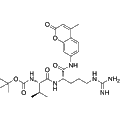
  • Boc-Val-Arg-AMC
    Cat. No.
    B11368

    Boc-Val-Arg-AMC

    Boc-Val-Arg-AMC is a synthetic peptide compound designed as a specific fluorescent substrate. It is selectively cleaved by enzymes such as thrombin, resulting in the release of the fluorescent molecule 7-amino-4-methylcoumarin (AMC). This compound is valuable for monitoring thrombin activity in various biological samples, including plasma, and has applications in enzyme activity assays and protease research.

    Out of stock

    All 3 sizes
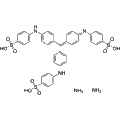
  • Aniline blue diammonium
    Cat. No.
    B11369

    Aniline blue diammonium

    Aniline blue diammonium is a vital dye commonly utilized in histological staining techniques, specifically for collagen fibers. It effectively stains collagen blue in tissue sections through Masson's trichrome protocol and is also employed for selective staining of callose in plant specimens. Additionally, Aniline blue diammonium is used in Gomori's one-step trichrome stain and Mallory's connective tissue stain, aiding in the assessment of nuclear maturity through histone staining in various tissues, including kidney and intestine.

    5 g
    $205.00
    10 g
    $310.00
    All 4 sizes
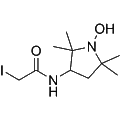
  • 3-(2-Iodoacetamido)-proxyl
    Cat. No.
    B11370

    3-(2-Iodoacetamido)-proxyl

    3-(2-Iodoacetamido)-proxyl is a fluorescent dye that functions as a free radical spin probe, primarily utilized in spin labeling techniques. This compound is instrumental for investigating dynamic interactions within biological systems, including molecules, proteins, lipids, and cell membranes. Its properties make it valuable for research applications that require detailed analysis of molecular behavior in various environments.

    10 mg
    $360.00
    25 mg
    $455.00
    All 3 sizes
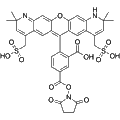
  • BP Fluor 568 NHS ester
    Cat. No.
    B11371

    BP Fluor 568 NHS ester

    BP Fluor 568 NHS ester is an amine-reactive fluorescent dye targeting primary amines in proteins, antibodies, and amine-modified oligonucleotides. With excitation and emission wavelengths of 578 nm and 602 nm, respectively, it enables robust labeling and tracking of biomolecules in various applications. This dye is ideal for use in fluorescence microscopy, flow cytometry, and other imaging techniques to study protein interactions and dynamics.

    Out of stock

    All 3 sizes
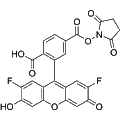
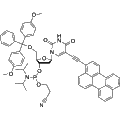
  • Perylene dU phosphoramidite
    Cat. No.
    B11372

    Perylene dU phosphoramidite

    Perylene dU phosphoramidite is a photostable fluorescent dye derived from polycyclic aromatic hydrocarbons (PAHs) that exhibits a high quantum yield. Its fluorescence lifetime is short, preventing excimer formation and ensuring distinct signal generation. This reagent is designed for incorporation into DNA during automated oligonucleotide synthesis, enabling advanced imaging and detection applications in molecular biology and biochemistry research.

    Out of stock

    All 3 sizes
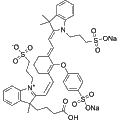
  • Filricianine sodium
    Cat. No.
    B11373

    Filricianine sodium

    Filricianine sodium is a hydrophilic fluorochrome known for its ability to efficiently bind to antibodies at higher dye-to-protein (D/P) ratios. It exhibits excellent fluorescence properties, making it suitable for various research applications including western blotting, microscopy, flow cytometry, and cell-based assays. This reagent enables enhanced visualization and analysis of target molecules in biological samples.

    Out of stock

    All 3 sizes
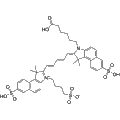
  • Sulfo Cy5.5-COOH
    Cat. No.
    B11374

    Sulfo Cy5.5-COOH

    Sulfo-Cy5.5-COOH is a sulfonated fluorescent dye characterized by the presence of both a sulfonic acid group and a carboxylic acid group. This dye exhibits strong fluorescence in the near-infrared region, making it suitable for applications requiring deep tissue penetration. It is commonly utilized in in vivo imaging, molecular labeling, and compatibility with various bioconjugation techniques.

    Out of stock

    All 3 sizes
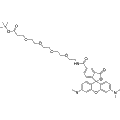
  • TAMRA-PEG4-t-butyl ester
    Cat. No.
    B11375

    TAMRA-PEG4-t-butyl ester

    TAMRA-PEG4-t-butyl ester is a fluorescent dye that targets red fluorescence, with an excitation and emission maxima of 553 nm and 575 nm, respectively. This compound features a t-butyl protected carboxyl group that is readily deprotected under acidic conditions. It is primarily utilized in cellular imaging and labeling applications, contributing to the study of biochemical processes and interactions within biological systems.

    Out of stock

    All 3 sizes
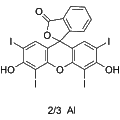
  • Erythrosine B aluminum
    Cat. No.
    B11376

    Erythrosine B aluminum

    Synonyms: Tetraiodofluorescein aluminum

    Erythrosine B aluminum is a fluorescent dye with colorimetric properties that targets a wide range of Gram-positive and Gram-negative bacteria. Its vibrant red color makes it suitable for live/dead cell assays, enabling the differentiation of viable from non-viable cells. This reagent is applicable in various experimental designs, including colorimetric and fluorescence-based assays, accommodating low to high-throughput screening needs.

    1 mg
    $25.00
    5 mg
    $60.00
    All 6 sizes
  • C11-BODIPY 505/515 Glucosyl ceramide
    Cat. No.
    B11377

    C11-BODIPY 505/515 Glucosyl ceramide

    C11-BODIPY 505/515 Glucosyl ceramide is a fluorescent lipid conjugate, labeled with C11-BODIPY 505/515, designed for advanced research applications in lipid nanoparticle formulation. This compound exhibits strong fluorescence properties with excitation/emission wavelengths of 505/515 nm, enabling tracking and visualization of lipid-based drug delivery systems. Its utility extends to studies on cellular uptake mechanisms and lipid metabolism, making it a valuable tool for researchers investigating lipid interactions in biological systems.

    Out of stock

    All 3 sizes
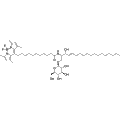
  • BP Fluor 647 Alkyne
    Cat. No.
    B11378

    BP Fluor 647 Alkyne

    BP Fluor 647 Alkyne is a fluorescent dye characterized by its bright green fluorescence and optimal excitation with 633 and 650 nm Argon lasers. The alkyne moiety enables efficient reactions with azides through copper-catalyzed Click Chemistry. With its four sulfonate groups, this dye demonstrates excellent water solubility and reduced aggregation across a pH range of 4 to 10. BP Fluor 647 Alkyne is ideal for applications in protein and antibody labeling, as well as nucleic acid studies, allowing for high labeling density.

    Out of stock

    All 3 sizes
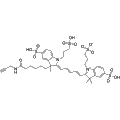
  • Tetra-sulfo-Cy7 DBCO
    Cat. No.
    B11380

    Tetra-sulfo-Cy7 DBCO

    Tetra-sulfo-Cy7 DBCO is a highly fluorescent near-infrared dye designed for applications requiring low background noise and high sensitivity. This water-soluble, hydrophilic probe exhibits remarkable photostability and maintains consistent fluorescence across a pH range of 4 to 10, minimizing autofluorescence interference in biological samples. Tetra-sulfo-Cy7 DBCO is ideal for use in various imaging techniques, where its long-wavelength emission is optimized for detection by advanced imaging systems.

    Out of stock

    All 3 sizes
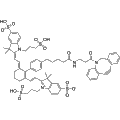
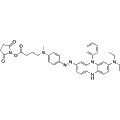
  • UBQ-3 NHS ester
    Cat. No.
    B11381

    UBQ-3 NHS ester

    UBQ-3 NHS Ester is a fluorescent dye characterized by its terminal N-hydroxysuccinimide (NHS) ester group. The compound exhibits a broad emission spectrum ranging from 620 to 730 nm, making it an excellent acceptor for fluorescence resonance energy transfer (FRET) applications when paired with far-red to near-infrared emitting dyes, such as Cy5 and Alexa Fluor variants. This NHS ester can effectively label primary amines (-NH2) found on proteins, amine-modified oligonucleotides, and other amine-containing biomolecules, facilitating various biochemical and molecular biology research applications.

    Out of stock

    All 3 sizes
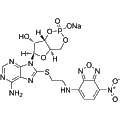
  • 8-NBD-cAMP sodium
    Cat. No.
    B11382

    8-NBD-cAMP sodium

    8-NBD-cAMP sodium is a fluorescently labeled analogue of cyclic adenosine monophosphate (cAMP) that serves as a valuable tool for studying cAMP signaling pathways. It retains the biological activity of cAMP by binding to key proteins such as exchange protein directly activated by cAMP (EPAC) and protein kinase A (PKA). This reagent is particularly useful in fluorescent competitive binding assays to assess the binding affinity of novel EPAC1 agonists for EPAC1 proteins, facilitating research in cellular signaling and pharmacology.

    Out of stock

    All 3 sizes
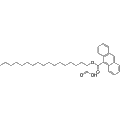
  • 2-AS
    Cat. No.
    B11383

    2-AS

    Synonyms: 2-(9-Anthroyloxy)stearic acid

    2-AS is a fluorescent probe designed to monitor the microenvironment and dynamic changes within biofilms. Its ability to provide real-time insights makes it essential for studying biofilm formation, stability, and behavior under varying conditions. This reagent is particularly valuable in microbiology and biotechnology research, facilitating a deeper understanding of microbial interactions and biofilm-related processes.

    Out of stock

    All 3 sizes
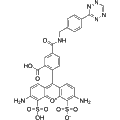
  • BP Fluor 488 Tetrazine
    Cat. No.
    B11384

    BP Fluor 488 Tetrazine

    BP Fluor 488 Tetrazine is a bright green-fluorescent dye that serves as a highly effective probe for detecting TCO-tagged biopolymers. Its remarkable cycloaddition kinetics, reaching up to 30,000 M-1 s-1 with trans-cyclooctenes (TCO), make it the fastest reported for any bioorthogonal reaction. This compound is particularly valuable for applications requiring rapid reaction kinetics, such as in vivo cancer imaging and pre-targeted cell labeling studies.

    Out of stock

    All 3 sizes
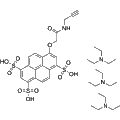
  • BP Fluor 405 alkyne triTEA
    Cat. No.
    B11385

    BP Fluor 405 alkyne triTEA

    BP Fluor 405 alkyne triTEA is a blue-fluorescent dye that serves as a versatile labeling reagent in multi-color applications, including flow cytometry and super-resolution microscopy techniques like STORM. It exhibits optimal excitation around the 407 nm spectral line of krypton lasers and the 408 nm violet laser diode. This dye participates in copper-catalyzed azide-alkyne cycloaddition (CuAAC), yielding a stable triazole linker upon reaction with azides. Additionally, a copper-free alternative, BP Fluor 405 DBCO, is available for applications sensitive to copper presence.

    Out of stock

    All 3 sizes
Items 2451-2475 of 2505

Added to your cart

View Cart Checkout

    Loading...