All Dyes

All Dyes is the single product list for the Fluorescent Dyes, Probes & Stains section. Many dyes here have no application or dye-family subcategory, so the list is the broadest way to browse the range. It suits searches by product name when the required dye is already known. Examples range from the near-infrared cyanine indocyanine green and the ratiometric calcium indicator Fura-2 pentapotassium to the nucleic acid stains Hoechst 33258 trihydrochloride and SYBR Green II. Classical stains such as hematoxylin, reactive labeling dyes and enzyme substrates are listed alongside them. For selection by task or by core structure, the parent Fluorescent Dyes, Probes & Stains page groups dyes by application and dye family.

Items 2426-2450 of 2505

  • 7-(2,4-Dinitrophenoxy)-4-methyl-2H-chromen-2-one
    Cat. No.
    B11332

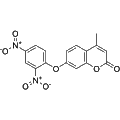
    7-(2,4-Dinitrophenoxy)-4-methyl-2H-chromen-2-one

    7-(2,4-Dinitrophenoxy)-4-methyl-2H-chromen-2-one is a highly sensitive fluorescent probe designed for the detection of hydrogen sulfide (H2S). It offers excellent selectivity with a low detection limit of 4×10^-6 mol/L and displays minimal cytotoxicity at concentrations up to 150 µg/mL. In DMSO solvent, this compound exhibits an excitation peak at 331 nm and an emission peak near 385 nm, with a pronounced increase in fluorescence intensity observed at approximately 392 nm upon the addition of H2S. This makes it a valuable tool for biological research applications involving H2S monitoring.

    1 mg
    $100.00
    5 mg
    $300.00
    All 4 sizes
  • C11-BODIPY 505/515 Ceramide-1-phosphate ammonium
    Cat. No.
    B11333

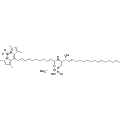
    C11-BODIPY 505/515 Ceramide-1-phosphate ammonium

    C11-BODIPY 505/515 Ceramide-1-phosphate ammonium is a fluorescent lipid derived from C11-BODIPY 505/515, specifically designed to study lipid membrane dynamics. This compound exhibits strong fluorescence with excitation and emission wavelengths of 505 nm and 515 nm, respectively. It serves as a valuable tool for preparing lipid nanoparticles for drug delivery applications, enabling researchers to track lipid incorporation and behavior within biological systems.

    Out of stock

    All 3 sizes
  • Cy3.5 carboxylic acid
    Cat. No.
    B11334

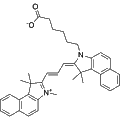
    Cy3.5 carboxylic acid

    Cy3.5 carboxylic acid is a fluorescent dye characterized by its carboxylic acid functional group, which readily engages with amines to form stable amide bonds. As a cyanine dye, it exhibits excitation and emission maxima at 576 nm and 603 nm, respectively. This dye is commonly utilized in various biological research applications, including imaging, labeling, and tracking of biomolecules in cellular assays and fluorescence microscopy. Its effective fluorescence characteristics make it an ideal choice for studies requiring precise visualization of target molecules.

    1 mg
    $155.00
    5 mg
    $395.00
    All 2 sizes
  • BP Fluor 488
    Cat. No.
    B11335

    BP Fluor 488

    BP Fluor 488 is a fluorescent dye with a primary mechanism of selectively labeling aldehydes and ketones in polysaccharides and glycoproteins. With an excitation peak at 499 nm and an emission peak at 520 nm, BP Fluor 488 enables enhanced visualization in applications such as microscopy and flow cytometry. Its vibrant green fluorescence makes it a valuable tool for researchers studying complex biological structures and interactions.

    Out of stock

    All 3 sizes
  • Cy3 hydrazide
    Cat. No.
    B11337

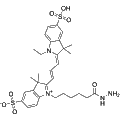
    Cy3 hydrazide

    Cy3 hydrazide is a cyanine dye linker designed for the selective labeling of carbonyl-containing molecules, including aldehydes and ketones. This reagent effectively labels proteins such as antibodies and glycoproteins following periodate oxidation, as well as proteins affected by oxidative stress or deamination. Cy3 hydrazide is suitable for various fluorescent applications and is compatible with a wide range of fluorescence instrumentation, facilitating advanced biochemical and cellular studies.

    Out of stock

    All 3 sizes
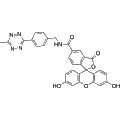
  • FAM tetrazine, 5-isomer
    Cat. No.
    B11339

    FAM tetrazine, 5-isomer

    FAM tetrazine, 5-isomer is a fluorescent dye characterized by its terminal tetrazine group, facilitating rapid click chemistry reactions with trans-cyclooctene (TCO). This compound serves as a versatile labeling agent in various biological applications, including protein tagging, cellular imaging, and detection of biomolecular interactions. Its high fluorescence and effective reactivity make it a valuable tool for researchers in fields such as biochemistry and molecular biology.

    Out of stock

    All 3 sizes
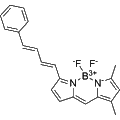
  • PBD-BODIPY
    Cat. No.
    B11340

    PBD-BODIPY

    PBD-BODIPY is a fluorescent dye designed for the spectrophotometric assessment of autoxidation reactions. This compound enables the quantification of co-autoxidation between the PBD-BODIPY signal carrier and hydrocarbon co-substrates through the monitoring of absorbance loss at 591 nm. It is effectively utilized to evaluate the activity of radical-trapping antioxidants in cell-free assays and serves as a fluorescent probe for detecting epoxidation activity in various biological contexts.

    0.5 mg
    $180.00
    1 mg
    $265.00
    All 3 sizes
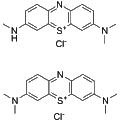
  • Azure II
    Cat. No.
    B11341

    Azure II

    Azure II is a vital nuclear stain utilized in histological and cytological applications. This synthetic dye primarily binds to nucleic acids, facilitating the visualization of cellular structures under a microscope. Its strong affinity for nuclei makes it invaluable for studying cellular morphology and identifying cellular abnormalities in various tissue samples. Azure II is commonly employed in research focused on cell biology, pathology, and histochemistry.

    25 mg
    $20.00
    50 mg
    $25.00
    All 6 sizes
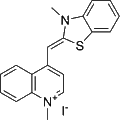
  • (Z)-Thiazole Orange iodide
    Cat. No.
    B11342

    (Z)-Thiazole Orange iodide

    (Z)-Thiazole Orange iodide is a fluorescent dye primarily utilized for nucleic acid detection. Its fluorescence is enhanced significantly upon binding to double-stranded DNA and RNA, increasing by up to a thousandfold in these environments. With a maximum absorption wavelength of 509 nm and an emission peak at 532 nm, this dye is valuable for applications such as determining reticulocyte percentages in human peripheral blood using microscopy and flow cytometry.

    Out of stock

    All 3 sizes
  • WSP2
    Cat. No.
    B11343

    WSP2

    WSP2 is a turn-on fluoresonance probe designed for the selective detection of sulfane sulfur species. It exhibits a significant increase in fluorescence upon binding to sulfane sulfur, enabling researchers to monitor the presence and dynamics of these reactive sulfur species in biological systems. This compound is suitable for applications in biochemistry, pharmacology, and physiological studies where understanding sulfane sulfur's role is critical.

    Out of stock

    All 3 sizes
  • BP Fluor 350 NHS ester
    Cat. No.
    B11344

    BP Fluor 350 NHS ester

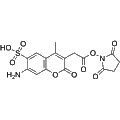
    BP Fluor 350 NHS ester is a fluorescent dye that reacts with primary amines to form stable covalent amide bonds, functioning optimally at pH 7-9. This water-soluble, blue-emitting compound is ideal for labeling and tracking biomolecules in various biochemical assays. It is particularly suited for applications requiring specific modification of amine groups in proteins, peptides, and other amine-containing substrates, enhancing visualization in fluorescence-based experiments.

    1 mg
    $220.00
    5 mg
    $505.00
    All 3 sizes
  • BP Fluor 350 Azide Plus
    Cat. No.
    B11345

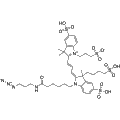
    BP Fluor 350 Azide Plus

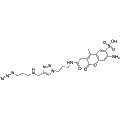
    BP Fluor 350 Azide Plus is a fluorescent dye characterized by its terminal azide group. This compound exhibits maximum absorption at 340 nm and emission at 440 nm, making it suitable for various imaging applications. The incorporation of a copper-chelating system facilitates the formation of robust copper complexes, serving as both reactants and catalysts in copper-catalyzed azide-alkyne cycloaddition (CuAAC) reactions. It is ideally suited for studies requiring efficient labeling and detection in biological systems.

    Out of stock

    All 3 sizes
  • Palladium meso-tetra(pentafluorophenyl)porphyrin
    Cat. No.
    B11346

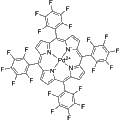
    Palladium meso-tetra(pentafluorophenyl)porphyrin

    Synonyms: PdTFPP; 5,10,15,20-Tetrakis(pentafluorophenyl)-21H,23H-porphine palladium(II)

    Palladium meso-tetra(pentafluorophenyl)porphyrin (PdTFPP) is a phosphorescent dye that functions as a potent singlet oxygen sensitizer owing to its metal center and high fluorine content. This compound exhibits exceptional photostability and oxidation resistance, making it suitable for various fluorescence-based research applications. PdTFPP is particularly valuable in photodynamic therapy studies and in the investigation of reactive oxygen species in biological systems.

    5 mg
    $25.00
    10 mg
    $40.00
    All 5 sizes
  • BP Fluor 555 azide
    Cat. No.
    B11347

    BP Fluor 555 azide

    BP Fluor 555 Azide is a fluorescent dye designed for the labeling of biomolecules through copper-catalyzed or copper-free click chemistry. Exhibiting bright orange fluorescence, it has optimal excitation wavelengths of 532 nm and 555 nm, making it suitable for imaging applications with TRITC filter sets. The dye demonstrates pH insensitivity from pH 4 to pH 10, facilitating the detection of low-abundance targets when conjugated to antibodies, peptides, or proteins. Its high brightness and photostability enhance the visibility and reliability of fluorescent imaging techniques in various biological research applications.

    Out of stock

    All 3 sizes
  • BP Fluor 430 alkyne
    Cat. No.
    B11348

    BP Fluor 430 alkyne

    BP Fluor 430 Alkyne is a green-fluorescent alkyne-activated probe designed for the imaging of azide-containing biomolecules with moderate to high abundance. It utilizes a copper-catalyzed azide-alkyne cycloaddition (CuAAC) reaction to produce a stable triazole linker. This probe exhibits bright and photostable fluorescence, optimally excited near 430 nm, and is water-soluble, maintaining pH-independent fluorescence across a wide range. Applications include cellular imaging and visualization of biomolecular interactions.

    Out of stock

    All 3 sizes
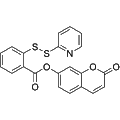
  • 4-Methyl-7-(4-nitrophenoxy)-2H-chromen-2-one
    Cat. No.
    B11349

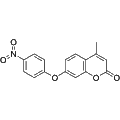
    4-Methyl-7-(4-nitrophenoxy)-2H-chromen-2-one

    4-Methyl-7-(4-nitrophenoxy)-2H-chromen-2-one is a fluorescent dye belonging to the coumarin class, exhibiting excitation and emission maxima at 323 nm and 445 nm, respectively. This compound is widely utilized in biological research applications including cell imaging, fluorescence microscopy, and tracking cellular processes. Its bright fluorescence and photostability make it an advantageous tool for studying various biological phenomena.

    1 mg
    $85.00
    5 mg
    $255.00
    All 4 sizes
  • MB 660R DBCO
    Cat. No.
    B11350

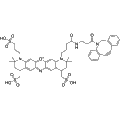
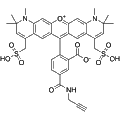
    MB 660R DBCO

    MB 660R DBCO is a far-red fluorescent dye, exhibiting strong fluorescence emission at approximately 685 nm. With an absorption maximum at around 665 nm, it can be effectively excited using 633 or 635 nm lasers. This dye is characterized by high water solubility and maintains stability across a broad pH range from 4 to 10. Its robust photostability and brightness make MB 660R DBCO suitable for various applications in fluorescent imaging and labeling in biological research.

    Out of stock

    All 3 sizes
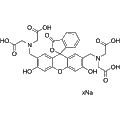
  • Calcein sodium salt
    Cat. No.
    B11351

    Calcein sodium salt

    Calcein sodium salt is a fluorescent dye that serves as a self-quenching probe, primarily utilized for assessing lipid vesicle leakage. It acts as a complexometric indicator for titrating calcium ions with EDTA and can be employed in the fluorometric determination of calcium concentration. Unlike its cell-permeable counterpart, Calcein-AM, Calcein itself does not penetrate intact cell membranes, making it suitable for in vitro studies. Additionally, it is useful as a model compound for evaluating the efficiency and bioavailability of drug delivery systems.

    1 g
    $20.00
    5 g
    $50.00
    All 3 sizes
  • BP Fluor 405 DBCO
    Cat. No.
    B11352

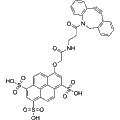
    BP Fluor 405 DBCO

    BP Fluor 405 DBCO is a blue-fluorescent dye that utilizes copper-free click chemistry for targeted labeling of azides, resulting in stable triazole formation. Its excitation wavelength is optimal for use with the 407 nm spectral line of the krypton laser or the 408 nm violet laser diode. This dye is particularly useful in multi-color applications such as flow cytometry and super-resolution microscopy techniques like STORM, enabling precise visualization in complex biological samples.

    Out of stock

    All 3 sizes
  • NK 19 diiodide
    Cat. No.
    B11354

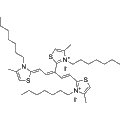
    NK 19 diiodide

    NK 19 diiodide is a photosensitive cyanin dye that acts as an immunomodulator by influencing the immunological functions of impaired lymphocytes. Its unique properties make it suitable for research applications involving wound healing and burn treatment. This compound aids in understanding immune responses and therapeutic strategies in these contexts.

    10 mg
    $400.00
    25 mg
    $1,275.00
    All 3 sizes
  • BP Fluor 594 alkyne
    Cat. No.
    B11355

    BP Fluor 594 alkyne

    BP Fluor 594 alkyne is a fluorescent dye designed for the specific imaging of azide-containing biomolecules. This probe utilizes a copper-catalyzed azide-alkyne cycloaddition (CuAAC) mechanism to react with azides, resulting in the formation of a stable triazole linkage. Its bright red fluorescence makes it an effective tool for various biological research applications, particularly in tracking biomolecular interactions and localization studies.

    Out of stock

    All 3 sizes
  • R6G phosphoramidite, 6-isomer
    Cat. No.
    B11356

    R6G phosphoramidite, 6-isomer

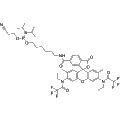
    R6G phosphoramidite, 6-isomer, is a fluorescent dye that serves as a versatile building block for oligonucleotide synthesis. This xanthene dye from the rhodamine family exhibits a high fluorescence quantum yield and a significant molar extinction coefficient, making it ideal for a variety of labeling applications. With absorption and emission maxima shifted to longer wavelengths at 518 nm and 542 nm, respectively, R6G is particularly suitable for applications requiring enhanced fluorescence sensitivity and stability in nucleic acid studies and other biotechnological fields.

    Out of stock

    All 3 sizes
  • BODIPY 564/570
    Cat. No.
    B11357

    BODIPY 564/570

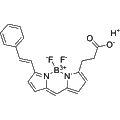
    BODIPY 564/570 is a fluorescent dye that targets superparamagnetic nanoparticles (MNPs) for advanced imaging applications. With a maximal excitation wavelength of 564 nm and a maximal emission wavelength of 570 nm, this compound is highly suitable for various fluorescence-based studies. Its distinct optical properties make it ideal for cellular imaging and tracking of nanoparticle behavior in biological systems.

    1 mg
    $160.00
    5 mg
    $345.00
    All 6 sizes
  • CDy9
    Cat. No.
    B11358

    CDy9

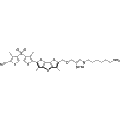
    CDy9 is a selective fluorescent probe designed for the identification of mouse embryonic stem cells through fluorescence microscopy. This probe exhibits excitation and emission maxima at 563 nm and 578 nm, respectively, making it suitable for biological imaging applications. CDy9 plays a crucial role in stem cell research by enabling the visualization of cellular behaviors and characteristics in experimental settings.

    Out of stock

    All 3 sizes
  • EE-Flipper 33
    Cat. No.
    B11359

    EE-Flipper 33

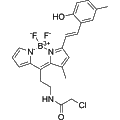
    EE-Flipper 33 is a Flipper probe with a primary mechanism targeting early endocytosis. This reagent has a pKa value of 10.6 and is capable of tracking approximately 70% of early endosomes (EE) in live cells, providing valuable insights into endocytic pathways. Additionally, EE-Flipper 33 can label the Golgi apparatus in live cells within an internal pH range of 6.0 to 6.7, making it a versatile tool for cellular imaging and studies of intracellular trafficking.

    25 mg
    $2,160.00
    50 mg
    $2,770.00
    All 3 sizes

Items 2426-2450 of 2505

Added to your cart

View Cart Checkout

    Loading...