All Dyes

All Dyes is the single product list for the Fluorescent Dyes, Probes & Stains section. Many dyes here have no application or dye-family subcategory, so the list is the broadest way to browse the range. It suits searches by product name when the required dye is already known. Examples range from the near-infrared cyanine indocyanine green and the ratiometric calcium indicator Fura-2 pentapotassium to the nucleic acid stains Hoechst 33258 trihydrochloride and SYBR Green II. Classical stains such as hematoxylin, reactive labeling dyes and enzyme substrates are listed alongside them. For selection by task or by core structure, the parent Fluorescent Dyes, Probes & Stains page groups dyes by application and dye family.

Items 576-600 of 2505

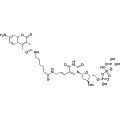
  • AMCA-6-dUTP
    Cat. No.
    A43833

    AMCA-6-dUTP

    AMCA-6-dUTP is a labeling dye specifically designed for enzymatic labeling of DNA and cDNA. This nucleotide analog incorporates the fluorescent AMCA moiety, facilitating the detection and quantification of nucleic acids in various molecular biology applications. It is ideal for studies involving in situ hybridization, PCR, and other techniques requiring sensitive visualization of DNA and cDNA.

    Out of stock

    All 3 sizes
  • Mag-Fura-2 tetrapotassium
    Cat. No.
    A43834

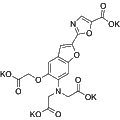
    Mag-Fura-2 tetrapotassium

    Mag-Fura-2 tetrapotassium is a cell-impermeant fluorescent indicator designed to selectively measure magnesium (Mg2+) and calcium (Ca2+) ion concentrations. It exhibits UV-excitable fluorescence with excitation wavelengths between 334-360 nm and emission at 510 nm. This reagent is widely utilized in cellular and molecular biology research for monitoring intracellular ion levels, aiding in the understanding of various physiological processes and signaling pathways.

    Out of stock

    All 3 sizes
  • LYCBX
    Cat. No.
    A43835

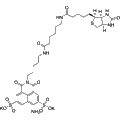
    LYCBX

    LYCBX is a fluorescent biotin derivative of Lucifer Yellow designed for use as a neuronal tracer. It enables the visualization of neuronal structures and connections, facilitating studies in neuroanatomy and neural circuit mapping. This reagent is valuable in research applications involving the investigation of synaptic development and neurodegenerative diseases.

    Out of stock

    All 3 sizes
  • APTAB
    Cat. No.
    A43838

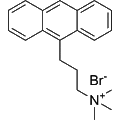
    APTAB

    APTAB is a fluorescent cationic membrane probe that targets lipid bilayers. It effectively identifies anthracene-labeled molecules within model membranes through fluorescence quenching, enabling detailed studies of membrane dynamics and interactions. APTAB is suitable for various research applications, including membrane permeability assessment and the investigation of molecular interactions within lipid environments.

    Out of stock

    All 3 sizes
  • 5-Nitro BAPTA
    Cat. No.
    A43842

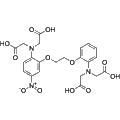
    5-Nitro BAPTA

    5-Nitro BAPTA is a calcium chelator that effectively binds Ca2+ ions. This compound serves as a foundational building block for the synthesis of Ca2+-specific chelators, buffers, and fluorescent indicators such as the red fluorescent probe CaTM-2 AM, which enables the imaging of cytoplasmic Ca2+ in live cultured cells. Its applications extend to various aspects of calcium signaling research, making it valuable for studying cellular processes influenced by calcium levels.

    Out of stock

    All 3 sizes
  • Calcium Green BAPTA-2 AM
    Cat. No.
    A43843

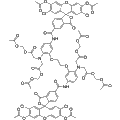
    Calcium Green BAPTA-2 AM

    Calcium Green BAPTA-2 AM is a fluorescent calcium indicator that selectively binds to free calcium ions, allowing for the measurement of intracellular calcium levels. Its high sensitivity and rapid response make it ideal for studying calcium signaling in live cells. This reagent is widely used in pharmacological studies and cellular imaging applications to investigate various physiological processes related to calcium dynamics.

    Out of stock

    All 3 sizes
  • DiSC18(3)
    Cat. No.
    A43844

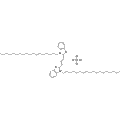
    DiSC18(3)

    Synonyms: 3,3'-Dioctadecylthiacarbocyanine perchlorate

    DiSC18(3) is a lipophilic carbocyanine dye designed for membrane labeling. It effectively integrates into lipid bilayers, enabling the visualization of membrane dynamics and organization. This dye is widely utilized in cell biology research for studying cellular structures, membrane trafficking, and lipid interactions, making it a valuable tool for investigating membrane-related processes.

    Out of stock

    All 3 sizes
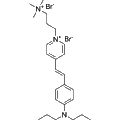
  • 3,3'-Diheptylthiacarbocyanine iodide
    Cat. No.
    A43845

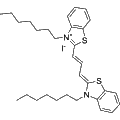
    3,3'-Diheptylthiacarbocyanine iodide

    3,3'-Diheptylthiacarbocyanine iodide is a cyanine fluorescent dye that targets membrane potential. This compound exhibits excitation at 562 nm and emission at 575 nm, making it suitable for studies involving cellular membrane dynamics. Its ability to accurately measure changes in membrane potential enables its use in various biological research applications, including electrophysiology and cell signaling.

    Out of stock

    All 3 sizes
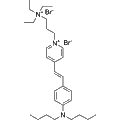
  • H2TPTBP
    Cat. No.
    A43846

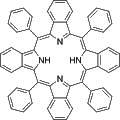
    H2TPTBP

    H2TPTBP is a small molecule ion indicator that selectively detects cations through fluorescence. It exhibits high sensitivity and specificity, making it a valuable tool for studying ion transport and cellular processes. Its applications include monitoring ion concentrations in various biological systems and investigating ion-related signaling pathways in research settings.

    Out of stock

    All 3 sizes
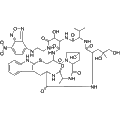
  • DiOC7(3)
    Cat. No.
    A43847

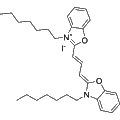
    DiOC7(3)

    Synonyms: 3,3'-Diheptyloxacarbocyanine iodide

    DiOC7(3) (3,3'-Diheptyloxacarbocyanine iodide) is a membrane potential dye that quantitatively assesses cellular membrane potential changes. This probe exhibits green fluorescence with excitation at 450-490 nm and emission at 510-520 nm, making it suitable for a variety of biomedical research applications. It is particularly useful in studies investigating vascular densities and cellular health in various biological contexts.

    Out of stock

    All 3 sizes
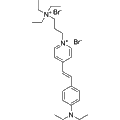
  • 1,4-Diacetoxy-2,3-dicyanobenzene
    Cat. No.
    A43848

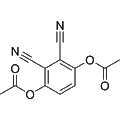
    1,4-Diacetoxy-2,3-dicyanobenzene

    1,4-Diacetoxy-2,3-dicyanobenzene is a cell-permeable fluorescent probe that targets cytosolic esterases. Upon penetrating the cell membrane, it is cleaved to yield the fluorescent pH indicator 2,3-dicyano-hydroquinone (DCH). This compound is useful for monitoring intracellular pH changes, making it a valuable tool in cellular biology and biochemical research.

    5 mg
    $175.00
    10 mg
    $485.00
    All 3 sizes
  • C12-NBD-ceramide
    Cat. No.
    A43849

    C12-NBD-ceramide

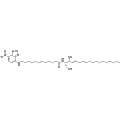
    C12-NBD-ceramide is a fluorescent analogue of ceramide with the primary mechanism of serving as a substrate in ceramidase assays. Its unique fluorescent properties facilitate the visualization and quantification of ceramide metabolism in various biological systems. This compound is valuable for research applications involving lipid signaling and metabolism, offering insights into ceramide's role in cell biology and disease.

    1 mg
    $745.00
    5 mg
    $1,530.00
    All 2 sizes
  • C12 NBD Lactosylceramide
    Cat. No.
    A43850

    C12 NBD Lactosylceramide

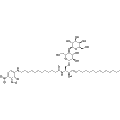
    C12 NBD Lactosylceramide is a fluorescent dye derived from Lactosylceramide, conjugated with a C12 NBD group. This compound is utilized for the specific identification and visualization of lactosylceramides in biological systems. Its fluorescence properties make it an invaluable tool in studies of glycosphingolipid biology and cellular membrane dynamics. Researchers can employ C12 NBD Lactosylceramide in various applications, including cell imaging and lipid trafficking investigations.

    1 mg
    $1,140.00
    All 1 sizes
  • DiOC3(3)
    Cat. No.
    A43851

    DiOC3(3)

    Synonyms: 3,3'-Dipropyloxacarbocyanine iodide

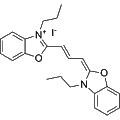
    DiOC3(3) (3,3'-Dipropyloxacarbocyanine iodide) is a lipophilic fluorescent dye that targets cell membranes due to its high membrane permeability. This green fluorescent compound is widely used for staining cell membranes and other lipid-soluble biological structures, making it a valuable tool in cellular biology and membrane studies. Its application extends to various research areas, including live cell imaging and analysis of membrane dynamics.

    5 mg
    $55.00
    10 mg
    $90.00
    All 5 sizes
  • 2-Aminopurine dihydrochloride
    Cat. No.
    A43852

    2-Aminopurine dihydrochloride

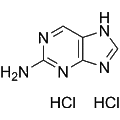
    2-Aminopurine dihydrochloride is a fluorescent analog of guanosine that serves as a nucleic acid fluorescence probe. This compound exhibits significant utility in the study of DNA structure and dynamics, providing insights into nucleic acid interactions and conformational changes. When integrated into DNA, 2-Aminopurine dihydrochloride effectively quenches fluorescence, enabling detailed analysis of nucleic acid behavior in various biological contexts.

    100 mg
    $170.00
    500 mg
    $585.00
    All 2 sizes
  • BODIPY TR methyl ester
    Cat. No.
    A43853

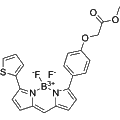
    BODIPY TR methyl ester

    BODIPY TR methyl ester is a lipophilic dye that serves as a GFP counterstain, primarily targeting endomembranous organelles. This red fluorescent vital dye exhibits excitation at 568 nm and emission at 625 nm, allowing for effective visualization of cell nuclei and cellular morphology within embryonic tissues. It is particularly useful for delineating the boundaries of organ-forming tissues throughout the embryo, thereby enhancing the study of developmental processes.

    1 mg
    $155.00
    5 mg
    $395.00
    All 2 sizes
  • FG 488 DHPE
    Cat. No.
    A43854

    FG 488 DHPE

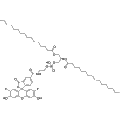
    FG 488 DHPE is a lipid-conjugated fluorescent dye that serves as an effective fluorophore, emitting at 534 nm when excited at 508 nm. It is utilized to monitor the acidification of lipid vesicles, making it valuable in studies of membrane dynamics. Additionally, FG 488 DHPE can quantify Hv1-induced proton translocation, facilitating research in cellular physiology and signaling pathways.

    Out of stock

    All 3 sizes
  • 18:1 PE CF
    Cat. No.
    A43856

    18:1 PE CF

    Synonyms: 1,2-dioleoyl-sn-glycero-3-phosphoethanolamine-N-(carboxyfluorescein) ammonium

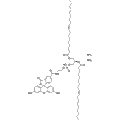
    18:1 PE CF is a pH-sensitive fluorescent membrane probe designed for labeling phospholipid ethanolamine lipids. Featuring a fluorescein moiety, this compound exhibits robust fluorescence in its conjugated base form while being a weak acid. It is primarily utilized in studies requiring visualization of membrane dynamics, providing insights into cellular processes and lipid interactions.

    Out of stock

    All 3 sizes
  • C12 NBD Globotriaosylceramide
    Cat. No.
    A43857

    C12 NBD Globotriaosylceramide

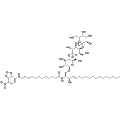
    C12 NBD Globotriaosylceramide is a fluorescent dye that targets glycosphingolipids. This compound is an active derivative of globotriaosylceramide, labeled with a C12 nitrobenzoxadiazole (NBD) group, allowing for effective detection and visualization of ceramide trihexoside. It is primarily utilized in studies involving lipid metabolism and cellular signaling, providing insights into the role of sphingolipids in biological processes.

    Out of stock

    All 3 sizes
  • 1-(3',6'-Bis(ethylamino)-2',7'-dimethyl-3-oxospiro[isoindoline-1,9'-xanthen]-2-yl)-3-phenylurea
    Cat. No.
    A43858

    1-(3',6'-Bis(ethylamino)-2',7'-dimethyl-3-oxospiro[isoindoline-1,9'-xanthen]-2-yl)-3-phenylurea

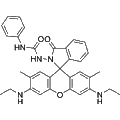
    1-(3',6'-Bis(ethylamino)-2',7'-dimethyl-3-oxospiro[isoindoline-1,9'-xanthen]-2-yl)-3-phenylurea functions as a fluorescent probe for the selective detection of gold ions. This compound exhibits rapid fluorescence response upon interaction with gold ions, making it useful for monitoring gold ion concentrations in various aqueous environments and synthetic applications. Its effectiveness in identifying gold ions underscores its potential utility in environmental monitoring and material science research.

    Out of stock

    All 3 sizes
  • NerveGreen C3
    Cat. No.
    A43861

    NerveGreen C3

    NerveGreen C3 is a cationic styrene-based fluorescent dye that targets neuronal structures. It exhibits strong fluorescence properties, making it ideal for tracking synaptic activity at neuromuscular junctions and synapses. This reagent is particularly useful in studies of neural communication and synaptic function, providing valuable insights into neurological research.

    Out of stock

    All 3 sizes
  • NerveGreen C1
    Cat. No.
    A43862

    NerveGreen C1

    NerveGreen C1 is a fluorescent dye characterized by an excitation wavelength of 500 nm and an emission wavelength of 615 nm. This compound is designed for the detection and visualization of nerve cells, making it a valuable tool in neurobiological research. Its high sensitivity enables effective imaging and analysis of neuronal structures and dynamics in various experimental settings.

    Out of stock

    All 3 sizes
  • N-(7-Nitrobenzofurazan-4-yl)phallacidin
    Cat. No.
    A43863

    N-(7-Nitrobenzofurazan-4-yl)phallacidin

    N-(7-Nitrobenzofurazan-4-yl)phallacidin is a fluorochrome that selectively binds to F-actin, allowing for the visualization of actin filaments in various cell types. This reagent is essential for studies involving cytoskeletal dynamics, cell motility, and morphology. It is utilized in fluorescence microscopy and other imaging techniques to enhance the understanding of actin-related biological processes.

    Out of stock

    All 3 sizes
  • FM 2-10
    Cat. No.
    A43864

    FM 2-10

    FM 2-10 is a fluorescent dye designed for the labeling of neuronal activity. As a less hydrophobic derivative of FM 1-43, it enables the identification of actively firing neurons and is particularly useful in studying the mechanisms of activity-dependent vesicle cycling. FM 2-10 is instrumental in research related to synaptic function and neurotransmitter release.

    Out of stock

    All 3 sizes
  • Dabcyl acid sodium
    Cat. No.
    A43865

    Dabcyl acid sodium

    Synonyms: DABCYL sodium; Para-methyl red sodium

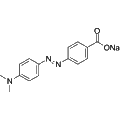
    Dabcyl acid sodium is a nonfluorescent chromophore that functions as an efficient fluorescent quencher. This compound is commonly employed in molecular beacon nucleic acid probes, enabling the specific detection and reporting of targeted nucleic acids in homogeneous solutions. Its application in fluorescence-based assays enhances the sensitivity and specificity of nucleic acid detection, making it a valuable tool in molecular biology research.

    25 mg
    $1,275.00
    50 mg
    $1,625.00
    All 3 sizes

Items 576-600 of 2505

Added to your cart

View Cart Checkout

    Loading...