All Dyes

All Dyes is the single product list for the Fluorescent Dyes, Probes & Stains section. Many dyes here have no application or dye-family subcategory, so the list is the broadest way to browse the range. It suits searches by product name when the required dye is already known. Examples range from the near-infrared cyanine indocyanine green and the ratiometric calcium indicator Fura-2 pentapotassium to the nucleic acid stains Hoechst 33258 trihydrochloride and SYBR Green II. Classical stains such as hematoxylin, reactive labeling dyes and enzyme substrates are listed alongside them. For selection by task or by core structure, the parent Fluorescent Dyes, Probes & Stains page groups dyes by application and dye family.

Items 601-625 of 2505

  • Gd-NMC-3
    Cat. No.
    A43866

    Gd-NMC-3

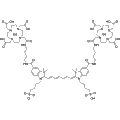
    Gd-NMC-3 is a near-infrared fluorescence and magnetic resonance bimodal imaging probe designed for enhanced tumor imaging. It exhibits high resolution and sensitivity, making it a valuable tool for in vivo imaging applications. Its favorable biocompatibility supports its potential use in research aimed at improving tumor detection and characterization.

    Out of stock

    All 3 sizes
  • INDO 1
    Cat. No.
    A43868

    INDO 1

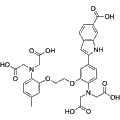
    INDO 1 is a cell-impermeant fluorescent calcium indicator that selectively binds to Ca2+, leading to a shift in emission wavelength from 485 nm to 410 nm upon binding. This property makes INDO 1 valuable for monitoring intracellular calcium levels in various biological research applications, including studies of signal transduction and cellular activity. Its robust fluorescent response allows for precise measurements, facilitating advancements in understanding calcium-related physiological processes.

    Out of stock

    All 3 sizes
  • Fura PE-3 potassium
    Cat. No.
    A43869

    Fura PE-3 potassium

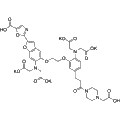
    Fura PE-3 potassium is a calcium-sensitive fluorophore designed for the measurement of intracellular calcium concentrations. This reagent is particularly effective for loading into intrapulmonary arteries (IPA) and mesenteric resistance arteries (MA), facilitating the study of vasoconstriction mechanisms. Fura PE-3 potassium is widely utilized in calcium imaging applications, enhancing the understanding of vascular function and calcium-related signaling pathways in various biological contexts.

    Out of stock

    All 3 sizes
  • FURA-PE3/AM
    Cat. No.
    A43870

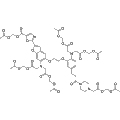
    FURA-PE3/AM

    FURA-PE3/AM is a fluorescent calcium indicator dye designed to detect intracellular calcium levels. Its leak-resistant properties enhance signal fidelity during cellular imaging, making it suitable for applications in studies of calcium signaling dynamics in live cells. This reagent is widely utilized in diverse research fields, including neurobiology and pharmacology, to investigate calcium-dependent cellular processes.

    Out of stock

    All 3 sizes
  • Ethidium monoazide bromide
    Cat. No.
    A43871

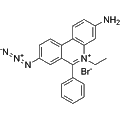
    Ethidium monoazide bromide

    Ethidium monoazide bromide is a DNA intercalating fluorescent dye specifically targeting nucleic acids in cells with compromised membranes. Upon photoactivation, this compound covalently binds to DNA, enabling the selective staining of dead cells. Additionally, it serves as a versatile click chemistry reagent, containing an azide group that can participate in copper-catalyzed azide-alkyne cycloaddition (CuAAc) or strain-promoted alkyne-azide cycloaddition (SPAAC) with alkyne-functionalized molecules. Ethidium monoazide bromide is valuable in microbiological studies and cellular viability assays.

    1 mg
    $320.00
    5 mg
    $1,035.00
    All 2 sizes
  • 4,4-Difluoro-8-(4'-iodophenyl)-1,7-bis-(1'-napthyl)-4-bora-3alpha,4alpha-diaza-s-indacene
    Cat. No.
    A43872

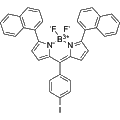
    4,4-Difluoro-8-(4'-iodophenyl)-1,7-bis-(1'-napthyl)-4-bora-3alpha,4alpha-diaza-s-indacene

    4,4-Difluoro-8-(4'-iodophenyl)-1,7-bis-(1'-napthyl)-4-bora-3alpha,4alpha-diaza-s-indacene is a fluorescent dye that effectively targets DNA for sequencing applications. Its strong fluorescence and specific spectral properties make it suitable for detecting and analyzing nucleic acids in various research settings. This compound is a valuable tool in molecular biology and genomics, enhancing the accuracy and efficiency of DNA sequencing protocols.

    Out of stock

    All 3 sizes
  • FIM-1
    Cat. No.
    A43873

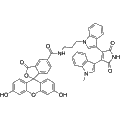
    FIM-1

    FIM-1 is a fluorescent probe specifically targeting protein kinase C (PKC), functioning as an ATP-competitive catalytic site inhibitor. This compound exhibits notable inhibitory effects on PKC activity, making it valuable for mitochondrial staining in various biological research applications. Researchers can utilize FIM-1 to explore signaling pathways involving PKC and to investigate mitochondrial dynamics and functions in cellular contexts.

    Out of stock

    All 3 sizes
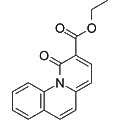
  • Ethyl benzo[6,7]-4-oxo-4H-quinolizine-3-carboxlate
    Cat. No.
    A43874

    Ethyl benzo[6,7]-4-oxo-4H-quinolizine-3-carboxlate

    Ethyl benzo[6,7]-4-oxo-4H-quinolizine-3-carboxlate functions as a selective fluorescent indicator for magnesium ions (Mg2+). This compound exhibits strong fluorescence in the presence of Mg2+, making it a valuable tool for biochemical assays and cellular imaging studies. Its specificity for Mg2+ allows researchers to investigate magnesium ion dynamics in various biological systems.

    Out of stock

    All 3 sizes
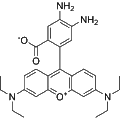
  • 5,6-Diamino-N,N,N',N'-tetraethyl-rhodamin
    Cat. No.
    A43877

    5,6-Diamino-N,N,N',N'-tetraethyl-rhodamin

    5,6-Diamino-N,N,N',N'-tetraethyl-rhodamin is a fluorescent indicator specifically designed for the detection of nitric oxide (NO). This compound exhibits strong fluorescence properties that facilitate the visualization and quantification of NO levels in biological systems. It is widely utilized in research applications involving NO signaling, oxidative stress studies, and cellular response investigations.

    Out of stock

    All 3 sizes
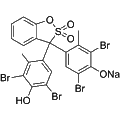
  • Bromocresol green sodium
    Cat. No.
    A43878

    Bromocresol green sodium

    Bromocresol green sodium is an anionic dye primarily utilized for pH indication and DNA agarose gel electrophoresis. This reagent exhibits a distinct color change, producing a yellow monoanionic form at lower pH (acidic conditions) and shifting to a blue dianionic form at basic conditions. Additionally, bromocresol green sodium is effective in the measurement of mammalian albumin, making it a valuable tool in various biochemical and analytical research applications.

    Out of stock

    All 3 sizes
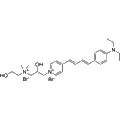
  • Di-12-ANEPPQ
    Cat. No.
    A43880

    Di-12-ANEPPQ

    Di-12-ANEPPQ is a lipophilic membrane potential dye designed for the rapid assessment of cellular membrane potentials. It exhibits cell-specific loading and provides Golgi-like staining patterns, enabling effective visualization with minimal background fluorescence in neocortical and hippocampal slices. This compound is ideal for studying neuronal activity and understanding the dynamics of membrane potential in various neurological research applications.

    Out of stock

    All 3 sizes
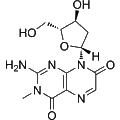
  • 3-Methyl-8-(2'-deoxy-β-D-ribofuranosyl)isoxanthopterin
    Cat. No.
    A43881

    3-Methyl-8-(2'-deoxy-β-D-ribofuranosyl)isoxanthopterin

    3-Methyl-8-(2'-deoxy-β-D-ribofuranosyl)isoxanthopterin is a pteridine-based fluorescent guanosine analogue that serves as a DNA uptake tracer. It exhibits key biological activity in studies of DNA binding and dynamics, featuring an absorbance maximum at 350 nm and an emission maximum at 430 nm. This compound is utilized in various research applications involving nucleic acid interactions and cellular uptake assays.

    1 mg
    $310.00
    2 mg
    $610.00
    All 3 sizes
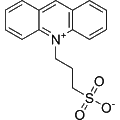
  • 10-(3-Sulfopropyl)acridinium Betaine
    Cat. No.
    A43882

    10-(3-Sulfopropyl)acridinium Betaine

    10-(3-Sulfopropyl)acridinium Betaine is a robust fluorescence dye, known for its superior stability exceeding three months. This compound exhibits high photostability, making it suitable for various biological applications, including fluorescence microscopy and flow cytometry. Its unique properties enable reliable detection and visualization of biological markers in complex samples.

    5 mg
    $100.00
    10 mg
    $150.00
    All 5 sizes
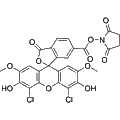
  • 6-JOE, SE
    Cat. No.
    A43883

    6-JOE, SE

    6-JOE, SE is an amine-reactive fluorescent dye designed for the specific labeling of amino-modified oligonucleotides. This reagent enables the sensitive detection and visualization of nucleic acids, facilitating various applications in molecular biology and genomics. Its ability to form stable conjugates makes it an essential tool for researchers involved in DNA and RNA studies.

    Out of stock

    All 3 sizes
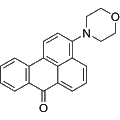
  • 3-Morpholinobenzanthrone
    Cat. No.
    A43884

    3-Morpholinobenzanthrone

    3-Morpholinobenzanthrone is a fluorescent membrane probe that exhibits a higher dipole moment in its excited state compared to its ground state. This characteristic facilitates its application in cellular imaging, allowing for enhanced visualization of membrane dynamics. The compound is particularly useful in biophysical studies and investigations focused on membrane interactions and behavior.

    25 mg
    $1,275.00
    50 mg
    $1,625.00
    All 3 sizes
  • Hydroxy naphthol blue (disodium)
    Cat. No.
    A43886

    Hydroxy naphthol blue (disodium)

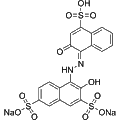
    Hydroxy naphthol blue (disodium) is an azo dye utilized primarily as an acid-base indicator, exhibiting a maximum absorbance at 650 nm. This compound demonstrates distinct color changes within the pH range of 12 to 13, appearing pale red in the presence of calcium ions and transitioning to dark blue upon interaction with disodium EDTA. It is valuable in biochemical assays and analytical chemistry for monitoring pH levels and ion concentrations.

    1 g
    $20.00
    All 1 sizes
  • RH 795
    Cat. No.
    A43887

    RH 795

    RH 795 is a fast-response voltage-sensitive dye that selectively reports on membrane potential changes in biological systems. This compound exhibits high sensitivity and rapid kinetics, making it an essential tool for studying neuronal activity and other excitable cells. It is widely used in electrophysiological research to investigate membrane dynamics and the mechanisms underlying cellular excitability.

    1 mg
    $310.00
    5 mg
    $860.00
    All 2 sizes
  • Zinquin AM ester
    Cat. No.
    A43888

    Zinquin AM ester

    Zinquin AM ester is a fluorescent dye that serves as a specific sensor for assessing cellular zinc (Zn2+) levels. Its AM ester modification enhances membrane permeability, allowing for effective intracellular staining and visualization of zinc dynamics in live cells. This reagent is widely utilized in studies investigating zinc's role in various biological processes and cellular signaling pathways.

    Out of stock

    All 3 sizes
  • Rhodamine B, tetramethyl-, isothiocyanate
    Cat. No.
    A43889

    Rhodamine B, tetramethyl-, isothiocyanate

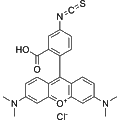
    Rhodamine B, tetramethyl-, isothiocyanate is a fluorescent dye known for its strong two-photon absorption at approximately 830 nm. This compound exhibits high quantum yield and photostability, making it suitable for a variety of biological imaging applications. It is commonly utilized in fluorescence microscopy, flow cytometry, and other techniques requiring sensitive detection of cellular and molecular interactions.

    Out of stock

    All 3 sizes
  • BTC-AM
    Cat. No.
    A43891

    BTC-AM

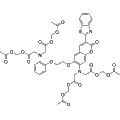
    BTC-AM is a calcium indicator with a low affinity for calcium ions. It exhibits significant calcium-independent fluorescence across various excitation wavelengths, making it suitable for imaging applications. BTC-AM can be efficiently loaded into neurons where it undergoes rapid hydrolysis, facilitating real-time monitoring of cellular processes in neurobiology and other research applications involving calcium signaling.

    1 mg
    $960.00
    All 1 sizes
  • BOD-NH-NP
    Cat. No.
    A43892

    BOD-NH-NP

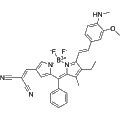
    BOD-NH-NP is a fluorescent probe designed for the detection and imaging of endogenous nitric oxide through the endothelial nitric oxide synthase (eNOS) enzymatic pathway. This activatable probe offers high sensitivity and specificity, making it suitable for studying nitric oxide dynamics in biological systems. Researchers can utilize BOD-NH-NP to investigate various physiological and pathological processes where nitric oxide signaling plays a crucial role.

    Out of stock

    All 3 sizes
  • PMQA
    Cat. No.
    A43895

    PMQA

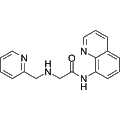
    Synonyms: Zn-green

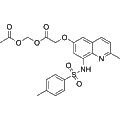
    PMQA is an 8-aminoquinoline-based ratiometric fluorescent sensor designed for the detection of zinc ions (Zn2+). Upon interaction with Zn2+, PMQA exhibits a significant redshift in emission wavelength (85 nm), facilitating sensitive measurements. This cell membrane-permeable probe is suitable for real-time imaging of Zn2+ in living cells, making it valuable for studies in cellular signaling and zinc homeostasis.

    Out of stock

    All 3 sizes
  • Nilotinib Acid
    Cat. No.
    A43896

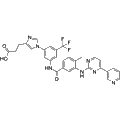
    Nilotinib Acid

    Nilotinib Acid is a fluorescent probe derivative of Nilotinib that is utilized for various biochemical applications. Its primary mechanism involves binding to specific molecular targets, enabling the visualization of cellular processes. This compound is particularly useful in research focused on cancer biology and drug development, where tracking the interaction of drugs with their molecular targets is crucial.

    Out of stock

    All 3 sizes
  • Ponatinib Acid
    Cat. No.
    A43897

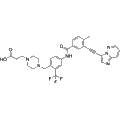
    Ponatinib Acid

    Ponatinib Acid is a fluorescent probe that functions as a labeled chemical in biological research. Its structural analogue of Ponatinib features an alkyne group, enabling copper-catalyzed azide-alkyne cycloaddition (CuAAc) with azide-containing molecules. This property makes Ponatinib Acid invaluable for applications in click chemistry, facilitating studies in chemical biology and bioconjugation.

    Out of stock

    All 3 sizes
  • Hoechst 33342 analog trihydrochloride
    Cat. No.
    A43898

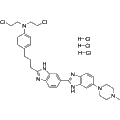
    Hoechst 33342 analog trihydrochloride

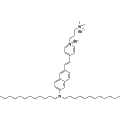
    Hoechst 33342 analog trihydrochloride is a fluorescent DNA stain that preferentially binds to A/T-rich regions of double-stranded DNA. This compound is utilized in live cell imaging due to its ability to enhance fluorescence intensity when binding to nucleic acids, making it ideal for cellular labeling applications. The fluorescence signal can be further increased by adjusting the pH of the solution. Proper storage away from light is essential to maintain its effectiveness.

    Out of stock

    All 3 sizes
Items 601-625 of 2505

Added to your cart

View Cart Checkout

    Loading...