All Dyes

All Dyes is the single product list for the Fluorescent Dyes, Probes & Stains section. Many dyes here have no application or dye-family subcategory, so the list is the broadest way to browse the range. It suits searches by product name when the required dye is already known. Examples range from the near-infrared cyanine indocyanine green and the ratiometric calcium indicator Fura-2 pentapotassium to the nucleic acid stains Hoechst 33258 trihydrochloride and SYBR Green II. Classical stains such as hematoxylin, reactive labeling dyes and enzyme substrates are listed alongside them. For selection by task or by core structure, the parent Fluorescent Dyes, Probes & Stains page groups dyes by application and dye family.

Items 2101-2125 of 2505

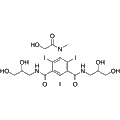
  • Iomeprol
    Cat. No.
    A89113

    Iomeprol

    Iomeprol is a nonionic X-ray contrast agent characterized by its low osmotic pressure and stable chemical properties, allowing for resistance to high temperature sterilization. This compound is primarily utilized in various imaging applications such as vascular, body cavity, and gastrointestinal angiography, enhancing the clarity and detail of diagnostic procedures. Its safety profile and effectiveness make it a valuable tool in medical imaging research.

    1 mg
    $330.00
    5 mg
    $810.00
    All 5 sizes
  • 4-Methylumbelliferyl stearate
    Cat. No.
    A89190

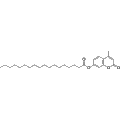
    4-Methylumbelliferyl stearate

    4-Methylumbelliferyl stearate is a biochemical reagent commonly utilized as a fluorogenic substrate for the detection of lipase activity. Upon enzymatic hydrolysis, it releases the fluorescent compound 4-methylumbelliferone, facilitating quantitative analysis of lipase in various biological samples. This reagent is widely employed in research applications focusing on lipid metabolism, enzyme kinetics, and the study of lipid-related disorders.

    100 mg
    $30.00
    250 mg
    $60.00
    All 4 sizes
  • ELF97 phosphate
    Cat. No.
    A89245

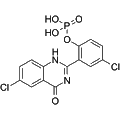
    ELF97 phosphate

    Synonyms: ELFP

    ELF97 phosphate is a fluorescent substrate designed for the specific detection of phosphatase activity. Upon hydrolysis by phosphatases, it generates a fluorescent, water-insoluble product known as ELF97 alcohol. This compound is valuable for studying and quantifying the activity of extracellular phosphatases in algal species present in natural water environments.

    1 mg
    $65.00
    5 mg
    $155.00
    All 6 sizes
  • 4-[3-(Trifluoromethyl)diazirin-3-yl] benzoic acid N-hydroxysuccinimide ester
    Cat. No.
    A89266

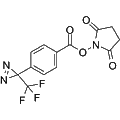
    4-[3-(Trifluoromethyl)diazirin-3-yl] benzoic acid N-hydroxysuccinimide ester

    4-[3-(Trifluoromethyl)diazirin-3-yl] benzoic acid N-hydroxysuccinimide ester is a photoactivated bifunctional cross-linker targeting specific proteins and biomolecules. Its unique structure enables precise and efficient cross-linking upon light activation, making it an invaluable tool for researchers in the fields of protein interaction studies and antigen engineering. This reagent supports rapid and accurate structural generation, facilitating advancements in various biochemical and biophysical research applications.

    5 mg
    $40.00
    10 mg
    $60.00
    All 3 sizes
  • 4-Benzoyl-3-methyl-1-phenyl-5-pyrazolone
    Cat. No.
    A89374

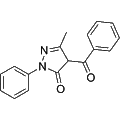
    4-Benzoyl-3-methyl-1-phenyl-5-pyrazolone

    4-Benzoyl-3-methyl-1-phenyl-5-pyrazolone is a heterocyclic compound targeting various biological processes. Its unique molecular structure makes it versatile for organic synthesis and organic transformations. As a biological probe, it is valuable in research aimed at understanding complex biochemical pathways and mechanisms in life sciences. This compound serves as an essential tool for exploring the role of pyrazolone derivatives in biological research.

    1 g
    $40.00
    All 1 sizes
  • CI Vat green 1
    Cat. No.
    A89405

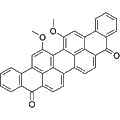
    CI Vat green 1

    CI Vat Green 1 is an organic dye primarily used for textile applications. This vat dye demonstrates excellent wash, light, and rubbing fastness, making it ideal for use in high-quality fabric dyeing processes. Its robust performance ensures durability in various environmental conditions, enhancing the longevity and aesthetic appeal of dyed materials. Research applications may include studies in textile engineering and color stability assessments.

    100 mg
    $25.00
    250 mg
    $40.00
    All 4 sizes
  • Sodium diphenylamine-4-sulfonate
    Cat. No.
    A89415

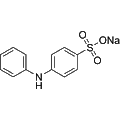
    Sodium diphenylamine-4-sulfonate

    Sodium diphenylamine-4-sulfonate functions as an oxidation-reduction indicator, exhibiting a colorless reduced state and a reddish-purple oxidized state. This compound serves multiple roles as a quencher and reducing agent, specifically inhibiting the electrochemiluminescence of the ruthenium tris(bipyridine) system through energy transfer mechanisms. Additionally, sodium diphenylamine-4-sulfonate is involved in the synthesis of nanocrystals, making it valuable for various analytical and synthetic research applications.

    1 g
    $25.00
    All 1 sizes
  • (Z)-Hexadec-9-en-15-ynoicacid
    Cat. No.
    A89441

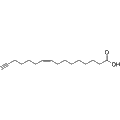
    (Z)-Hexadec-9-en-15-ynoicacid

    Synonyms: Palmitoleic acid alkyne

    (Z)-Hexadec-9-en-15-ynoic acid is an alkynyl fatty acid probe, specifically designed to investigate metabolic pathways involving unsaturated fatty acids. This compound exhibits unique properties that facilitate the study of lipid metabolism and membrane dynamics. Its application in chemical biology allows researchers to explore interactions within lipid biochemistry and cellular processes.

    0.1 mg
    $130.00
    0.5 mg
    $520.00
    All 3 sizes
  • 1-NBD-decanoyl-2-decanoyl-sn-glycerol
    Cat. No.
    A89474

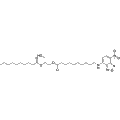
    1-NBD-decanoyl-2-decanoyl-sn-glycerol

    1-NBD-decanoyl-2-decanoyl-sn-glycerol is a fluorescently labeled diacylglycerol (DAG) derivative, specifically designed as a substrate for diacylglycerol kinase (DGK). This compound enables quantitative detection of DGK enzyme kinetics in vitro, facilitating the study of DAG and phosphatidic acid (PA) dynamics during cellular signaling processes. Its application extends to various research areas, including cell biology and biochemistry, where understanding lipid signaling pathways is critical.

    0.5 mg
    $220.00
    1 mg
    $420.00
    All 3 sizes
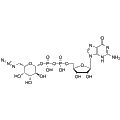
  • GDP-azido-fucose
    Cat. No.
    A89509

    GDP-azido-fucose

    GDP-azido-fucose is a modified donor substrate that incorporates an azide group, enabling bioorthogonal click reactions. This compound serves as a valuable tool for synthesizing fluorophore-conjugated GDP-fucose, which can facilitate the visualization of glycosylation processes. GDP-azido-fucose is also instrumental in studying glycosyltransferase reactions, allowing researchers to investigate glycan biosynthesis and its implications in various biological contexts.

    Out of stock

    All 3 sizes
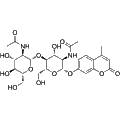
  • MUF-diNAG
    Cat. No.
    A89524

    MUF-diNAG

    Synonyms: 4-Methylumbelliferyl N,N-diacetyl-β-D-chitobioside

    MUF-diNAG (4-Methylumbelliferyl N,N-diacetyl-β-D-chitobioside) serves as a fluorescent substrate, allowing for the detection of enzymatic activity. This compound is particularly useful in studies involving glycosidases and chitinases, enabling researchers to investigate carbohydrate metabolism and related biochemical pathways. Its fluorescent properties make it an essential tool in various life science applications, including enzyme assays and cellular imaging.

    1 mg
    $140.00
    5 mg
    $360.00
    All 2 sizes
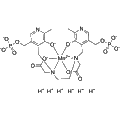
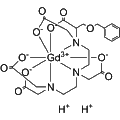
  • Mangafodipir
    Cat. No.
    A89571

    Mangafodipir

    Mangafodipir is a hepatocellular-specific contrast agent that serves as an effective inhibitor of chemotherapy-induced peripheral neuropathy (CIPN) and conditions related to oxidative stress. This agent demonstrates the ability to facilitate imaging while maintaining the efficacy of chemotherapeutic agents, making it valuable in research focused on liver function and disease. Mangafodipir's unique properties position it as a significant tool in studying hepatic cellular responses in various pathological contexts.

    Out of stock

    All 3 sizes
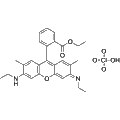
  • Rhodamine 6G perchlorate
    Cat. No.
    A89617

    Rhodamine 6G perchlorate

    Rhodamine 6G perchlorate is a fluorescent dye commonly used as a biochemical assay reagent. It exhibits exceptional photostability and high fluorescence intensity, making it suitable for applications in cellular imaging and the study of biological processes. This compound facilitates the visualization of cellular structures and interactions, providing valuable insights in life science research.

    50 mg
    $30.00
    100 mg
    $45.00
    All 3 sizes
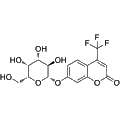
  • 4-Trifluoromethylumbelliferyl-ß-D-galactopyranoside
    Cat. No.
    A89851

    4-Trifluoromethylumbelliferyl-ß-D-galactopyranoside

    Synonyms: TFMU-Gal

    4-Trifluoromethylumbelliferyl-ß-D-galactopyranoside (TFMU-Gal) is a fluorogenic substrate primarily used in biochemical assays for the detection of ß-galactosidase activity. Upon enzymatic cleavage, TFMU-Gal releases a highly fluorescent product, making it a valuable tool in glycobiology research for studying glycosidase activity and carbohydrate metabolism. This compound is essential for understanding the role of glycosides in various biological processes.

    Out of stock

    All 3 sizes
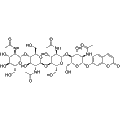
  • 4-Methylumbelliferyl β-D-N,N',N'',N'''-tetraacetylchitotetraoside
    Cat. No.
    A89874

    4-Methylumbelliferyl β-D-N,N',N'',N'''-tetraacetylchitotetraoside

    4-Methylumbelliferyl β-D-N,N',N'',N'''-tetraacetylchitotetraoside is a fluorogenic substrate specifically designed for lysozyme assays. This reagent facilitates the study of enzyme activity, making it valuable for various biomedical research applications. Its high sensitivity enhances the analysis of enzyme reactions in biological samples, providing reliable results for researchers investigating enzymatic processes.

    Out of stock

    All 3 sizes
  • Gadobenic acid
    Cat. No.
    A89957

    Gadobenic acid

    Gadobenic acid is a gadolinium-based MRI contrast agent that enhances the visualization of internal structures during magnetic resonance imaging. It functions primarily by altering the relaxation times of nearby hydrogen atoms, thereby improving the contrast between different tissues. This compound is extensively used in clinical and research applications for imaging vascular and soft tissue abnormalities, facilitating accurate diagnosis and monitoring of various medical conditions.

    Out of stock

    All 3 sizes
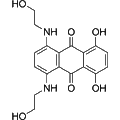
  • Celliton Fast Blue Green B
    Cat. No.
    A90056

    Celliton Fast Blue Green B

    Synonyms: Disperse Blue 7; 1,4-DiOH-5,8-bis(2-OHethyl)aminoanthraquinone

    Celliton Fast Blue Green B is a synthetic dye primarily used in textile applications. This compound exhibits excellent color fastness while demonstrating minimal skin irritation and sensitization in laboratory studies. It is suitable for research focused on colorant safety and biocompatibility in various consumer products.

    Out of stock

    All 3 sizes
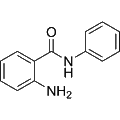
  • 2-Aminobenzanilide
    Cat. No.
    A90254

    2-Aminobenzanilide

    Synonyms: 2-Amino-N-phenylbenzamide

    2-Aminobenzanilide serves as a fluorescent tag, primarily utilized in glycan analysis. This stable and neutral compound acts as a competent ambident nucleophile, facilitating various important reactions, including the Bargellini reaction. Additionally, 2-aminobenzanilide and its derivatives play a role in the blood coagulation cascade, making them valuable in biochemical research and analysis.

    25 mg
    $25.00
    50 mg
    $40.00
    All 3 sizes
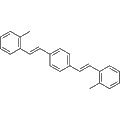
  • 1,4-Bis(2-methylstyryl)-benzene,99%
    Cat. No.
    A90338

    1,4-Bis(2-methylstyryl)-benzene,99%

    Synonyms: Bis-MSB,99%

    1,4-Bis(2-methylstyryl)-benzene is a biochemical assay reagent functioning as a fluorescent probe for various assays. It exhibits significant biological activity by enabling the detection of specific biomolecular interactions. This compound is primarily utilized in biochemical research applications focused on studying protein interactions, cell signaling pathways, and molecular binding events.

    1 g
    $20.00
    All 1 sizes
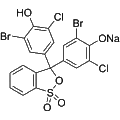
  • Bromochlorophenol Blue sodium salt
    Cat. No.
    A90402

    Bromochlorophenol Blue sodium salt

    Bromochlorophenol Blue sodium salt is a pH-indicating dye that exhibits acid-sensitive properties. This compound is widely used in various biochemical assays and laboratory applications to monitor pH changes in solution. Its color transition occurs within a pH range of approximately 3.0 to 4.6, making it suitable for applications in analytical chemistry and microbiology.

    25 mg
    $1,275.00
    50 mg
    $1,625.00
    All 3 sizes
  • ARC12
    Cat. No.
    A90449

    ARC12

    ARC12 is a secondary metabolism probe that targets the biosynthetic pathways in Streptomyces coelicolor. It effectively modulates the production of secondary metabolites, notably reducing the levels of germicidin. This compound serves as a valuable tool for studying the regulation of secondary metabolite biosynthesis in microbial systems.

    5 mg
    $55.00
    10 mg
    $100.00
    All 5 sizes
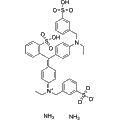
  • Acid blue 9 (diammonium)
    Cat. No.
    A90503

    Acid blue 9 (diammonium)

    Acid Blue 9 (Diammonium) is a triarylmethane dye known for its role as a chromosomal aberration inducer. It demonstrates cytogenetic toxicity, particularly in onion root tip meristematic cells, making it a valuable tool for studies in genotoxicity and cytogenetics. This reagent can be utilized in research applications aimed at understanding the mechanisms of DNA damage and the effects of chemical exposures on plant cells.

    1 g
    $245.00
    All 1 sizes
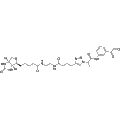
  • Citrulline-specific probe-biotin
    Cat. No.
    A90504

    Citrulline-specific probe-biotin

    Citrulline-specific probe-biotin is a biotinylated fluorescent probe designed for the detection of citrulline, a hydrolysis product of arginine produced by the enzyme protein arginine deiminase (PAD). Increased PAD activity is implicated in various pathological conditions, including autoimmune diseases and inflammatory disorders. This probe facilitates the identification of diseases characterized by elevated citrulline levels and is particularly useful in animal models of ulcerative colitis for studying disease mechanisms and potential therapeutic interventions.

    Out of stock

    All 3 sizes
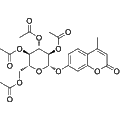
  • 4-Methylumbelliferyl 2,3,4,6-tetra-O-acetyl-β-D-glucopyranoside
    Cat. No.
    A90599

    4-Methylumbelliferyl 2,3,4,6-tetra-O-acetyl-β-D-glucopyranoside

    4-Methylumbelliferyl 2,3,4,6-tetra-O-acetyl-β-D-glucopyranoside is a biochemical assay reagent primarily utilized for the detection of β-D-glucosidase activity. This compound serves as a fluorogenic substrate, releasing 4-methylumbelliferone upon enzymatic hydrolysis, allowing for sensitive measurement of enzyme activity. It is commonly employed in various biochemical research applications, including studies on enzyme kinetics and carbohydrate metabolism.

    Out of stock

    All 3 sizes
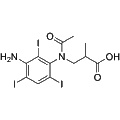
  • Cholebrine
    Cat. No.
    A90603

    Cholebrine

    Synonyms: DRC 1201; Iocetamic acid; MP 620

    Cholebrine is an orally active cholecystographic contrast agent that enhances imaging of the gallbladder during diagnostic procedures. It functions by improving the visibility of the biliary system, facilitating accurate diagnosis of various pathologies. This reagent is employed in medical imaging applications, allowing for improved assessment of gallbladder function and anatomy.

    Out of stock

    All 3 sizes

Items 2101-2125 of 2505

Added to your cart

View Cart Checkout

    Loading...