All Dyes

All Dyes is the single product list for the Fluorescent Dyes, Probes & Stains section. Many dyes here have no application or dye-family subcategory, so the list is the broadest way to browse the range. It suits searches by product name when the required dye is already known. Examples range from the near-infrared cyanine indocyanine green and the ratiometric calcium indicator Fura-2 pentapotassium to the nucleic acid stains Hoechst 33258 trihydrochloride and SYBR Green II. Classical stains such as hematoxylin, reactive labeling dyes and enzyme substrates are listed alongside them. For selection by task or by core structure, the parent Fluorescent Dyes, Probes & Stains page groups dyes by application and dye family.

Items 2126-2150 of 2505

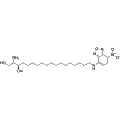
  • NBD-sphinganine
    Cat. No.
    A90702

    NBD-sphinganine

    NBD-sphinganine is a fluorescent substrate for ceramide synthase (CerS), enabling the detection of CerS activity. Its fluorescence properties make it a valuable tool for studying sphingolipid metabolism and ceramide signaling pathways in various biological contexts. This compound is useful in research applications focusing on cell signaling, lipid biology, and related diseases.

    Out of stock

    All 3 sizes
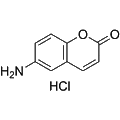
  • 6-Aminocoumarin hydrochloride
    Cat. No.
    A90814

    6-Aminocoumarin hydrochloride

    6-Aminocoumarin hydrochloride is a coumarin dye characterized as a donor-acceptor compound, featuring an amine group as the electron donor and a carbonyl group as the acceptor. This compound exhibits fluorescence properties, making it useful in various biological and chemical assays. Its applications extend to studying cellular imaging, protein labeling, and as a fluorescent probe in biochemical research.

    Out of stock

    All 3 sizes
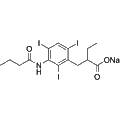
  • Tyropanoate sodium
    Cat. No.
    A90832

    Tyropanoate sodium

    Synonyms: NSC 107434 sodium

    Tyropanoate sodium is an orally active contrast agent targeting the gallbladder for cholecystography. After intestinal absorption, it is secreted by the liver into the bile, where it accumulates in the gallbladder. This accumulation results in a radiopaque contrast that enhances visualization during X-ray imaging, facilitating accurate assessment of gallbladder pathologies.

    25 mg
    $1,275.00
    All 1 sizes
  • Leucoberbelin blue I
    Cat. No.
    A90852

    Leucoberbelin blue I

    Synonyms: LBB

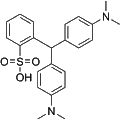
    Leucoberbelin blue I is a leuco base that serves as a specific indicator for manganese (II) oxides. It undergoes an oxidation reaction resulting in a colored complex that enables the quantification and confirmation of Mn (II) oxides. This reagent is valuable in research applications involving manganese detection and analysis in various chemical and environmental studies.

    25 mg
    $60.00
    50 mg
    $85.00
    All 3 sizes
  • Boc-Val-Gly-Arg-AMC
    Cat. No.
    A90892

    Boc-Val-Gly-Arg-AMC

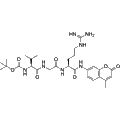
    Boc-Val-Gly-Arg-AMC is a peptide substrate designed for the analysis of proteasome activity. This compound serves as a sensitive fluorogenic reporter, enabling the quantification of proteolytic processes in biological samples. Its utility extends to various research applications, including drug discovery and the study of cellular protein degradation mechanisms.

    Out of stock

    All 3 sizes
  • Methyl red hydrochloride
    Cat. No.
    A90898

    Methyl red hydrochloride

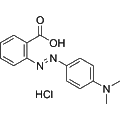
    Methyl red hydrochloride is an azo dye primarily utilized as a pH indicator. It exhibits distinct color changes from red at pH 4.4 to yellow at pH 6.0, making it valuable for monitoring pH levels in various biological and chemical experiments. Its applications span across microbiology, pharmaceuticals, and environmental testing, where precise pH measurements are crucial.

    Out of stock

    All 3 sizes
  • H-L-Ile-Amc TFA
    Cat. No.
    A90971

    H-L-Ile-Amc TFA

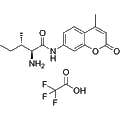
    H-L-Ile-Amc TFA is a fluorescent dye that serves as a substrate for aminopeptidases, enabling the detection of yeasts and molds in various samples. This compound is particularly useful in microbiological research and diagnostics, facilitating the identification and quantification of fungal contamination. Its sensitivity and specificity make it a valuable tool in microbial monitoring and food safety applications.

    Out of stock

    All 3 sizes
  • C.I. Solvent Yellow 33
    Cat. No.
    A91292

    C.I. Solvent Yellow 33

    C.I. Solvent Yellow 33 is a yellow dye primarily employed for its coloring properties in industrial applications and signaling devices. This non-toxic compound exhibits strong dyeing capabilities, making it suitable for various formulations. Its utility spans across multiple sectors, including manufacturing and maritime signaling.

    5 g
    $20.00
    10 g
    $30.00
    All 4 sizes
  • 4-Methylumbelliferyl β-D-fucoside
    Cat. No.
    A91449

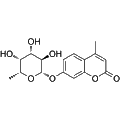
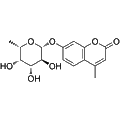
    4-Methylumbelliferyl β-D-fucoside

    4-Methylumbelliferyl β-D-fucoside is a fluorogenic substrate for the enzymatic detection of fucosidase activity. Upon hydrolysis by fucosidases, it releases 4-methylumbelliferone, which exhibits high fluorescent properties. This reagent is widely used in biochemical assays to study fucosidase activity in various biological samples, facilitating research in glycoprotein metabolism and cellular signaling pathways.

    25 mg
    $355.00
    50 mg
    $550.00
    All 4 sizes
  • L-Arginine 7-amido-4-methylcoumarin dihydrochloride
    Cat. No.
    A91479

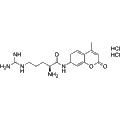
    L-Arginine 7-amido-4-methylcoumarin dihydrochloride

    L-Arginine 7-amido-4-methylcoumarin dihydrochloride is a fluorescent substrate designed for the detection of cathepsin H activity. This compound generates highly sensitive fluorescent signals, making it valuable for various biological research applications, particularly in enzyme activity analysis. Its specificity and sensitivity enhance the study of protease-related biological processes, facilitating advancements in the understanding of cellular functions and disease mechanisms.

    Out of stock

    All 3 sizes
  • 4-Methyl-3-phenylcoumarin
    Cat. No.
    A91554

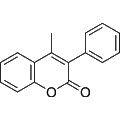
    4-Methyl-3-phenylcoumarin

    4-Methyl-3-phenylcoumarin is a biochemical reagent known for its role as a fluorescent probe. It exhibits photochemical properties that make it useful in the study of cellular processes and biomolecular interactions. This compound is valuable in various research applications, including fluorescence microscopy and biochemical assays for tracking molecular dynamics.

    250 mg
    $25.00
    1 g
    $70.00
    All 3 sizes
  • 4-Methylumbelliferyl β-L-fucoside
    Cat. No.
    A91569

    4-Methylumbelliferyl β-L-fucoside

    Synonyms: 4-Methylumbelliferyl beta-L-fucopyranoside

    4-Methylumbelliferyl β-L-fucoside is a fucose derivative functioning as a fluorogenic substrate for β-L-fucosidase activity. This compound releases a fluorescent product upon cleavage, making it suitable for biochemical assays and glycobiology research. It enables the study of glycan metabolism and the characterization of fucosylated biomolecules, facilitating research in various biological systems.

    5 mg
    $105.00
    10 mg
    $130.00
    All 4 sizes
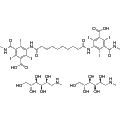
  • Iosefamate meglumine
    Cat. No.
    A91588

    Iosefamate meglumine

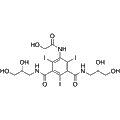
    Iosefamate meglumine is a contrast agent primarily utilized in hepatic CT scanning. This compound enhances the visibility of vascular structures and lesions within the liver, facilitating the diagnosis and assessment of various hepatic conditions. It is instrumental in imaging studies that require precise delineation of liver anatomy and pathology.

    Out of stock

    All 3 sizes
  • Ioversol hydrolysate-1
    Cat. No.
    A91624

    Ioversol hydrolysate-1

    Ioversol hydrolysate-1 is a hydrolyzed form of Ioversol, a non-ionic iodinated contrast agent primarily utilized in radiographic imaging techniques such as computed tomography (CT) scans and X-rays. This compound facilitates enhanced visualization of internal structures during imaging procedures, making it valuable in preclinical studies and animal experiments. Its application in research provides critical insights into anatomical features and pathologies, supporting advancements in diagnostic imaging methodologies.

    25 mg
    $75.00
    50 mg
    $115.00
    All 4 sizes
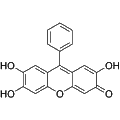
  • Phenylfluorone
    Cat. No.
    A91818

    Phenylfluorone

    Synonyms: Fluorone black

    Phenylfluorone is a heavy metal photometric probe that exhibits strong selectivity for the detection of specific heavy metals, including germanium and tin. This compound serves as an essential tool in analytical chemistry for the quantification of metal ions in various samples. Its robust photometric capabilities make it valuable for research applications involving environmental monitoring and material analysis.

    250 mg
    $25.00
    1 g
    $45.00
    All 4 sizes
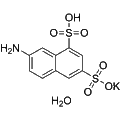
  • 7-Amino-1,3-naphthalenedisulfonic acid monopotassium monohydrate
    Cat. No.
    A91829

    7-Amino-1,3-naphthalenedisulfonic acid monopotassium monohydrate

    Synonyms: mono-Potassium 7-amino-1,3-naphthalenedisulfonate monohydrate

    7-Amino-1,3-naphthalenedisulfonic acid monopotassium monohydrate functions primarily as a fluorescent dye. It is effective in labeling carbohydrates, exhibiting excitation and emission wavelengths at 310 nm and 450 nm, respectively. This reagent is valuable for studies in carbohydrate biochemistry and various fluorescence-based applications in biochemical research.

    Out of stock

    All 3 sizes
  • AMCPy
    Cat. No.
    A91904

    AMCPy

    AMCPy is a potent electron paramagnetic resonance (EPR) imaging agent designed for brain imaging applications. Its high lipophilicity facilitates effective penetration of the blood-brain barrier (BBB), making it an invaluable tool for neuroimaging studies. This compound is useful for investigating central nervous system disorders and monitoring brain-related biological processes.

    Out of stock

    All 3 sizes
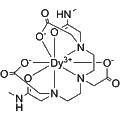
  • Sprodiamide
    Cat. No.
    A92026

    Sprodiamide

    Synonyms: Dy-DTPA-BMA

    Sprodiamide (Dy-DTPA-BMA) is a susceptibility-based MRI contrast agent that enhances image contrast by detecting changes in magnetic susceptibility during the vascular transport of drugs. Its primary mechanism involves improving the visibility of dynamic processes within the vascular system, making it valuable for studying drug delivery systems and assessing vascular health. Sprodiamide is instrumental in research applications related to drug transport mechanisms and imaging in preclinical studies.

    25 mg
    $1,275.00
    All 1 sizes
  • RAP 1
    Cat. No.
    A92042

    RAP 1

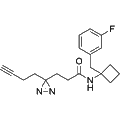
    RAP 1 is a reactive affinity probe that selectively labels the SLC6A8 transporter in the presence of guanine alanine (GPA). This chemical probe serves as a valuable tool for identifying and characterizing potential drug binding sites on SLC6A8. RAP 1 facilitates the exploration of SLC6A8's role in neurotransmitter transport and its implications in neurological disorders, supporting pharmacological research and drug development efforts.

    Out of stock

    All 3 sizes
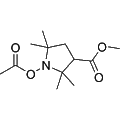
  • 4-Methylumbelliferyl 3,4,6-tri-O-acetyl-2-deoxy-2-trifluoroacetamido-α-D-glucopyranoside
    Cat. No.
    A92114

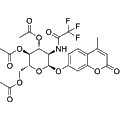
    4-Methylumbelliferyl 3,4,6-tri-O-acetyl-2-deoxy-2-trifluoroacetamido-α-D-glucopyranoside

    Synonyms: A-MUAA

    4-Methylumbelliferyl 3,4,6-tri-O-acetyl-2-deoxy-2-trifluoroacetamido-α-D-glucopyranoside functions as a fluorogenic substrate for carbohydrate-active enzymes, specifically glycosidases. This compound enables the quantitative detection of glycosidase activity through fluorescence emission, making it valuable in enzymology and carbohydrate metabolism research. It aids in studying enzymatic reactions and the characterization of glycosidase specificity, contributing to a better understanding of glycosylation processes in biological systems.

    5 mg
    $120.00
    10 mg
    $130.00
    All 3 sizes
  • Nerindocianine
    Cat. No.
    A92164

    Nerindocianine

    Nerindocianine is a fluorescent diagnostic contrast agent primarily utilized for non-invasive intraoperative ureteral imaging. Its high hydrophilicity facilitates effective renal metabolism, enhancing imaging quality during surgical procedures. This reagent is valuable in studies requiring precise visualization of ureteral anatomy and function.

    Out of stock

    All 3 sizes
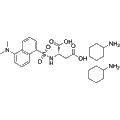
  • Dansyl-L-aspartic acid dicyclohexylammonium
    Cat. No.
    A92243

    Dansyl-L-aspartic acid dicyclohexylammonium

    Dansyl-L-aspartic acid dicyclohexylammonium is a biochemical reagent primarily used for fluorescent labeling of proteins and peptides. Its dansyl group provides a distinctive fluorescence suitable for various detection methods, enhancing the study of protein interactions and conformational changes. This compound is frequently employed in studies involving biochemical assays, thereby facilitating investigations in cell biology and biochemistry.

    Out of stock

    All 3 sizes
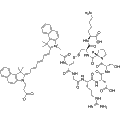
  • Cronexitide lanocianine
    Cat. No.
    A92273

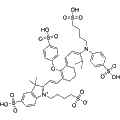
    Cronexitide lanocianine

    Synonyms: LS301

    Cronexitide lanocianine serves as a diagnostic imaging agent through its ability to enhance contrast in imaging procedures. It is utilized in various imaging modalities to improve the visualization of tissues and vascular structures. This compound plays a critical role in the assessment and diagnosis of medical conditions, allowing for more precise and reliable imaging results in clinical applications.

    Out of stock

    All 3 sizes
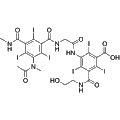
  • Ioxaglic acid
    Cat. No.
    A92357

    Ioxaglic acid

    Synonyms: P-286

    Ioxaglic acid is a negatively charged contrast agent primarily utilized for imaging applications in computed tomography (CT). It serves as an inverse indicator for glycosaminoglycan (GAG) content, enabling the quantitative assessment of GAG in human osteoarthritic cartilage. This reagent is valuable for research focused on osteoarthritis and related cartilage pathologies.

    5 mg
    $205.00
    10 mg
    $335.00
    All 4 sizes
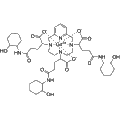
  • Gd-PCTA-Ach
    Cat. No.
    A92563

    Gd-PCTA-Ach

    Gd-PCTA-Ach is a macrocyclic gadolinium-based MRI contrast agent designed for enhanced imaging through its high kinetic inertness and moderate affinity for albumin. Its ability to bind to albumin effectively prolongs blood circulation time, contributing to improved imaging quality. Gd-PCTA-Ach is predominantly cleared via the kidneys, with approximately 10% excreted through the hepatobiliary pathway, showcasing its unique dual-channel excretion profile. This contrast agent is particularly valuable for high-resolution imaging of brain and liver tumors, making it instrumental in diagnostic research focused on liver cancer and glioma.

    Out of stock

    All 3 sizes
Items 2126-2150 of 2505

Added to your cart

View Cart Checkout

    Loading...