All Dyes

All Dyes is the single product list for the Fluorescent Dyes, Probes & Stains section. Many dyes here have no application or dye-family subcategory, so the list is the broadest way to browse the range. It suits searches by product name when the required dye is already known. Examples range from the near-infrared cyanine indocyanine green and the ratiometric calcium indicator Fura-2 pentapotassium to the nucleic acid stains Hoechst 33258 trihydrochloride and SYBR Green II. Classical stains such as hematoxylin, reactive labeling dyes and enzyme substrates are listed alongside them. For selection by task or by core structure, the parent Fluorescent Dyes, Probes & Stains page groups dyes by application and dye family.

Items 501-525 of 2505

  • HKOCl-4m
    Cat. No.
    A43742

    HKOCl-4m

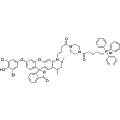
    HKOCl-4m is a rhodol-based fluorescent probe specifically designed for the selective monitoring of mitochondrial hypochlorous acid (HOCl). This compound exhibits high sensitivity and selectivity for HOCl detection within mitochondria, facilitating the study of oxidative stress and its implications in cellular processes. It is a valuable tool for researchers investigating mitochondrial function and related pathophysiological conditions.

    1 mg
    $300.00
    5 mg
    $615.00
    All 5 sizes
  • NIR-H2O2
    Cat. No.
    A43743

    NIR-H2O2

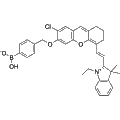
    NIR-H2O2 is a cell-permeable near-infrared (NIR) fluorescent sensor designed to detect hydrogen peroxide (H2O2). Upon excitation in the NIR region, NIR-H2O2 exhibits a significant turn-on fluorescence response, enabling the sensitive imaging of endogenously produced H2O2 in living cells and mice. This compound is valuable for studying oxidative stress, signaling pathways, and various biological processes involving reactive oxygen species.

    Out of stock

    All 3 sizes
  • KMG-104AM
    Cat. No.
    A43745

    KMG-104AM

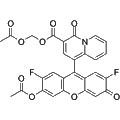
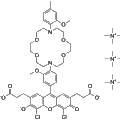
    KMG-104AM is a membrane-permeable fluorescein-derived probe that specifically targets magnesium ions (Mg2+). This reagent facilitates intracellular imaging of magnesium in PC12 cells, enabling the visualization and study of magnesium dynamics within live cells. Its application in 3D imaging provides valuable insights into cellular magnesium homeostasis and its role in various physiological processes.

    Out of stock

    All 3 sizes
  • TMRM
    Cat. No.
    A43746

    TMRM

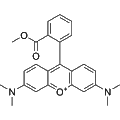
    TMRM (Tetramethylrhodamine Methyl Ester) is a membrane-permeable cationic fluorescent dye that selectively targets mitochondrial membrane potential. Its ability to accumulate in mitochondria results in strong fluorescence, enabling the visualization of mitochondrial dynamics. TMRM is widely utilized in cellular research, including studies of mitochondrial function, cell viability, and apoptosis in various biological systems, including animal, plant, and microbial cells.

    Out of stock

    All 3 sizes
  • DMA trihydrochloride
    Cat. No.
    A43747

    DMA trihydrochloride

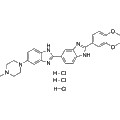
    DMA trihydrochloride is a fluorescent compound with an excitation wavelength of 340 nm and an emission wavelength of 478 nm. This compound exhibits significant fluorescence properties, making it suitable for various biological imaging applications. It can be utilized in cellular studies, particularly in tracking and visualizing cellular processes in live cells.

    2 mg
    $35.00
    5 mg
    $60.00
    All 6 sizes
  • MitoPeDPP
    Cat. No.
    A43748

    MitoPeDPP

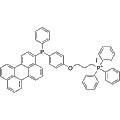
    MitoPeDPP is a mitochondrial-targeted fluorescent probe that detects lipid peroxidation (LPO) within mitochondria. Synthesized from diphenylpyrenephosphine, this reagent enables the visualization of LPO events, making it valuable for studying mitochondrial dynamics in various biological contexts. Its application includes investigating RSL3-induced ferroptosis in oligodendrocytes, providing insights into the mechanisms of cell death and oxidative stress.

    0.005 mg
    $610.00
    0.01 mg
    $980.00
    All 4 sizes
  • QSY-21
    Cat. No.
    A43749

    QSY-21

    QSY-21 is a powerful fluorescence quencher designed for applications in fluorescence resonance energy transfer (FRET). It exhibits broad absorption in the far red and near-infrared range, with a notable absorption maximum at 661 nm, enabling efficient quenching of fluorescence from dyes such as Cyanine5, Cyanine5.5, and AF 647. As a carboxylic acid derivative, QSY-21 is essential for studies requiring precise control of fluorescent signals, making it a valuable tool in various biochemical and cellular research applications.

    1 mg
    $540.00
    5 mg
    $1,385.00
    All 3 sizes
  • 8-(4-Iodophenyl)-1,3,5,7-tetramethyl BODIPY
    Cat. No.
    A43750

    8-(4-Iodophenyl)-1,3,5,7-tetramethyl BODIPY

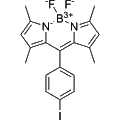
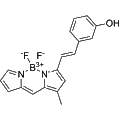
    8-(4-Iodophenyl)-1,3,5,7-tetramethyl BODIPY is a BODIPY derivative designed for use as a fluorescent probe targeting GFP-labeled muscarinic M1 receptors. This compound exhibits strong fluorescence properties, enabling effective visualization and study of receptor interactions and dynamics in biological systems. Its application in research enhances the understanding of muscarinic receptor function and signaling pathways.

    50 mg
    $25.00
    100 mg
    $30.00
    All 5 sizes
  • Asante potassium green-2 (TMA)
    Cat. No.
    A43751

    Asante potassium green-2 (TMA)

    Synonyms: APG-2 (TMA)

    Asante potassium green-2 (TMA) is a cell-impermeable potassium-sensitive fluorescent indicator with an excitation/emission spectrum of 525/545 nm. It selectively detects intracellular potassium ion concentrations, making it valuable for studies involving ion channel activity and cellular signaling. This reagent is essential for investigating potassium homeostasis and its implications in various physiological processes and pathologies.

    0.1 mg
    $385.00
    All 1 sizes
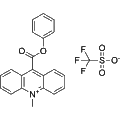
  • 10-Methyl-9-(phenoxycarbonyl) acridinium trifluoromethanesulfonate
    Cat. No.
    A43752

    10-Methyl-9-(phenoxycarbonyl) acridinium trifluoromethanesulfonate

    10-Methyl-9-(phenoxycarbonyl) acridinium trifluoromethanesulfonate is a fluorescent dye that serves as an acridinium ester, generating the fluorescent compound 10-methyl-9-acridone upon oxidation with various agents like hydrogen peroxide or persulfate under alkaline conditions. This reagent is suitable for a range of applications, including chemiluminescent assays, immunoassays for enzymes, antibodies, and hormones, as well as for detecting oxidants in biological, environmental, and pharmaceutical contexts. Its utility in these research areas makes it a valuable tool for fluorescence-based detection methods.

    5 mg
    $30.00
    10 mg
    $35.00
    All 4 sizes
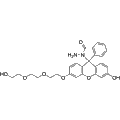
  • FHZ
    Cat. No.
    A43754

    FHZ

    FHZ is a fluorescent dye that serves as a vital tool for bioimaging applications. This compound exhibits strong fluorescent properties, enabling precise visualization of cellular structures and processes. It is particularly useful in fluorescence microscopy and can facilitate studies in cellular dynamics, protein localization, and organelle tracking.

    5 mg
    $100.00
    10 mg
    $170.00
    All 5 sizes
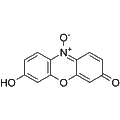
  • Resazurin
    Cat. No.
    A43757

    Resazurin

    Synonyms: Diazoresorcinol

    Resazurin is a water-soluble, membrane-permeable fluorescent dye that serves as a redox indicator. It is non-toxic and stable, transitioning from a blue non-fluorescent form to a pink and highly fluorescent form, Resorufin, upon reduction in living cells. Due to its sensitivity to changes in cellular metabolism, Resazurin is widely used for assessing cell viability, cytotoxicity, proliferation, migration, and invasion across various biological systems, including human, plant, animal, bacterial, and fungal cells.

    25 mg
    $1,275.00
    All 1 sizes
  • TP-α
    Cat. No.
    A43758

    TP-α

    Synonyms: TPG-456

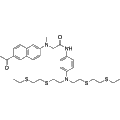
    TP-α is a glucagon-selective two-photon fluorescent probe with a dissociation constant (Kd) of 65 μM. This probe directly interacts with glucagon, resulting in a significant enhancement of fluorescence. TP-α selectively stains viable glucagon-secreting α cells within pancreatic islets, facilitating the visualization of their localization, distribution, and availability. It is particularly valuable for applications in diabetes research.

    Out of stock

    All 3 sizes
  • ACu1
    Cat. No.
    A43759

    ACu1

    ACu1 is a copper (I)-selective two-photon fluorescent probe designed for the visualization and imaging of Cu+ distribution in living cells and tissues. This reagent enables researchers to study copper homeostasis and investigate the role of copper ions in cellular processes. Its high sensitivity and selectivity make it an essential tool for biological research involving metal ion dynamics.

    Out of stock

    All 3 sizes
  • AG2
    Cat. No.
    A43760

    AG2

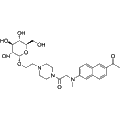
    AG2 is a two-photon fluorescent probe that selectively targets glucose uptake through glucose-specific transport systems, promoting cellular internalization. This compound demonstrates preferential accumulation in cancer cells and colon cancer tissues compared to normal cells, primarily localizing in mitochondria, with additional distribution in the cytoplasm and cell membrane. AG2 is valuable for research focused on colon cancer dynamics and metabolism.

    Out of stock

    All 3 sizes
  • CDg4
    Cat. No.
    A43763

    CDg4

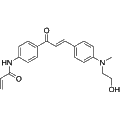
    CDg4 is a green fluorescent probe designed for specific binding to glycogen on the surfaces of mouse embryonic stem cell colonies. As a member of the fluorescent diamino-chalcone library, CDg4 serves as a valuable tool in cellular imaging and visualization studies, enabling researchers to investigate glycogen dynamics and localization within stem cell environments. Its fluorescent properties make it ideal for various biological applications, especially in stem cell research and metabolic studies.

    Out of stock

    All 3 sizes
  • BD-105
    Cat. No.
    A43765

    BD-105

    BD-105 is a glucagon-binding fluorescent probe with a dissociation constant (Ka) of 13.3 μM. This reagent displays significant changes in fluorescence intensity upon binding to glucagon, enabling the visualization of glucagon-secreting cells in various biological contexts. BD-105 selectively labels these cells while avoiding staining of insulin-secreting and non-endocrine control cells. It is an invaluable tool for imaging glucagon in live cells and tissues, facilitating studies in metabolic regulation and endocrine functions.

    Out of stock

    All 3 sizes
  • Calcein
    Cat. No.
    A43766

    Calcein

    Synonyms: Fluorexon

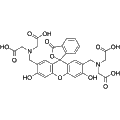
    Calcein is a fluorescent dye primarily used for assessing lipid vesicle leakage and as a complexometric indicator for calcium ion titration with EDTA. This compound is valuable for fluorometric determination of calcium levels within biological samples. Due to its inability to cross intact cell membranes, Calcein serves as a model compound for evaluating drug delivery systems, facilitating research on drug efficiency and bioavailability.

    50 mg
    $30.00
    100 mg
    $40.00
    All 4 sizes
  • BOCA-1-BG
    Cat. No.
    A43767

    BOCA-1-BG

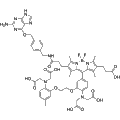
    BOCA-1-BG is a BODIPY-labeled SNAP tag fluorescence probe designed for the detection of intracellular Ca2+ concentration. This compound functions as a highly sensitive fluorescent indicator for Ca2+, enabling real-time monitoring of calcium levels in various biological research applications. It is suitable for use in studies involving calcium signaling pathways and cellular responses to calcium fluctuations.

    Out of stock

    All 3 sizes
  • SNAP-Peroxy-Green-1
    Cat. No.
    A43768

    SNAP-Peroxy-Green-1

    Synonyms: SPG1

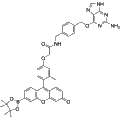
    SNAP-Peroxy-Green-1 is a fluorescent probe designed for the selective detection of hydrogen peroxide (H2O2) in the extracellular environment and on cell membranes. This compound utilizes the SNAP-tag technology, enabling targeted visualization of oxidative stress and reactive oxygen species. Its primary applications include studying redox biology, investigating cellular signaling pathways, and enhancing our understanding of oxidative damage in various biological systems.

    Out of stock

    All 3 sizes
  • ZP1BG
    Cat. No.
    A43769

    ZP1BG

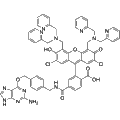
    ZP1BG is a fluorescent probe designed for the specific detection of Zn2+ ions, formed through the covalent attachment of the zinc sensor ZP1 from the Zinpyr family to a benzyl guanine moiety. This reagent allows for the imaging and quantification of Zn2+ concentrations within neuronal organelles, including the Golgi apparatus and mitochondria. Its application is valuable for studies focused on zinc's role in cellular signaling and neurobiology.

    Out of stock

    All 3 sizes
  • MI-BP-CC
    Cat. No.
    A43770

    MI-BP-CC

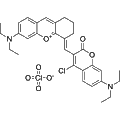
    MI-BP-CC is a mitochondrial-targeting near-infrared fluorescent probe that localizes specifically within the mitochondria of live cells. It operates by visualizing mitochondrial viscosity through its fluorescent emission at 722 nm. This compound is useful for studies investigating mitochondrial function and dynamics in cellular environments.

    Out of stock

    All 3 sizes
  • CN-N2
    Cat. No.
    A43773

    CN-N2

    CN-N2 is a visible light fluorescent probe designed for high selectivity and rapid tissue penetration. This reagent demonstrates excellent biocompatibility and imaging efficacy, making it ideal for intraoperative rapid imaging of atherosclerotic plaques. Its properties facilitate enhanced visualization in biomedical research, particularly in the study of cardiovascular diseases.

    Out of stock

    All 3 sizes
  • OBADC-TPA
    Cat. No.
    A43774

    OBADC-TPA

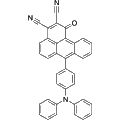
    OBADC-TPA is a novel photosensitizer that demonstrates effective absorption of light, facilitating photodynamic applications. This compound is utilized for the modification of nanoparticles, enhancing their imaging capabilities. It is particularly beneficial for precise optical imaging and the investigation of lymphoma, contributing to advancements in cancer research and diagnostics.

    Out of stock

    All 3 sizes
  • NBzF-BG
    Cat. No.
    A43775

    NBzF-BG

    NBzF-BG is a H2O2-specific fluorescent probe that exhibits visible absorption centered at 505 nm and displays weak fluorescence with an emission peak at 525 nm. When conjugated covalently and selectively with the SNAP-tag protein, it forms a fluorophore-protein conjugate (SNAP-NBzF) that rapidly reacts with hydrogen peroxide. This reaction leads to a significant enhancement in fluorescence, making NBzF-BG a valuable tool for studying oxidative stress and hydrogen peroxide dynamics in biological systems.

    Out of stock

    All 3 sizes

Items 501-525 of 2505

Added to your cart

View Cart Checkout

    Loading...