All Dyes

All Dyes is the single product list for the Fluorescent Dyes, Probes & Stains section. Many dyes here have no application or dye-family subcategory, so the list is the broadest way to browse the range. It suits searches by product name when the required dye is already known. Examples range from the near-infrared cyanine indocyanine green and the ratiometric calcium indicator Fura-2 pentapotassium to the nucleic acid stains Hoechst 33258 trihydrochloride and SYBR Green II. Classical stains such as hematoxylin, reactive labeling dyes and enzyme substrates are listed alongside them. For selection by task or by core structure, the parent Fluorescent Dyes, Probes & Stains page groups dyes by application and dye family.

Items 451-475 of 2505

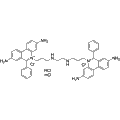
  • Ethidium homodimer
    Cat. No.
    A43670

    Ethidium homodimer

    Synonyms: EthD-1

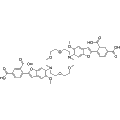
    Ethidium homodimer is a high-affinity fluorescent nucleic acid dye targeting DNA and RNA. It exhibits enhanced fluorescence upon binding, with an increase of over 30 times, making it an effective tool for detecting nucleic acids in various biological samples, including mammalian cells, bacteria, yeast, and fungi. Due to its positive charge, Ethidium homodimer is unable to penetrate live cell membranes; however, it can access the nuclei of dead cells, resulting in the emission of red fluorescence. This characteristic makes it suitable for applications involving cell viability and nucleic acid detection, with an excitation/emission wavelength of 528/617 nm.

    0.5 mg
    $495.00
    1 mg
    $660.00
    All 2 sizes
  • DiAzKs
    Cat. No.
    A43671

    DiAzKs

    Synonyms: H-L-Photo-lysine

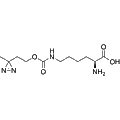
    DiAzKs (H-L-Photo-lysine) is a diazirine-containing amino acid that functions as a photo-crosslinker. This compound enables site-selective incorporation into proteins, facilitating the study of protein-protein interactions both in vitro and in living cells. Activated by UV light, DiAzKs serves as an effective probe for photo-crosslinking applications in chemical biology and biophysical research.

    1 mg
    $55.00
    5 mg
    $140.00
    All 4 sizes
  • Calcein (tetraethyl ester)
    Cat. No.
    A43673

    Calcein (tetraethyl ester)

    Synonyms: Fluorexon tetraethyl ester

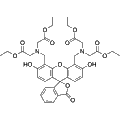
    Calcein (tetraethyl ester) is a fluorescent dye that permeates cellular membranes, enabling its use in live cell imaging. This compound is widely utilized for assessing cell viability and for short-term labeling applications in biological research. Its strong fluorescence allows for effective visualization of cellular processes in various experimental contexts.

    2 mg
    $25.00
    5 mg
    $40.00
    All 6 sizes
  • Propidium monoazide
    Cat. No.
    A43674

    Propidium monoazide

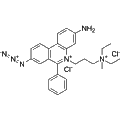
    Propidium monoazide (PMA) is a cell-impermeant photoreactive DNA-binding dye that selectively targets double-stranded DNA (dsDNA). It effectively prevents the amplification of DNA derived from dead bacteria during polymerase chain reaction (PCR), enhancing both the specificity and sensitivity of PCR assays. Additionally, PMA serves as a click chemistry reagent, containing an azide group that participates in copper-catalyzed azide-alkyne cycloaddition (CuAAc) and strain-promoted alkyne-azide cycloaddition (SPAAC) reactions with alkyne-containing molecules, DBCO, or BCN groups, facilitating advanced chemical labeling and analysis in research applications.

    1 mg
    $320.00
    All 1 sizes
  • FBBBE
    Cat. No.
    A43677

    FBBBE

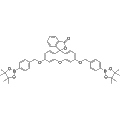
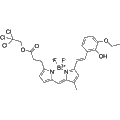
    FBBBE is a selective fluorescent dye for the detection of hydrogen peroxide (H2O2) within cells. Upon exposure to intracellular H2O2, FBBBE undergoes a chemical transformation to fluorescein, leading to enhanced intracellular fluorescence (Ex=480 nm, Em=512 nm). This compound is valuable in studies examining oxidative stress and cellular responses to reactive oxygen species.

    1 mg
    $60.00
    All 1 sizes
  • 5(6)-Carboxynaphthofluorescein
    Cat. No.
    A43678

    5(6)-Carboxynaphthofluorescein

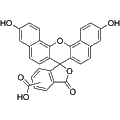
    5(6)-Carboxynaphthofluorescein is a pH-sensitive fluorophore known for its ability to fluoresce within an alkaline pH range. This compound serves as an effective fluorescent pH indicator, with excitation and emission wavelengths of 593 nm and 668 nm, respectively. It is particularly useful in the development of fiber-optic pH sensors and various biological and chemical research applications that require real-time pH monitoring.

    5 mg
    $40.00
    10 mg
    $65.00
    All 3 sizes
  • C12 NBD Sphingomyelin
    Cat. No.
    A43679

    C12 NBD Sphingomyelin

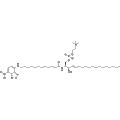
    C12 NBD Sphingomyelin serves as a substrate for sphingomyelinase, incorporating a fluorescent C12 nitrobenzoxadiazole tag. This reagent enables the study of sphingomyelin metabolism and transport under fluorescence microscopy or spectroscopy, with an excitation wavelength of 470 nm and emission at 525 nm. Its application is critical for researchers investigating sphingolipid dynamics and related cellular processes.

    0.1 mg
    $190.00
    All 1 sizes
  • Fura-2 pentapotassium
    Cat. No.
    A43680

    Fura-2 pentapotassium

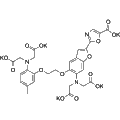
    Fura-2 pentapotassium is a cell-impermeable fluorescent dye designed for intracellular calcium imaging, targeting Ca2+ ions. It exhibits an emission wavelength of 510 nm, with excitation wavelengths at 340 nm and 380 nm. The fluorescence intensity ratio of 340 nm to 380 nm is directly proportional to intracellular Ca2+ levels, making it a valuable tool for studies related to calcium signaling and cellular physiology.

    0.5 mg
    $160.00
    1 mg
    $295.00
    All 3 sizes
  • Meldola blue
    Cat. No.
    A43681

    Meldola blue

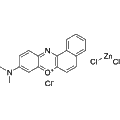
    Meldola blue is a fluorescent dye primarily used as a biosensor for measuring lactate levels in serum. This reagent is designed for application on screen-printed carbon electrodes modified with Meldola's Blue-Reinecke salt (MBRS-SPCE) and incorporates the lactate dehydrogenase NAD+-dependent enzyme derived from pig heart, in conjunction with NAD+. It facilitates sensitive detection of lactate, making it valuable for research in metabolic studies and clinical diagnostics.

    10 mg
    $25.00
    25 mg
    $50.00
    All 4 sizes
  • (±)-ANAP hydrochloride
    Cat. No.
    A43682

    (±)-ANAP hydrochloride

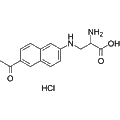
    (±)-ANAP hydrochloride is an unnatural amino acid analog of prodan that functions as a fluorescent probe, enhancing the sensitivity to environmental changes. Its unique fluorescent properties make it valuable for studying protein conformational dynamics and interactions in various biological systems. This reagent is commonly utilized in fluorescence spectroscopy and microscopy applications to monitor changes in cellular environments.

    5 mg
    $305.00
    10 mg
    $505.00
    All 5 sizes
  • AIE-ER
    Cat. No.
    A43684

    AIE-ER

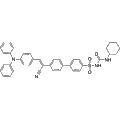
    AIE-ER is an advanced fluorescent probe designed for targeting the endoplasmic reticulum (ER), functioning through the aggregation-induced emission (AIE) mechanism. This probe displays exceptional photostability and high brightness, making it suitable for sensitive imaging applications. AIE-ER enables researchers to investigate ER-related pathologies, providing insights into cellular processes and disease mechanisms associated with ER dysfunction.

    5 mg
    $155.00
    10 mg
    $265.00
    All 5 sizes
  • 3-C12-NBD-cholesterol
    Cat. No.
    A43685

    3-C12-NBD-cholesterol

    Synonyms: 3-Dodecanoyl-NBD-cholesterol

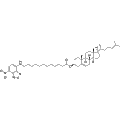
    3-C12-NBD-cholesterol is a fluorescent cholesterol analog that targets cellular membranes to facilitate the study of cholesterol trafficking dynamics. This compound allows for real-time visualization and quantification of membrane and intracellular cholesterol distribution in various biological systems. It is an essential tool for investigating membrane biology, lipid metabolism, and the role of cholesterol in cellular processes.

    Out of stock

    All 3 sizes
  • Resorufin acetate
    Cat. No.
    A43686

    Resorufin acetate

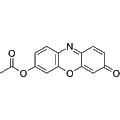
    Resorufin acetate is a fluorescent dye that selectively targets hydrazine, enabling sensitive detection in various biological samples. This compound exhibits strong fluorescence upon reduction, making it a valuable tool in research applications focused on environmental monitoring, biochemical assays, and the study of oxidative stress. Its utility in detecting hydrazine enhances analytical capabilities in both research and laboratory settings.

    5 mg
    $55.00
    10 mg
    $110.00
    All 4 sizes
  • PBFI
    Cat. No.
    A43688

    PBFI

    PBFI is a cell-impermeant fluorescent indicator primarily targeting potassium ions (K+). It is utilized for quantitative determination of K+ concentrations, exhibiting excitation and emission maxima at 340/500 nm and 380/500 nm, respectively. This reagent is essential for research applications involving ion channel studies and cellular signaling mechanisms related to potassium homeostasis.

    1 mg
    $655.00
    All 1 sizes
  • 9-Anthryldiazomethane
    Cat. No.
    A43689

    9-Anthryldiazomethane

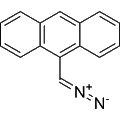
    9-Anthryldiazomethane is a fluorescent labeling reagent that selectively targets fatty acids and their derivatives for detection. This compound enables sensitive fluorescence-based assays, facilitating the study of lipid metabolism and related biological processes. Its application in fluorescent labeling makes it a valuable tool in biochemical research.

    1 mg
    $110.00
    5 mg
    $180.00
    All 2 sizes
  • Hoechst 33342 analog 2 trihydrochloride
    Cat. No.
    A43691

    Hoechst 33342 analog 2 trihydrochloride

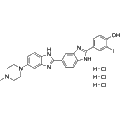
    Hoechst 33342 analog 2 trihydrochloride is a DNA intercalating agent primarily targeting A/T-rich regions within the double-stranded DNA. This live-cell nuclear marker exhibits enhanced fluorescence upon binding, making it an effective tool for cell labeling in various biological studies. Its fluorescence intensity is also influenced by the pH of the solution, which can be advantageous for certain imaging applications. This reagent is widely used in research involving cell cycle analysis, apoptosis detection, and chromatin studies.

    5 mg
    $325.00
    10 mg
    $505.00
    All 5 sizes
  • 2',7'-Difluorofluorescein
    Cat. No.
    A43692

    2',7'-Difluorofluorescein

    Synonyms: Oregon green 488

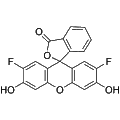
    2',7'-Difluorofluorescein is a pH-sensitive fluorescent probe with a pKa of approximately 4.7. It provides ratiometric pH analysis through altered fluorescence intensity upon excitation at 488 nm, facilitating quantitative pH measurements between 2 and 7, particularly in submicron aerosol particles. This compound is notable for its ability to undergo buffer-mediated excited-state proton transfer and maintain stable fluorescence characteristics in physiological pH ranges, making it suitable for applications in fluorescent imaging, calcium indicator systems, and as a fluorescent protein label. Additionally, it demonstrates resistance to photodegradation, ensuring reliability in experimental settings.

    5 mg
    $35.00
    10 mg
    $60.00
    All 5 sizes
  • BD-Oligo
    Cat. No.
    A43695

    BD-Oligo

    BD-Oligo is an oligomer-specific fluorescent chemical probe that selectively targets Aβ oligomer assemblies, distinguishing them from monomers and fibrils. Utilizing diversity-directed fluorescent library screening and advanced computational techniques, BD-Oligo enables real-time monitoring of oligomer formation during Aβ peptide fibrillogenesis. Additionally, this probe demonstrates blood-brain barrier permeability, allowing for in vivo staining of Aβ oligomers, making it a valuable tool for studying Alzheimer's disease and related neurodegenerative processes.

    5 mg
    $240.00
    10 mg
    $390.00
    All 5 sizes
  • H2TMpyP-2 chloride
    Cat. No.
    A43696

    H2TMpyP-2 chloride

    Synonyms: Tetrakis(2-N-methylpyridyl)porphine chloride

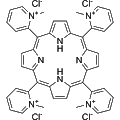
    H2TMpyP-2 chloride is a potent photosensitizer that demonstrates strong absorption in the visible to near-infrared spectrum and exhibits a high singlet oxygen quantum yield. This compound is particularly useful in supramolecular nanosynthesis to enhance singlet oxygen production, photostability, and overall photosensitization, making it a valuable tool for photodynamic therapy applications. Additionally, the H2TMpyP-2 chloride has shown antibacterial effects against Escherichia coli and cytotoxic activity against A549 lung cancer cells, supporting its utility in both antimicrobial and anticancer research.

    5 mg
    $220.00
    10 mg
    $380.00
    All 2 sizes
  • Brom0phenol blue sodium
    Cat. No.
    A43697

    Brom0phenol blue sodium

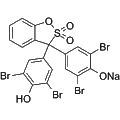
    Bromophenol blue sodium is a pH indicator that exhibits a color transition from yellow at pH 3.0 to blue at pH 4.6. This compound is widely utilized in molecular biology applications as a tracking dye for monitoring the progress of agarose and polyacrylamide gel electrophoresis. Its ability to indicate pH changes makes it a valuable tool in various biochemical assays and experiments.

    1 g
    $25.00
    All 1 sizes
  • Gol-NTR
    Cat. No.
    A43698

    Gol-NTR

    Gol-NTR is a Golgi-targetable probe that selectively activates upon interaction with Nitroreductase (NTR). This compound is designed for the visualization of acute lung injury (ALI) and its repair mechanisms, demonstrating high sensitivity with a detection limit of 54.8 ng/mL. Gol-NTR is particularly valuable in research applications aimed at monitoring and assessing cellular responses to sepsis-induced ALI, facilitating insights into injury and recovery processes within the Golgi apparatus.

    5 mg
    $125.00
    10 mg
    $210.00
    All 5 sizes
  • 3-(Dansylamino)phenylboronic acid
    Cat. No.
    A43699

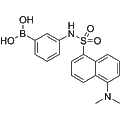
    3-(Dansylamino)phenylboronic acid

    3-(Dansylamino)phenylboronic acid acts as a glucose detection agent through its ability to reversibly bind to glucose, forming stable complexes. This compound exhibits fluorescence properties, making it suitable for monitoring glucose levels in various biological samples. Its applications extend to research in diabetes, metabolism, and the development of glucose-sensitive materials.

    2 mg
    $100.00
    5 mg
    $110.00
    All 6 sizes
  • FM1-84
    Cat. No.
    A43700

    FM1-84

    Synonyms: Neurodye GH1-84

    FM1-84 is a cell membrane fluorescent dye that serves as a valuable tool for visualizing synaptic vesicle recycling in neurons. Its lipophilic properties enable effective membrane association, enhancing fluorescence intensity with excitation at 510 nm and emission at 625 nm. This compound is essential for studies focusing on neuronal activity, membrane dynamics, and synaptic processes.

    5 mg
    $260.00
    All 1 sizes
  • CLR1501
    Cat. No.
    A43702

    CLR1501

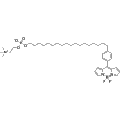
    CLR1501 is a fluorescently labeled analog of CLR1404, specifically designed for cancer cell imaging. This compound exhibits selective localization in cancer cells, allowing for enhanced visualization and study of tumor biology. CLR1501 can be utilized in various research applications, including cancer diagnostics and the assessment of tumor response to treatments.

    1 mg
    $380.00
    5 mg
    $975.00
    All 6 sizes
  • KMG-301AM
    Cat. No.
    A43704

    KMG-301AM

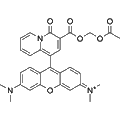
    KMG-301AM is an acetoxymethyl ester of KMG-301 designed as a Mg2+ fluorescent probe targeting mitochondria. Upon accumulation within mitochondria, KMG-301AM is hydrolyzed to the active form, KMG-301, which is selective for Mg2+ detection in intact cells. This compound remains retained in the mitochondria due to the impermeable nature of the mitochondrial membrane, allowing it to reliably indicate variations in mitochondrial Mg2+ concentration and facilitate studies of Mg2+ transport across the mitochondrial membrane in cellular models.

    Out of stock

    All 3 sizes

Items 451-475 of 2505

Added to your cart

View Cart Checkout

    Loading...