All Dyes

All Dyes is the single product list for the Fluorescent Dyes, Probes & Stains section. Many dyes here have no application or dye-family subcategory, so the list is the broadest way to browse the range. It suits searches by product name when the required dye is already known. Examples range from the near-infrared cyanine indocyanine green and the ratiometric calcium indicator Fura-2 pentapotassium to the nucleic acid stains Hoechst 33258 trihydrochloride and SYBR Green II. Classical stains such as hematoxylin, reactive labeling dyes and enzyme substrates are listed alongside them. For selection by task or by core structure, the parent Fluorescent Dyes, Probes & Stains page groups dyes by application and dye family.

Items 2176-2200 of 2505

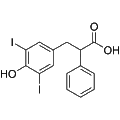
  • Iodoalphionic acid
    Cat. No.
    A94864

    Iodoalphionic acid

    Synonyms: Priodax; Pheniodol

    Iodoalphionic acid is a contrast agent that targets the hepatobiliary system, facilitating imaging studies of the gallbladder. It enhances the visibility of gallbladder structures during diagnostic imaging procedures, making it valuable for evaluating biliary pathologies. Its use is critical in clinical settings for accurate gallbladder assessment and diagnosis.

    25 mg
    $1,275.00
    All 1 sizes
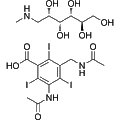
  • Iodamide meglumine
    Cat. No.
    A94902

    Iodamide meglumine

    Synonyms: Renovue 65

    Iodamide meglumine is a trityl ion contrast agent that primarily functions by blocking X-rays. It is commonly utilized in diagnostic procedures such as cholangiography and cholecystography to visualize the gallbladder and bile ducts. Additionally, Iodamide meglumine exhibits renal tubular active secretion properties, making it suitable for applications in intravenous urography. This reagent is essential for enhancing imaging clarity in various radiographic studies.

    Out of stock

    All 3 sizes
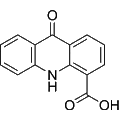
  • Acridone-4-carboxylic acid
    Cat. No.
    A95093

    Acridone-4-carboxylic acid

    Acridone-4-carboxylic acid (ACA) is a heme-interacting compound that effectively prevents free heme-mediated protein oxidation and degradation. With an IC50 value of 43 μM, ACA inhibits protein carbonyl formation, making it a valuable tool in studies related to oxidative stress and protein integrity. Its unique properties support research applications focused on the mechanisms of oxidative damage and potential protective agents.

    5 mg
    $40.00
    10 mg
    $65.00
    All 5 sizes
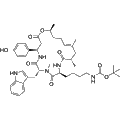
  • Jasplakinolide probe-1
    Cat. No.
    A95690

    Jasplakinolide probe-1

    Jasplakinolide probe-1 is a derivative of Jasplakinolide, specifically designed as a probe targeting actin dynamics. This compound exhibits significant anti-proliferative activity by disrupting the balance of actin filament dynamics, which leads to the collapse of cell lamellipodia. Jasplakinolide probe-1 is particularly useful for imaging actin structures within cells when conjugated with a fluorescent dye, facilitating studies in cellular morphology and motility.

    Out of stock

    All 3 sizes
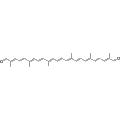
  • 4,4'-Diapo-ω,ω-carotene-4,4'-dial
    Cat. No.
    A95734

    4,4'-Diapo-ω,ω-carotene-4,4'-dial

    4,4'-Diapo-ω,ω-carotene-4,4'-dial is a carotenoid pigment that plays a critical role in various biological processes. It is known to influence cellular differentiation, growth regulation, and photooxidative protection, while also contributing to cell membrane stability. This compound is valuable for research applications related to photosynthesis, vision biology, and nutritional studies, aiding in the exploration of carotenoid functionalities and their potential health benefits.

    Out of stock

    All 3 sizes
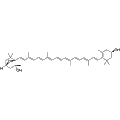
  • Cucurbitaxanthin A
    Cat. No.
    A96318

    Cucurbitaxanthin A

    Synonyms: Capsolutein

    Cucurbitaxanthin A is a carotenoid pigment distinguished by its unique 3,6-oxabicycloheptane end group. This compound exhibits significant potential in biological research, particularly in studies involving antioxidant activity and pigment functions in plants. Its distinctive structure and properties make it a valuable tool for investigating the roles of carotenoids in photosynthesis and photoprotection.

    Out of stock

    All 3 sizes
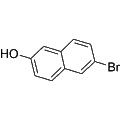
  • 6-Bromo-2-naphthol
    Cat. No.
    A97808

    6-Bromo-2-naphthol

    6-Bromo-2-naphthol serves as a real-time polymerase chain reaction (RTP) probe, forming a stable complex with β-cyclodextrin (β-CD) to enhance nucleic acid detection. This compound enables the real-time monitoring of PCR reactions, allowing for precise quantification of specific nucleic acid sequences. With applications in gene expression analysis, SNP genotyping, and pathogen detection, 6-Bromo-2-naphthol utilizes hydrophobic interactions to inhibit quenching by oxygen, resulting in a phosphorescent signal. Additionally, it can function as an intermediate for the synthesis of antibacterial azo dyes, demonstrating effective antibacterial activity against pathogens such as Staphylococcus aureus and Escherichia coli.

    1 g
    $25.00
    25 g
    $30.00
    All 4 sizes
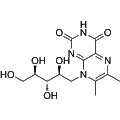
  • 6,7-Dimethyl-8-ribityllumazine
    Cat. No.
    A98731

    6,7-Dimethyl-8-ribityllumazine

    6,7-Dimethyl-8-ribityllumazine is a direct biosynthetic precursor of riboflavin, functioning primarily by facilitating riboflavin synthesis in biological systems. This compound serves as a noncovalently bound fluorophore in lumazine protein, which is important for various fluorescent applications in biochemical research. Its role in riboflavin metabolism makes it a valuable tool for studies on vitamin B2 synthesis and enzymatic processes associated with this pathway.

    1 mg
    $1,045.00
    All 1 sizes
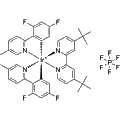
  • [Ir(dF(Me)ppy)2(dtbbpy)]PF6
    Cat. No.
    B10975

    [Ir(dF(Me)ppy)2(dtbbpy)]PF6

    Ir(dF(Me)ppy)2(dtbbpy)PF6 is a blue-green luminescent material that exhibits unstructured emission with peak maxima at 498, 512, and 519 nm. This compound serves as an effective electrochemiluminescence-based biological probe, making it valuable for various biological research applications. Its unique luminescent properties provide opportunities for innovative studies in the field of bioimaging and analytical chemistry.

    50 mg
    $20.00
    100 mg
    $30.00
    All 6 sizes
  • Fluoresterol
    Cat. No.
    B10980

    Fluoresterol

    Synonyms: 22-NBD Cholesterol

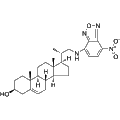
    Fluoresterol (22-NBD Cholesterol) is a cholesterol-specific fluorescent probe designed to bind selectively to cholesterol transport-related proteins, including ABCA1 and ABCG1. This compound serves as a valuable tool for studying cholesterol metabolism, enabling visualization and quantitative analysis of cholesterol absorption, efflux, intracellular transport dynamics, and reverse cholesterol transport processes. Fluoresterol is particularly useful in research exploring the mechanisms underlying hyperlipidemia, atherosclerosis, and non-alcoholic fatty liver disease (NAFLD). Common application concentrations range from 0.1 to 10 μM in vitro and doses of 5 to 20 mg/kg for in vivo studies, with excitation and emission wavelengths of 472 nm and 540 nm, respectively.

    0.5 mg
    $50.00
    1 mg
    $95.00
    All 6 sizes
  • Sulfo-Cy5-Mal
    Cat. No.
    B10985

    Sulfo-Cy5-Mal

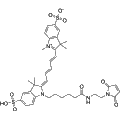
    Sulfo-Cy5-Mal is a reactive fluorescent dye designed to covalently label proteins via thiol groups, forming stable conjugates. This dye is ideal for applications requiring sensitive detection, quantification, and imaging of proteins in various biological assays. Its strong fluorescence enables high-resolution analyses in immunofluorescence, flow cytometry, and multiplexing experiments, facilitating advanced protein research.

    1 mg
    $60.00
    5 mg
    $150.00
    All 4 sizes
  • SBP-3264
    Cat. No.
    B10986

    SBP-3264

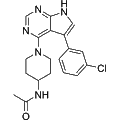
    SBP-3264 is a fluorescent dye that serves as a valuable chemical probe for investigating the roles of STK3 and STK4 kinases in acute myeloid leukemia (AML). This compound is specifically designed to aid in the analysis of cellular signaling pathways and can enhance understanding of AML pathogenesis. Its unique fluorescent properties enable effective visualization and tracking in various research applications related to cancer biology.

    1 mg
    $25.00
    5 mg
    $50.00
    All 6 sizes
  • ICG-DBCO
    Cat. No.
    B10989

    ICG-DBCO

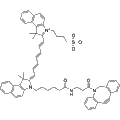
    ICG-DBCO is a near-infrared fluorescent dye targeting biological imaging applications. Its fluorescence emits at 813 nm upon excitation at 789 nm, making it suitable for labeling cells, biomolecules, and particles. This compound is essential for various research applications, including in vivo imaging and fluorescence microscopy, allowing for enhanced visualization of biological processes.

    5 mg
    $225.00
    10 mg
    $345.00
    All 2 sizes
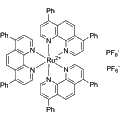
  • Ru(dpp)3(PF6)2
    Cat. No.
    B10991

    Ru(dpp)3(PF6)2

    Ru(dpp)3(PF6)2 is a ruthenium-based complex functioning as a chemiluminescent oxygen probe. This compound exhibits efficient metal-to-ligand charge transfer (MLCT) processes, resulting in observable fluorescence, which is significantly quenched in the presence of molecular oxygen. Its unique properties make Ru(dpp)3(PF6)2 suitable for applications in biosensors, environmental monitoring, and materials science. Additionally, its ability to oxidize Ru2+ to Ru3+ has been harnessed in the design of solid-state light-emitting electrochemical cells.

    25 mg
    $25.00
    50 mg
    $40.00
    All 3 sizes
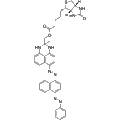
  • SBB-Analogue (GL13) Biotin
    Cat. No.
    B10992

    SBB-Analogue (GL13) Biotin

    Synonyms: GL13; SBB-A-B

    SBB-Analogue (GL13) Biotin is a fluorescent dye derived from Sudan Black B, conjugated to biotin. This reagent specifically detects senescent cells, overcoming the false positive staining issues associated with SA-β-gal due to factors such as serum starvation and cell confluency. SBB-Analogue (GL13) Biotin is suitable for applications in flow cytometry and immunofluorescence analysis, providing a reliable tool for studying cellular senescence in various biological contexts.

    5 mg
    $175.00
    10 mg
    $335.00
    All 3 sizes
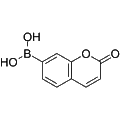
  • Coumarin boronic acid
    Cat. No.
    B10994

    Coumarin boronic acid

    Coumarin boronic acid serves as a fluorescent probe with excitation and emission wavelengths of 360 nm and 430 nm, respectively. This reagent facilitates real-time monitoring of amino acid and protein hydroxyl peroxides, thereby contributing to the understanding of oxidative stress and protein post-translational modifications. Its applications are valuable for researchers studying cellular mechanisms and redox biology.

    5 mg
    $60.00
    10 mg
    $100.00
    All 5 sizes
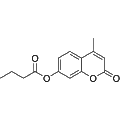
  • 4-Methylumbelliferyl butyrate
    Cat. No.
    B10995

    4-Methylumbelliferyl butyrate

    4-Methylumbelliferyl butyrate is a coumarin-based fluorogenic substrate primarily utilized for the identification of Moraxella catarrhalis C4-esterase. Upon enzymatic cleavage, it is converted to the highly fluorescent 4-methylumbelliferone, enabling sensitive detection and quantification of enzymatic activity. This reagent is valuable in biochemical assays and research applications involving enzyme kinetics and substrate specificity.

    25 mg
    $20.00
    50 mg
    $25.00
    All 5 sizes
  • Methyl red
    Cat. No.
    B11000

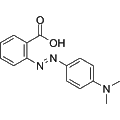
    Methyl red

    Methyl red is an azo dye that functions as a pH-sensitive acid-base indicator with a pKa of 5.1. It facilitates visual determination of titration endpoints by undergoing reversible structural changes related to protonation (red at pH 6.2). Methyl red is extensively utilized in acid-base titrations and for monitoring buffer pH in biochemical research.

    100 g
    $20.00
    All 1 sizes
  • Coppersensor-3
    Cat. No.
    B11002

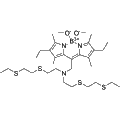
    Coppersensor-3

    Coppersensor-3 is a highly selective fluorescent probe designed for the detection of Cu(I) ions. With its robust sensitivity, Coppersensor-3 enables the imaging of labile copper pools within living cells at endogenous levels. This reagent is ideal for investigations into copper's biological roles and dynamics in cell biology research.

    1 mg
    $180.00
    5 mg
    $555.00
    All 2 sizes
  • 8-Hydroxyjulolidine-9-carboxaldehyde
    Cat. No.
    B11004

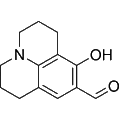
    8-Hydroxyjulolidine-9-carboxaldehyde

    Synonyms: 9-Formyl-8-hydroxyjulolidine

    8-Hydroxyjulolidine-9-carboxaldehyde is a selective fluorescent probe targeting hydrogen sulfide (H2S) and silicate (SiO32−). This compound functions through the inhibition of intramolecular charge transfer (ICT), resulting in significant fluorescence enhancement upon interaction with weak acid ions. It is particularly valuable for research applications involving fluorescence imaging of hydrogen sulfide in living cells, providing insights into biological processes associated with this important signaling molecule.

    1 g
    $30.00
    5 g
    $105.00
    All 3 sizes
  • NBD-Fructose
    Cat. No.
    B11005

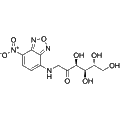
    NBD-Fructose

    NBD-Fructose is a fluorescent derivative of fructose, created through the coupling of NBD-chloride with the amino group of fructose. It exhibits fluorescence with excitation and emission maxima at 472 nm and 538 nm, respectively. This reagent is primarily utilized in biological assays to study carbohydrate metabolism and transport, providing a valuable tool in research involving cellular imaging and detection of fructose in various biological samples.

    0.5 mg
    $170.00
    1 mg
    $305.00
    All 4 sizes
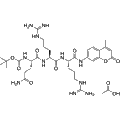
  • Boc-Gln-Arg-Arg-AMC acetate
    Cat. No.
    B11006

    Boc-Gln-Arg-Arg-AMC acetate

    Boc-Gln-Arg-Arg-AMC acetate is a fluorogenic substrate specifically designed for the evaluation of protease activity. Upon hydrolysis, it releases 7-amino-4-methylcoumarin (AMC), a fluorescent compound that emits strong fluorescence under UV light. This property makes it an essential tool for monitoring proteolytic events in biochemical research and assays.

    5 mg
    $145.00
    10 mg
    $225.00
    All 2 sizes
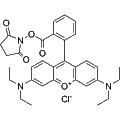
  • Rhodamine B NHS ester
    Cat. No.
    B11007

    Rhodamine B NHS ester

    Synonyms: N-Hydroxysuccinimidyl rhodamine B ester

    Rhodamine B NHS ester is an amine-reactive fluorescent probe that efficiently labels amine-containing biomolecules. With excitation and emission wavelengths of 564 nm and 589 nm, respectively, it is widely utilized in various biological applications, including protein tagging and cellular imaging. This reagent can specifically react with primary amines, enabling researchers to study protein interactions and localization in live cells and complex biological systems.

    5 mg
    $235.00
    10 mg
    $335.00
    All 4 sizes
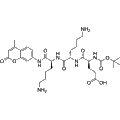
  • Boc-Glu-Lys-Lys-AMC
    Cat. No.
    B11008

    Boc-Glu-Lys-Lys-AMC

    Boc-Glu-Lys-Lys-AMC is a fluorogenic substrate specifically designed for urokinase-activated plasmin. This compound enables the sensitive detection of plasmin activity, facilitating research in fibrinolysis and related biological processes. Its applications extend to studying proteolytic activity in various physiological and pathological conditions.

    5 mg
    $180.00
    10 mg
    $295.00
    All 2 sizes
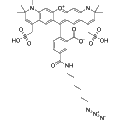
  • Alexa Fluor 594 azide
    Cat. No.
    B11009

    Alexa Fluor 594 azide

    Alexa Fluor 594 azide is a fluorescent dye modified with an azide group, functioning as a FRET acceptor. Its minimal direct absorption under 488 nm excitation ensures excellent photostability and compatibility with various donor dyes, making it suitable for single-molecule imaging applications using total internal reflection fluorescence microscopy (TIRFM). This reagent is particularly valuable for visualizing copper nanoparticle-catalyzed click reactions, facilitating detailed studies of reaction dynamics and mechanisms.

    1 mg
    $190.00
    5 mg
    $490.00
    All 4 sizes

Items 2176-2200 of 2505

Added to your cart

View Cart Checkout

    Loading...