All Dyes

All Dyes is the single product list for the Fluorescent Dyes, Probes & Stains section. Many dyes here have no application or dye-family subcategory, so the list is the broadest way to browse the range. It suits searches by product name when the required dye is already known. Examples range from the near-infrared cyanine indocyanine green and the ratiometric calcium indicator Fura-2 pentapotassium to the nucleic acid stains Hoechst 33258 trihydrochloride and SYBR Green II. Classical stains such as hematoxylin, reactive labeling dyes and enzyme substrates are listed alongside them. For selection by task or by core structure, the parent Fluorescent Dyes, Probes & Stains page groups dyes by application and dye family.

Items 2326-2350 of 2505

  • 5(6)-Carboxyrhodamine 110
    Cat. No.
    B11205

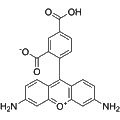
    5(6)-Carboxyrhodamine 110

    5(6)-Carboxyrhodamine 110 is an amine-reactive fluorescent probe that targets nucleic acids, proteins, and cells, exhibiting excitation and emission maxima at 498 nm and 530 nm, respectively. This compound is widely utilized in various applications, including fluorescence microscopy, flow cytometry, and cellular imaging, facilitating studies of biomolecular interactions and cellular processes. The stability and brightness of 5(6)-Carboxyrhodamine 110 make it an invaluable tool in molecular biology and biochemistry research.

    Out of stock

    All 3 sizes
  • NPE-caged-HPTS sodium
    Cat. No.
    B11207

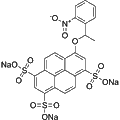
    NPE-caged-HPTS sodium

    NPE-caged-HPTS sodium is a caged fluorophore that becomes fluorescent upon the release of the free highly polar fluorophore HPTS. With excitation at 470 nm and emission at 525 nm, HPTS facilitates the rapid and uniform monitoring of diffusion processes within tissues. This characteristic makes it a valuable tool for studying diffusion coefficients comparable to that of synaptic L-glutamate, providing insights into cellular dynamics.

    5 mg
    $475.00
    All 1 sizes
  • NBD dodecanoic acid N-succinimidyl ester
    Cat. No.
    B11208

    NBD dodecanoic acid N-succinimidyl ester

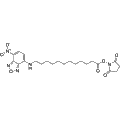
    NBD dodecanoic acid N-succinimidyl ester is a fluorescent dye that incorporates a long-chain fatty acid moiety, enabling targeting of lipid-rich cellular environments. This compound can be utilized for labeling and tracking biological molecules, facilitating fluorescence microscopy and imaging studies. Its ability to stably conjugate to amine-containing biomolecules enhances its application in cellular and molecular biology research.

    Out of stock

    All 3 sizes
  • Cbz-Lys-Lys-PABA-AMC diTFA
    Cat. No.
    B11209

    Cbz-Lys-Lys-PABA-AMC diTFA

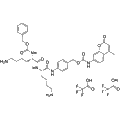
    Cbz-Lys-Lys-PABA-AMC diTFA is a fluorogenic peptide designed to function as a substrate for proteases. It exhibits high specificity for certain enzymes, enabling the detection and quantification of proteolytic activity in biological samples. This compound is valuable in studies requiring the measurement of enzyme kinetics, protease activity, and related metabolic processes.

    Out of stock

    All 3 sizes
  • Cy5-DSPE
    Cat. No.
    B11210

    Cy5-DSPE

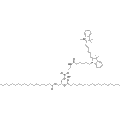
    Cy5-DSPE is a fluorescent phospholipid that serves as a vital tool for membrane labeling and imaging applications. Its unique fluorescent properties enable researchers to study cell membrane dynamics, lipid interactions, and membrane-associated processes in living cells. This compound is particularly useful for applications in fluorescence microscopy and various biophysical assays, contributing to advanced understanding in cellular research and diagnostics.

    1 mg
    $95.00
    5 mg
    $215.00
    All 4 sizes
  • 1,N6-Ethenoadenosine 5'-monophosphate sodium
    Cat. No.
    B11211

    1,N6-Ethenoadenosine 5'-monophosphate sodium

    Synonyms: 1,N6-Etheno-AMP sodium; 1,N6-ε-AMP sodium

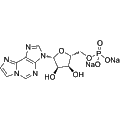
    1,N6-Ethenoadenosine 5'-monophosphate sodium is a highly fluorescent analog of adenosine 5'-monophosphate (AMP) designed for use as a fluorescent probe. This compound exhibits strong fluorescence properties, with excitation occurring in the range of 250-300 nm and emission at 415 nm, enabling sensitive detection at low concentrations. It serves as a valuable tool in research applications focused on adenosine signaling pathways, allowing for the investigation of cellular mechanisms involving AMP.

    Out of stock

    All 3 sizes
  • Dabsyl-Leu-Gly-Gly-Gly-Ala-Edans
    Cat. No.
    B11212

    Dabsyl-Leu-Gly-Gly-Gly-Ala-Edans

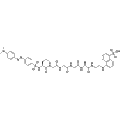
    Dabsyl-Leu-Gly-Gly-Gly-Ala-Edans is a Dabsyl-labeled peptide designed as a fluorophore substrate for studying peptidase activity. It serves as a specific probe for evaluating the enzymatic activity of the LasA protease from Pseudomonas aeruginosa. This reagent is valuable in research focused on protease function and substrate specificity, facilitating insights into microbial proteolytic mechanisms.

    Out of stock

    All 3 sizes
  • Mca-KPLGL-Dap(Dnp)-AR-NH2 TFA
    Cat. No.
    B11214

    Mca-KPLGL-Dap(Dnp)-AR-NH2 TFA

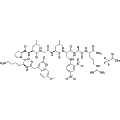
    Mca-KPLGL-Dap(Dnp)-AR-NH2 TFA is a fluorogenic substrate specifically designed for matrix metalloproteinases (MMPs). Upon cleavage by MMPs, 7-methoxycoumarin-4 acetyl (Mac) is released, exhibiting fluorescence that can be quantified to assess MMP activity. This substrate is particularly useful in studying the role of MMPs in various biological processes and diseases. Mac shows excitation and emission wavelengths at 328 nm and 420 nm, respectively, facilitating sensitive detection in biochemical assays.

    1 mg
    $115.00
    5 mg
    $535.00
    All 4 sizes
  • 18:1-18:1-C11 BODIPY 505/515 TG
    Cat. No.
    B11215

    18:1-18:1-C11 BODIPY 505/515 TG

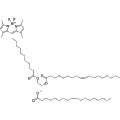
    18:1-18:1-C11 BODIPY 505/515 TG is a fluorescently labeled triglyceride designed for the measurement of triacylglycerol hydrolases. With excitation and emission wavelengths of 495 nm and 503 nm, respectively, this reagent serves as a valuable tool for studying lipid metabolism and enzyme activity in various biological systems. It is particularly suitable for assays investigating triglyceride turnover and lipid homeostasis.

    Out of stock

    All 3 sizes
  • Di-sulfo squarefluor 640/660 free acid
    Cat. No.
    B11216

    Di-sulfo squarefluor 640/660 free acid

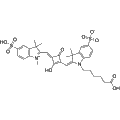
    Di-sulfo squarefluor 640/660 free acid is a fluorescent lipid designed for the visualization of cell membranes, with excitation and emission wavelengths of 640 nm and 660 nm, respectively. This reagent is suitable for applications in fluorescence microscopy and cellular imaging, facilitating studies of membrane dynamics and cellular architecture. Its distinct fluorescence properties enable enhanced contrast and clarity in biological assays.

    Out of stock

    All 3 sizes
  • AOI 987
    Cat. No.
    B11217

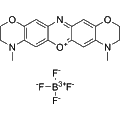
    AOI 987

    AOI 987 is an oxazine dye that serves as a fluorescent molecule, enabling visual tracking of biological macromolecules. Its ability to bind effectively to various biomolecules facilitates its use in fluorescence microscopy and cellular imaging applications, making it a valuable tool for researchers investigating cellular processes and biomolecular interactions.

    Out of stock

    All 3 sizes
  • Pegulicianine
    Cat. No.
    B11219

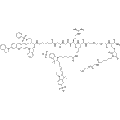
    Pegulicianine

    Synonyms: LUM015 free base

    Pegulicianine is an activatable fluorescent imaging agent primarily used in fluorescence-guided surgery. Its properties enable effective visualization of tumor margins during surgical procedures, particularly in breast cancer. This imaging agent enhances the accuracy of tumor resection, thereby improving patient outcomes in oncological surgeries.

    Out of stock

    All 3 sizes
  • PF-06649283
    Cat. No.
    B11220

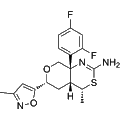
    PF-06649283

    PF-06649283 is a fluorescent dye that exhibits potential intracellular activity. Its effects may be influenced by cellular metabolism, protein-protein interactions, post-translational modifications, and asymmetric localization within cells. This compound demonstrates variable potency at the cellular level compared to recombinant enzymes, a distinction that is important for drug discovery applications. The enhanced intracellular potency of PF-06649283 is essential for its use as both a probe and a therapeutic agent in research settings.

    Out of stock

    All 3 sizes
  • D-Luciferin phosphate trisodium
    Cat. No.
    B11222

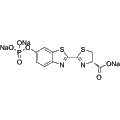
    D-Luciferin phosphate trisodium

    D-Luciferin phosphate trisodium is a bioluminescent substrate specifically designed for firefly luciferase. Upon dephosphorylation by alkaline phosphatase, it releases the fluorescent compound D-fluorescein, enabling highly sensitive detection of phosphatase activity. This reagent is widely utilized in biochemical assays and molecular biology research to study enzyme kinetics and substrate interactions.

    Out of stock

    All 3 sizes
  • Boc-Glu(OBzl)-Gly-Arg-AMC
    Cat. No.
    B11223

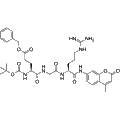
    Boc-Glu(OBzl)-Gly-Arg-AMC

    Boc-Glu(OBzl)-Gly-Arg-AMC is a fluorogenic substrate specifically designed for the detection of factors IXa and XIIa. Upon enzymatic cleavage of the amide bond between arginine and the methylcoumarin amide moiety, it releases the fluorescent compound 7-Amino-4-methylcoumarin. This substrate is valuable for biochemical assays focused on studying coagulation pathways and enzyme activity.

    Out of stock

    All 3 sizes
  • 2-Aza-ε-adenosine
    Cat. No.
    B11226

    2-Aza-ε-adenosine

    Synonyms: 2-Aza-1,N6-ethenoadenosine

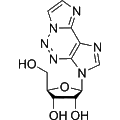
    2-Aza-ε-adenosine is a multifunctional dye recognized for its utility in biological research. This compound facilitates the observation and analysis of cellular structures, tracking of biomolecules, and evaluation of cell functions, making it an invaluable tool in various research applications, including tissue pathology and microbiological monitoring. Additionally, 2-Aza-ε-adenosine finds diverse uses beyond biological studies, such as in textile dyeing and emerging technologies like dye-sensitized solar cells.

    Out of stock

    All 3 sizes
  • TRH-AMC
    Cat. No.
    B11227

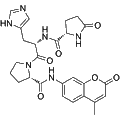
    TRH-AMC

    TRH-AMC serves as a fluorogenic substrate specifically for the enzyme that degrades thyrotropin-releasing hormone (TRH). By utilizing this substrate in coupled assays, researchers can effectively study the biochemical activity of TRH-degrading ectoenzymes. This compound is valuable for investigating the enzymatic processes involved in hormonal regulation and related physiological pathways.

    Out of stock

    All 3 sizes
  • M-2420
    Cat. No.
    B11231

    M-2420

    M-2420 is a fluorogenic substrate designed to target the β-secretase site of the Swedish mutation of amyloid precursor protein (APP). This compound exhibits key biological activity by facilitating the detection and quantification of β-secretase activity, which is crucial for understanding amyloidogenic processes in Alzheimer’s disease. M-2420 is suitable for research applications focused on neurodegenerative diseases and protein cleavage mechanisms.

    1 mg
    $230.00
    5 mg
    $755.00
    All 2 sizes
  • GSH Tracker Probe
    Cat. No.
    B11233

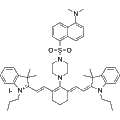
    GSH Tracker Probe

    GSH Tracker Probe (CPDSA) is a cyanine-based fluorescent probe designed for the selective detection of glutathione (GSH) with near-infrared (NIR) emission characteristics. Excited at 635 nm and emitting between 655-755 nm, this probe enables real-time monitoring and imaging of GSH levels in live cells and in vivo models. It serves as a valuable tool for studies related to oxidative stress, cellular redox states, and various pathological conditions linked to glutathione alterations.

    Out of stock

    All 3 sizes
  • Z-VDVAD-AFC
    Cat. No.
    B11234

    Z-VDVAD-AFC

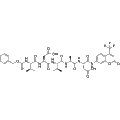
    Z-VDVAD-AFC is a fluorogenic substrate designed to measure the activity of cysteine protease 3 (Caspase-3). Upon hydrolysis, Z-VDVAD-AFC releases 7-amino-4-trifluoromethylcoumarin (AFC), which exhibits strong fluorescence under ultraviolet light. This property enables researchers to monitor proteolytic activity in various biological assays, facilitating studies in apoptosis, cell signaling, and disease mechanisms.

    Out of stock

    All 3 sizes
  • Primulin
    Cat. No.
    B11235

    Primulin

    Synonyms: Primuline

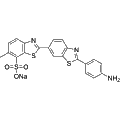
    Primulin is a fluorescent dye that exhibits strong binding affinity for albumin, making it a valuable tool in various analytical and biological studies. This compound effectively labels plant cell walls and distinguishes between live and dead spermatozoa through distinct fluorescence patterns. In neurobiology, Primulin serves as a retrograde axonal tracer, while its derivatives demonstrate inhibitory activity against HCV NS3 and interference with dengue virus NS3-mediated ATP hydrolysis. Additionally, Primulin disrupts HCV replicase assembly, highlighting its potential in virology research applications.

    Out of stock

    All 3 sizes
  • Cyanine 3.5 azide
    Cat. No.
    B11236

    Cyanine 3.5 azide

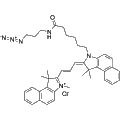
    Cyanine 3.5 azide is a fluorescent dye featuring an azide functional group, making it suitable for click chemistry applications. It effectively participates in copper-catalyzed azide-alkyne cycloaddition (CuAAc) reactions with alkyne-containing compounds, as well as in strain-promoted alkyne-azide cycloaddition (SPAAC) with DBCO or BCN groups. This versatile reagent exhibits excitation and emission maxima at 591 nm and 604 nm, respectively, and is ideal for labeling and imaging studies in chemical biology and biomolecular research.

    Out of stock

    All 3 sizes
  • 4-Methyl-7-(2-nitrophenoxy)-2H-chromen-2-one
    Cat. No.
    B11237

    4-Methyl-7-(2-nitrophenoxy)-2H-chromen-2-one

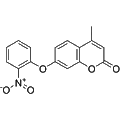
    4-Methyl-7-(2-nitrophenoxy)-2H-chromen-2-one functions as a selective fluorescent probe for selenols, utilizing a nucleophilic aromatic substitution mechanism. This compound demonstrates the ability to accurately detect selenols in neutral aqueous environments while minimizing interference from thiols, amines, and alcohols commonly found in biological systems. Its applications include quantifying selenium levels in selenoenzymes and visualizing endogenous selenol activity in live cells.

    1 mg
    $85.00
    5 mg
    $255.00
    All 6 sizes
  • Meso-Cl cyanine 7 free acid chloride
    Cat. No.
    B11239

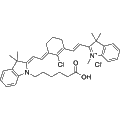
    Meso-Cl cyanine 7 free acid chloride

    Meso-Cl cyanine 7 free acid chloride is a fluorescent dye targeting amine groups on biomolecules. It is particularly useful for labeling antibodies, nucleic acids, and proteins, enabling enhanced visualization in various fluorescence detection techniques including microscopy and flow cytometry. The dye exhibits excitation and emission wavelengths of 778 nm and 805 nm, respectively, making it suitable for multiplex applications in biological research.

    Out of stock

    All 3 sizes
  • Ac-GAK-AMC
    Cat. No.
    B11242

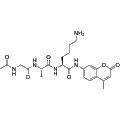
    Ac-GAK-AMC

    Ac-GAK-AMC is a fluorescent substrate designed to measure protease activity through the hydrolysis of the compound. Upon enzymatic cleavage by proteases, Ac-GAK-AMC releases 7-amino-4-methylcoumarin (AMC), resulting in a detectable fluorescent signal. This reagent is suitable for various research applications, including enzyme assays and studying proteolytic pathways.

    Out of stock

    All 3 sizes
Items 2326-2350 of 2505

Added to your cart

View Cart Checkout

    Loading...