All Dyes

All Dyes is the single product list for the Fluorescent Dyes, Probes & Stains section. Many dyes here have no application or dye-family subcategory, so the list is the broadest way to browse the range. It suits searches by product name when the required dye is already known. Examples range from the near-infrared cyanine indocyanine green and the ratiometric calcium indicator Fura-2 pentapotassium to the nucleic acid stains Hoechst 33258 trihydrochloride and SYBR Green II. Classical stains such as hematoxylin, reactive labeling dyes and enzyme substrates are listed alongside them. For selection by task or by core structure, the parent Fluorescent Dyes, Probes & Stains page groups dyes by application and dye family.

Items 2351-2375 of 2505

  • A 53693
    Cat. No.
    B11243

    A 53693

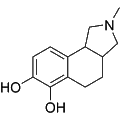
    A 53693 is a fluorescent dye that selectively acts as an adrenergic agonist, primarily targeting alpha-2 receptor subtypes. This compound demonstrates a high affinity for certain rat alpha-2 receptors while exhibiting low affinity for alpha-1 receptors. A 53693 serves as a valuable probe in biological research, enabling the investigation of molecular interactions between alpha agonist compounds and their respective receptors.

    25 mg
    $1,530.00
    50 mg
    $1,950.00
    All 3 sizes
  • Flutax 1
    Cat. No.
    B11244

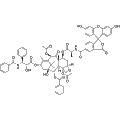
    Flutax 1

    Flutax 1 is a fluorescent derivative of Paclitaxel that effectively targets microtubules. Its unique fluorescent properties, with an excitation/emission wavelength of 495 nm/520 nm, enable precise microtubule staining in cellular studies. This compound is ideal for investigating microtubule dynamics and interactions in various biological research applications.

    1 mg
    $580.00
    All 1 sizes
  • NE11808
    Cat. No.
    B11245

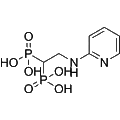
    NE11808

    NE11808 is a fluorescent dye that acts as an antiresorptive agent by inhibiting osteoclast prenylation. It effectively suppresses protein prenylation in osteoclasts, making it a valuable tool for studying osteoclastic activity and bone resorption processes. This compound is particularly useful in research applications related to bone biology and osteoporosis.

    25 mg
    $1,275.00
    50 mg
    $1,625.00
    All 3 sizes
  • Ala-Ala-Phe-AMC TFA
    Cat. No.
    B11246

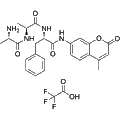
    Ala-Ala-Phe-AMC TFA

    Ala-Ala-Phe-AMC TFA is a fluorogenic substrate utilized for the assessment of tri-peptidyl peptidase II (TPPII) activity. This compound provides a sensitive tool for monitoring enzymatic activity, facilitating research in proteolytic processes and related biological pathways. Its fluorescent properties make it valuable for various applications in biochemical assays and enzyme kinetics studies.

    25 mg
    $1,275.00
    50 mg
    $1,625.00
    All 3 sizes
  • 18:1 SquareFluor(629/648) PE ammonium
    Cat. No.
    B11247

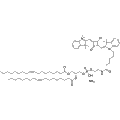
    18:1 SquareFluor(629/648) PE ammonium

    18:1 SquareFluor(629/648) PE ammonium is a fluorescent lipid designed for visualization of cell membranes, excitable at 629 nm with emission at 648 nm. This reagent enables precise imaging applications in cellular biological studies, providing insights into membrane dynamics and organization. Its fluorescent properties make it an essential tool for researchers investigating lipid interactions and cell membrane behavior.

    Out of stock

    All 3 sizes
  • 14:0-6:0(C2 NBD) PI(4,5)P2 TEA
    Cat. No.
    B11248

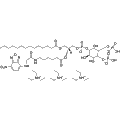
    14:0-6:0(C2 NBD) PI(4,5)P2 TEA

    14:0-6:0(C2 NBD) PI(4,5)P2 TEA is a fluorescent phosphoinositide labeled with Nitrobenzoxadiazole (NBD), exhibiting excitation and emission maxima at 460 nm and 540 nm, respectively. This compound is useful for studying lipid signaling pathways and membrane dynamics in various biological systems. Its fluorescent properties enable visualization of phosphoinositide localization and interactions in cellular contexts, making it an essential tool for researchers investigating cell signaling mechanisms.

    Out of stock

    All 3 sizes
  • Ala-Phe-Lys-AMC
    Cat. No.
    B11249

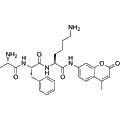
    Ala-Phe-Lys-AMC

    Ala-Phe-Lys-AMC is a fluorogenic substrate designed for the assessment of residual plasmin activity. This compound releases a fluorescent signal upon cleavage, allowing for sensitive detection and quantification of plasmin activity in various biological samples. It is widely utilized in research applications focusing on fibrinolysis and related proteolytic processes.

    Out of stock

    All 3 sizes
  • Radermachol
    Cat. No.
    B11250

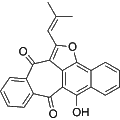
    Radermachol

    Radermachol is a red pigment characterized by its synthesis through a four-step process involving key ytterbium triflate-catalyzed furan cyclization and intramolecular nucleophilic acylation. This compound serves as a valuable tool in chemical biology and dye chemistry research, enabling studies on pigment properties and applications in various materials science contexts. Its distinct color and reactivity make it suitable for exploring biochemical interactions and properties related to pigmentation.

    25 mg
    $1,275.00
    50 mg
    $1,625.00
    All 3 sizes
  • Ac4ManNDAz
    Cat. No.
    B11251

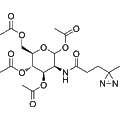
    Ac4ManNDAz

    Ac4ManNDAz is a cell-permeable photocross-linking probe that selectively competes with endogenous sialic acid for incorporation into surface glycoproteins. Upon UV light irradiation, it effectively forms cross-links with glycoprotein ligands, facilitating the investigation of glycoprotein interactions. This reagent is valuable for applications in glycobiology and the study of glycoprotein-mediated cellular processes.

    1 mg
    $145.00
    5 mg
    $365.00
    All 5 sizes
  • 4-Methylumbelliferyl β-D-ribofuranoside
    Cat. No.
    B11252

    4-Methylumbelliferyl β-D-ribofuranoside

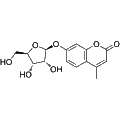
    4-Methylumbelliferyl β-D-ribofuranoside serves as a fluorogenic substrate for β-ribosidase, a critical enzyme involved in the hydrolysis of ribonucleosides. Its cleavage generates a fluorescent signal, allowing for sensitive detection and quantification of β-ribosidase activity. This compound is widely utilized in biochemical assays and enzyme activity studies, facilitating research in enzymology and cellular metabolism.

    10 mg
    $95.00
    25 mg
    $175.00
    All 4 sizes
  • MCA-AVLQSGFR-Lys(Dnp)-Lys-NH2
    Cat. No.
    B11254

    MCA-AVLQSGFR-Lys(Dnp)-Lys-NH2

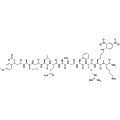
    MCA-AVLQSGFR-Lys(Dnp)-Lys-NH2 is a fluorescent substrate designed for fluorescence resonance energy transfer (FRET) protease assays. This compound effectively facilitates the measurement of SARS-CoV-2 3CLpro activity, enabling researchers to investigate protease activity in viral infections and assess potential therapeutic interventions. Its use in biochemical assays provides valuable insights into enzyme kinetics and protein interactions in disease models.

    0.5 mg
    $100.00
    1 mg
    $160.00
    All 2 sizes
  • (E)-2-Hexadecenal alkyne
    Cat. No.
    B11255

    (E)-2-Hexadecenal alkyne

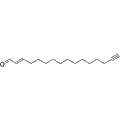
    (E)-2-Hexadecenal alkyne is a fluorescent dye that serves as a chemical probe to investigate the cellular targets of 2-trans-Hexadecenal. This compound covalently modifies a range of proteins within cells, making it an effective tool for studying diseases associated with lipid metabolism. Researchers can utilize this reagent to gain insights into protein interactions and signaling pathways influenced by lipid-derived compounds.

    0.5 mg
    $340.00
    1 mg
    $640.00
    All 3 sizes
  • Mito-laurdan bromide
    Cat. No.
    B11256

    Mito-laurdan bromide

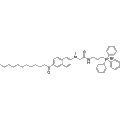
    Mito-laurdan bromide is a fluorescent probe designed to target lipid environments within mitochondria. This compound features a cationic triphenylphosphonium moiety that selectively accumulates at the inner mitochondrial membrane due to the negative membrane potential, connected by a three-carbon linker. Mito-laurdan bromide enables the study of lipid dynamics and organization in mitochondrial membranes, making it an invaluable tool for research in bioenergetics and mitochondrial function.

    Out of stock

    All 3 sizes
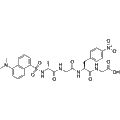
  • Dansyl-D-Ala-Gly-Phe(pNO2)-Gly
    Cat. No.
    B11257

    Dansyl-D-Ala-Gly-Phe(pNO2)-Gly

    Dansyl-D-Ala-Gly-Phe(pNO2)-Gly is a synthetic peptide substrate designed for use as a fluorescent dye. It selectively targets neutral endopeptidase (NEP), which recognizes and cleaves the peptide, releasing the fluorescent dansyl group. This property enables quantitative assessment of NEP activity, making it a valuable tool in research focused on enzyme kinetics and functional assays involving NEP modulation.

    Out of stock

    All 3 sizes
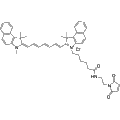
  • Cyanine 7.5 maleimide chloride
    Cat. No.
    B11258

    Cyanine 7.5 maleimide chloride

    Cyanine 7.5 maleimide chloride is a near-infrared fluorescent dye, designed for specific labeling applications in biochemical research. This compound exhibits exceptional properties, including a long wavelength, high extinction coefficient, and excellent water solubility, making it an ideal choice for the selective labeling of proteins, antibodies, and small molecules. It can facilitate efficient conjugation through a straightforward mixing reaction, enabling researchers to visualize and track biomolecules with precision in various applications such as cellular imaging and protein interaction studies.

    Out of stock

    All 3 sizes
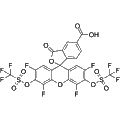
  • HKSOX-1
    Cat. No.
    B11259

    HKSOX-1

    HKSOX-1 is a fluorescent dye specifically designed for the sensitive and selective detection of superoxide anion radicals (O2•−) within cellular environments. Utilizing an aryl trifluoromethanesulfonate moiety, this probe undergoes O2•−-mediated cleavage, resulting in the release of a free phenol and subsequent fluorescence emission. HKSOX-1 exhibits high specificity and sensitivity across various pH levels and is resistant to interference from common oxidants and reductants in biological systems. Its derivative, HKSOX-1r, is optimized for cellular retention and has been effectively utilized in assays such as confocal microscopy, flow cytometry, and zebrafish embryo research, making it valuable for studies related to O2•− in inflammation and mitochondrial stress.

    5 mg
    $945.00
    10 mg
    $1,670.00
    All 2 sizes
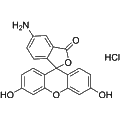
  • 5-Aminofluorescein hydrochloride
    Cat. No.
    B11261

    5-Aminofluorescein hydrochloride

    Synonyms: 5-AF hydrochloride

    5-Aminofluorescein hydrochloride is a highly effective fluorescent dye primarily utilized for protein labeling. This reagent exhibits strong fluorescence activity, making it ideal for cell imaging and the development of molecular probes in biomedical research. Its capabilities enable the visualization of protein localization and dynamic changes, facilitating a deeper understanding of biological processes. Additionally, 5-Aminofluorescein hydrochloride is valuable for detecting interactions between biomolecules, thereby aiding in the analysis of complex biological phenomena.

    25 mg
    $1,275.00
    50 mg
    $1,625.00
    All 3 sizes
  • PP-biotin
    Cat. No.
    B11262

    PP-biotin

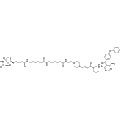
    PP-biotin is an irreversible biotin-labeled probe designed for the identification and characterization of specific proteins and biomolecules. Its biotin moiety enables a strong and stable interaction with avidin or streptavidin, facilitating various detection and enrichment applications in biochemical research. This reagent is particularly useful in affinity purification, proteomics, and cellular localization studies.

    Out of stock

    All 3 sizes
  • NBD-FTY720 phenoxy hydrochloride
    Cat. No.
    B11263

    NBD-FTY720 phenoxy hydrochloride

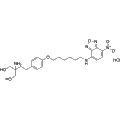
    NBD-FTY720 phenoxy hydrochloride is a fluorescently-labeled analog of FTY720, a potent modulator of sphingosine 1-phosphate (S1P) receptors. This compound provides a valuable tool for studying S1P receptor signaling pathways in various biological contexts. Its fluorescence allows for visualization and tracking in cellular assays, making it suitable for research applications in immunology, cardiovascular studies, and neurobiology.

    0.1 mg
    $60.00
    0.5 mg
    $260.00
    All 4 sizes
  • Calpain-1 substrate, fluorogenic
    Cat. No.
    B11264

    Calpain-1 substrate, fluorogenic

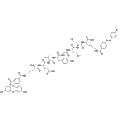
    Calpain-1 substrate, fluorogenic is a sensitive and specific substrate designed for detecting calpain-1 activity. This substrate is cleaved at the Tyr-Gly bond, resulting in enhanced fluorescence detectable at excitation/emission wavelengths of 490 nm/518 nm. It is valuable in studying calpain-related processes and evaluating the role of calpain-1 in various biological contexts.

    Out of stock

    All 3 sizes
  • NIR-RED ATP Probe
    Cat. No.
    B11266

    NIR-RED ATP Probe

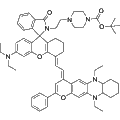
    NIR-RED ATP Probe is a near-infrared (NIR-II) fluorescent probe that selectively binds to adenosine triphosphate (ATP). This probe enables non-invasive, high-contrast detection of ATP concentration changes at the cellular level, while minimizing interference with other abundant biomolecules. Its utility as a biomarker detection tool makes the NIR-RED ATP Probe applicable in research related to drug-induced liver injury (DILI).

    Out of stock

    All 3 sizes
  • (E)-Cyanine 3.5 chloride
    Cat. No.
    B11267

    (E)-Cyanine 3.5 chloride

    Synonyms: (E)-Cy3.5 NHS ester chloride; (E)-Cy 3.5 chloride

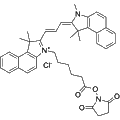
    (E)-Cyanine 3.5 chloride is a fluorescent dye that features a N-hydroxysuccinimide (NHS) moiety, enabling efficient labeling of biomolecules. The NHS group allows for the formation of stable ester bonds upon reaction with amines, making it suitable for conjugation applications. With excitation and emission wavelengths of 586 nm and 612 nm, respectively, (E)-Cyanine 3.5 chloride is highly useful in various biological imaging and assay applications, including fluorescence microscopy and flow cytometry.

    Out of stock

    All 3 sizes
  • Ac-Gly-Ala-Lys(Ac)-AMC
    Cat. No.
    B11269

    Ac-Gly-Ala-Lys(Ac)-AMC

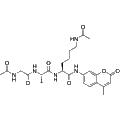
    Ac-Gly-Ala-Lys(Ac)-AMC is a fluorogenic substrate designed for the precise measurement of protease activity. Upon hydrolysis, it liberates the fluorescent compound 7-amino-4-methylcoumarin (AMC), which emits a fluorescent signal when exposed to UV light. This reagent is particularly valuable for studies in protease function and activity assays in various biological research applications.

    Out of stock

    All 3 sizes
  • FFN-102 trifluoroacetate
    Cat. No.
    B11270

    FFN-102 trifluoroacetate

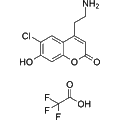
    FFN-102 trifluoroacetate is a false neurotransmitter that serves as a pH-dependent fluorescent probe for the visualization of neuronal structures. This compound effectively labels dopamine cell bodies, axons, and presynaptic terminals, making it valuable for studies in neurobiology and neurotransmission. Its biological activity allows for detailed investigation and imaging of dopamine-related pathways in various research applications.

    5 mg
    $305.00
    10 mg
    $725.00
    All 2 sizes
  • 16:0-LR/18:1/18:1 TG - Lissamine rhodamine
    Cat. No.
    B11271

    16:0-LR/18:1/18:1 TG - Lissamine rhodamine

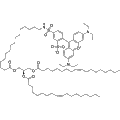
    16:0-LR/18:1/18:1 TG - Lissamine rhodamine is a fluorescent lipid that serves as a versatile tracer for biological studies. This compound is widely utilized in cell membrane research, allowing for the visualization of lipid dynamics and cellular localization through fluorescence microscopy. Its unique properties enable researchers to explore various applications, including lipid metabolism, membrane fluidity, and cellular interactions.

    Out of stock

    All 3 sizes

Items 2351-2375 of 2505

Added to your cart

View Cart Checkout

    Loading...