All Dyes

All Dyes is the single product list for the Fluorescent Dyes, Probes & Stains section. Many dyes here have no application or dye-family subcategory, so the list is the broadest way to browse the range. It suits searches by product name when the required dye is already known. Examples range from the near-infrared cyanine indocyanine green and the ratiometric calcium indicator Fura-2 pentapotassium to the nucleic acid stains Hoechst 33258 trihydrochloride and SYBR Green II. Classical stains such as hematoxylin, reactive labeling dyes and enzyme substrates are listed alongside them. For selection by task or by core structure, the parent Fluorescent Dyes, Probes & Stains page groups dyes by application and dye family.

Items 2301-2325 of 2505

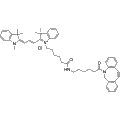
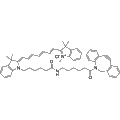
  • Cyanine 7 DBCO chloride
    Cat. No.
    B11171

    Cyanine 7 DBCO chloride

    Cyanine 7 DBCO chloride is a fluorescent lipid reagent featuring a dibenzocyclooctyne (DBCO) group that facilitates copper-free click chemistry. This compound exhibits superior biocompatibility, rapid reaction kinetics, and stability, with an excitation/emission wavelength of 745/785 nm. It is primarily utilized in biological research for fluorescent labeling and imaging applications, enabling detailed visualization of cellular structures and processes.

    Out of stock

    All 3 sizes
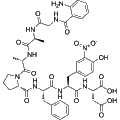
  • Fluorescent Substrate for Pro-Specific Proteases
    Cat. No.
    B11172

    Fluorescent Substrate for Pro-Specific Proteases

    Fluorescent Substrate for Pro-Specific Proteases is designed to selectively measure the activity of pro-specific proteases. This substrate emits fluorescence upon hydrolysis, allowing for the quantitative assessment of enzyme activity in various biological samples. It is suitable for applications in enzyme kinetics, protease activity assays, and for understanding proteolytic processes in cellular environments.

    Out of stock

    All 3 sizes
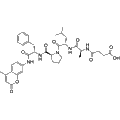
  • Suc-Ala-Leu-Pro-Phe-AMC
    Cat. No.
    B11174

    Suc-Ala-Leu-Pro-Phe-AMC

    Suc-Ala-Leu-Pro-Phe-AMC is a fluorogenic substrate specifically designed for the study of peptidyl-prolyl isomerase (PPIase) activity. Its unique structure allows for the sensitive detection of PPIase activity through fluorescence, making it an essential tool for researchers exploring protein folding and regulation. This substrate is widely applicable in biochemical assays investigating chaperone functions and the role of PPIases in various biological processes.

    Out of stock

    All 3 sizes
  • TBZ-1
    Cat. No.
    B11175

    TBZ-1

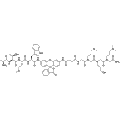
    TBZ-1 is a fluorescent probe designed to monitor the activity of the immunoproteasome (iCP) within cells. It exhibits fluorescence activation upon selective cleavage by the β5i subunit, enabling effective tracking of intracellular proteasome activity. This compound is particularly applicable in cancer research, facilitating studies on immune responses and proteasome-related pathways.

    Out of stock

    All 3 sizes
  • Acid Violet 7
    Cat. No.
    B11176

    Acid Violet 7

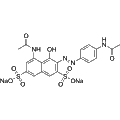
    Acid Violet 7 is an azo dye that serves as a substrate for assessing the degradation capabilities of various microorganisms. This compound is utilized in microbiological research to evaluate the efficiency of microbial strains in breaking down synthetic dyes. Its distinctive coloration and stability make it a valuable tool for studies related to bioremediation and environmental microbiology.

    50 mg
    $40.00
    100 mg
    $65.00
    All 2 sizes
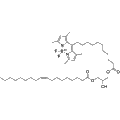
  • 18:1-C11 BODIPY 505/515 DG
    Cat. No.
    B11177

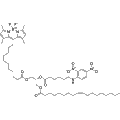
    18:1-C11 BODIPY 505/515 DG

    18:1-C11 BODIPY 505/515 DG is a fluorescently labeled glycerolipid designed for studying lipid-related biological processes. With an excitation/emission wavelength of 495/503 nm, it is an essential tool for visualizing and tracking lipid dynamics in live cells. This reagent is particularly useful in investigations of membrane biology, lipid signaling, and cellular uptake mechanisms.

    Out of stock

    All 3 sizes
  • 18:0 Sulfo-cyanine 5 PE ammonium
    Cat. No.
    B11179

    18:0 Sulfo-cyanine 5 PE ammonium

    18:0 Sulfo-cyanine 5 PE ammonium is a fluorescent lipid designed for the visualization of cell membranes, exhibiting excitation and emission wavelengths of 650 nm and 670 nm, respectively. This reagent facilitates advanced imaging techniques in cellular and molecular biology, allowing researchers to study membrane dynamics and cellular interactions. Its application is crucial in fluorescence microscopy and related imaging methods for investigating lipid bilayer properties and cellular structure.

    Out of stock

    All 3 sizes
  • Quinaldine red
    Cat. No.
    B11180

    Quinaldine red

    Quinaldine red is a fluorochrome dye utilized for the determination of the melting temperature (Tm) of proteins. This chemical probe exhibits strong fluorescent properties, making it instrumental in studies of protein stability and folding. Its applications in biochemical research include assessing thermal denaturation and providing insights into protein conformational states.

    5 g
    $40.00
    All 1 sizes
  • Dabcyl-GLRTQSFS-EDANS
    Cat. No.
    B11181

    Dabcyl-GLRTQSFS-EDANS

    Dabcyl-GLRTQSFS-EDANS is a fluorogenic peptide substrate designed to assess the enzymatic activity of Hepatitis A Virus 3C proteinase. This substrate provides a means to study proteolytic processes and the dynamics of viral infections. Its fluorescent characteristics enable the sensitive detection of enzymatic cleavage, making it a valuable tool in virology research and drug development studies.

    Out of stock

    All 3 sizes
  • Cyanine 5 azide
    Cat. No.
    B11182

    Cyanine 5 azide

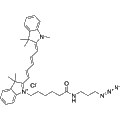
    Cyanine 5 azide is a fluorescent dye featuring an azide functional group, primarily serving as a click chemistry reagent. This compound can participate in copper-catalyzed azide-alkyne cycloaddition reactions (CuAAc) with alkyne-containing molecules, as well as strain-promoted alkyne-azide cycloaddition (SPAAC) with DBCO or BCN groups. With excitation and emission wavelengths of 633 nm and 670 nm, respectively, it is valuable for a range of biological applications, including labeling and imaging studies.

    Out of stock

    All 3 sizes
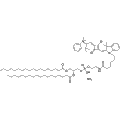
  • Cy5-DSPE chloride ammonium
    Cat. No.
    B11183

    Cy5-DSPE chloride ammonium

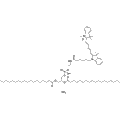
    Cy5-DSPE chloride ammonium is a fluorescent phospholipid that acts as a versatile labeling reagent for membrane studies. This compound enhances the visualization of lipid structures and cellular membranes, facilitating the analysis of biological processes such as membrane dynamics and protein-lipid interactions. Its applications include use in live cell imaging, bioluminescence assays, and lipid raft characterization, making it a valuable tool in cell biology and biochemistry research.

    Out of stock

    All 3 sizes
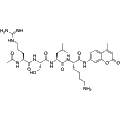
  • Ac-RSLK-AMC
    Cat. No.
    B11184

    Ac-RSLK-AMC

    Ac-RSLK-AMC is a fluorogenic peptide substrate designed to target site-1 protease (S1P). It serves as a powerful tool for quantifying the enzymatic activity of S1P in biochemical assays. This reagent is instrumental in studies related to proteolytic processing, providing insights into cellular mechanisms and regulatory pathways influenced by S1P activity.

    Out of stock

    All 3 sizes
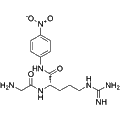
  • Gly-Arg-pNA
    Cat. No.
    B11185

    Gly-Arg-pNA

    Gly-Arg-pNA is a fluorogenic substrate utilized for the assessment of protease activity. Upon hydrolysis, it releases p-nitroaniline, a compound that exhibits fluorescence under ultraviolet light. This property enables the quantification of protease activity through the measurement of emitted fluorescent signals, making it a valuable tool in biochemical and molecular research applications.

    Out of stock

    All 3 sizes
  • Cyanine 3 DBCO chloride
    Cat. No.
    B11187

    Cyanine 3 DBCO chloride

    Cyanine 3 DBCO chloride is a fluorescent lipid labeling reagent that incorporates a cycloalkyne group for click chemistry applications. This compound features a DBCO moiety, facilitating copper-free biocompatible click reactions with rapid kinetics and excellent stability. With excitation and emission wavelengths of 550 nm and 570 nm respectively, it is ideal for labeling and visualizing biomolecules in various biological research applications, including tracking cellular processes and studying lipid interactions.

    Out of stock

    All 3 sizes
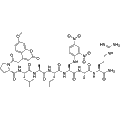
  • Mca-PLA-Nva-Dap(Dnp)-AR-NH2
    Cat. No.
    B11188

    Mca-PLA-Nva-Dap(Dnp)-AR-NH2

    Mca-PLA-Nva-Dap(Dnp)-AR-NH2 is a fluorogenic substrate specifically designed for the matrix metalloproteinase-2 (MMP-2). It enables real-time monitoring of MMP-2 activity through fluorescence, making it useful for studying proteolytic processes in various biological contexts. This substrate is valuable in research applications focusing on cancer metastasis, wound healing, and extracellular matrix remodeling.

    Out of stock

    All 3 sizes
  • Cyanine 7.5 NHS chloride
    Cat. No.
    B11189

    Cyanine 7.5 NHS chloride

    Cyanine 7.5 NHS chloride is a fluorescent dye that functions as a reactive electrophile, allowing for selective conjugation to amine-containing biomolecules. This compound is particularly useful in the development of fluorescent copolymers, such as mPEG-b-PDPA-Cy7.5, enhancing their imaging capabilities. Its fluorescent properties, with excitation and emission wavelengths of 780 nm and 820 nm respectively, make it suitable for various fluorescence imaging applications in biological research.

    Out of stock

    All 3 sizes
  • Rhod-2 triammonium
    Cat. No.
    B11192

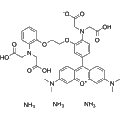
    Rhod-2 triammonium

    Rhod-2 triammonium is a cell impermeant red fluorescent calcium ion probe that targets calcium binding. This reagent exhibits a notable increase in fluorescence intensity upon calcium binding, with excitation maxima shifting from 549 nm in the calcium-free state to 552 nm in the calcium-bound state, and emission maxima at 581 nm. Rhod-2 triammonium is ideal for studying intracellular calcium dynamics and monitoring calcium fluctuations in live cells without the spectral shifts associated with UV-excitable indicators.

    Out of stock

    All 3 sizes
  • 18:1-6:0 DNP-C11 BODIPY 505/515 TG
    Cat. No.
    B11193

    18:1-6:0 DNP-C11 BODIPY 505/515 TG

    18:1-6:0 DNP-C11 BODIPY 505/515 TG is a fluorescently labeled triglyceride targeting lipid metabolism and cellular lipid dynamics. With excitation and emission wavelengths of 495 and 503 nm, respectively, this reagent enables the visualization and analysis of phosphoinositide effects in various biological processes. Its applications include studying lipid trafficking, membrane interactions, and examining lipid-related signaling pathways in cellular systems.

    Out of stock

    All 3 sizes
  • Ac-RHKK(Ac)-AMC
    Cat. No.
    B11195

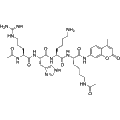
    Ac-RHKK(Ac)-AMC

    Ac-RHKK(Ac)-AMC is a fluorescent substrate designed for the investigation of SITR6 activity, which plays a role in the regulation of p53. By mimicking the H3K56 deacetylation site, this compound enhances the deacetylation signal while maintaining a low signal-to-background ratio. Ac-RHKK(Ac)-AMC is suitable for applications in aging and cancer research, providing valuable insights into the dynamics of protein acetylation and its implications in cellular processes.

    1 mg
    $40.00
    5 mg
    $100.00
    All 3 sizes
  • RU 45196
    Cat. No.
    B11196

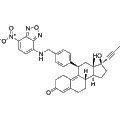
    RU 45196

    RU 45196 is an 11 beta-substituted 19-norsteroid of the estra-4,9-diene series that exhibits fluorescent properties with excitation at 480 nm and emission at 525 nm. This compound demonstrates significant binding affinities for glucocorticoid and progesterone receptors, making it a valuable tool in steroid receptor research and fluorescence imaging applications. Researchers can utilize RU 45196 to investigate steroid receptor dynamics and related biological processes.

    Out of stock

    All 3 sizes
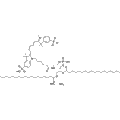
  • Squarefluor 631/646 free acid
    Cat. No.
    B11198

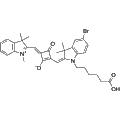
    Squarefluor 631/646 free acid

    Squarefluor 631/646 free acid is a squaraine-based fluorescent dye characterized by its excitation and emission wavelengths of 631 nm and 646 nm, respectively. This compound exhibits strong fluorescence properties, making it suitable for a variety of biological imaging applications. It is particularly useful in fluorescence microscopy and flow cytometry, enabling researchers to visualize and quantify cellular processes.

    Out of stock

    All 3 sizes
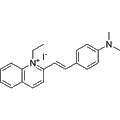
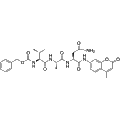
  • Z-VAN-AMC
    Cat. No.
    B11200

    Z-VAN-AMC

    Z-VAN-AMC is a fluorogenic substrate designed for the detection of proteolytic enzymes, particularly those exhibiting legumain-like activity. Upon hydrolysis, Z-VAN-AMC releases a fluorescent signal, making it valuable for studying enzyme activity in various biological systems. Its applications include investigating protease functions in plant-mite interactions and assessing legumains in other biological contexts.

    Out of stock

    All 3 sizes
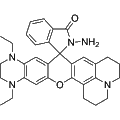
  • ONOO-LysopH
    Cat. No.
    B11201

    ONOO-LysopH

    ONOO-LysopH is a Rhodamine-based near-infrared fluorescent dye specifically designed to target lysosomal pH and detect peroxynitrite (ONOO−). This probe exhibits a significant fluorescence enhancement at approximately 686 nm under acidic conditions, while showing a rapid NIR turn-on at around 678 nm in the presence of ONOO− at physiological pH. ONOO-LysopH is ideal for live cell imaging to monitor lysosomal pH fluctuations and to visualize endogenous or exogenous peroxynitrite levels, thereby providing valuable insights into cellular processes.

    Out of stock

    All 3 sizes
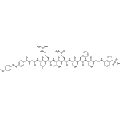
  • 18:0 SquareFluor(629/648) PE ammonium
    Cat. No.
    B11202

    18:0 SquareFluor(629/648) PE ammonium

    18:0 SquareFluor(629/648) PE ammonium is a fluorescent lipid designed for the visualization of cell membranes, with an excitation and emission wavelength of 629 and 648 nm, respectively. This compound is particularly useful in live-cell imaging and studies involving membrane dynamics. Its ability to selectively label lipid bilayers makes it an essential tool for researchers investigating cellular processes and membrane organization.

    Out of stock

    All 3 sizes
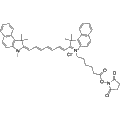
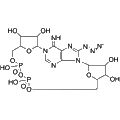
  • 8-Azido-cADPR
    Cat. No.
    B11203

    8-Azido-cADPR

    8-Azido-cADPR is a potent photoaffinity probe featuring a photoactive azido group, which enables the identification and characterization of cADPR-binding proteins. This compound acts as a click chemistry reagent, capable of undergoing copper-catalyzed azide-alkyne cycloaddition (CuAAc) with alkynes, as well as strain-promoted alkyne-azide cycloaddition (SPAAC) with DBCO or BCN groups. Its key biological activity makes it suitable for applications in protein interaction studies and bioconjugation in chemical biology research.

    Out of stock

    All 3 sizes
Items 2301-2325 of 2505

Added to your cart

View Cart Checkout

    Loading...