Search by product name, CAS, target or catalog number. Press Down Arrow to reach product suggestions, Tab to move between links, and Escape to close suggestions.
USD – US Dollar✓Current currency
Account
ROS & Oxidative Stress Probes
Select an oxidative-stress probe by the reaction and cellular compartment you need to investigate, not by the label “ROS” alone. DCF-based fluorescence, mitochondria-associated probe oxidation and membrane-associated oxidation provide different kinds of information. [1][2] The selected reagents illustrate these choices. Interpret signal changes alongside method-specific controls; fluorescence intensity alone may not identify a particular oxidant or quantify oxidative damage. [1][3]
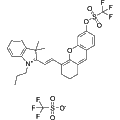
ONOO-/O2- Tracker Probe is a dual-responsive near-infrared fluorescent probe designed to selectively detect peroxynitrite (ONOO⁻) and superoxide anion (O₂•⁻) simultaneously. This probe emits a strong fluorescence signal only in the presence of both reactive oxygen and nitrogen species, making it an effective tool for monitoring oxidative stress in biological systems. Research applications include assessing drug-induced liver injury (DILI) and studying other conditions associated with oxidative damage.
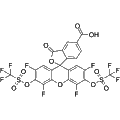
HKSOX-1 is a fluorescent dye specifically designed for the sensitive and selective detection of superoxide anion radicals (O2•−) within cellular environments. Utilizing an aryl trifluoromethanesulfonate moiety, this probe undergoes O2•−-mediated cleavage, resulting in the release of a free phenol and subsequent fluorescence emission. HKSOX-1 exhibits high specificity and sensitivity across various pH levels and is resistant to interference from common oxidants and reductants in biological systems. Its derivative, HKSOX-1r, is optimized for cellular retention and has been effectively utilized in assays such as confocal microscopy, flow cytometry, and zebrafish embryo research, making it valuable for studies related to O2•− in inflammation and mitochondrial stress.
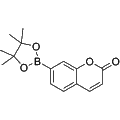
Coumarin-7-pinacolboronate is a fluorochrome dye designed for the detection of reactive oxygen species. This compound undergoes nucleophilic reactions with various oxidants, including hydrogen peroxide, hypochlorous acid, peroxynitrite, and tyrosine hydroperoxide, resulting in the formation of fluorescent products. Its ability to selectively react with these species makes it a valuable tool for studying oxidative stress and cellular signaling pathways in biological research.
H2DCFDA supports oxidation-dependent DCF measurements; it is not a direct hydrogen-peroxide concentration assay. MitoSOX is used in mitochondrial oxidation studies, but different oxidation products contribute overlapping fluorescence. [1]
Does the readout identify the species?
A red MitoSOX signal alone does not establish superoxide production. Product separation and identification are needed for that attribution. DCF chemistry can also be affected by heme proteins, metals and signal amplification reactions; use a method that can address these confounders. [1]
Is membrane oxidation the question?
C11-BODIPY has documented use as an oxidation-sensitive membrane probe. Its response should not be equated with the absolute amount of endogenous lipid oxidation: a comparison with mass spectrometry found overreporting and perturbation of oxidation in the tested system. Treat it as an indicator within a validated assay. [2][3]
Representative Reagent Comparison
Selected examples for this topic; independent of the current product page or filters.
Representative reagents and selection considerations
Not an absolute lipid-oxidation measurement. The dye overreported and inhibited oxidative damage in a model-membrane comparison. [2][3]
These probes have useful, conditional research roles. A signal change is not automatically a specific ROS concentration or proof of a particular cell-death pathway.