
Bromodomains and Bromodomain Inhibitors: A Review of the Epigenetic Reader Domain, the BET Family and the Chemical Probes Used to Study Them
What a bromodomain is, how the reader domain recognizes acetylated lysine, how BET and non-BET bromodomain inhibitors work, what the clinical trials have shown, and the concentrations used at the bench.
Technical guide from Adooq Bioscience · Product: (+)-JQ1, Cat. No. A12729 · Last reviewed: 2026-11
Bromodomain inhibitors at a glance
| Compound | Bromodomain target | Selectivity | Typical role | Cat. No. |
|---|---|---|---|---|
| (+)-JQ1 | BET: BRD2, BRD3, BRD4, BRDT | Pan-BET, both bromodomains | The reference BET chemical probe | A12729 |
| (-)-JQ1 | None | Inactive enantiomer | Negative control for (+)-JQ1 | A14160 |
| Molibresib (I-BET762) | BET | Pan-BET | Clinical-stage benzodiazepine BET inhibitor | A11440 |
| I-BET151 | BET | Pan-BET | Quinoline BET probe, used in MLL-fusion leukemia work | A11783 |
| Birabresib (OTX015) | BET | Pan-BET | Clinical-stage; phase 1 data in leukemia and lymphoma, phase 2 in glioblastoma | A13890 |
| Pelabresib (CPI-0610) | BET | Pan-BET | The BET inhibitor furthest along in clinical development | A16076 |
| Mivebresib (ABBV-075) | BET | Pan-BET, single-digit nanomolar | Potent pan-BET tool and clinical compound | A17226 |
| ABBV-744 | BET BD2 | BD2 over BD1 | Tests which phenotypes need BD2 | A16831 |
| GSK778 (I-BET-BD1) and GSK046 (I-BET-BD2) | BET BD1 / BET BD2 | Domain-selective pair | Separates oncology from inflammation phenotypes | A30085, A22068 |
| Apabetalone (RVX-208) | BET BD2 | BD2-leaning | Cardiovascular and metabolic research | A13956 |
| MZ1 and dBET1 | BET | VHL- and cereblon-based degraders | Remove BET protein rather than block it | A17014, A16858 |
| SGC-CBP30 | CBP/p300 bromodomain | CBP over BET | The standard CBP bromodomain probe | A13227 |
| GNE-371 | TAF1 second bromodomain | TAF1(2) selective | Probe for the TAF1 bromodomain module | A19248 |
| NVS-BPTF-1 | BPTF | BPTF selective | BPTF bromodomain chemical probe | A40328 |
| I-BRD9 | BRD9 | BRD9 over BET | ncBAF complex studies | A15872 |
| PFI-3 | SMARCA2, SMARCA4, PB1(5) | BAF-family bromodomains | Chromatin remodeler studies | A13957 |
| Bromosporine | Many bromodomains | Deliberately promiscuous | Pan-bromodomain comparator | A13163 |
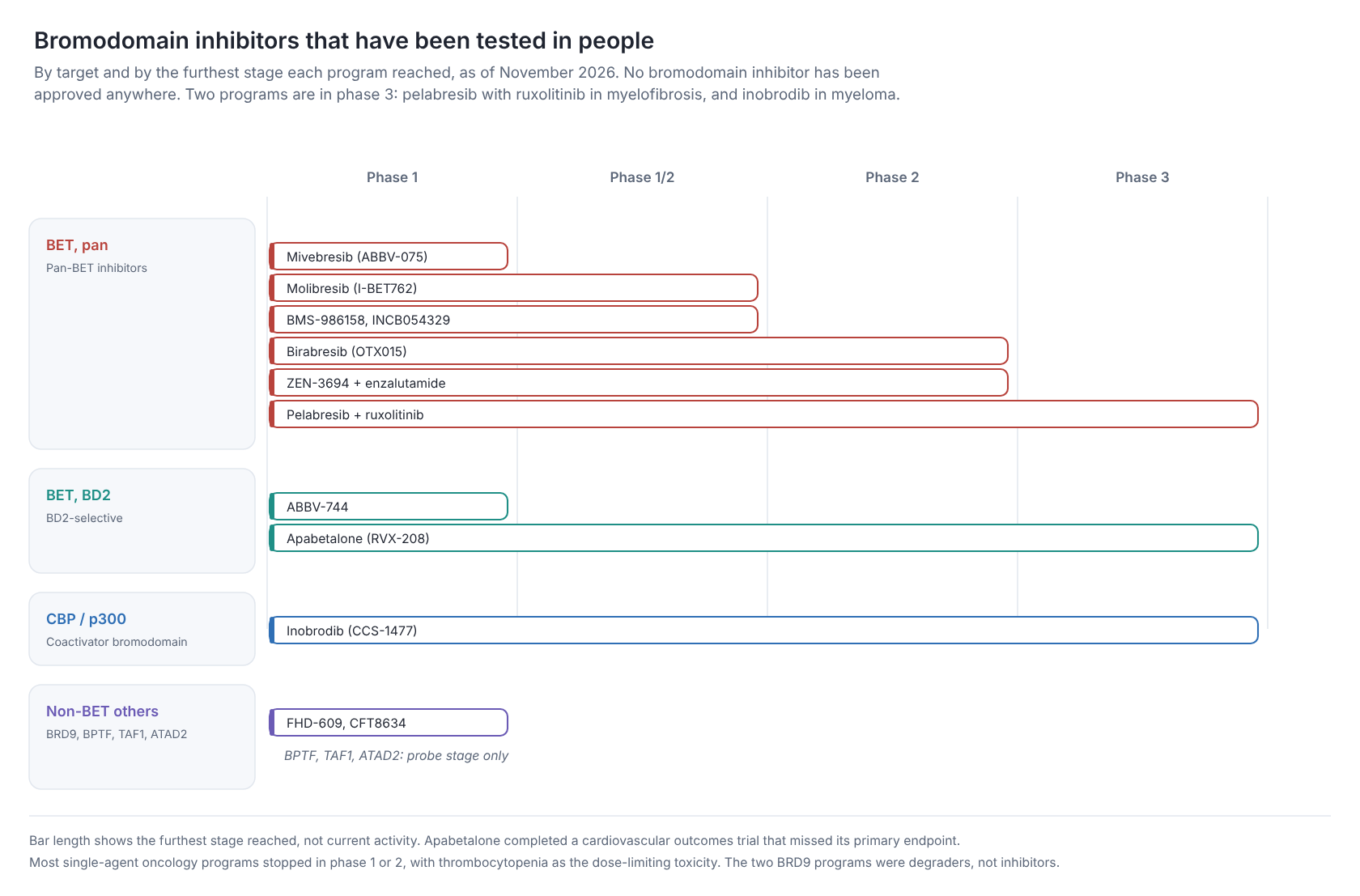
No bromodomain inhibitor has been approved as a drug anywhere, as of November 2026. The molecules above are research compounds, and the clinical sections of this review describe trial results rather than treatment.
1. What is a bromodomain?
A bromodomain is a small protein module, about 110 amino acids long, that binds acetylated lysine. It is the largest and best-characterized family of epigenetic reader domains for lysine acetylation in the human proteome, joined more recently by the smaller YEATS and double PHD finger families, which is why the bromodomain is still the module usually meant by the epigenetic reader domain for acetylation [1] [2].
The name has nothing to do with bromine. It comes from brahma, a Drosophila gene described in 1992 whose protein carried a then-unrecognized repeated sequence; the shared region was named the bromodomain after that gene [3]. The structure was solved seven years later, when NMR work on the bromodomain of the histone acetyltransferase PCAF showed a left-handed bundle of four helices with a deep hydrophobic pocket at one end [4]. A crystal structure of the Gcn5p bromodomain bound to an acetylated histone H4 peptide then showed exactly how the mark is read [5].
1.1 Reader, writer, eraser
Chromatin signaling is usually described with three verbs. Writers add a chemical mark: histone acetyltransferases such as CBP, p300, GCN5 and PCAF transfer an acetyl group from acetyl-CoA onto the ε-amino group of a lysine side chain. Erasers remove it: the histone deacetylases and sirtuins. Readers recognize the modified residue and convert it into an event, usually by recruiting something larger to that piece of chromatin [6].
Acetylation does two things at once. It neutralizes the positive charge on lysine, which loosens the grip of the histone tail on DNA, and it creates a binding site for bromodomains. The second effect is the one that small molecules can address, because the pocket that reads the mark is druggable in a way that the charge change is not.
1.2 Bromodomain structure
Every bromodomain solved so far has the same fold: four alpha helices, called αZ, αA, αB and αC, packed in a left-handed bundle. The loops between them, the ZA loop and the BC loop, line a hydrophobic cavity at the end of the bundle. The ZA loop is the long one and carries most of the sequence variation across the family; the BC loop contains the single most important residue, a conserved asparagine [4] [7].
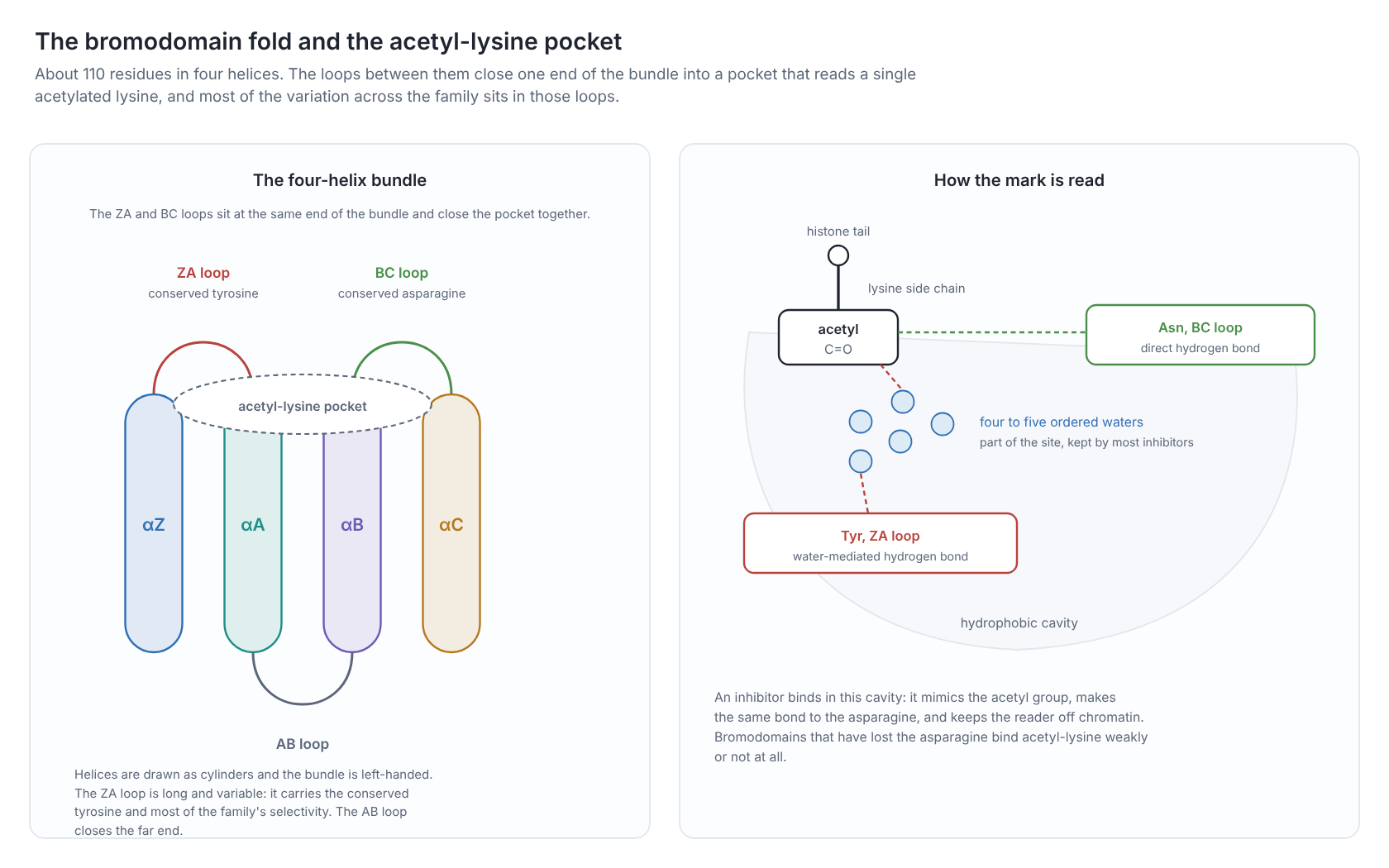
Recognition works like this. The acetyl-lysine side chain slides into the cavity. Its carbonyl oxygen makes a direct hydrogen bond to the side-chain amide of the conserved asparagine, and a second, water-mediated hydrogen bond to a conserved tyrosine in the ZA loop. Four to five structured water molecules sit at the bottom of the pocket and are part of the binding site rather than bystanders; most inhibitors keep them in place. Around this core, the residues of the ZA and BC loops read two or three amino acids either side of the acetylated lysine, which is where selectivity between family members comes from [7] [8].
Not every bromodomain has the conserved asparagine. Thirteen of the 61 human bromodomains replace it: SP100, SP110, SP140 and ZMYND11 carry a tyrosine, PHIP(2) and BRWD1(2)/BRWD3(2) a threonine, and MLL (KMT2A) an aspartate. Several of those appear to have lost acetyl-lysine binding altogether while keeping the fold as a protein interaction surface [7]. BRD7 and BRD9 are not among them: both keep the canonical asparagine and depend on it, for histone binding and for inhibitor binding alike [9].
1.3 Bromodomain and chromodomain: two different readers
Searches for "bromodomain and chromodomain" usually reflect a simple question: what is the difference? The answer is the mark each one reads.
| Bromodomain | Chromodomain | |
|---|---|---|
| Mark read | Acetylated lysine | Methylated lysine, mostly H3K9me3 and H3K27me3 |
| Fold | Four-helix bundle, left-handed | Three-stranded antiparallel β-sheet against a C-terminal helix |
| Recognition chemistry | Hydrogen bond to a conserved asparagine plus an ordered water network | An aromatic cage that traps the methylammonium group through cation-π interactions |
| Typical host proteins | BRD2–4, BRDT, CBP, p300, TAF1, BPTF, SMARCA2/4, BRD9, ATAD2 | HP1, Polycomb CBX proteins, CHD1 |
| Typical output | Transcriptional activation, elongation, remodeling | Heterochromatin formation and gene silencing |
| Drugged? | Yes, dozens of chemical probes | Fewer, and harder; the aromatic cage is a shallower target |
Other reader domains follow the same logic with different chemistry: PHD fingers and Tudor domains also read methylation, YEATS domains read acylation including crotonylation, and the double PHD finger of MOZ reads acetylation without a bromodomain [6]. Many proteins carry more than one reader, which is how combinations of marks get read as a unit.
1.4 Where the acetyl groups come from
The acetyl group on a histone comes from acetyl-CoA, and the nuclear pool of acetyl-CoA is set by metabolism. ATP-citrate lyase converts citrate exported from mitochondria into acetyl-CoA, and knocking it down lowers histone acetylation at specific promoters, including those of glycolytic genes [10]. Acetyl-CoA therefore behaves as a second messenger that couples nutrient supply to the chromatin state [11].
That is the mechanistic content behind the phrase "acetyl-CoA epigenetic signals bromodomain and extra-terminal motif". The chain runs: nutrient state sets acetyl-CoA, acetyl-CoA sets histone acetylation, acetylation sets BET protein occupancy, and BET occupancy sets transcriptional output. It also explains why BET inhibitor phenotypes can shift with media composition, confluency and glucose concentration, which is worth keeping in mind when a result will not reproduce between labs.
2. The human bromodomain family
Humans have 61 bromodomains distributed across 46 bromodomain-containing proteins. Structural work on the family put them into eight classes based on sequence and the shape of the binding site [7].
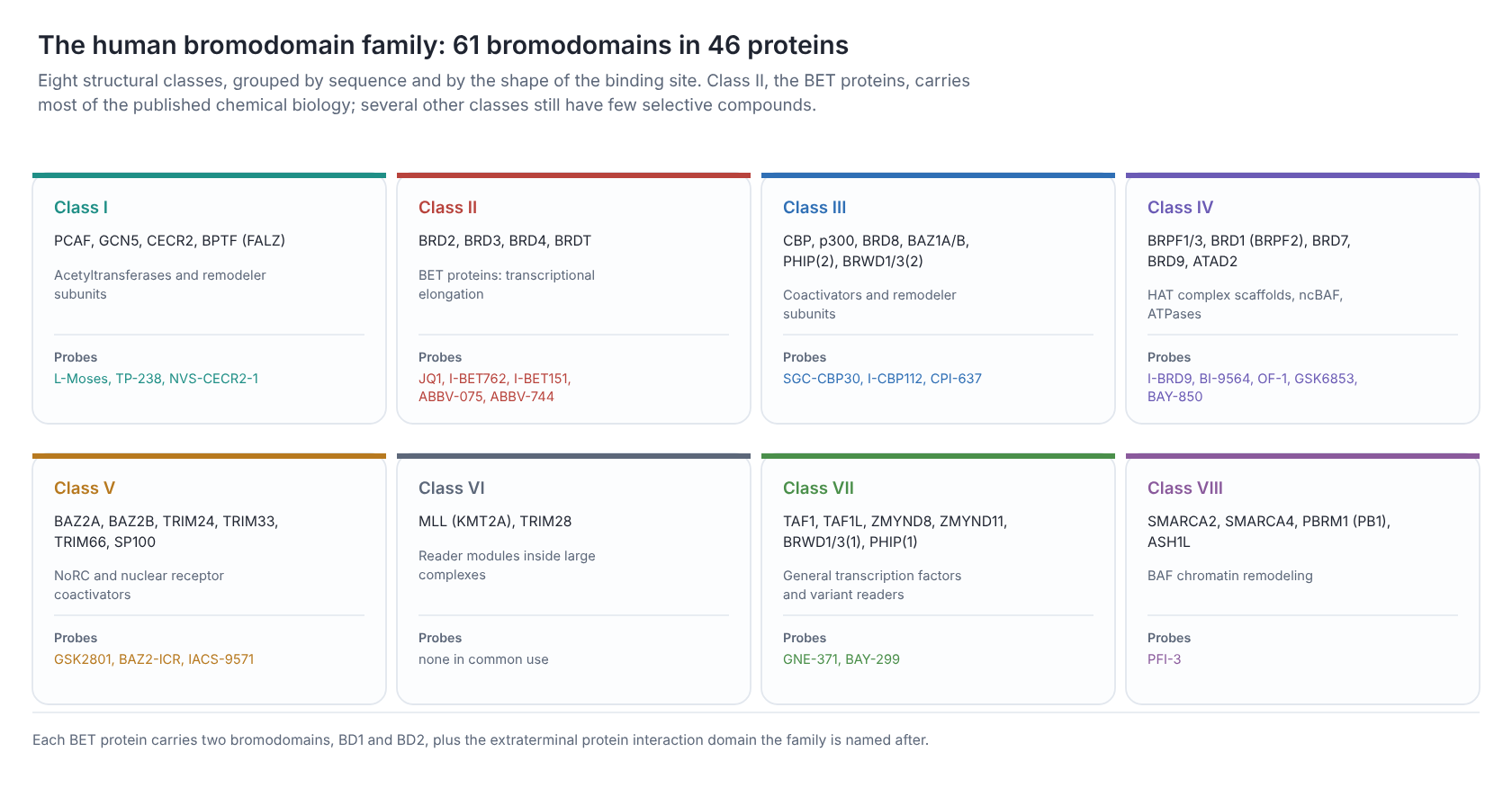
| Class | Representative proteins | What they do | Probes in common use |
|---|---|---|---|
| I | PCAF, GCN5, CECR2, BPTF (FALZ) | Acetyltransferases and remodeler subunits | L-Moses, TP-238, NVS-CECR2-1 |
| II | BRD2, BRD3, BRD4, BRDT | BET proteins; transcriptional elongation | JQ1, I-BET762, I-BET151, ABBV-075, ABBV-744 |
| III | CBP, p300, BRD8, BAZ1A, BAZ1B, PHIP(2), BRWD1/3(2) | Coactivators and remodeling complex subunits | SGC-CBP30, I-CBP112, CPI-637 |
| IV | BRD1 (BRPF2), BRPF1, BRPF3, BRD7, BRD9, ATAD2, ATAD2B | HAT complex scaffolds, ncBAF, ATPases | OF-1, GSK6853, NI-57, I-BRD9, BI-9564, BAY-850 |
| V | BAZ2A, BAZ2B, TRIM24, TRIM33, TRIM66, SP100 | NoRC, nuclear receptor coactivators | GSK2801, BAZ2-ICR, IACS-9571 |
| VI | MLL (KMT2A), TRIM28 | Reader modules in large complexes | None in common use |
| VII | TAF1, TAF1L, ZMYND8, ZMYND11, BRWD1/3(1), PHIP(1) | General transcription factors and variant readers | GNE-371, BAY-299 |
| VIII | SMARCA2, SMARCA4, PBRM1 (PB1) bromodomains, ASH1L | BAF chromatin remodeling | PFI-3 |
The distribution of effort across these classes is uneven. BET proteins account for most published chemical biology, non-BET targets have good probes but far fewer biological studies, and several classes still have no selective compound at all [12].
2.1 BET: the bromodomain and extraterminal domain family
BET stands for bromodomain and extraterminal domain. Four proteins carry the architecture: BRD2, BRD3, BRD4 and the testis-restricted BRDT. Each has two tandem bromodomains near the N terminus, called BD1 and BD2, followed by the extraterminal domain that gives the family its name and serves as a protein interaction platform for NSD3, JMJD6, CHD4 and other partners [8].
The tandem arrangement matters. Two bromodomains on one polypeptide can engage two acetyl marks at once, which raises avidity for hyperacetylated nucleosomes and is the structural basis for bivalent inhibitors such as AZD5153, a bivalent triazolopyridazine that bridges both pockets of one BET protein with a single molecule and gains roughly an order of magnitude in cellular potency from the avidity [13].
2.2 BRD4, the bromodomain containing protein 4
BRD4 is the most studied member and the one most searches mean by "bromodomain 4" or "brd4 bromodomain". It exists as a long isoform and a short isoform, binds acetylated chromatin through BD1 and BD2, and stays bound to mitotic chromosomes, which is the basis of its role in transmitting transcriptional memory through cell division [14].
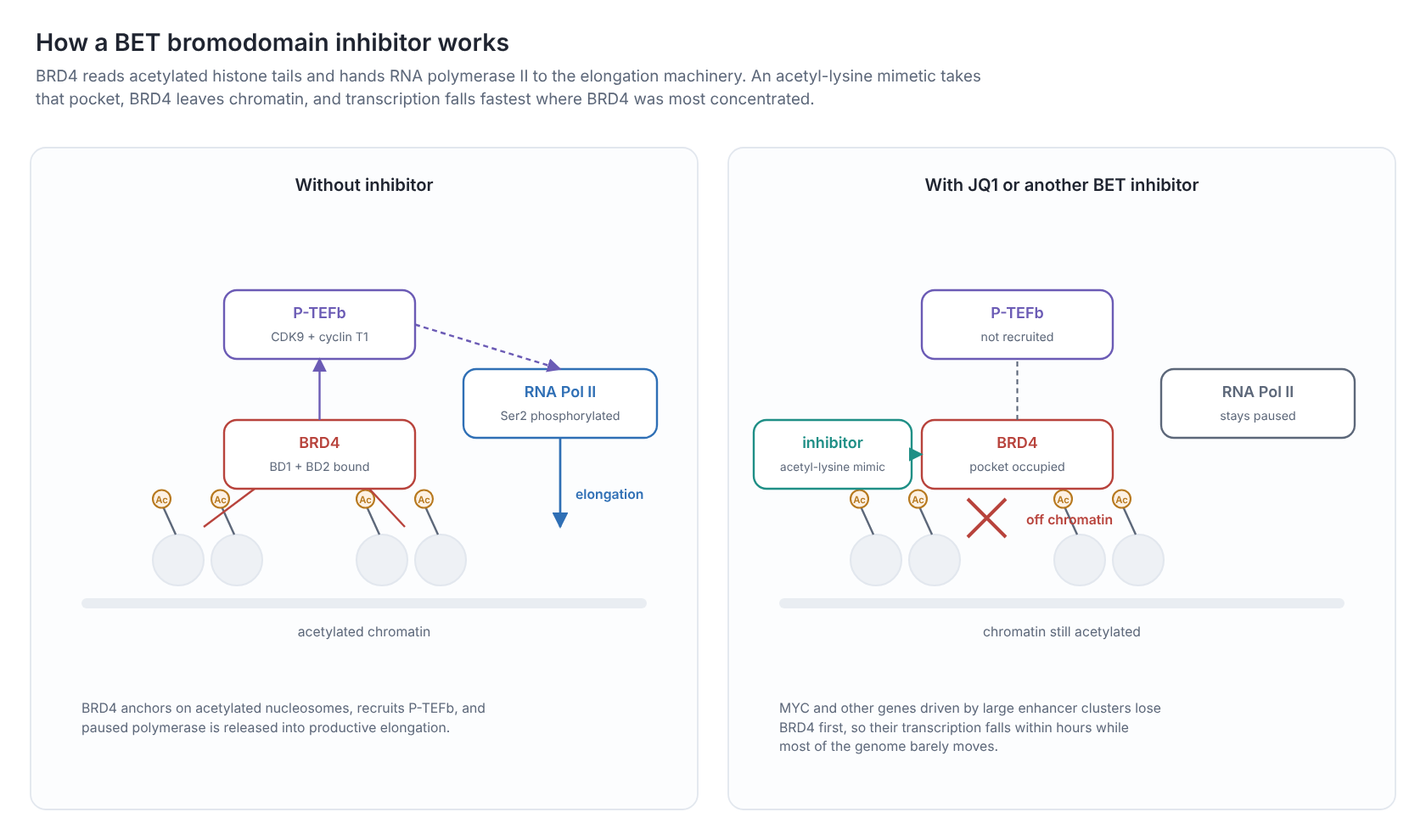
Its central function is transcriptional elongation. BRD4 recruits the positive transcription elongation factor b, the CDK9–cyclin T1 complex, to acetylated chromatin, and P-TEFb then phosphorylates serine 2 of the RNA polymerase II C-terminal domain so that paused polymerase can move into productive elongation [15] [16]. Acute degradation of BET proteins collapses transcriptional elongation genome-wide and phenocopies CDK9 inhibition, yet it does not displace CDK9 from chromatin, which argues that BET proteins act directly as elongation factors rather than only as the thing that puts P-TEFb in place [17].
Two further points come up often enough to be worth stating plainly. First, BRD4 has been reported to have intrinsic atypical kinase activity toward the polymerase C-terminal domain, which is where the question "are bromodomain proteins kinases" comes from; this is a property reported for BRD4 itself rather than a property of bromodomains, and bromodomains are reader modules, not catalytic domains [18]. Second, in NUT carcinoma a chromosomal translocation fuses BRD4 to NUT, producing a fusion protein that tethers p300 to BRD4-bound chromatin and builds enormous hyperacetylated domains, a disease that is essentially a bromodomain disorder [19].
2.3 Non-BET bromodomain containing proteins
Outside the BET family, bromodomains sit in four kinds of protein. Histone acetyltransferases read their own product: CBP, p300, PCAF and GCN5 all carry one. Chromatin remodelers use them for targeting: SMARCA2 and SMARCA4, the ATPases of the BAF complex, and BPTF, the largest subunit of NURF. General transcription factors use them too, most notably TAF1, a subunit of TFIID that carries a tandem double bromodomain module whose structure was solved in 2000 and was the first demonstration that two bromodomains can work as a single unit [20]. And several ATPases and scaffolds, including ATAD2 and the BRPF proteins, carry bromodomains whose function is still being worked out [8].
3. How bromodomain inhibitors work
A bromodomain inhibitor is an acetyl-lysine mimetic. It occupies the pocket that would otherwise accept the acetylated side chain, makes the same hydrogen bond to the conserved asparagine, usually keeps the ordered waters in place, and so prevents the reader from binding chromatin [1].
3.1 JQ1, the compound that opened the field
The 2010 report of JQ1 is the paper most people mean by "bromodomain inhibitor JQ1". It described a thienotriazolodiazepine that binds BET bromodomains competitively with acetylated histone, with a co-crystal structure showing the triazole ring acting as the acetyl-lysine mimetic and displacement of histone H4 peptide from BRD4 at nanomolar concentrations. In BRD4-NUT carcinoma cells the compound displaced the fusion protein from chromatin, produced squamous differentiation and growth arrest, and shrank xenografts [21].
Two features made JQ1 the reference tool rather than one compound among many. It is a single enantiomer with an inactive partner: (+)-JQ1 is active and (-)-JQ1 is not, which gives a structurally matched negative control that no knockdown can match for speed. And it was distributed openly, so the biology arrived quickly. A racemic preparation and a biotinylated derivative for pull-down work are also in routine use.
An independent program reached the same target from the other direction. I-BET762, now molibresib, was found in a phenotypic screen for compounds that raised apolipoprotein A1 expression, and turned out to be a benzodiazepine that mimics acetylated histone. In macrophages it suppressed induction of a subset of inflammatory genes, and it protected mice against endotoxic shock [22]. The two papers appeared within weeks of each other and together defined the field.
3.2 What happens downstream: MYC and super-enhancers
The early BET work converged on a surprising observation: inhibiting a general transcriptional cofactor does not shut down transcription globally but hits a small set of genes hard. In multiple myeloma, JQ1 collapsed MYC transcription and produced the transcriptional signature of MYC withdrawal [23]. An RNAi screen in acute myeloid leukemia independently nominated murine Brd4 as a dependency, and BET inhibition promoted differentiation and apoptosis in that setting [24]. I-BET151 was effective in MLL-fusion leukemia models, where it displaced BRD3 and BRD4 along with the elongation machinery from chromatin [25].
The explanation came with super-enhancers: large enhancer clusters, densely loaded with mediator and BET proteins, that drive the identity genes of a cell. Because these regions carry disproportionate amounts of BRD4, they lose it disproportionately when the pool of free BRD4 is reduced, so genes such as MYC fall first and furthest [26] [27]. This is the clearest reason why a general cofactor inhibitor can produce a selective phenotype, and it remains the standard framework for interpreting BET inhibitor experiments [27].
The dependency is not always on MYC. In GNAQ/GNA11-mutant uveal melanoma, JQ1 was cytotoxic regardless of MYC status, and silencing MYC did not reproduce the apoptosis; the relevant BRD4-dependent genes were BCL2L1 and RAD51, and the MYC-amplified but GNAQ/11 wild-type line Mel290 was comparatively insensitive [28]. Checking which transcripts actually move in your own model, rather than assuming MYC, is therefore part of a careful experiment.
3.3 BD1 and BD2: domain-selective inhibition
For a decade, every BET inhibitor in use hit BD1 and BD2 at similar potency. The first hint that the two domains could be separated came from RVX-208, now apabetalone, which binds the second bromodomain of BET proteins preferentially; structures showed the basis of that preference in the ZA channel [29].
Two papers then made the separation a usable tool. A matched pair of probes, GSK778 for BD1 and GSK046 for BD2, showed that the two domains carry different jobs: BD1 inhibition reproduces most of the anti-cancer phenotype, while BD2 inhibition is the one that matters in inflammatory and autoimmune models [30]. In parallel, the pan-BET pyrrolopyridone mivebresib (ABBV-075) was reworked into ABBV-744, a BD2-selective compound from the same chemical series that retained activity in androgen receptor-dependent prostate cancer models while being markedly better tolerated than pan-BET compounds in animals [31].
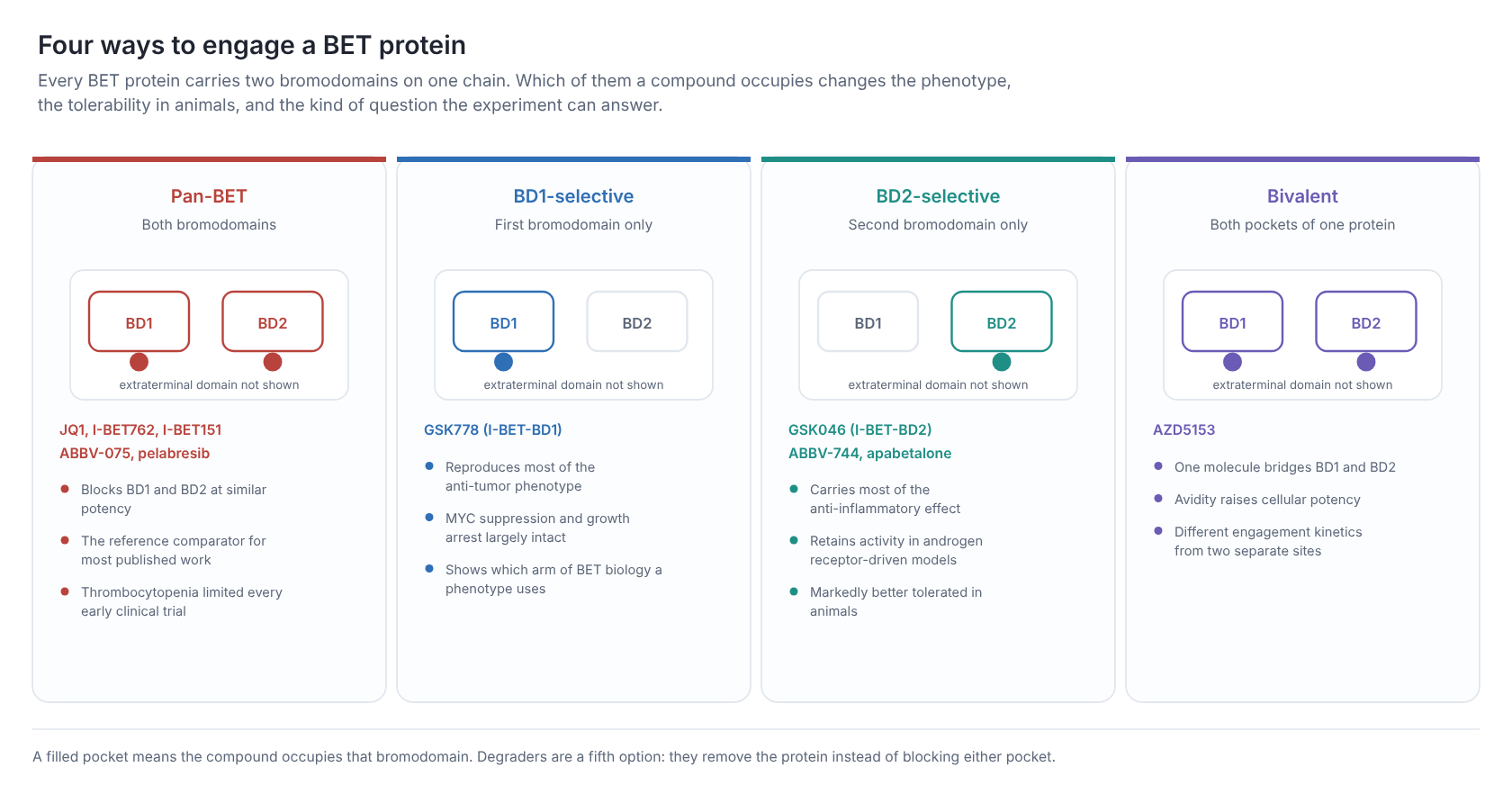
This is the practical content behind searches for "bd2 bromodomain". If an experiment asks which arm of BET biology drives a phenotype, the GSK778/GSK046 pair answers it directly, and ABBV-744 provides an orthogonal BD2-selective check.
3.4 Degraders: removing the protein instead of blocking the pocket
A bromodomain inhibitor occupies one pocket. A degrader removes the whole protein, including the extraterminal domain and any scaffolding function that an inhibitor leaves intact. BET proteins were the proving ground for this chemistry.
- MZ1 joins a JQ1 warhead to a VHL ligand and degrades BRD4 preferentially over BRD2 and BRD3, which demonstrated that a degrader can be more selective than its own warhead [32].
- dBET1 uses a phthalimide to recruit cereblon, degrading BET proteins within an hour and producing effects in leukemia models beyond those of the parent inhibitor [33]. dBET6 is the more potent, cell-permeable follow-up used for acute degradation experiments [17].
- ARV-825 also recruits cereblon and produced sustained BRD4 loss in Burkitt lymphoma models where inhibitor treatment gave only transient suppression [34], while ARV-771, a VHL-based pan-BET degrader, was active in castration-resistant prostate cancer models [35].
- BETd-260 and QCA570 are later, highly potent BET degraders used where very deep BET depletion is wanted.
Degraders answer a question inhibitors cannot: whether a phenotype needs the protein gone or only its bromodomains blocked. When the two disagree, the difference usually points at a scaffolding function.
4. BET bromodomain inhibitors in the laboratory
The BET compound set available to a lab is now large enough that the choice should be deliberate. The table groups the ones in common use by what they are for. Molecular weights are from the product pages and are what you need for stock calculations.
| Compound | Chemotype | Domain preference | Why you would pick it | MW | Cat. No. |
|---|---|---|---|---|---|
| (+)-JQ1 | Thienotriazolodiazepine | Pan-BET | The reference probe; comparability with most of the literature | 456.99 | A12729 |
| (-)-JQ1 | Thienotriazolodiazepine | None | Matched inactive control; same formula and mass as (+)-JQ1 | 456.99 | A14160 |
| Molibresib (I-BET762) | Benzodiazepine | Pan-BET | Clinical-stage comparator; inflammation models | 423.90 | A11440 |
| I-BET151 | Quinoline isoxazole | Pan-BET | Chemically unrelated to JQ1; good orthogonal check | 415.40 | A11783 |
| Birabresib (OTX015) | Thienotriazolodiazepine | Pan-BET | Matches published phase 1 pharmacology | 491.99 | A13890 |
| Pelabresib (CPI-0610) | Isoxazole azepine | Pan-BET | The compound with phase 3 data behind it | 365.82 | A16076 |
| Mivebresib (ABBV-075) | Pyrrolopyridone sulfonamide | Pan-BET, very potent | Low-nanomolar engagement; combination studies | 459.47 | A17226 |
| ABBV-744 | Pyrrolopyridone | BD2 | Tests the BD2 arm; better tolerated in vivo | 491.55 | A16831 |
| GSK778 | Imidazoquinoline isoxazole | BD1 | Half of the domain-selective pair | 511.61 | A30085 |
| GSK046 | Acetamidobenzamide | BD2 | The other half of the pair | 414.47 | A22068 |
| Apabetalone (RVX-208) | Quinazolinone | BD2-leaning | Cardiovascular, metabolic and ApoA1 work | 370.40 | A13956 |
| AZD5153 | Bivalent | Both pockets at once | Higher cellular potency through avidity | 479.57 | A24388 |
| CPI-203 | Thienotriazolodiazepine | Pan-BET | Widely used in lymphoma and neuroendocrine models | 399.90 | A13068 |
| PFI-1 | Dihydroquinazolinone | Pan-BET | Chemically distinct, short-acting | 347.39 | A12545 |
| PLX51107 | Azaindole isoxazole | Pan-BET, structurally atypical | Different binding mode from the diazepines [36] | 438.49 | A18345 |
| INCB054329 | Isoxazole | Pan-BET | Clinical-stage comparator | 348.36 | A20293 |
| NHWD-870 | Tetracyclic dimethyltriazole | Pan-BET, highly potent | Potency-limited experiments | 491.59 | A24387 |
| BMS-986158 | Carboline triazole | Pan-BET | Clinical-stage comparator [37] | 495.62 | A19442 |
| Amredobresib (BI894999) | Triazolopyrazine | Pan-BET | Clinical-stage comparator | 467.57 | A24389 |
| MS417 | Thienotriazolodiazepine | Pan-BET | Used in HIV and inflammation studies | 414.91 | A19433 |
Mivebresib is worth a note of its own. It came out of a fragment-based campaign that produced a pyrrolopyridone sulfonamide with single-digit nanomolar affinity for BET bromodomains and oral exposure in animals [38], and its preclinical characterization mapped where pan-BET inhibition is most effective and which combinations extend it [39]. If an experiment needs the deepest BET engagement available in a conventional inhibitor, this is usually the compound.
Two compounds sit slightly outside the set. Bromosporine is a deliberately promiscuous bromodomain ligand, built as a pan-family comparator; used alongside selective probes it shows which parts of a phenotype are BET-specific and which are shared across the family [40]. And dual kinase-bromodomain inhibitors exist by accident as well as by design: several clinical kinase inhibitors turned out to bind BET bromodomains at pharmacologically relevant concentrations, a cross-reactivity that was then exploited deliberately [41]. If a kinase inhibitor in your hands produces a BET-like transcriptional signature, that is worth checking before interpreting it.
5. Non-BET bromodomain inhibitors
The non-BET half of the family has good chemical probes and far less published biology, which makes it the more open area of the two [12].
5.1 CBP and p300 bromodomain
CBP and its paralog p300 are acetyltransferases that also read acetylation through a bromodomain, so they can be inhibited in two places. SGC-CBP30 is the standard bromodomain-directed probe, selective for CBP and p300 over BET; in human T cells it suppressed Th17 responses and reduced IL-17A secretion, which is the result most CBP bromodomain work is built on [42]. I-CBP112 is the orthogonal probe from a different chemical series, and CPI-637 and GNE-272 and GNE-781 are later, more potent compounds. Bromodomain inhibition of CBP/p300 kills multiple myeloma cells by collapsing the IRF4 network, a mechanism distinct from, and additive with, BET inhibition [43].
Targeting the catalytic domain is a different experiment. A-485 is a selective catalytic p300/CBP inhibitor, active in lineage-specific tumors including androgen receptor-positive prostate cancer, and it is the right control when you need to separate the writer function from the reader function [44]. The older C646 is also a catalytic inhibitor but is less selective and chemically reactive, so it should not carry an experiment alone. Selective bromodomain inhibition of p300/CBP, without any action on the catalytic domain, was enough to suppress androgen receptor and MYC output in lethal prostate cancer models, and that is the compound class that produced the clinical candidate inobrodib (CCS-1477) [45].
5.2 TAF1 bromodomain
TAF1 is a subunit of TFIID and carries a tandem double bromodomain whose crystal structure first showed how two bromodomains in one module can read two acetyl marks on the same histone tail [20]. The module resisted chemistry for years. GNE-371 is a potent and selective probe for the second bromodomain of TAF1 and TAF1L and is the current reference compound [46]. BAY-299 came out of a benzoisoquinolinedione series and inhibits BRD1 and TAF1(2) [47], and CeMMEC1 is a chemically unrelated TAF1 binder used as a cross-check.
5.3 BPTF bromodomain inhibitors and tool compounds
BPTF is the largest subunit of the NURF remodeling complex, and interest in it as a target has grown faster than the chemistry. Two probe-grade options exist, and the difference between them matters.
NVS-BPTF-1 is the chemical probe: double-digit nanomolar binding to the BPTF bromodomain (reported K_D around 71 nM in vitro), low-nanomolar cellular target engagement, no significant off-targets in a bromodomain screen, and a recommended cellular working concentration of up to 1 µM. Its published synthesis and characterization make it the first compound to reach for [48]. It is a cell-based probe only: the free base dissolves poorly and the ADME properties are not suitable for animal work, so in vivo BPTF questions need a different compound.
BPTF-IN-BZ1, the pyridazinone known as BZ1, binds BPTF with a dissociation constant of about 6 nM and is about 350-fold selective over BRD4(1), but it binds BRD9 and BRD7 even more tightly than BPTF. It is a potent BPTF tool compound, not a selective one, and any BZ1 phenotype needs a BRD9 probe run alongside it before it can be read as BPTF biology [49]. TP-238 is a CECR2 and BPTF-directed probe from the class I series and is useful as a third chemotype.
5.4 BAF, SMARCA and BRD9
The BAF (SWI/SNF) remodeling complexes carry three druggable bromodomains: those of the ATPases SMARCA2 and SMARCA4, the fifth bromodomain of the PBRM1 (PB1) subunit, and the bromodomain of BRD9 in the non-canonical ncBAF complex.
PFI-3 is the probe for the SMARCA2, SMARCA4 and PB1(5) bromodomains. It binds with an unusual mode that displaces the conserved water network, and in cells it impaired embryonic and trophoblast stem cell maintenance while having little effect on cancer cell proliferation, an instructive result about what these particular bromodomains do and do not control [50].
BRD9 has better chemistry. I-BRD9 was the first selective cellular probe, with roughly 700-fold selectivity over the BET family and 200-fold over the closely related BRD7 [9]. BI-7273 and BI-9564 came from an independent series; work with them showed that acute myeloid leukemia cells depend on BRD9, and an engineered resistance allele confirmed that the phenotype is on-target [51]. LP99 covers BRD7 and BRD9 together, BRD7-IN-1 leans toward BRD7, TP-472 is a further BRD9/BRD7 chemotype, and dBRD9 degrades BRD9 rather than blocking it.
5.5 BRPF, ATAD2, BAZ2 and the rest
- BRPF1 and BRD1 (BRPF2). These are the scaffolds that organize MOZ/MORF acetyltransferase complexes, and the probes are not interchangeable. GSK6853 is selective for BRPF1, with more than three orders of magnitude of selectivity over BRD1 and BRPF3 [52], while NI-57 and OF-1 are pan-BRPF compounds that hit BRPF1, BRD1 and BRPF3 together. Use GSK6853 to ask about BRPF1 specifically and a pan-BRPF compound to ask about the family.
- ATAD2. A hard target with a shallow pocket. GSK8814 is the selective probe; BAY-850 works by an unusual isoform-selective mechanism that induces dimerization of the ATAD2 bromodomain rather than occupying the acetyl-lysine pocket in the normal way [53].
- BAZ2A and BAZ2B. GSK2801 and BAZ2-ICR, two chemically distinct probes for the NoRC subunits.
- TRIM24 and BRPF1. IACS-9571, a dual probe used in nuclear receptor coactivator studies.
- PCAF and GCN5. L-Moses, a class I bromodomain probe.
- CECR2. NVS-CECR2-1.
A recurring pattern across these targets is that bromodomain inhibition is often less dramatic than knocking out the protein, because the bromodomain is one of several targeting modules. That is information rather than failure: it localizes the function to the reader module or rules it out.
6. Bromodomain inhibitors in clinical trials
More than a dozen BET inhibitors have entered clinical testing since 2012. None has been approved. The trial record is worth knowing in detail, because it explains why the research compounds changed shape over the last decade.
6.1 The first wave: hematological malignancies
Birabresib (OTX015) produced the first clear signals. In a phase 1 dose-escalation study in acute leukemia, a minority of heavily pretreated patients had complete responses or partial blast clearance, with dose-limiting thrombocytopenia [54]. A parallel study in lymphoma and multiple myeloma showed responses in diffuse large B-cell lymphoma, again with thrombocytopenia as the main dose-limiting toxicity [55]. Those two papers set the pattern for everything that followed: real but modest single-agent activity, and a narrow window set by thrombocytopenia.
Birabresib was also taken into solid tumors. A phase Ib study in NUT carcinoma, castration-resistant prostate cancer and non-small-cell lung cancer found the compound tolerable at the doses studied with signals of activity in NUT carcinoma, and again described thrombocytopenia among the main toxicities [56]. A phase 2 dose-finding study in recurrent glioblastoma (NCT02296476) was terminated, which is as far as the compound went.
Molibresib was tested in NUT carcinoma and other solid tumors, the disease that JQ1 was first shown to act in. Responses occurred in NUT carcinoma, confirming the mechanism in the human disease, but they were mostly partial and not durable, and thrombocytopenia and gastrointestinal toxicity limited exposure [57]. Mivebresib, a far more potent pan-BET compound, reached the clinic in relapsed solid tumors with a similar outcome: target engagement was demonstrable, single-agent activity was limited, and thrombocytopenia again defined the ceiling [58].
6.2 Pelabresib and myelofibrosis: the combination that went furthest
The most informative clinical program put a BET inhibitor next to an established drug rather than against one. In myelofibrosis, pelabresib combined with the JAK inhibitor ruxolitinib produced spleen volume responses in JAK inhibitor-naive patients well above what had been seen with ruxolitinib alone in historical experience, and the combination moved into a randomized phase 3 trial [59].
That trial, MANIFEST-2, randomized 430 JAK inhibitor-naive patients. At week 24, 65.9% of patients on the combination achieved at least a 35% reduction in spleen volume versus 35.2% on ruxolitinib alone. The symptom score endpoint favored the combination numerically but did not reach the same margin, which is why the result has been read as a clear biological effect without yet being a settled clinical one [60]. Longer follow-up continued to be reported through 2026, and a further phase 3 study began.
6.3 Solid tumors and the prostate cancer case
In metastatic castration-resistant prostate cancer, the pan-BET inhibitor ZEN-3694 was combined with enzalutamide in patients whose disease had already progressed on androgen receptor-directed therapy. The combination produced durable disease control in a subset, and the signal was strongest in patients with the least androgen receptor-driven disease, which fits the preclinical model in which BET proteins sustain androgen receptor output [61]. That phase 1/2 result was taken into a randomized phase 2b study of the same combination in metastatic castration-resistant prostate cancer, reported in 2025, which makes ZEN-3694 the BET compound furthest along outside myelofibrosis. BD2-selective chemistry came out of the same biology: ABBV-744 retained prostate cancer activity while sparing much of the toxicity that limits pan-BET compounds in animals [31].
6.4 Outside oncology
Apabetalone is the only bromodomain inhibitor to have completed a large cardiovascular outcomes trial. BETonMACE randomized 2,425 patients with recent acute coronary syndrome and type 2 diabetes and did not meet its primary endpoint; the difference in major adverse cardiovascular events was not statistically significant [62]. The trial is nevertheless the largest body of human safety data for any BET inhibitor, and it established that chronic BD2-leaning BET inhibition is tolerable in a non-oncology population.
The anti-inflammatory side of BET biology, visible since the first I-BET762 paper [22], now has a clearer target assignment: BD2 inhibition carries most of the immunomodulatory effect [30]. Male contraception is a separate thread entirely. JQ1 crosses the blood-testis barrier and inhibits BRDT, the testis-specific BET protein, and produced reversible contraceptive effects in mice without altering testosterone [63].
6.5 Non-BET compounds in the clinic
The p300/CBP axis is the non-BET target that has moved furthest, and it is now the only non-BET bromodomain program to reach phase 3. Inobrodib (CCS-1477), which came from the prostate cancer work described above [45], is being tested with pomalidomide and dexamethasone in relapsed and refractory multiple myeloma after reporting response rates in heavily pretreated patients in dose-optimization work. Two registration-enabling trials are running: the single-arm pivotal phase 2 DOMMINO-1 (NCT07096778), and the randomized global phase 3 DOMMINO-2, which compares the combination against investigator's choice of standard therapy. The compound remains investigational.
The other non-BET programs that reached people did so as degraders rather than inhibitors. Two BRD9 degraders, FHD-609 and CFT8634, entered phase 1 trials in synovial sarcoma and other SMARCB1-deficient tumors on the strength of the ncBAF dependency described in Section 5.4. The FHD-609 study confirmed on-target BRD9 degradation and identified maximum tolerated doses rather than a recommended phase 2 dose, and two findings closed it out: cardiac dose-limiting toxicity, in the form of QTc prolongation and syncope, with treatment-emergent QTc prolongation in a fifth of the 55 patients, and single-agent activity amounting to one partial response. Both programs were discontinued [64]. Every conventional small-molecule probe for BRD9, BPTF, TAF1 and ATAD2 remains preclinical.
6.6 Why nothing has been approved
Four reasons recur in the record, and together they shaped the current generation of compounds.
- A narrow therapeutic window. Thrombocytopenia appears across the class, because megakaryocyte development depends on BET-driven transcription. It was dose-limiting in essentially every early trial [54] [55] [58].
- Modest single-agent activity. BET inhibition suppresses transcriptional programs rather than killing cells directly, so responses tend to be cytostatic and partial [65].
- Fast adaptive resistance. Transcriptional rewiring restores the output within days, which section 7 covers.
- No patient selection marker. Apart from NUT carcinoma, no biomarker reliably identifies which tumors depend on BET proteins, so trials enrolled unselected populations [65].
The responses to those four problems are visible in the compound table: domain-selective inhibitors to widen the window, degraders to deepen and prolong target loss, and combinations rather than monotherapy.
7. Resistance to BET bromodomain inhibition
Resistance to BET inhibitors is usually not mutational. Three papers established the mechanism.
In mouse and human acute myeloid leukemia, resistance emerged from leukemia stem cells without any change in BET protein sequence or expression; Wnt/β-catenin signaling was activated and sustained MYC transcription in the continued presence of drug [66]. A parallel study found the same phenomenon through a different route: cells restored MYC expression using enhancer regions that do not require BRD4, and WNT pathway activity marked the resistant state [67]. In triple-negative breast cancer, resistant cells kept BRD4 at enhancers through a hyperphosphorylated form that binds MED1 independently of its bromodomains, so the drug was still occupying the pocket while the protein kept working [68].
The practical implications for an experiment are direct. Resistance to a BET inhibitor can appear within one to three weeks in continuous culture, and it is usually reversible on drug withdrawal, so a resistant line must be maintained under selection. Because the mechanism is adaptive rather than mutational, degraders and combinations with WNT, CDK or kinase inhibitors are the standard way to test whether a phenotype can be held. And a resistant line that still shows target engagement is not a failed experiment: the third mechanism above says exactly that result is expected.
8. Stock solutions and working concentrations
Most bromodomain probes are DMSO-soluble small molecules used in the 10 nM to 10 µM range in cell culture. The table gives the data needed to prepare stocks. Solubility values are from the product pages; where a page carries no reported solubility, the molecular weight is given so that stock volumes can still be calculated, and the solvent should be established empirically.
| Compound | MW | Reported solubility | 10 mM stock from 1 mg | Cat. No. |
|---|---|---|---|---|
| (+)-JQ1 | 456.99 | DMSO (warmed) 90 mg/mL; ethanol 90 mg/mL; water insoluble | 219 µL | A12729 |
| (-)-JQ1 | 456.99 | No reported solubility on the product page | 219 µL | A14160 |
| Molibresib | 423.90 | DMSO 72 mg/mL; ethanol (warmed) 36 mg/mL | 236 µL | A11440 |
| I-BET151 | 415.40 | DMSO >100 mg/mL; ethanol 83 mg/mL | 241 µL | A11783 |
| Birabresib | 491.99 | DMSO 89 mg/mL; ethanol 89 mg/mL | 203 µL | A13890 |
| Pelabresib | 365.82 | DMSO 70 mg/mL; ethanol 12 mg/mL | 273 µL | A16076 |
| Mivebresib | 459.47 | DMSO 79 mg/mL; ethanol insoluble | 218 µL | A17226 |
| ABBV-744 | 491.55 | DMSO 94 mg/mL; ethanol insoluble | 203 µL | A16831 |
| GSK778 | 511.61 | No reported solubility on the product page | 195 µL | A30085 |
| GSK046 | 414.47 | No reported solubility on the product page | 241 µL | A22068 |
| AZD5153 | 479.57 | No reported solubility on the product page | 209 µL | A24388 |
| Apabetalone | 370.40 | DMSO 63 mg/mL; ethanol insoluble | 270 µL | A13956 |
| CPI-203 | 399.90 | DMSO (warmed) 78 mg/mL; ethanol 5 mg/mL | 250 µL | A13068 |
| PFI-1 | 347.39 | DMSO 65 mg/mL; ethanol insoluble | 288 µL | A12545 |
| PLX51107 | 438.49 | DMSO 84 mg/mL; ethanol insoluble | 228 µL | A18345 |
| INCB054329 | 348.36 | DMSO 63 mg/mL; water <1 mg/mL | 287 µL | A20293 |
| MZ1 | 1002.64 | DMSO 97 mg/mL; ethanol 97 mg/mL | 100 µL | A17014 |
| dBET1 | 785.27 | DMSO 89 mg/mL; ethanol 35 mg/mL | 127 µL | A16858 |
| dBET6 | 841.37 | DMSO 96 mg/mL; ethanol 40 mg/mL | 119 µL | A20110 |
| ARV-825 | 923.44 | DMSO 97 mg/mL; ethanol 3 mg/mL | 108 µL | A16859 |
| ARV-771 | 986.64 | DMSO 97 mg/mL; ethanol 97 mg/mL | 101 µL | A13255 |
| SGC-CBP30 | 509.04 | No reported solubility on the product page | 196 µL | A13227 |
| I-CBP112 | 468.59 | DMSO 86 mg/mL; water 86 mg/mL; ethanol 86 mg/mL | 213 µL | A13165 |
| A-485 | 536.48 | DMSO 89 mg/mL; ethanol 89 mg/mL | 186 µL | A16830 |
| NVS-BPTF-1 | 537.61 | No reported solubility on the product page | 186 µL | A40328 |
| GNE-371 | 431.49 | No reported solubility on the product page | 232 µL | A19248 |
| I-BRD9 | 497.55 | DMSO 94 mg/mL; ethanol insoluble | 201 µL | A15872 |
| BI-7273 | 353.41 | DMSO 62 mg/mL; ethanol 62 mg/mL | 283 µL | A16068 |
| BI-9564 | 353.41 | DMSO 3 mg/mL; ethanol 15 mg/mL | 283 µL in ethanol; in DMSO prepare 5 mM (566 µL), since 10 mM needs 3.5 mg/mL | A16196 |
| PFI-3 | 321.37 | DMSO 62 mg/mL; ethanol insoluble | 311 µL | A13957 |
| Bromosporine | 404.44 | DMSO 77 mg/mL; ethanol insoluble | 247 µL | A13163 |
The last column is the volume of solvent that makes a 10 mM stock from 1 mg of compound, calculated from molecular weight alone. It is arithmetic, not a solubility claim: check the compound dissolves at that concentration before relying on it, and warm and sonicate where the page says warming is needed.
Two entries need care. I-CBP112 is supplied as the free base, so the molecular weight in the table is the free-base figure and the stock volume is calculated from it. A free base of that lipophilicity does not go into neutral water at the solubility quoted on the product page, so prepare that stock in DMSO and acidify the aqueous step only if an assay requires it. For BI-9564 the reported DMSO solubility is below what a 10 mM stock requires, so make the DMSO stock at 5 mM or use ethanol.
8.1 Choosing a concentration
Four rules cover most situations.
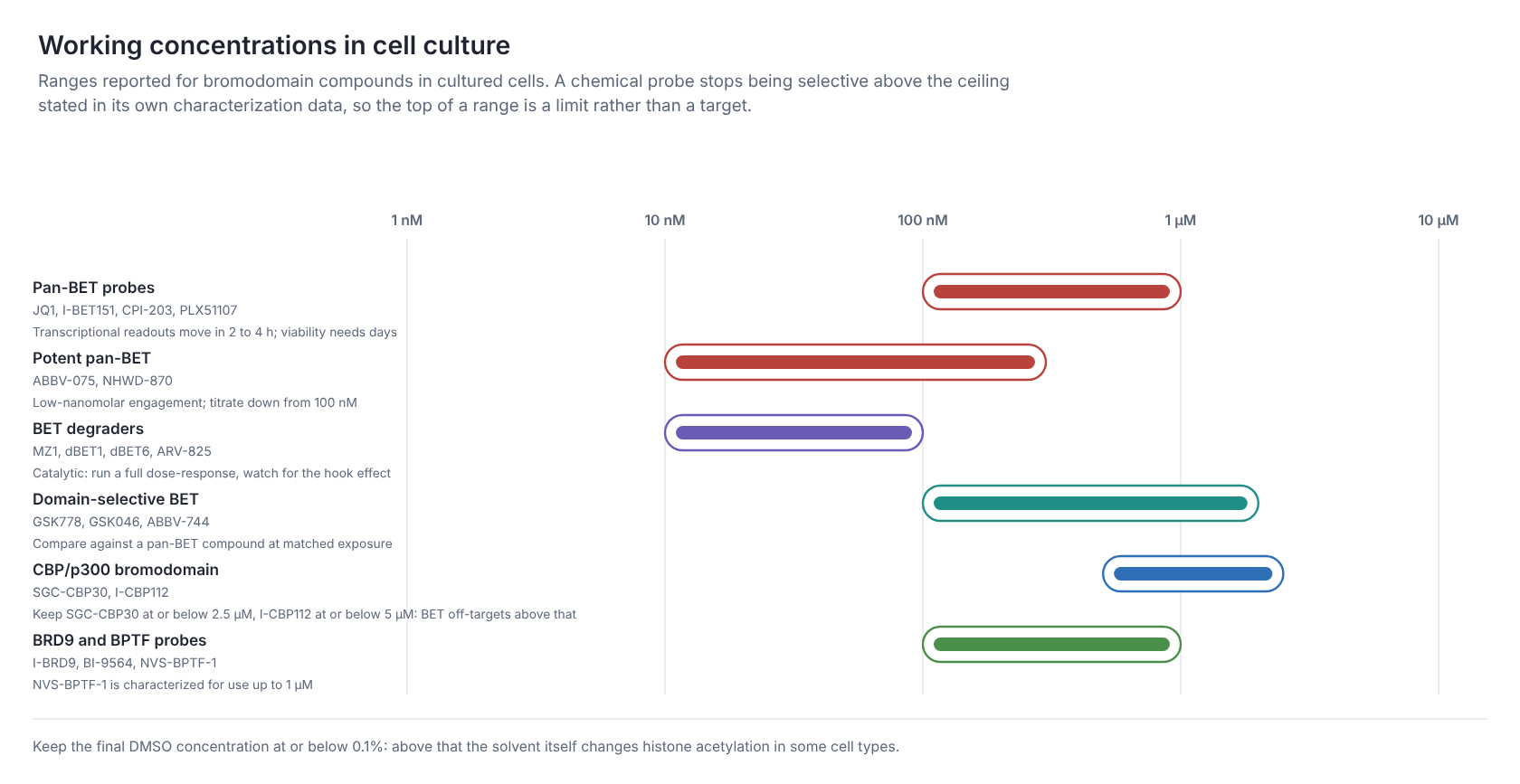
- Start from the probe's own data, not from a round number. Chemical probe characterization usually states a maximum recommended cellular concentration, above which selectivity is no longer guaranteed. For NVS-BPTF-1 that figure is 1 µM [48]. Exceeding it converts a selective experiment into a nonselective one.
- For pan-BET work, 100 nM to 1 µM over 24 to 72 hours covers most phenotypes. In the uveal melanoma study cited earlier, JQ1 gave viability IC50 values of roughly 100 to 250 nM in sensitive lines, and mechanistic work was done at 500 nM [28]. Transcriptional readouts move much earlier than viability: MYC message falls within 2 to 4 hours, while proliferation effects need days.
- Degraders work lower and faster. Degradation is catalytic, so maximal effect often occurs at 10 to 100 nM, and higher concentrations can be counterproductive through the hook effect, where excess compound saturates both ends of the ternary complex separately [32]. Always run a full dose-response for a degrader rather than a single concentration.
- Keep DMSO at or below 0.1%. Above that, the solvent itself changes histone acetylation and transcription in some cell types, which is exactly the readout being measured.
- Store and choose stocks with the experiment in mind. Make stocks in anhydrous DMSO, aliquot them, keep them dark at -20 °C or -80 °C, and avoid repeated freeze-thaw cycles, which let the solvent take up water and drop compound out of solution. (+)-JQ1 is also a poor choice for animal work because its half-life is short; CPI-203, molibresib, mivebresib and ABBV-744 have better pharmacokinetics and are the usual substitutes. In pluripotent stem cells and in organoid culture, BET inhibition lowers core pluripotency factors such as NANOG and OCT4 quickly and triggers differentiation, so those systems usually need 50 to 250 nM and a shorter readout window than a cancer line would.
8.2 Controls and readouts
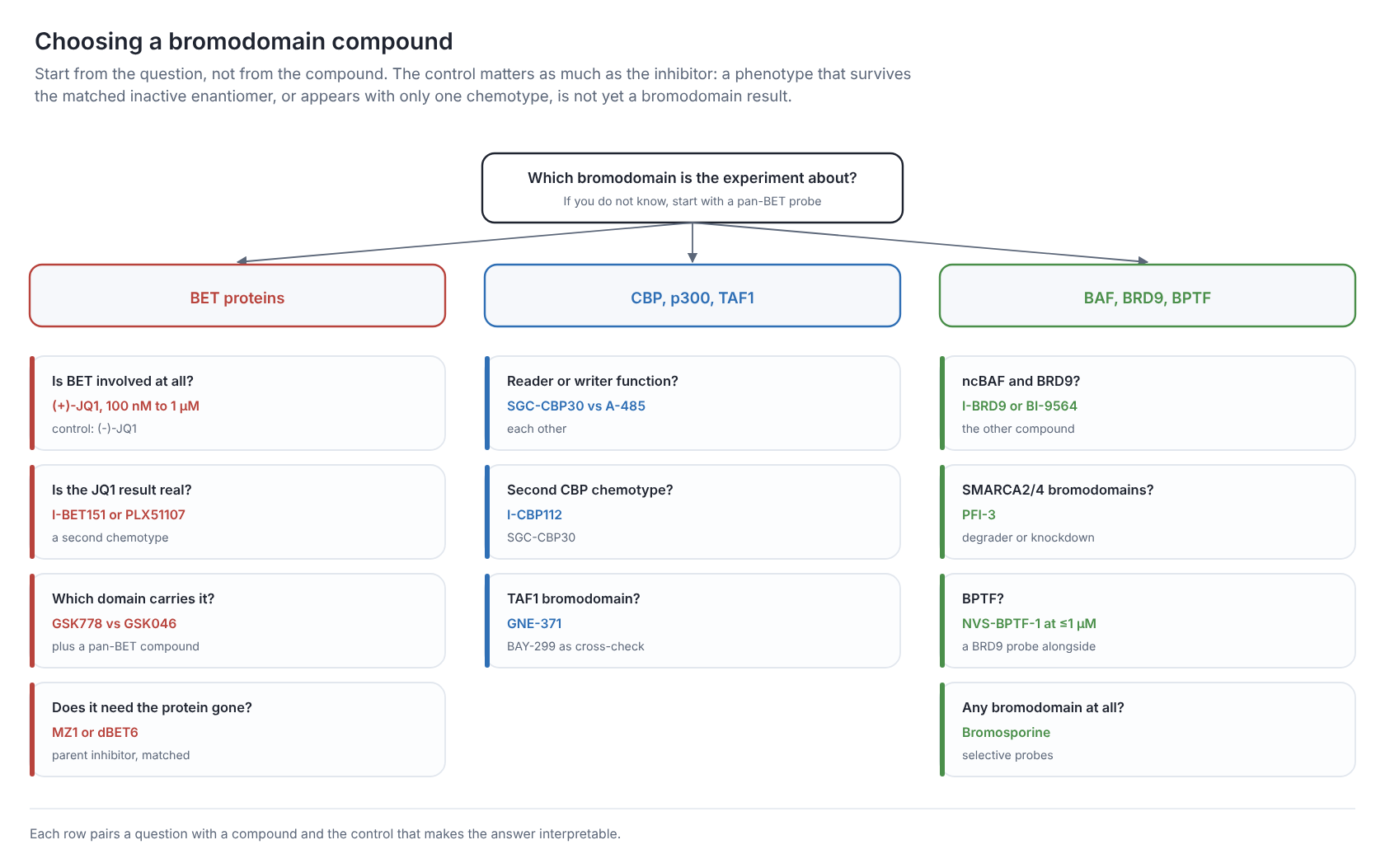
- The matched inactive enantiomer. (-)-JQ1 is the single most useful control in BET biology. Any phenotype that survives it is not BET bromodomain-dependent.
- A second chemotype. Confirm with a chemically unrelated compound: I-BET151 or PLX51107 against JQ1, BI-7273 against I-BRD9, I-CBP112 against SGC-CBP30. Shared phenotype, different scaffold, is far stronger evidence than potency alone.
- Target engagement rather than inhibition. FRAP or a NanoBRET-style assay shows the protein leaving chromatin; a western blot shows only abundance, which an inhibitor is not expected to change.
- Transcriptional readout. MYC and HEXIM1 are the standard pair for BET engagement: MYC falls, HEXIM1 rises, and both move within hours. The HEXIM1 response was mapped to transient release of P-TEFb from the 7SK snRNP and is one of the earliest readouts available [69].
- For degraders. Immunoblot for the target protein with a time course, plus a proteasome inhibitor control and the parent inhibitor at matched concentration, to show the effect requires degradation and not just occupancy.
9. Choosing a bromodomain inhibitor
| If the question is | Use | With this control |
|---|---|---|
| Does this phenotype need BET proteins? | (+)-JQ1 at 100 nM to 1 µM | (-)-JQ1 at the same concentration |
| Is the JQ1 phenotype real? | I-BET151 or PLX51107 | Different chemotype, same readout |
| Which BET domain carries it? | GSK778 and GSK046 | Each other, plus a pan-BET compound |
| Is a BD2-selective compound enough? | ABBV-744 | Pan-BET comparator |
| Does the phenotype need the protein gone? | MZ1 or dBET6 | Parent inhibitor at matched concentration |
| Is it CBP/p300 reader or writer function? | SGC-CBP30 versus A-485 | Each other |
| Is it BRD9 and ncBAF? | I-BRD9 or BI-9564 | The other compound, plus a BET probe |
| Is it BPTF? | NVS-BPTF-1 at ≤1 µM | A BRD9 probe, to exclude cross-reactivity |
| Is it the BAF ATPase bromodomains? | PFI-3 | A SMARCA degrader or knockdown |
| Is any bromodomain involved at all? | Bromosporine | Selective probes, to localize the effect |
10. Troubleshooting
No effect on viability at 1 µM JQ1. Many cell types are genuinely insensitive; BET dependency is not universal. Check target engagement with a transcriptional readout (MYC down, HEXIM1 up) before concluding the compound failed. If the transcriptional response is present and viability is not affected, the result is that this line tolerates BET inhibition.
The effect does not reproduce between passages. Resistance to BET inhibition arises quickly and reversibly in culture [66]. Use early-passage cells, and keep selected lines under continuous drug.
Compound precipitates in medium. Most of these molecules are hydrophobic. Pre-dilute the DMSO stock into a small volume of warm medium with mixing before adding to the plate, keep the final DMSO at or below 0.1%, and avoid adding concentrated stock directly to cold serum-free medium.
A degrader works at 100 nM but not at 10 µM. The hook effect. Run a full dose-response; do not pick a single high concentration [32].
A BPTF compound gives a strong phenotype. Check it is not BRD9. BZ1 binds BRD9 more tightly than BPTF [49], so run a BRD9 probe in parallel before attributing the result to NURF.
A kinase inhibitor produces a BET-like signature. Several kinase inhibitors bind BET bromodomains [41]. Compare the transcriptional signature against JQ1 directly.
Different BET compounds give different results. Check domain selectivity before chemistry. A BD2-selective compound is expected to differ from a pan-BET compound in inflammatory readouts [30].
11. Frequently asked questions
What is a bromodomain?
A bromodomain is a protein module of about 110 residues that binds acetylated lysine. It is built from four alpha helices in a left-handed bundle, with a hydrophobic pocket formed by the ZA and BC loops. A conserved asparagine in the BC loop makes the direct hydrogen bond to the acetyl group, and a conserved tyrosine contributes a water-mediated bond [4] [7].
What is the function of a bromodomain?
It converts a chemical mark into a molecular event. By binding acetylated histones, the bromodomain anchors its host protein on specific chromatin, which is how acetyltransferases, chromatin remodelers and transcriptional cofactors are directed to the right place in the genome [8].
How many bromodomains are there in humans?
Sixty-one bromodomains across 46 proteins, grouped into eight structural classes [7].
What does BET stand for?
Bromodomain and extraterminal domain. It describes four proteins, BRD2, BRD3, BRD4 and BRDT, each carrying two bromodomains plus an extraterminal protein interaction domain [8].
What is BRD4?
Bromodomain containing protein 4, the most studied BET protein. It binds acetylated chromatin, recruits the P-TEFb elongation complex, and is required for productive transcription of genes driven by large enhancer clusters [15] [16] [26].
How does JQ1 work?
JQ1 is an acetyl-lysine mimetic. It occupies both bromodomains of BET proteins competitively with acetylated histone, displacing BRD4 from chromatin; downstream, P-TEFb recruitment falls and transcription collapses first at super-enhancer-driven genes such as MYC [21] [26].
What is the difference between a bromodomain and a chromodomain?
They read different marks. Bromodomains read acetylated lysine using a four-helix bundle and a conserved asparagine; chromodomains read methylated lysine using a β-sheet fold and an aromatic cage. Bromodomain-containing proteins mostly activate transcription, while chromodomain proteins such as HP1 and the Polycomb CBX proteins mostly silence it [6].
What is the difference between BD1 and BD2 inhibitors?
Both bromodomains of a BET protein bind acetyl-lysine, but they carry different biology. BD1-selective compounds such as GSK778 reproduce most of the anti-cancer phenotype, BD2-selective compounds such as GSK046 and ABBV-744 carry most of the anti-inflammatory and immunomodulatory effect, and BD2 selectivity improves tolerability in animals [30] [31].
Is any bromodomain inhibitor approved as a drug?
No. As of November 2026 no bromodomain inhibitor has been approved in any jurisdiction. Pelabresib with ruxolitinib has phase 3 data in myelofibrosis [60], and apabetalone completed a cardiovascular outcomes trial that missed its primary endpoint [62].
Why did so many BET inhibitor trials stop?
Thrombocytopenia set a narrow therapeutic window, single-agent activity was mostly cytostatic and partial, resistance developed quickly through transcriptional rewiring, and there was no biomarker to select patients outside NUT carcinoma [54] [65].
Are bromodomains kinases?
No. A bromodomain is a reader module with no catalytic activity. The confusion comes from BRD4, which has been reported to have intrinsic atypical kinase activity toward RNA polymerase II, a property of that protein rather than of the domain [18]. Separately, several kinase inhibitors cross-react with BET bromodomains [41].
What is a BPTF bromodomain inhibitor and which one should I use?
BPTF is the largest subunit of the NURF remodeling complex. NVS-BPTF-1 is the chemical probe, with double-digit nanomolar binding, no significant bromodomain off-targets and a recommended cellular ceiling of 1 µM, and it is suitable for cell work only [48]. The pyridazinone BZ1 is more potent on BPTF but binds BRD9 and BRD7 more tightly still, so it is a tool compound that needs a BRD9 control alongside it [49].
What is the working concentration of a bromodomain inhibitor in cell culture?
For pan-BET probes, 100 nM to 1 µM for 24 to 72 hours covers most phenotypes; transcriptional readouts move within hours [28]. Degraders are usually used at 10 to 100 nM with a full dose-response, because of the hook effect [32]. For non-BET probes, follow the maximum cellular concentration stated in the probe's characterization.
Which negative control should I use with JQ1?
(-)-JQ1, the inactive enantiomer. It is matched in structure, solubility and physical properties, and it does not bind BET bromodomains [21].
Do bromodomain inhibitors affect reproduction?
BRDT is a testis-specific BET protein. JQ1 crosses the blood-testis barrier, inhibits BRDT and causes reversible contraceptive effects in male mice without changing testosterone or mating behavior [63]. This is a research finding in animals.
Do bromodomains exist outside humans?
Yes, across eukaryotes. The domain was named after a Drosophila gene [3], and bromodomain proteins are targets in parasites: in Plasmodium falciparum, the ApiAP2 transcription factor PfAP2-I associates with the bromodomain protein PfBDP1 to control red blood cell invasion genes [70]. Searches for "AP2 protein bromodomain" usually land on this parasite biology rather than on the human AP-2 transcription factors, which have no bromodomain.
What is the difference between a bromodomain inhibitor and a BET degrader?
An inhibitor blocks the acetyl-lysine pocket and leaves the protein in place, including its extraterminal scaffolding domain. A degrader such as MZ1 recruits an E3 ligase and removes the whole protein, so the effect is deeper and lasts past compound washout [33] [32]. When the two disagree, the difference usually reflects a function that does not depend on the bromodomains.
References
- Filippakopoulos P, Knapp S. Targeting bromodomains: epigenetic readers of lysine acetylation. Nature Reviews Drug Discovery 2014. doi
- Li Y, Wen H, Xi Y, et al. AF9 YEATS Domain Links Histone Acetylation to DOT1L-Mediated H3K79 Methylation. Cell 2014. PMID 25417107
- Tamkun JW, Deuring R, Scott MP, et al. brahma: A regulator of Drosophila homeotic genes structurally related to the yeast transcriptional activator SNF2/SWI2. Cell 1992. doi
- Dhalluin C, Carlson JE, Zeng L, He C, Aggarwal AK, Zhou MM. Structure and ligand of a histone acetyltransferase bromodomain. Nature 1999. doi
- Owen DJ, Ornaghi P, Yang JC, et al. The structural basis for the recognition of acetylated histone H4 by the bromodomain of histone acetyltransferase Gcn5p. The EMBO Journal 2000. doi
- Musselman CA, Lalonde ME, Côté J, Kutateladze TG. Perceiving the epigenetic landscape through histone readers. Nature Structural & Molecular Biology 2012. doi
- Filippakopoulos P, Picaud S, Mangos M, et al. Histone Recognition and Large-Scale Structural Analysis of the Human Bromodomain Family. Cell 2012. doi
- Fujisawa T, Filippakopoulos P. Functions of bromodomain-containing proteins and their roles in homeostasis and cancer. Nature Reviews Molecular Cell Biology 2017. doi
- Theodoulou NH, Bamborough P, Bannister AJ, et al. Discovery of I-BRD9, a Selective Cell Active Chemical Probe for Bromodomain Containing Protein 9 Inhibition. Journal of Medicinal Chemistry 2016. doi
- Wellen KE, Hatzivassiliou G, Sachdeva UM, Bui TV, Cross JR, Thompson CB. ATP-Citrate Lyase Links Cellular Metabolism to Histone Acetylation. Science 2009. doi
- Pietrocola F, Galluzzi L, Bravo-San Pedro JM, Madeo F, Kroemer G. Acetyl Coenzyme A: A Central Metabolite and Second Messenger. Cell Metabolism 2015. doi
- Cochran AG, Conery AR, Sims RJ. Bromodomains: a new target class for drug development. Nature Reviews Drug Discovery 2019. doi
- Bradbury RH, Callis R, Carr GR, et al. Optimization of a Series of Bivalent Triazolopyridazine Based Bromodomain and Extraterminal Inhibitors: The Discovery of AZD5153. Journal of Medicinal Chemistry 2016. doi
- Wu SY, Chiang CM. The Double Bromodomain-containing Chromatin Adaptor Brd4 and Transcriptional Regulation. Journal of Biological Chemistry 2007. doi
- Yang Z, Yik JHN, Chen R, et al. Recruitment of P-TEFb for Stimulation of Transcriptional Elongation by the Bromodomain Protein Brd4. Molecular Cell 2005. doi
- Jang MK, Mochizuki K, Zhou M, Jeong HS, Brady JN, Ozato K. The Bromodomain Protein Brd4 Is a Positive Regulatory Component of P-TEFb and Stimulates RNA Polymerase II-Dependent Transcription. Molecular Cell 2005. doi
- Winter GE, Mayer A, Buckley DL, et al. BET Bromodomain Proteins Function as Master Transcription Elongation Factors Independent of CDK9 Recruitment. Molecular Cell 2017. doi
- Devaiah BN, Lewis BA, Cherman N, et al. BRD4 is an atypical kinase that phosphorylates Serine2 of the RNA Polymerase II carboxy-terminal domain. Proceedings of the National Academy of Sciences 2012. doi
- Eagen KP, French CA. Supercharging BRD4 with NUT in carcinoma. Oncogene 2021. doi
- Jacobson RH, Ladurner AG, King DS, Tjian R. Structure and Function of a Human TAFII250 Double Bromodomain Module. Science 2000. doi
- Filippakopoulos P, Qi J, Picaud S, et al. Selective inhibition of BET bromodomains. Nature 2010. PMID 20871596
- Nicodeme E, Jeffrey KL, Schaefer U, et al. Suppression of inflammation by a synthetic histone mimic. Nature 2010. doi
- Delmore JE, Issa GC, Lemieux ME, et al. BET Bromodomain Inhibition as a Therapeutic Strategy to Target c-Myc. Cell 2011. doi
- Zuber J, Shi J, Wang E, et al. RNAi screen identifies Brd4 as a therapeutic target in acute myeloid leukaemia. Nature 2011. doi
- Dawson MA, Prinjha RK, Dittmann A, et al. Inhibition of BET recruitment to chromatin as an effective treatment for MLL-fusion leukaemia. Nature 2011. doi
- Lovén J, Hoke HA, Lin CY, et al. Selective Inhibition of Tumor Oncogenes by Disruption of Super-Enhancers. Cell 2013. doi
- Shi J, Vakoc CR. The Mechanisms behind the Therapeutic Activity of BET Bromodomain Inhibition. Molecular Cell 2014. doi
- Ambrosini G, Sawle AD, Musi E, Schwartz GK. BRD4-targeted therapy induces Myc-independent cytotoxicity in Gnaq/11-mutant uveal melanoma cells. Oncotarget 2015. doi
- Picaud S, Wells C, Felletar I, et al. RVX-208, an inhibitor of BET transcriptional regulators with selectivity for the second bromodomain. Proceedings of the National Academy of Sciences 2013. doi
- Gilan O, Rioja I, Knezevic K, et al. Selective targeting of BD1 and BD2 of the BET proteins in cancer and immunoinflammation. Science 2020. doi
- Faivre EJ, McDaniel KF, Albert DH, et al. Selective inhibition of the BD2 bromodomain of BET proteins in prostate cancer. Nature 2020. doi
- Zengerle M, Chan KH, Ciulli A. Selective Small Molecule Induced Degradation of the BET Bromodomain Protein BRD4. ACS Chemical Biology 2015. doi
- Winter GE, Buckley DL, Paulk J, et al. Phthalimide conjugation as a strategy for in vivo target protein degradation. Science 2015. doi
- Lu J, Qian Y, Altieri M, et al. Hijacking the E3 Ubiquitin Ligase Cereblon to Efficiently Target BRD4. Chemistry & Biology 2015. doi
- Raina K, Lu J, Qian Y, et al. PROTAC-induced BET protein degradation as a therapy for castration-resistant prostate cancer. Proceedings of the National Academy of Sciences 2016. doi
- Ozer HG, El-Gamal D, Powell B, et al. BRD4 Profiling Identifies Critical Chronic Lymphocytic Leukemia Oncogenic Circuits and Reveals Sensitivity to PLX51107, a Novel Structurally Distinct BET Inhibitor. Cancer Discovery 2018. PMID 29386193
- Gavai AV, Norris D, Delucca G, et al. Discovery and Preclinical Pharmacology of an Oral Bromodomain and Extra-Terminal (BET) Inhibitor Using Scaffold-Hopping and Structure-Guided Drug Design. Journal of Medicinal Chemistry 2021. PMID 34543572
- McDaniel KF, Wang L, Soltwedel T, et al. Discovery of ABBV-075/mivebresib, a potent and orally available bromodomain and extraterminal domain (BET) family bromodomain inhibitor. Journal of Medicinal Chemistry 2017. doi
- Bui MH, Lin X, Albert DH, et al. Preclinical Characterization of BET Family Bromodomain Inhibitor ABBV-075 Suggests Combination Therapeutic Strategies. Cancer Research 2017. doi
- Picaud S, Leonards K, Lambert JP, et al. Promiscuous targeting of bromodomains by bromosporine identifies BET proteins as master regulators of primary transcription response in leukemia. Science Advances 2016. doi
- Ciceri P, Müller S, O'Mahony A, et al. Dual kinase-bromodomain inhibitors for rationally designed polypharmacology. Nature Chemical Biology 2014. doi
- Hammitzsch A, Tallant C, Fedorov O, et al. CBP30, a selective CBP/p300 bromodomain inhibitor, suppresses human Th17 responses. Proceedings of the National Academy of Sciences 2015. doi
- Conery AR, Centore RC, Neiss A, et al. Bromodomain inhibition of the transcriptional coactivators CBP/EP300 as a therapeutic strategy to target the IRF4 network in multiple myeloma. eLife 2016. doi
- Lasko LM, Jakob CG, Edalji RP, et al. Discovery of a selective catalytic p300/CBP inhibitor that targets lineage-specific tumours. Nature 2017. doi
- Welti J, Sharp A, Brooks N, et al. Targeting the p300/CBP Axis in Lethal Prostate Cancer. Cancer Discovery 2021. doi
- Wang S, Tsui V, Crawford TD, et al. GNE-371, a Potent and Selective Chemical Probe for the Second Bromodomains of Human Transcription-Initiation-Factor TFIID Subunit 1 and Transcription-Initiation-Factor TFIID Subunit 1-like. Journal of Medicinal Chemistry 2018. doi
- Bouché L, Christ CD, Siegel S, et al. Benzoisoquinolinediones as Potent and Selective Inhibitors of BRPF2 and TAF1/TAF1L Bromodomains. Journal of Medicinal Chemistry 2017. doi
- Mélin L, Calosing C, Kharenko OA, et al. Synthesis of NVS-BPTF-1 and evaluation of its biological activity. Bioorganic & Medicinal Chemistry Letters 2021. doi
- Zahid H, Buchholz CR, Singh M, et al. New Design Rules for Developing Potent Cell-Active Inhibitors of the Nucleosome Remodeling Factor (NURF) via BPTF Bromodomain Inhibition. Journal of Medicinal Chemistry 2021. doi
- Fedorov O, Castex J, Tallant C, et al. Selective targeting of the BRG/PB1 bromodomains impairs embryonic and trophoblast stem cell maintenance. Science Advances 2015. doi
- Hohmann AF, Martin LJ, Minder JL, et al. Sensitivity and engineered resistance of myeloid leukemia cells to BRD9 inhibition. Nature Chemical Biology 2016. doi
- Bamborough P, Barnett HA, Becher I, et al. GSK6853, a Chemical Probe for Inhibition of the BRPF1 Bromodomain. ACS Medicinal Chemistry Letters 2016. PMID 27326325
- Fernández-Montalván AE, Berger M, Kuropka B, et al. Isoform-Selective ATAD2 Chemical Probe with Novel Chemical Structure and Unusual Mode of Action. ACS Chemical Biology 2017. doi
- Berthon C, Raffoux E, Thomas X, et al. Bromodomain inhibitor OTX015 in patients with acute leukaemia: a dose-escalation, phase 1 study. The Lancet Haematology 2016. doi
- Amorim S, Stathis A, Gleeson M, et al. Bromodomain inhibitor OTX015 in patients with lymphoma or multiple myeloma: a dose-escalation, open-label, pharmacokinetic, phase 1 study. The Lancet Haematology 2016. doi
- Lewin J, Soria JC, Stathis A, et al. Phase Ib Trial With Birabresib, a Small-Molecule Inhibitor of Bromodomain and Extraterminal Proteins, in Patients With Selected Advanced Solid Tumors. Journal of Clinical Oncology 2018. doi
- Piha-Paul SA, Hann CL, French CA, et al. Phase 1 Study of Molibresib (GSK525762), a Bromodomain and Extra-Terminal Domain Protein Inhibitor, in NUT Carcinoma and Other Solid Tumors. JNCI Cancer Spectrum 2020. doi
- Piha-Paul SA, Sachdev JC, Barve M, et al. First-in-Human Study of Mivebresib (ABBV-075), an Oral Pan-Inhibitor of Bromodomain and Extra Terminal Proteins, in Patients with Relapsed/Refractory Solid Tumors. Clinical Cancer Research 2019. doi
- Mascarenhas J, Kremyanskaya M, Patriarca A, et al. MANIFEST: Pelabresib in Combination With Ruxolitinib for Janus Kinase Inhibitor Treatment-Naïve Myelofibrosis. Journal of Clinical Oncology 2023. doi
- Rampal RK, Grosicki S, Chraniuk D, et al. Pelabresib plus ruxolitinib for JAK inhibitor-naive myelofibrosis: a randomized phase 3 trial. Nature Medicine 2025. doi
- Aggarwal RR, Schweizer MT, Nanus DM, et al. A Phase Ib/IIa Study of the Pan-BET Inhibitor ZEN-3694 in Combination with Enzalutamide in Patients with Metastatic Castration-resistant Prostate Cancer. Clinical Cancer Research 2020. doi
- Ray KK, Nicholls SJ, Buhr KA, et al. Effect of Apabetalone Added to Standard Therapy on Major Adverse Cardiovascular Events in Patients With Recent Acute Coronary Syndrome and Type 2 Diabetes. JAMA 2020. doi
- Matzuk MM, McKeown MR, Filippakopoulos P, et al. Small-Molecule Inhibition of BRDT for Male Contraception. Cell 2012. doi
- Livingston JA, Blay JY, Trent J, et al. A Phase I Study of FHD-609, a Heterobifunctional Degrader of Bromodomain-Containing Protein 9, in Patients with Advanced Synovial Sarcoma or SMARCB1-Deficient Tumors. Clinical Cancer Research 2025. PMID 39660994
- Shorstova T, Foulkes WD, Witcher M. Achieving clinical success with BET inhibitors as anti-cancer agents. British Journal of Cancer 2021. doi
- Fong CY, Gilan O, Lam EYN, et al. BET inhibitor resistance emerges from leukaemia stem cells. Nature 2015. doi
- Rathert P, Roth M, Neumann T, et al. Transcriptional plasticity promotes primary and acquired resistance to BET inhibition. Nature 2015. doi
- Shu S, Lin CY, He HH, et al. Response and resistance to BET bromodomain inhibitors in triple-negative breast cancer. Nature 2016. doi
- Bartholomeeusen K, Xiang Y, Fujinaga K, et al. Bromodomain and Extra-terminal (BET) Bromodomain Inhibition Activate Transcription via Transient Release of Positive Transcription Elongation Factor b (P-TEFb) from 7SK Small Nuclear Ribonucleoprotein. Journal of Biological Chemistry 2012. PMID 22952229
- Santos JM, Josling G, Ross P, et al. Red Blood Cell Invasion by the Malaria Parasite Is Coordinated by the PfAP2-I Transcription Factor. Cell Host & Microbe 2017. doi