CRFR

Corticotropin-releasing factor receptor (CRFR) antagonists act on key receptors of the stress response. The peptide corticotropin-releasing factor (CRF) was characterized in 1981 as a 41-residue hypothalamic peptide that stimulates corticotropin secretion. Expression cloning of a human CRF receptor, now called CRF1, followed in 1993, and a second subtype, CRF2, was identified later. Through the hypothalamic-pituitary-adrenal (HPA) axis, CRF1 signaling links stress to glucocorticoid release and anxiety-like behavior. Most compounds here are small-molecule CRF1 antagonists, including pexacerfont, verucerfont, R-121919 and CP 376395. The list also holds Corticotropin Releasing Factor, bovine, and tetracosactide, a corticotropin fragment that acts on melanocortin receptors.

Items 51-62 of 62

  • CRHR1 antagonist 1
    Cat. No.
    A59763

    CRHR1 antagonist 1

    CRHR1 Antagonist 1 is a non-peptide antagonist of the corticotropin-releasing hormone type 1 receptor (CRHR1). This compound is designed for research into mental disorders, where it may help elucidate the role of CRHR1 in stress response and related pathologies. Its application in preclinical studies could advance understanding of therapeutic targets for anxiety and depression.

    5 mg
    $245.00
    10 mg
    $400.00
    All 4 sizes
  • CRA1000
    Cat. No.
    A59764

    CRA1000

    CRA1000 is a selective and competitive antagonist of the corticotropin-releasing factor 1 (CRF1) receptor. This compound exhibits anxiolytic and antidepressant-like properties, making it valuable in the study of stress-related disorders. CRA1000 is suitable for research applications focusing on the modulation of anxiety and depressive symptoms through CRF1 receptor pathways.

    25 mg
    $1,275.00
    50 mg
    $1,625.00
    All 3 sizes
  • NBI-34041
    Cat. No.
    A59765

    NBI-34041

    Synonyms: SB-723620

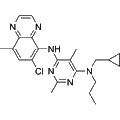
    NBI-34041 is a selective, orally active nonpeptide antagonist of the CRF1 receptor, exhibiting an IC50 of 58.9 nM and a Ki of 4.0 nM for the human CRF1 receptor. This compound is characterized by its lack of inhibitory effects on the CRF2 receptor. NBI-34041 is utilized in research targeting depression and anxiety disorders, providing a valuable tool for investigating the role of CRF1 in stress-related conditions.

    25 mg
    $1,780.00
    50 mg
    $2,280.00
    All 3 sizes
  • NBI-35965
    Cat. No.
    A59766

    NBI-35965

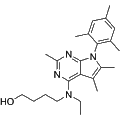
    NBI-35965 is a selective antagonist of corticotropin-releasing factor receptor 1 (CRF-R1). This compound is utilized in research applications focusing on the nervous system, particularly in studies exploring stress response, anxiety, and depression. By inhibiting CRF-R1 activity, NBI-35965 provides valuable insights into the mechanisms underlying these neuropsychiatric disorders.

    25 mg
    $1,780.00
    50 mg
    $2,280.00
    All 3 sizes
  • SN003
    Cat. No.
    A59767

    SN003

    SN003 is a reversible antagonist of corticotropin-releasing factor receptor 1 (CRFR 1), exhibiting an IC50 of 241 nM and over 1000-fold selectivity for CRFR 1 compared to CRFR 2. This compound effectively suppresses corticotropin-releasing factor-induced adrenocorticotropic hormone (ACTH) release in vitro. Additionally, SN003 demonstrates the potential to mitigate depressive-like behavior in rat models, making it a valuable tool for research in neuropsychiatric disorders.

    25 mg
    $1,405.00
    50 mg
    $1,790.00
    All 3 sizes
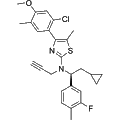
  • Crinecerfont
    Cat. No.
    A66455

    Crinecerfont

    Synonyms: SSR-125543

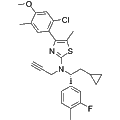
    Crinecerfont is a selective antagonist of the corticotropin-releasing factor receptor type-1 (CRF1). It effectively inhibits CRF1 receptor signaling, leading to a reduction in adrenocorticotropic hormone secretion and enhanced sensitivity of the hypothalamic-pituitary-adrenal axis negative feedback in models of chronic stress. This compound is valuable for research into chronic stress conditions and classic congenital adrenal hyperplasia due to 21-hydroxylase deficiency. Additionally, Crinecerfont serves as a click chemistry reagent, featuring an alkyne group that participates in copper-catalyzed azide-alkyne cycloaddition (CuAAc) with azide-containing molecules.

    1 mg
    $75.00
    5 mg
    $190.00
    All 6 sizes
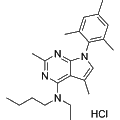
  • CP 154526 hydrochloride
    Cat. No.
    A66458

    CP 154526 hydrochloride

    CP 154526 hydrochloride is a selective antagonist of corticotropin-releasing factor receptor 1 (CRF1) with a binding affinity (Ki) of 2.7 nM. This compound demonstrates high selectivity for CRF1 over CRF2, exhibiting a Ki greater than 10 μM for CRF2. CP 154526 hydrochloride is recognized for its anxiolytic properties and is utilized in research applications aimed at exploring stress-related disorders and anxiety treatment mechanisms.

    1 mg
    $35.00
    5 mg
    $85.00
    All 6 sizes
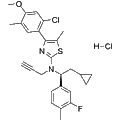
  • Crinecerfont hydrochloride
    Cat. No.
    A66462

    Crinecerfont hydrochloride

    Synonyms: SSR-125543 hydrochloride

    Crinecerfont hydrochloride is a selective antagonist of the corticotropin-releasing factor type 1 (CRF1) receptor. This compound inhibits CRF1 receptor signaling, leading to a reduction in adrenocorticotropic hormone secretion, which may enhance negative feedback sensitivity of the hypothalamic-pituitary-adrenal axis in models of chronic stress. Crinecerfont hydrochloride is suitable for research into chronic stress disorders and classic congenital adrenal hyperplasia caused by 21-hydroxylase deficiency. Additionally, it serves as a click chemistry reagent, featuring an alkyne group that allows for copper-catalyzed azide-alkyne cycloaddition with azide-containing molecules.

    2 mg
    $195.00
    5 mg
    $230.00
    All 6 sizes
  • CRF1 receptor antagonist-1
    Cat. No.
    A66491

    CRF1 receptor antagonist-1

    CRF1 receptor antagonist-1 is a potent antagonist of the corticotropin-releasing factor 1 (CRF1) receptor. This compound is primarily utilized in research focusing on congenital adrenal hyperplasia (CAH) and related disorders. Its ability to inhibit CRF1 receptor activity may provide insights into stress response and endocrine regulation.

    Out of stock

    All 3 sizes
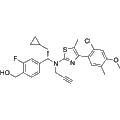
  • (R)-Crinecerfont
    Cat. No.
    A66493

    (R)-Crinecerfont

    Synonyms: (R)-SSR-125543

    (R)-Crinecerfont is the R-enantiomer of Crinecerfont and functions as a selective antagonist of the corticotropin-releasing factor receptor type-1 (CRF1 receptor). It effectively inhibits CRF1 receptor signaling, leading to a reduction in adrenocorticotropic hormone secretion, thus enhancing the sensitivity of the hypothalamic-pituitary-adrenal axis negative feedback in models of chronic stress. This compound is valuable for research into chronic stress conditions and classic congenital adrenal hyperplasia due to 21-hydroxylase deficiency. Additionally, (R)-Crinecerfont features an alkyne group, enabling its use in copper-catalyzed azide-alkyne cycloaddition (CuAAc) applications in click chemistry.

    1 mg
    $95.00
    2 mg
    $145.00
    All 7 sizes
  • Crinecerfont tosylate
    Cat. No.
    A66495

    Crinecerfont tosylate

    Synonyms: SSR-125543 tosylate

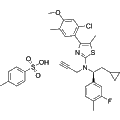
    Crinecerfont tosylate is a selective antagonist of the corticotropin-releasing factor receptor type-1 (CRF1). This compound effectively inhibits CRF1 receptor signaling, leading to a reduction in adrenocorticotropic hormone (ACTH) secretion. Its ability to enhance the sensitivity of the hypothalamic-pituitary-adrenal axis negative feedback makes it valuable in studies related to chronic stress and classic congenital adrenal hyperplasia caused by 21-hydroxylase deficiency. Additionally, Crinecerfont tosylate features an alkyne group, allowing it to participate in copper-catalyzed azide-alkyne cycloaddition (CuAAc) reactions, further expanding its utility in chemical biology research.

    Out of stock

    All 3 sizes
  • AAG561
    Cat. No.
    A66497

    AAG561

    Synonyms: NVP-AAG 561

    AAG561 is a potent antagonist of the corticotropin-releasing factor receptor 1 (CRF1). This compound is instrumental in investigating the mechanisms behind emotion dysregulation associated with various mental disorders. AAG561's ability to modulate CRF1 activity makes it a valuable tool for research into stress-related behaviors and the neurobiology of anxiety and depression.

    Out of stock

    All 3 sizes

Items 51-62 of 62

Added to your cart

View Cart Checkout

    Loading...