All Dyes

All Dyes is the single product list for the Fluorescent Dyes, Probes & Stains section. Many dyes here have no application or dye-family subcategory, so the list is the broadest way to browse the range. It suits searches by product name when the required dye is already known. Examples range from the near-infrared cyanine indocyanine green and the ratiometric calcium indicator Fura-2 pentapotassium to the nucleic acid stains Hoechst 33258 trihydrochloride and SYBR Green II. Classical stains such as hematoxylin, reactive labeling dyes and enzyme substrates are listed alongside them. For selection by task or by core structure, the parent Fluorescent Dyes, Probes & Stains page groups dyes by application and dye family.

Items 826-850 of 2505

  • MBD
    Cat. No.
    A44509

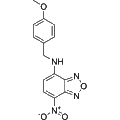
    MBD

    Synonyms: 7-(p-Methoxybenzylamino)-4-nitrobenz-2,1,3-oxadiazole

    MBD (7-(p-Methoxybenzylamino)-4-nitrobenz-2,1,3-oxadiazole) is a fluorescent probe that selectively binds to hydrophobic regions of macromolecules, enabling the visualization of protein and nucleoprotein conformations. It has been successfully applied to bacterial ribosomes, as well as bovine trypsinogen and trypsin. MBD's strong fluorescence upon binding makes it a valuable tool for investigating protein structure and dynamics in various biological research applications.

    10 mg
    $25.00
    50 mg
    $45.00
    All 3 sizes
  • Ru(bpy)2(mcbpy-O-Su-ester)(PF6)2
    Cat. No.
    A44512

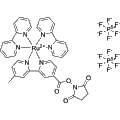
    Ru(bpy)2(mcbpy-O-Su-ester)(PF6)2

    Ru(bpy)2(mcbpy-O-Su-ester)(PF6)2 is a ruthenium-based dye that acts primarily as a fluorescence quencher for quantum dots (QDs). This compound serves as a reliable capture probe for the virus antigen EV71 and offers enhanced sensitivity as an electrogenerated chemiluminescence (ECL) label for the detection of matrix metalloproteinases (MMPs). Its unique properties make it valuable for various applications in biochemical and molecular research.

    1 mg
    $130.00
    5 mg
    $615.00
    All 2 sizes
  • Fluorescein diphosphate tetraammonium
    Cat. No.
    A44513

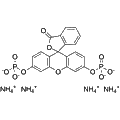
    Fluorescein diphosphate tetraammonium

    Fluorescein diphosphate tetraammonium is a fluorescent dye that acts as a fluorogenic substrate, generating fluorescein as a fluorescent product upon enzymatic hydrolysis. This compound is widely used in biochemical assays for the detection and quantification of phosphatase activity. Its bright fluorescence makes it a valuable tool in various research applications, including cell biology and enzyme kinetics studies.

    1 mg
    $90.00
    5 mg
    $220.00
    All 7 sizes
  • 4-MU-α-GlcNS sodium
    Cat. No.
    A44514

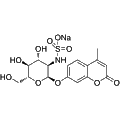
    4-MU-α-GlcNS sodium

    4-MU-α-GlcNS sodium is a fluorogenic substrate for heparin sulphamidase, which is desulfurized to produce 4-MU-α-GlcNH2. This metabolite is then hydrolyzed by α-glucosaminidase, resulting in the release of 4-methylumbelliferone (4-MU), a fluorescent compound with maximum emission wavelengths between 445-454 nm. 4-MU-α-GlcNS sodium is valuable in studying heparin sulphamidase deficiencies related to Mucopolysaccharidosis IIIA and other lysosomal disorders.

    0.5 mg
    $130.00
    1 mg
    $235.00
    All 2 sizes
  • Fluorescein Di-β-D-Glucuronide
    Cat. No.
    A44515

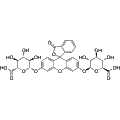
    Fluorescein Di-β-D-Glucuronide

    Fluorescein Di-β-D-Glucuronide is a fluorescent probe substrate specifically designed to detect β-glucuronidase (βG) activity in intestinal bacteria. This compound enables non-invasive time-lapse optical imaging of βG activity, facilitating in vivo studies in models such as nude mice. Additionally, Fluorescein Di-β-D-Glucuronide supports quantitative analysis of bacterial βG enzyme activity and its inhibition, making it a valuable tool for microbiological research and enzyme kinetics.

    5 mg
    $640.00
    10 mg
    $1,050.00
    All 3 sizes
  • C6 NBD Lactosylceramide
    Cat. No.
    A44516

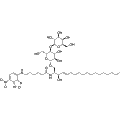
    C6 NBD Lactosylceramide

    C6 NBD Lactosylceramide is a fluorescent dye that serves as a substrate for lactosylceramide synthase assays. It exhibits key biological properties that facilitate the study of glycosphingolipid metabolism and its implications in cancer research. This reagent is valuable for investigating cellular signaling pathways and membrane dynamics associated with lactosylceramides.

    0.05 mg
    $605.00
    All 1 sizes
  • 7-Ethoxy-4-trifluoromethylcoumarin
    Cat. No.
    A44517

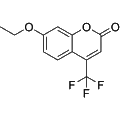
    7-Ethoxy-4-trifluoromethylcoumarin

    7-Ethoxy-4-trifluoromethylcoumarin is a fluorescent substrate that targets cytochrome P450 enzymes, facilitating the study of enzymatic activities within this superfamily. Its biological activity makes it particularly useful in drug metabolism research, allowing for the assessment of enzyme specificity and interaction with various compounds. This reagent is an essential tool for investigating the pharmacokinetics and biotransformation processes of therapeutic agents.

    1 mg
    $25.00
    2 mg
    $35.00
    All 4 sizes
  • Msr-Ratio
    Cat. No.
    A44519

    Msr-Ratio

    Synonyms: Msr-green

    Msr-Ratio is a ratiometric fluorescent probe designed for the detection of methionine sulfoxide reductase, with an excitation wavelength of 375 nm and an emission wavelength of 550 nm. This probe enables the monitoring of enzyme activity both in vitro and within live cells, providing valuable insights into redox regulation and oxidative stress mechanisms. Its application facilitates studies in cellular biology and biochemical pathways involving methionine sulfoxide reductase.

    2 mg
    $25.00
    5 mg
    $40.00
    All 7 sizes
  • PL553
    Cat. No.
    A44520

    PL553

    PL553 is a high-affinity fluorogenic substrate targeting leukotriene A4 hydrolase. With an excitation wavelength (λmax) of 210 nm and emission wavelength (λem) of 410 nm, this fluorescent dye is designed for specific detection in biological assays. Its robust fluorescence enables applications in studying leukotriene metabolism and related inflammatory pathways.

    5 mg
    $175.00
    10 mg
    $300.00
    All 5 sizes
  • Ac-Leu-Arg-AMC
    Cat. No.
    A44521

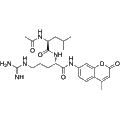
    Ac-Leu-Arg-AMC

    Ac-Leu-Arg-AMC is a fluorogenic peptide substrate designed for the quantitative analysis of protease activity. This compound is particularly useful in studies of proteolytic enzymes, enabling the detection of enzyme activity through fluorescence measurement. Its specificity for certain proteases makes it ideal for applications in biochemical assays and research involving protein degradation pathways.

    5 mg
    $70.00
    10 mg
    $120.00
    All 3 sizes
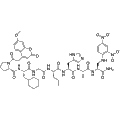
  • Mca-Pro-Leu-Ala-Cys(Mob)-Trp-Ala-Arg-Dap(Dnp)-NH2
    Cat. No.
    A44525

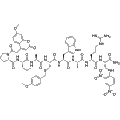
    Mca-Pro-Leu-Ala-Cys(Mob)-Trp-Ala-Arg-Dap(Dnp)-NH2

    Mca-Pro-Leu-Ala-Cys(Mob)-Trp-Ala-Arg-Dap(Dnp)-NH2 is a fluorogenic substrate specifically designed for the matrix metalloproteinase-14 (MMP-14). This compound exhibits enhanced fluorescence upon cleavage by MMP-14, allowing for sensitive detection and quantification of enzyme activity. It serves as a valuable tool for research applications focused on understanding extracellular matrix remodeling and the role of MMP-14 in various physiological and pathological processes.

    0.5 mg
    $290.00
    All 1 sizes
  • PFB-FDG
    Cat. No.
    A44526

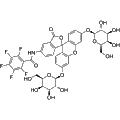
    PFB-FDG

    PFB-FDG is a non-fluorescent galactosidase substrate that is hydrolyzed to produce the green fluorescent compound PFB-F, with excitation and emission maxima at 485 nm and 535 nm, respectively. This reagent is utilized for the quantitative assessment of β-galactosidase activity in various biological samples, enabling researchers to study enzyme kinetics and cellular processes involving this crucial enzyme. Its application spans across fields such as molecular biology, biochemistry, and cell biology.

    1 mg
    $240.00
    5 mg
    $575.00
    All 4 sizes
  • Ac-VEID-AMC
    Cat. No.
    A44527

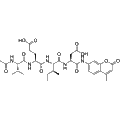
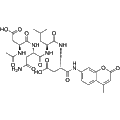
    Ac-VEID-AMC

    Ac-VEID-AMC is a fluorescent substrate specifically designed for the detection of caspase-6 and related cysteine protease activities. It emits fluorescence upon cleavage, allowing for sensitive quantitation of protease activity. This compound is widely applied in apoptosis research and studies involving cellular signaling pathways where caspase-6 plays a crucial role.

    5 mg
    $90.00
    10 mg
    $150.00
    All 4 sizes
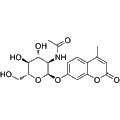
  • 4-Methylumbelliferyl-N-acetyl-α-D-glucosaminide
    Cat. No.
    A44528

    4-Methylumbelliferyl-N-acetyl-α-D-glucosaminide

    4-Methylumbelliferyl-N-acetyl-α-D-glucosaminide serves as a fluorogenic substrate specifically for the detection of α-N-acetylglucosaminidase. Upon cleavage by the enzyme, it releases a highly fluorescent product, enabling sensitive quantification in various biological samples. This reagent is valuable in enzymatic assays to study glycosylation processes and related biochemical pathways.

    5 mg
    $280.00
    10 mg
    $505.00
    All 3 sizes
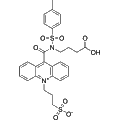
  • NSP-AS
    Cat. No.
    A44529

    NSP-AS

    NSP-AS is a chemiluminescent acridinium substrate that serves as a sensitive detection reagent in homogeneous assays. It facilitates light emission in the presence of target analytes, enabling the quantification of biological molecules. NSP-AS is ideal for applications in clinical diagnostics and research involving biomarker detection and assay development.

    5 mg
    $60.00
    10 mg
    $100.00
    All 5 sizes
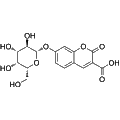
  • CUG
    Cat. No.
    A44531

    CUG

    Synonyms: 3-Carboxyumbelliferyl-β-D-galactopyranoside

    CUG (3-Carboxyumbelliferyl-β-D-galactopyranoside) is a fluorogenic substrate primarily used to detect β-galactosidase activity. It exhibits excitation and emission wavelengths of 386 nm and 445 nm, respectively. This compound is valuable in various biochemical assays and cellular studies to monitor enzyme activity and understand metabolic processes.

    1 mg
    $90.00
    5 mg
    $240.00
    All 2 sizes
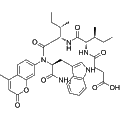
  • N-Succinyl-Ile-Ile-Trp-AMC
    Cat. No.
    A44538

    N-Succinyl-Ile-Ile-Trp-AMC

    N-Succinyl-Ile-Ile-Trp-AMC is a peptide-based fluorescent probe specifically designed for the detection of carboxypeptidase Y (CPY) activity. This substrate exhibits high sensitivity and specificity, allowing researchers to quantitatively measure CPY activity in various biological samples. Its fluorescent properties make it an essential tool in studies related to enzymatic activity, protein processing, and biosensor development.

    Out of stock

    All 3 sizes
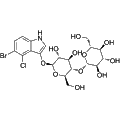
  • 5-Bromo-4-chloro-3-indolyl β-D-cellobioside
    Cat. No.
    A44539

    5-Bromo-4-chloro-3-indolyl β-D-cellobioside

    5-Bromo-4-chloro-3-indolyl β-D-cellobioside is a chromogenic compound that serves as a substrate for the detection of cellobiohydrolases. This reagent facilitates the identification and quantification of enzymatic activity in biochemical assays. Its application is particularly valuable in studies involving cellulose degradation and enzyme characterization in microbial and plant systems.

    5 mg
    $20.00
    10 mg
    $25.00
    All 6 sizes
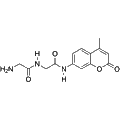
  • Gly-Gly-AMC
    Cat. No.
    A44540

    Gly-Gly-AMC

    Gly-Gly-AMC is a fluorogenic peptide substrate utilized for measuring protease activity. This compound is particularly effective in evaluating the bacterial protease activities of Pseudomonas aeruginosa and Staphylococcus aureus. Researchers can leverage Gly-Gly-AMC for applications in enzymatic assays and studies focused on bacterial pathogenicity and proteolytic processes.

    1 mg
    $90.00
    5 mg
    $265.00
    All 4 sizes
  • Mca-P-Cha-G-Nva-HA-Dap(DNP)-NH2
    Cat. No.
    A44541

    Mca-P-Cha-G-Nva-HA-Dap(DNP)-NH2

    Mca-P-Cha-G-Nva-HA-Dap(DNP)-NH2 is a fluorogenic substrate specifically designed for the activity assessment of matrix metalloproteinase-1 (MMP-1), MMP-3, and MMP-26. This reagent enables the quantification of these MMPs, facilitating research into their roles in various physiological and pathological processes, including tissue remodeling and inflammation. Its application is particularly relevant in studies involving cancer biology and cardiovascular research, where MMP activity is a key determinant of disease progression.

    Out of stock

    All 3 sizes
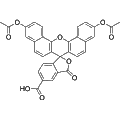
  • 5(6)-Carboxynaphthofluorescein diacetate
    Cat. No.
    A44543

    5(6)-Carboxynaphthofluorescein diacetate

    5(6)-Carboxynaphthofluorescein diacetate is a specific fluorescent substrate utilized in esterase assays. It is cleaved by intracellular esterases, leading to the production of red fluorescence, which can be quantitatively measured to assess enzyme activity. This compound is instrumental in various biological and biochemical research applications, including monitoring esterase activity in live cells.

    Out of stock

    All 3 sizes
  • Ac-DNLD-AMC
    Cat. No.
    A44544

    Ac-DNLD-AMC

    Ac-DNLD-AMC is a fluorogenic substrate specifically designed for the detection of caspase-3 activity. Upon cleavage by this enzyme, Ac-DNLD-AMC releases the fluorescent moiety 7-amino-4-methylcoumarin (AMC), enabling sensitive quantification of caspase-3 enzymatic activity. This reagent is valuable in apoptosis research and the study of cellular processes involving programmed cell death.

    1 mg
    $65.00
    All 1 sizes
  • 7-Hydroxycoumarinyl-γ-linolenate
    Cat. No.
    A44545

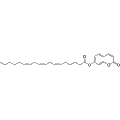
    7-Hydroxycoumarinyl-γ-linolenate

    7-Hydroxycoumarinyl-γ-linolenate serves as a fluorogenic substrate specifically for cytosolic phospholipase A2 (cPLA2). This compound is utilized to assess and monitor the enzymatic activity of cPLA2 in various biological systems. Its ability to generate fluorescence upon cleavage allows for sensitive detection and quantification, making it valuable in studies related to inflammation and lipid signaling pathways.

    1 mg
    $25.00
    5 mg
    $130.00
    All 2 sizes
  • 4-Methylumbelliferyl-β-D-galactopyranoside 6-sulfate
    Cat. No.
    A44546

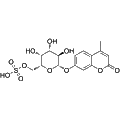
    4-Methylumbelliferyl-β-D-galactopyranoside 6-sulfate

    4-Methylumbelliferyl-β-D-galactopyranoside 6-sulfate is a fluorescent dye primarily utilized for its ability to measure enzymatic activity related to galactose-6-sulfate sulfatase. This compound plays a crucial role in the diagnosis of mucopolysaccharidosis IV A by providing a sensitive method for detecting enzyme activity. Its fluorescence properties enhance analysis in biochemical assays, making it valuable in research applications focused on lysosomal storage disorders.

    1 mg
    $210.00
    All 1 sizes
  • Naphthalene-1,2-dicarbaldehyde
    Cat. No.
    A44549

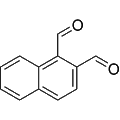
    Naphthalene-1,2-dicarbaldehyde

    Naphthalene-1,2-dicarbaldehyde is a fluorogenic compound widely used as a fluorescent dye in biochemical research. Its unique structural properties allow for effective incorporation into various biochemical assays, enabling sensitive detection of target molecules. This reagent is particularly valuable in studies involving protein interactions and cellular imaging, facilitating enhanced visualization in fluorescence microscopy applications.

    Out of stock

    All 3 sizes

Items 826-850 of 2505

Added to your cart

View Cart Checkout

    Loading...