All Dyes

All Dyes is the single product list for the Fluorescent Dyes, Probes & Stains section. Many dyes here have no application or dye-family subcategory, so the list is the broadest way to browse the range. It suits searches by product name when the required dye is already known. Examples range from the near-infrared cyanine indocyanine green and the ratiometric calcium indicator Fura-2 pentapotassium to the nucleic acid stains Hoechst 33258 trihydrochloride and SYBR Green II. Classical stains such as hematoxylin, reactive labeling dyes and enzyme substrates are listed alongside them. For selection by task or by core structure, the parent Fluorescent Dyes, Probes & Stains page groups dyes by application and dye family.

Items 851-875 of 2505

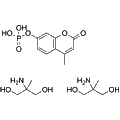
  • 4-Methylumbelliferyl phosphate (2-amino-2-methyl-1,3-propanediol)
    Cat. No.
    A44550

    4-Methylumbelliferyl phosphate (2-amino-2-methyl-1,3-propanediol)

    4-Methylumbelliferyl phosphate (2-amino-2-methyl-1,3-propanediol) serves as a fluorescent substrate primarily utilized in enzyme assays. This compound exhibits fluorescence upon enzymatic hydrolysis, making it an effective tool for studying enzyme activity and kinetics. Its applications extend to various biochemical assays, facilitating the detection and quantification of specific enzymatic reactions.

    10 mg
    $25.00
    25 mg
    $50.00
    All 5 sizes
  • DDAO-C6
    Cat. No.
    A44551

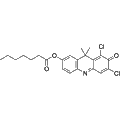
    DDAO-C6

    DDAO-C6 is a cridone ester derivative that functions as a near-infrared (NIR) probe. This highly specific fluorescent reagent is designed for the detection of human serum albumin (HSA) and enables the visual assessment of endogenous lipase activity from gut microbes. Emitting fluorescence at wavelengths of 600 nm (excitation) and 658 nm (emission), DDAO-C6 is suitable for applications in biological research that require the tracking of enzymatic processes in physiological environments.

    Out of stock

    All 3 sizes
  • H-Ala-4MβNA hydrochloride
    Cat. No.
    A44552

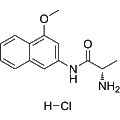
    H-Ala-4MβNA hydrochloride

    H-Ala-4MβNA hydrochloride is a fluorogenic substrate specifically designed for the enzyme aminopeptidase M. This compound exhibits high sensitivity and specificity, making it an effective tool for studying enzymatic activity in biological samples. It is widely utilized in research applications focused on enzyme kinetics, proteomics, and peptide metabolism.

    Out of stock

    All 3 sizes
  • 3-Acetylumbelliferyl β-D-Glucopyranoside
    Cat. No.
    A44555

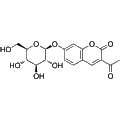
    3-Acetylumbelliferyl β-D-Glucopyranoside

    3-Acetylumbelliferyl β-D-Glucopyranoside serves as a fluorogenic substrate specifically for β-glucosidase, facilitating the detection of enzymatic activity through fluorescence. This compound is valuable as a positive control in assays involving β-D-glucosidase, enabling researchers to evaluate enzyme function and activity in various biological systems. Its application in fluorescence-based assays enhances the understanding of β-glucosidase involvement in numerous biological processes.

    5 mg
    $210.00
    10 mg
    $325.00
    All 2 sizes
  • 4-Methylumbelliferyl Decanoate
    Cat. No.
    A44556

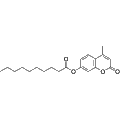
    4-Methylumbelliferyl Decanoate

    Synonyms: 4-MUD

    4-Methylumbelliferyl Decanoate is a fluorogenic substrate primarily utilized for monitoring the hydrolytic activity of carboxylesterases. When cleaved by these enzymes, it emits fluorescence, facilitating the detection and quantification of enzyme activity in biological samples. This reagent is instrumental in studies involving drug metabolism, enzyme kinetics, and the functional characterization of esterases in various biological systems.

    100 mg
    $50.00
    500 mg
    $175.00
    All 3 sizes
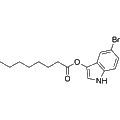
  • 5-Bromo-1H-indol-3-yl octanoate
    Cat. No.
    A44557

    5-Bromo-1H-indol-3-yl octanoate

    5-Bromo-1H-indol-3-yl octanoate is a fluorescent dye that serves as a chromogenic substrate for esterases, specifically exhibiting C8 activity. Upon enzymatic cleavage, this compound produces a blue precipitate, enabling visual detection and quantification of esterase activity in various biological samples. It is valuable for research applications aiming to study enzyme kinetics and cellular processes involving ester hydrolysis.

    25 mg
    $1,275.00
    50 mg
    $1,625.00
    All 3 sizes
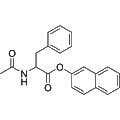
  • N-Acetyl-DL-phenylalanine β-naphthyl ester
    Cat. No.
    A44558

    N-Acetyl-DL-phenylalanine β-naphthyl ester

    N-Acetyl-DL-phenylalanine β-naphthyl ester acts as a fluorescent dye and a chromogenic substrate for chymotrypsin and microbial serine proteases, including subtilisin. This compound is valuable in biochemical research for the detection and characterization of proteolytic enzymes. Its fluorescent properties facilitate imaging and analysis in protease-related studies.

    25 mg
    $40.00
    50 mg
    $65.00
    All 3 sizes
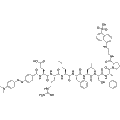
  • DABCYL-Glu-Arg-Nle-Phe-Leu-Ser-Phe-Pro-EDANS
    Cat. No.
    A44559

    DABCYL-Glu-Arg-Nle-Phe-Leu-Ser-Phe-Pro-EDANS

    DABCYL-Glu-Arg-Nle-Phe-Leu-Ser-Phe-Pro-EDANS is a fluorescent dye utilized as a fluorogenic substrate for aspartyl proteinases derived from human malaria parasites. This compound exhibits enhanced fluorescence upon cleavage, making it an effective tool in studying enzyme activity and kinetics. Its applications extend to research focusing on malaria pathogenesis and the development of potential therapeutic strategies against the disease.

    Out of stock

    All 3 sizes
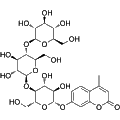
  • 4-Methylumbelliferyl β-cellotrioside
    Cat. No.
    A44560

    4-Methylumbelliferyl β-cellotrioside

    4-Methylumbelliferyl β-cellotrioside is a fluorescent substrate specifically designed for the detection and quantification of β-glycosidase enzymes. This compound incorporates a cellulose fluorescent derivative, allowing for sensitive imaging and analysis of enzyme activity. It is widely utilized in biochemical assays to study glycoside hydrolysis and investigate cellulose degradation mechanisms in various biological systems.

    25 mg
    $1,875.00
    50 mg
    $2,795.00
    All 3 sizes
  • N-Butylfluorescein
    Cat. No.
    A44562

    N-Butylfluorescein

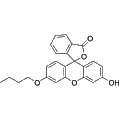
    N-Butylfluorescein is an alkyl-substituted fluorescein compound that acts as a fluorescent probe. It is primarily utilized to synthesize fluorogenic substrates for the assay of phosphatidylinositol-specific phospholipase C. Its applications extend to studying enzyme activity and facilitating imaging in biological research, making it a valuable tool in cell signaling studies.

    1 mg
    $45.00
    5 mg
    $145.00
    All 3 sizes
  • Glut-Phe-AMC
    Cat. No.
    A44563

    Glut-Phe-AMC

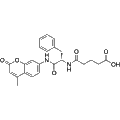
    Glut-Phe-AMC is a fluorescent dye primarily used for monitoring proteolytic activity. This substrate is cleaved by proteases, releasing the fluorescent aminomethylcoumarin (AMC) moiety, which allows for sensitive detection in various biological assays. Its application is particularly valuable in studies involving enzyme activity, protein degradation, and cellular processes. Glut-Phe-AMC serves as an essential tool for researchers exploring protease functions in numerous biological contexts.

    Out of stock

    All 3 sizes
  • EDANS sodium
    Cat. No.
    A44566

    EDANS sodium

    EDANS sodium is a fluorogenic substrate employed primarily in FRET (Förster Resonance Energy Transfer) applications, specifically as a donor in nucleic acid probes and protease assays. When paired with quenchers such as DABCYL or DABSYL, EDANS sodium enhances the sensitivity and specificity of detection methods. The compound exhibits optimal absorbance and emission wavelengths at λabs = 336 nm and λem = 490 nm, making it suitable for various biological research applications involving real-time monitoring of enzymatic reactions and nucleic acid interactions.

    5 mg
    $30.00
    10 mg
    $40.00
    All 4 sizes
  • Ac-IETD-AMC
    Cat. No.
    A44567

    Ac-IETD-AMC

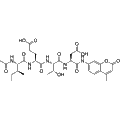
    Ac-IETD-AMC is a fluorogenic substrate specifically designed for the detection and quantification of caspase-8 activity. This compound, which includes an acetyl (Ac) moiety, serves as an efficient tool for studying apoptosis and related pathways mediated by caspase-8 and granzyme B. Its application in research allows for precise measurement of caspase-8 activity in various biological contexts, facilitating insights into cell death mechanisms and potential therapeutic targets.

    Out of stock

    All 3 sizes
  • RH 421
    Cat. No.
    A44568

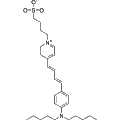
    RH 421

    RH 421 is a voltage-sensitive styryl dye that targets lipid bilayers, enabling its use in studies of membrane potential changes. As a chromogenic substrate for β-galactosidase, it serves important roles in cellular imaging and assay development. This compound is valuable in electrophysiological research and the investigation of membrane dynamics.

    Out of stock

    All 3 sizes
  • SCOTfluor-89
    Cat. No.
    A44569

    SCOTfluor-89

    SCOTfluor-89 is a conjugatable fluorophore designed for in vivo imaging, specifically targeting cellular metabolism. This small, orthogonal, and multi-colored fluorophore enables enhanced visualization in biological studies. It is suitable for applications in metabolic research, offering insights into cellular processes and dynamics.

    Out of stock

    All 3 sizes
  • 3-BTMD
    Cat. No.
    A44570

    3-BTMD

    3-BTMD is a fluorescent compound generated through the action of the COMT enzyme on its substrate, 3-BTD, exhibiting an excitation wavelength of 390 nm and an emission wavelength of 510 nm. This reagent is primarily utilized in fluorescent labeling and imaging applications, facilitating the study of enzymatic activity and biomolecular interactions in various biological contexts. Its distinct fluorescence properties make it a valuable tool for researchers in the fields of biochemistry and molecular biology.

    25 mg
    $1,275.00
    50 mg
    $1,625.00
    All 3 sizes
  • 2,6-Dibromo-4-(chloroimino)cyclohexa-2,5-dienone
    Cat. No.
    A44572

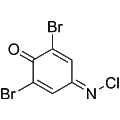
    2,6-Dibromo-4-(chloroimino)cyclohexa-2,5-dienone

    Synonyms: NSC 528

    2,6-Dibromo-4-(chloroimino)cyclohexa-2,5-dienone serves as a colorimetric dye primarily targeting phenolic compounds. At an approximate pH of 9.4, it reacts with phenolics to yield an indigo product, enabling sensitive detection. This reagent is notably employed as a Gibbs reagent for the colorimetric analysis of phenolic substances and has demonstrated utility in quantifying aflatoxins, transforming their colorless form to a green hue with an absorption peak at 673 nm.

    100 mg
    $25.00
    250 mg
    $40.00
    All 4 sizes
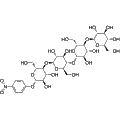
  • 4-Nitrophenyl β-D-cellotetraoside
    Cat. No.
    A44573

    4-Nitrophenyl β-D-cellotetraoside

    Synonyms: p-Nitopheyl β-D-cellotetaoside

    4-Nitrophenyl β-D-cellotetraoside is a fluorescent dye that functions as a cellulose mimetic, comprising a tetramer of D-glucose units with β-1-4 glycosidic bonds. It serves as a substrate for enzymatic hydrolysis, allowing researchers to analyze the fragmentation pattern via thin-layer chromatography or by quantifying the release of 4-nitrophenol, which exhibits strong absorbance at 395 nm in alkaline solutions. This reagent is particularly useful in studies of cellulose degradation, enabling the assessment of cellulase specificity and activity.

    1 mg
    $300.00
    10 mg
    $385.00
    All 2 sizes
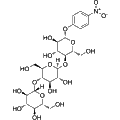
  • 4-Nitrophenyl β-D-cellotrioside
    Cat. No.
    A44574

    4-Nitrophenyl β-D-cellotrioside

    Synonyms: p-Nitopheyl β-D-cellotioside

    4-Nitrophenyl β-D-cellotrioside is a chromogenic substrate specifically designed for endoglucanases and cellulose biohydrolases. This compound serves as a fluorescent dye, undergoing hydrolysis by enzymes to release 4-nitrophenol, which results in a distinct yellow color. The enzymatic activity can be quantitatively assessed by measuring the absorbance change at 405 nm, making it a useful tool for studying cellulose degradation and enzyme kinetics in various biological research applications.

    0.5 mg
    $105.00
    1 mg
    $175.00
    All 2 sizes
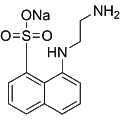
  • N-(Aminoethyl)-8-naphthylamine-1-sulfonic acid sodium
    Cat. No.
    A44575

    N-(Aminoethyl)-8-naphthylamine-1-sulfonic acid sodium

    Synonyms: 1,8-EDNAS sodium

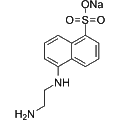
    N-(Aminoethyl)-8-naphthylamine-1-sulfonic acid sodium, commonly known as 1,8-EDNAS sodium, serves as a multifunctional dye primarily targeting biological research. This compound is instrumental in visualizing and analyzing cell structures, tracking biomolecules, evaluating cellular functions, and differentiating cell types. Its diverse applications extend from fundamental scientific investigations to clinical diagnostics, in addition to traditional uses in textile dyeing and emerging areas such as food pigments and dye-sensitized solar cells.

    Out of stock

    All 3 sizes
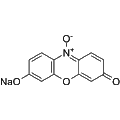
  • Resazurin sodium
    Cat. No.
    A44577

    Resazurin sodium

    Synonyms: Diazoresorcinol sodium

    Resazurin sodium is a non-toxic, stable redox indicator that targets bacterial activity through its membrane-permeable properties. It serves as a vital tool for assessing cell viability, proliferation, and toxicity in various cell types, including human, plant, animal, bacterial, and fungal cells. Upon reduction, Resazurin sodium transforms into Resorufin, a highly fluorescent compound, enabling sensitive detection and quantification of cellular processes under fluorescent microscopy or spectrophotometry.

    500 mg
    $20.00
    1 g
    $25.00
    All 3 sizes
  • CDy14
    Cat. No.
    A44578

    CDy14

    CDy14 is a fluorescent probe that targets the extracellular polysaccharide Psl, facilitating the visualization and detection of biofilms. This reagent is valuable for studying chronic bacterial infections, providing insights into microbial communities and their persistence in various environments. Researchers can utilize CDy14 to enhance understanding of biofilm-associated pathogenesis and antibiotic resistance mechanisms.

    Out of stock

    All 3 sizes
  • CDG-DNB3
    Cat. No.
    A44579

    CDG-DNB3

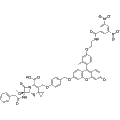
    CDG-DNB3 is a selective fluorescent probe targeting Mycobacterium tuberculosis. It enables rapid and specific labeling of live bacterial cultures, facilitating real-time imaging of Bacillus Calmette-Guérin phagocytosis. This probe is essential for studying the interactions between the pathogen and host cells, contributing to research in tuberculosis diagnostics and therapeutics.

    Out of stock

    All 3 sizes
  • Ruthenium red
    Cat. No.
    A44580

    Ruthenium red

    Synonyms: Ammoniated ruthenium oxychloride

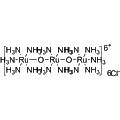
    Ruthenium red is a polycationic dye primarily used for electron microscopy applications in the analysis of cells, tissues, and vegetative bacteria. It exhibits a strong interaction with phospholipids and fatty acids while binding effectively to acidic mucopolysaccharides. Additionally, Ruthenium red functions as a blocker of L-type calcium currents (ICa), making it valuable for studies involving cellular calcium dynamics.

    100 mg
    $25.00
    200 mg
    $35.00
    All 3 sizes
  • Fluorescent Brightener 28
    Cat. No.
    A44582

    Fluorescent Brightener 28

    Synonyms: Calcofluor White M2R

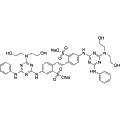
    Fluorescent Brightener 28 is a fluorescent whitening agent and photoinitiator that functions primarily through emission of visible light. This compound can effectively stain polysaccharides, including cellulose, and shows utility in marking the cytoplasm and cell nucleus upon membrane rupture. Additionally, it serves as a tool for detecting intracellular chitin in living cells. Fluorescent Brightener 28 is also sensitive to LED light, making it suitable for applications in free radical photopolymerizations.

    50 mg
    $20.00
    100 mg
    $25.00
    All 6 sizes

Items 851-875 of 2505

Added to your cart

View Cart Checkout

    Loading...