All Dyes

All Dyes is the single product list for the Fluorescent Dyes, Probes & Stains section. Many dyes here have no application or dye-family subcategory, so the list is the broadest way to browse the range. It suits searches by product name when the required dye is already known. Examples range from the near-infrared cyanine indocyanine green and the ratiometric calcium indicator Fura-2 pentapotassium to the nucleic acid stains Hoechst 33258 trihydrochloride and SYBR Green II. Classical stains such as hematoxylin, reactive labeling dyes and enzyme substrates are listed alongside them. For selection by task or by core structure, the parent Fluorescent Dyes, Probes & Stains page groups dyes by application and dye family.

Items 876-900 of 2505

  • NADA-green
    Cat. No.
    A44583

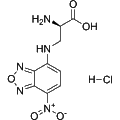
    NADA-green

    Synonyms: NADA hydrochloride

    NADA-green is a fluorescent D-amino acid probe designed to target peptidoglycan biosynthesis in a range of bacterial species. This reagent is efficiently incorporated into the bacterial cell wall, enabling real-time monitoring of bacterial growth with minimal disturbance to cellular processes. NADA-green is an invaluable tool for researchers studying bacterial physiology and cell wall dynamics.

    1 mg
    $100.00
    5 mg
    $265.00
    All 4 sizes
  • Giemsa stain
    Cat. No.
    A44584

    Giemsa stain

    Giemsa stain is a composite dye that functions primarily as a histological stain. This reagent effectively stains chromatin, nuclear membranes, specific cytoplasmic components, and microorganisms, facilitating detailed examination of cellular structures. Giemsa stain is widely utilized in cytological research and parasitological studies, allowing for enhanced visualization and analysis of cellular morphology and pathogen identification.

    1 g
    $25.00
    5 g
    $40.00
    All 2 sizes
  • Wright's stain
    Cat. No.
    A44585

    Wright's stain

    Wright's stain is a composite staining agent that primarily targets nucleic acids and proteins through the action of thiazine dyes, including methylene blue, and eosin. This pH-sensitive stain, optimal at pH 6.4-6.7, facilitates the differentiation of cytoplasmic and nuclear morphology by producing contrasting colors; thiazine dyes yield purple staining of nucleic acids, while eosin binds to cytoplasmic proteins to impart a red hue. Wright's stain effectively reveals fine structural details of blood and bone marrow cells, allowing for the rapid assessment of cell morphological abnormalities.

    5 g
    $30.00
    10 g
    $55.00
    All 2 sizes
  • Auramine O
    Cat. No.
    A44586

    Auramine O

    Auramine O is a fluorescent dye primarily used for the detection of amyloid fibrils. It exhibits strong yellow fluorescence, making it valuable for visualizing cellular structures and assessing algal cell viability. Additionally, Auramine O is employed in staining acid-fast bacteria, thereby aiding in microbiological studies and cancer research involving lung malignancies.

    50 g
    $25.00
    100 g
    $35.00
    All 2 sizes
  • Methyl Blue
    Cat. No.
    A44587

    Methyl Blue

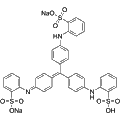
    Methyl Blue is a triaminotriphenylmethane dye known for its antiseptic properties. It is commonly employed in histological and microbiological staining procedures, particularly within the polychrome staining technique. Additionally, Methyl Blue serves as a model compound for researching the effects of various catalysts on the photodegradation of dyes, facilitating studies in environmental chemistry and dye degradation pathways.

    500 mg
    $20.00
    5 g
    $25.00
    All 3 sizes
  • 5-Cyano-2,3-di-(p-tolyl)tetrazolium chloride
    Cat. No.
    A44588

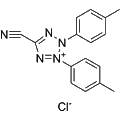
    5-Cyano-2,3-di-(p-tolyl)tetrazolium chloride

    Synonyms: CTC

    5-Cyano-2,3-di-(p-tolyl)tetrazolium chloride is a redox-sensitive fluorescent dye primarily used as a metabolic activity indicator in microorganisms. This compound emits red fluorescence with a maximum emission at 602 nm, enabling effective visualization and quantification of cellular metabolism. It serves as a valuable tool in microbiological studies, particularly for assessing viability and metabolic function in various microbial species.

    1 mg
    $30.00
    5 mg
    $70.00
    All 5 sizes
  • DMN-Tre
    Cat. No.
    A44589

    DMN-Tre

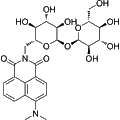
    DMN-Tre is a fluorogenic dye that selectively targets the mycobacterial cell wall via the Ag85 enzymes. Its primary application lies in the diagnosis of tuberculosis, allowing for effective labeling of mycobacterial components. DMN-Tre serves as a valuable tool in research focused on infection and mycobacterial biology.

    5 mg
    $410.00
    10 mg
    $680.00
    All 5 sizes
  • Jenner's Stain
    Cat. No.
    A44590

    Jenner's Stain

    Jenner's Stain is a chromosome dye primarily used in microscopy for C-banding techniques. This reagent effectively stains blood smears, facilitating routine blood examinations and the identification of malaria parasites. Its application in cytogenetics allows for visualizing chromosomal structures, aiding in various research studies related to hematology and infectious diseases.

    1 g
    $20.00
    5 g
    $40.00
    All 2 sizes
  • Quinacrine mustard dihydrochloride
    Cat. No.
    A44591

    Quinacrine mustard dihydrochloride

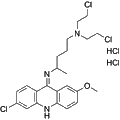
    Quinacrine mustard dihydrochloride is a fluorochrome that primarily targets nucleic acids. This polycyclic aromatic compound exhibits mutagenic properties, effectively inducing bacterial mutants and facilitating studies on genetic mutation. Quinacrine mustard dihydrochloride also induces G2/M-phase cell cycle arrest, making it a valuable tool for investigating cellular processes. Its applications extend to research involving plant, animal, and human chromosomes, aiding in the understanding of chromosomal behavior and dynamics.

    5 mg
    $70.00
    10 mg
    $215.00
    All 4 sizes
  • Reactive Blue 19
    Cat. No.
    A44592

    Reactive Blue 19

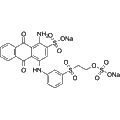
    Reactive Blue 19 is an anthraquinone dye that primarily targets textile materials for coloration. This compound exhibits strong staining properties and is commonly used in both research and industrial applications for dyeing textiles and other substrates. Its vibrant hue and stability make it a valuable reagent in studies related to dye chemistry and material science.

    10 g
    $20.00
    25 g
    $35.00
    All 6 sizes
  • Pyronin B
    Cat. No.
    A44593

    Pyronin B

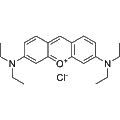
    Pyronin B is an organic cationic dye primarily utilized for the selective staining of bacterial cells, mycobacteria, and ribonucleic acids. Its ability to penetrate cell membranes makes it a valuable tool for visualizing cellular components in microscopy applications. Additionally, Pyronin B serves as a small hydrophobic protein channel inhibitor, allowing researchers to investigate ion transport dynamics and membrane physiology in various biological systems.

    100 mg
    $25.00
    500 mg
    $30.00
    All 3 sizes
  • Methyl Green zinc chloride
    Cat. No.
    A44594

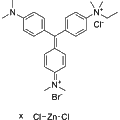
    Methyl Green zinc chloride

    Methyl Green Zinc Chloride is a fluorescent dye specifically targeting DNA. It is effective in staining cells and electrophoretic gels, allowing for the visualization of nucleic acids. This compound can be utilized for direct assessment of cell viability through microscopy and flow cytometry, exhibiting emission peaks at 633 nm and 677 nm. Its applications are important in molecular biology and biomedical research.

    100 mg
    $25.00
    500 mg
    $40.00
    All 2 sizes
  • sBADA
    Cat. No.
    A44597

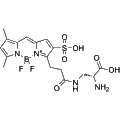
    sBADA

    sBADA is a sulfonated BODIPY-FL derivative that serves as a potent green fluorescent dye. Its primary mechanism involves the labeling of peptidoglycans within bacterial cell walls, facilitating in situ visualization. sBADA is particularly valuable in microbiological studies and applications focused on bacterial cell wall characterization. Emission is observed at 510 nm upon excitation at 490 nm, making it suitable for various fluorescence microscopy techniques.

    1 mg
    $700.00
    All 1 sizes
  • Phenosafranine
    Cat. No.
    A44598

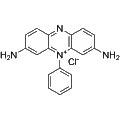
    Phenosafranine

    Phenosafranine is a phenazine dye known for its high binding affinity to triple-stranded RNA, intercalating with both triple-stranded and double-stranded RNA. It also interacts with hemoglobin, making it a valuable tool in biological research. Phenosafranine is primarily utilized for plant cell staining and the detection of biomolecules such as hemoglobin, dopamine, and serotonin in various analytical applications.

    1 g
    $20.00
    5 g
    $75.00
    All 4 sizes
  • Rf470DL
    Cat. No.
    A44599

    Rf470DL

    Rf470DL is a rotor-fluorogenic D-amino acid (RfDAA) that serves as a potent bacteria labeling agent. Exhibiting excitation at 470 nm and emission at 640 nm, it enables selective visualization of bacterial cells in various research applications. Its unique properties allow for effective tracking and imaging of bacterial populations in live-cell studies and microbiological research.

    Out of stock

    All 3 sizes
  • Sudan I
    Cat. No.
    A44600

    Sudan I

    Synonyms: Solvent Yellow 14

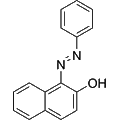
    Sudan I, a diazo-conjugate red dye, primarily functions as a colorant in various applications, including oils, solvents, and polishes. This compound is known to inhibit the growth of specific bacterial strains, such as Clostridium perfringens and Lactobacillus rhamnosus. Its antimicrobial properties make it a valuable tool in microbiological research and product formulation studies.

    5 g
    $25.00
    25 g
    $30.00
    All 4 sizes
  • BIN-3
    Cat. No.
    A44602

    BIN-3

    BIN-3 is a near-infrared fluorescent probe that targets drug-resistant bacterial infections by selectively imaging β-lactamase enzymes. Demonstrating excellent biocompatibility and a lack of cytotoxicity and hemolytic effects, BIN-3 is suitable for in vivo imaging applications in live mice. Its high sensitivity and selectivity make it an invaluable tool for researchers studying antibiotic resistance and bacterial pathogenesis.

    Out of stock

    All 3 sizes
  • OGDA
    Cat. No.
    A44603

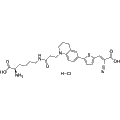
    OGDA

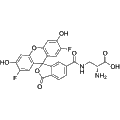
    OGDA is a green fluorescent D-amino acid that serves as a valuable tool for the selective labeling of peptidoglycan in both Gram-positive and Gram-negative bacteria. Its fluorescent properties facilitate the visualization of bacterial cell walls, enhancing studies on bacterial morphology and structure. This compound is particularly useful in microbiological research and applications involving bacterial imaging and tracking.

    5 mg
    $730.00
    All 1 sizes
  • 1,3-Di-(2-pyrenyl)propane
    Cat. No.
    A44605

    1,3-Di-(2-pyrenyl)propane

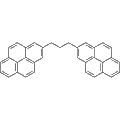
    1,3-Di-(2-pyrenyl)propane functions as a fluorescent indicator that is particularly useful for monitoring the fluidity of bacterial membrane lipids through intramolecular excimerization. This compound exhibits temperature-dependent fluorescence lifetime distributions, making it valuable for studying membrane dynamics and cellular responses to thermal variations. Its unique photophysical properties facilitate research in membrane biophysics and related biological applications.

    25 mg
    $1,275.00
    50 mg
    $1,625.00
    All 3 sizes
  • Cy3-NO2-Tre
    Cat. No.
    A44606

    Cy3-NO2-Tre

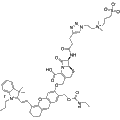
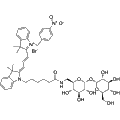
    Cy3-NO2-Tre is a nitroreductase-responsive cyanine-based fluorescent dye designed for the specific labeling of Mycobacterium tuberculosis (Mtb). Upon activation by the conserved nitroreductase Rv3368c found in the Mycobacteriaceae family, it exhibits fluorescence, facilitating the imaging of mycobacteria within infected host cells. This fluorescent probe is valuable for tracking infection dynamics and visualizing the endocytosis of Mycobacterium smegmatis by macrophages, with excitation/emission wavelengths of 540-550/575-625 nm.

    Out of stock

    All 3 sizes
  • NFC nitro probe 1
    Cat. No.
    A44607

    NFC nitro probe 1

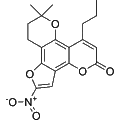
    NFC Nitro Probe 1 is a specialized compound designed for the detection of Mycobacterium tuberculosis (Mtb). It exhibits significant potency against both drug-resistant (R-Mtb) and non-resistant (NR-Mtb) strains, making it a valuable tool for tuberculosis research. This probe can be utilized in studies focusing on Mtb identification and characterization, facilitating advancements in diagnostic and therapeutic approaches.

    Out of stock

    All 3 sizes
  • Thioflavin T
    Cat. No.
    A44608

    Thioflavin T

    Synonyms: Basic Yellow 1

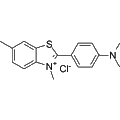
    Thioflavin T is a cationic benzothiazole dye that selectively binds to β-amyloid fibrils, resulting in a significant increase in fluorescence. The dye exhibits an excitation maximum at approximately 385 nm when unbound and around 450 nm when bound to amyloid, with emission maxima of approximately 445 nm and 485 nm, respectively. It is widely used in research to detect and study amyloid deposition in tissues, contributing to the understanding of neurodegenerative diseases such as Alzheimer's.

    500 mg
    $20.00
    1 g
    $25.00
    All 3 sizes
  • N-Methylmesoporphyrin IX
    Cat. No.
    A44609

    N-Methylmesoporphyrin IX

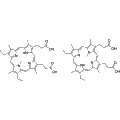
    N-Methylmesoporphyrin IX (NMM) is a potent fluorescent binder that targets G-quadruplex DNA, making it an effective probe for studying Aβ fibrillation. It serves as both an in situ inhibitor and an ex situ monitor of Aβ amyloidogenesis in vitro and within cellular contexts. NMM exhibits high sensitivity to G-quadruplex structures while showing negligible response to duplexes, triplexes, and single-stranded DNA. Additionally, it remains nonfluorescent in monomeric Aβ environments, producing strong fluorescence upon interaction with Aβ aggregates.

    1 mg
    $175.00
    5 mg
    $215.00
    All 6 sizes
  • Eosin Y
    Cat. No.
    A44611

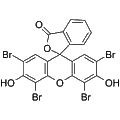
    Eosin Y

    Synonyms: Acid Red 87 free base

    Eosin Y (Acid Red 87 free base) is a soluble acid dye known for its role as a photoredox catalyst. This dye exhibits strong absorbance in the visible light spectrum, facilitating various organic synthesis reactions. Eosin Y is commonly utilized in photochemical applications, enabling the generation of reactive intermediates for diverse chemical transformations.

    5 g
    $50.00
    10 g
    $75.00
    All 3 sizes
  • HMBR
    Cat. No.
    A44612

    HMBR

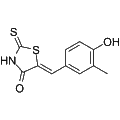
    HMBR is a fluorogenic compound that features an additional methyl group on the aromatic ring, rendering it non-fluorescent in its base form. When conjugated with Y-FAST, HMBR emits yellow fluorescence upon blue light excitation (Ex= 419 nm; Em= 525–539 nm), enabling effective live-cell imaging. This reagent demonstrates high cell permeability and is non-toxic to zebrafish embryos, making it suitable for various biological studies and applications in fluorescence microscopy and cellular imaging.

    1 mg
    $60.00
    5 mg
    $150.00
    All 7 sizes

Items 876-900 of 2505

Added to your cart

View Cart Checkout

    Loading...