All Dyes

All Dyes is the single product list for the Fluorescent Dyes, Probes & Stains section. Many dyes here have no application or dye-family subcategory, so the list is the broadest way to browse the range. It suits searches by product name when the required dye is already known. Examples range from the near-infrared cyanine indocyanine green and the ratiometric calcium indicator Fura-2 pentapotassium to the nucleic acid stains Hoechst 33258 trihydrochloride and SYBR Green II. Classical stains such as hematoxylin, reactive labeling dyes and enzyme substrates are listed alongside them. For selection by task or by core structure, the parent Fluorescent Dyes, Probes & Stains page groups dyes by application and dye family.

Items 176-200 of 2505

  • Coppersensor 1
    Cat. No.
    A24517

    Coppersensor 1

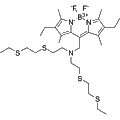
    Coppersensor-1 (CS1) is a membrane-permeable fluorescent probe with picomolar affinity for Cu⁺ ions, exhibiting high selectivity over other cellular metal ions. It enables sensitive and selective detection of copper(I) in biological samples, including live cells. CS1 is suitable for imaging studies related to copper homeostasis in diseases such as cancer, cardiovascular disorders, and neurodegenerative conditions.

    1 mg
    $81.00
    5 mg
    $243.00
    All 4 sizes
  • BODIPY-Cholesterol
    Cat. No.
    A24518

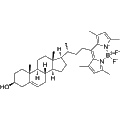
    BODIPY-Cholesterol

    BODIPY-cholesterol is a lipophilic, cell-permeable fluorescent analog of cholesterol, labeled with a BODIPY fluorophore (Ex/Em: 505/515 nm). It is commonly used to monitor sterol uptake, distribution, and inter-organelle trafficking in live cells.

    1 mg
    $135.00
    5 mg
    $405.00
    All 4 sizes
  • TMRM Perchlorate
    Cat. No.
    A24533

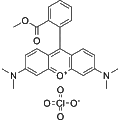
    TMRM Perchlorate (T668)

    Synonyms: T668

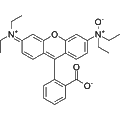
    Rhodamine dyes are membrane-permeable, cationic fluorescent probes that selectively accumulate in mitochondria by recognizing mitochondrial membrane potential, producing bright fluorescence. At appropriate concentrations, they exhibit low cytotoxicity and are widely used for mitochondrial staining in animal cells, plant cells, and microorganisms.

    5 mg
    $36.00
    10 mg
    $62.00
    All 4 sizes
  • Laurdan
    Cat. No.
    A24534

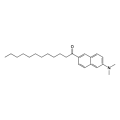
    Laurdan

    Laurdan is a membrane-permeable fluorescent probe that exhibits spectral sensitivity to the phospholipid phase of the membrane it integrates into. Measurement of its generalized polarization (GP) enables quantification and distinction of membrane phases, such as liquid-ordered and liquid-disordered states.

    5 mg
    $27.00
    10 mg
    $47.00
    All 4 sizes
  • Calcein-AM
    Cat. No.
    A24535

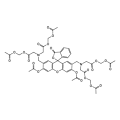
    Calcein-AM

    Synonyms: Calcein acetoxymethyl ester

    Calcein AM is a cell-permeable, non-fluorescent dye that readily enters live cells. Once inside, it is hydrolyzed by intracellular esterases to generate Calcein, a polar and highly negatively charged molecule that is retained within the cytoplasm. Calcein emits strong green fluorescence (Ex/Em: 494/515 nm) and is commonly used in combination with Propidium Iodide for assessing cell viability and cytotoxicity.

    1 mg
    $198.00
    5 mg
    $698.00
    All 4 sizes
  • RhoNox-1
    Cat. No.
    A24536

    RhoNox-1

    RhoNox-1 is a fluorescent probe designed for the specific detection of divalent iron ions (Fe²⁺). Upon reaction with Fe²⁺, RhoNox-1 forms an irreversible orange-red fluorescent product (Ex/Em: 540/575 nm). It efficiently penetrates cell membranes and is suitable for detecting intracellular Fe²⁺, with a tendency to localize in the Golgi apparatus.

    5 mg
    $225.00
    10 mg
    $388.00
    All 4 sizes
  • DiO
    Cat. No.
    A24537

    DiO (DiOC18(3))

    Synonyms: 3,3'-Dioctadecyloxacarbocyanine perchlorate; DiOC18(3)

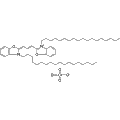
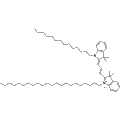
    DiO is a long-chain carbocyanine dye commonly used for labeling cells, organelles, liposomes, viruses, and lipoproteins. As a member of the Di-series carbocyanine dyes, DiO integrates into lipid membranes, enabling effective fluorescent tracking in various biological systems.

    5 mg
    $27.00
    10 mg
    $47.00
    All 4 sizes
  • TMRE
    Cat. No.
    A24538

    TMRE

    Synonyms: Tetramethylrhodamine ethyl ester perchlorate

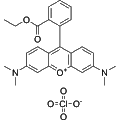
    Rhodamine dyes are membrane-permeable, cationic fluorescent probes that selectively accumulate in mitochondria by sensing mitochondrial membrane potential, resulting in bright fluorescence. Due to their low cytotoxicity at appropriate concentrations, they are widely used for mitochondrial labeling in animal cells, plant cells, and microorganisms.

    5 mg
    $27.00
    10 mg
    $47.00
    All 4 sizes
  • BODIPY 581/591 C11
    Cat. No.
    A24539

    BODIPY 581/591 C11

    BODIPY 581/591 C11 is a boron-dipyrromethene (BODIPY) derivative with excellent photostability and minimal fluorescence artifacts. It is widely used to study lipid peroxidation and antioxidant activity in living cells, and to detect ferroptosis through its reaction with hydroxyl radicals. The dye exhibits a fluorescence shift upon oxidation: the reduced form emits at 591 nm (Ex: 581 nm), while the oxidized form emits at 510 nm (Ex: 500 nm).

    1 mg
    $180.00
    5 mg
    $540.00
    All 4 sizes
  • PKH 26
    Cat. No.
    A24540

    PKH 26

    PKH26 is a red fluorescent dye that stably incorporates into the lipid regions of the cell membrane, emitting red fluorescence (Ex/Em: 551/567 nm). It is commonly used for in vitro cell labeling, cell proliferation assays, and both in vivo and in vitro cell tracking studies.

    1 mg
    $135.00
    5 mg
    $405.00
    All 4 sizes
  • MitoSOX Red
    Cat. No.
    A24559

    MitoSOX Red

    MitoSOX Red is a live cell fluorescent probe that specifically targets mitochondria and is cell membrane permeable. MitoSOX Red enters mitochondria and is oxidized by superoxide but not by other ROS or RNS generating systems. The oxidized MitoSOX Red then binds to nucleic acids in mitochondria/nucleus, producing strong red fluorescence. MitoSOX Red can be used as a fluorescent indicator to specifically detect superoxide. In addition, superoxide dismutase (SOD) can prevent the oxidation of MitoSOX Red. Excitation/emission wavelength: 510/580 nm.

    0.05 mg
    $40.00
    0.1 mg
    $65.00
    All 8 sizes
  • Coumarin 6
    Cat. No.
    A24560

    Coumarin 6

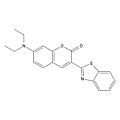
    Coumarin 6 is a fluorescent dye commonly used as a probe in drug delivery research. It serves as a tracer in microparticle and nanoparticle delivery systems, enabling *in vivo* tracking, cellular uptake analysis, and transport mechanism studies. Coumarin 6 exhibits strong fluorescence with excitation and emission maxima at λexc = 450 nm and λem = 505 nm, respectively, making it an ideal marker for evaluating drug distribution and release profiles in biological systems.

    10 mg
    $18.00
    25 mg
    $36.00
    All 4 sizes
  • DiI
    Cat. No.
    A24570

    DiI

    Synonyms: DiIC18(3)

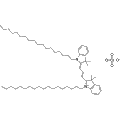
    DiI is a long-chain lipophilic carbocyanine dye commonly used for fluorescent labeling of biological membranes. Due to its strong affinity for lipid bilayers, DiI efficiently integrates into cell membranes, making it ideal for tracing cells, organelles, liposomes, viruses, and lipoproteins. It exhibits bright fluorescence, high photostability, and minimal cytotoxicity, enabling long-term imaging and tracking in both fixed and live-cell applications.

    10 mg
    $23.00
    25 mg
    $45.00
    All 4 sizes
  • Nile Red
    Cat. No.
    A24579

    Nile Red

    Synonyms: Nile Blue A oxazone; Phenoxazone 9

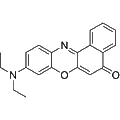
    Nile red (Nile blue oxazone) is a lipophilic stain. Nile red has environment-sensitive fluorescence. Nile red is intensely fluorescent in a lipid-rich environment while it has minimal fluorescence in aqueous media. Nile red is an excellent vital stain for the detection of intracellular lipid droplets by fluorescence microscopy and flow cytof uorometry. Nile red stains intracellular lipid droplets red. The fluorescence wavelength is 559/635 nm.

    5 mg
    $30.00
    10 mg
    $35.00
    All 7 sizes
  • Dansyl chloride
    Cat. No.
    A24580

    Dansyl chloride (DNSCl)

    Synonyms: DNSCl

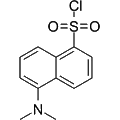
    Dansyl chloride is a fluorescent labeling reagent that reacts with primary and secondary amines to form stable blue or blue-green fluorescent sulfonamide adducts. It readily labels aliphatic and aromatic amines through reaction with amino groups, making it a valuable tool for biochemical analysis. Dansyl chloride is widely used for amino acid derivatization, protein sequencing, and amino acid composition analysis, enabling sensitive fluorescence-based detection and quantification of amine-containing biomolecules.

    1 g
    $27.00
    All 1 sizes
  • Tartrazine
    Cat. No.
    A24581

    Tartrazine

    Synonyms: Acid Yellow 23; FD&C Yellow No. 5

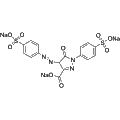
    Tartrazine (Acid Yellow 23; FD&C Yellow No. 5) is an orally active synthetic azo dye that appears as an orange-yellow, water-soluble powder producing a bright yellow coloration in solution. It is widely used as a food colorant and in pharmaceuticals and cosmetics due to its high chemical and photostability. Beyond its industrial applications, Tartrazine has been reported to induce mitochondria-mediated apoptosis and to exhibit potential biological effects, including neurodevelopmental toxicity, cytotoxicity, and genotoxicity under certain experimental conditions. It serves as a model compound in toxicological and biochemical studies investigating the safety and cellular impact of synthetic food dyes.

    500 mg
    $36.00
    All 1 sizes
  • Fluorescein-5-maleimide
    Cat. No.
    A24582

    Fluorescein-5-maleimide

    Synonyms: N-(5-Fluoresceinyl)maleimide

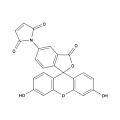
    Fluorescein-5-maleimide (N-(5-Fluoresceinyl)maleimide) is a thiol-reactive fluorescent dye widely used for covalent labeling of proteins, peptides, and other biomolecules containing cysteine residues. By forming stable thioether bonds with sulfhydryl groups, it enables precise detection and quantification of thiol-containing targets. Fluorescein-5-maleimide is employed to monitor the redox state of thiols in eukaryotic cells, label peptides or actin for protein–protein interaction studies—such as investigations of actin binding to cardiac myosin-binding protein C (cMyBP-C)—and to detect negatively charged nanoparticles. It also serves as a tool for screening mutant proteins containing cysteine residues. The dye exhibits strong fluorescence with excitation and emission maxima at 494 nm and 519 nm, respectively, making it highly suitable for fluorescence microscopy, flow cytometry, and biochemical assays.

    5 mg
    $32.00
    10 mg
    $54.00
    All 4 sizes
  • AQC
    Cat. No.
    A24583

    AQC

    Synonyms: 6-Aminoquinolyl-N-hydroxysccinimidyl carbamate

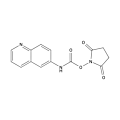
    AQC (6-Aminoquinolyl-N-hydroxysuccinimidyl carbamate) is a highly sensitive derivatization reagent used for amino acid and peptide analysis by high-performance liquid chromatography (HPLC) with fluorescence detection. It reacts rapidly with both primary and secondary amino groups to form stable fluorescent derivatives, enabling detection of amino acids at sub-picomolar concentrations. Due to its high reactivity, stability, and strong fluorescence yield, AQC is widely applied in protein sequencing, amino acid quantification, and metabolic profiling, providing exceptional sensitivity and reproducibility in analytical and biochemical studies.

    25 mg
    $63.00
    50 mg
    $109.00
    All 4 sizes
  • WSP-5
    Cat. No.
    A24584

    WSP-5

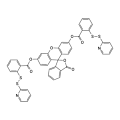
    WSP-5 is a selective fluorescent probe designed for rapid detection of hydrogen sulfide (H₂S) in biological samples and live cells. It operates via a reaction-based “fluorescence turn-on” mechanism, in which WSP-5 reacts specifically and swiftly with H₂S to generate a highly fluorescent product. The probe exhibits excitation and emission maxima at 502 nm and 525 nm, respectively. Due to its excellent selectivity, sensitivity, and biocompatibility, WSP-5 is widely used in studies of H₂S biology, cellular signaling, and redox homeostasis.

    1 mg
    $36.00
    5 mg
    $108.00
    All 4 sizes
  • Rhodamine B isothiocyanate
    Cat. No.
    A24585

    Rhodamine B isothiocyanate

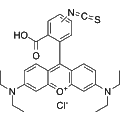
    Rhodamine B isothiocyanate (RBITC) is a reactive fluorescent dye widely used for covalent labeling of biomolecules in imaging and analytical applications. The isothiocyanate functional group readily reacts with primary amines on proteins, peptides, and other biomolecules to form stable thiourea linkages, enabling durable fluorescent tagging. RBITC emits bright orange-red fluorescence upon green light excitation, providing strong signal intensity and excellent photostability for visualization in complex biological systems. Owing to its high sensitivity, chemical stability, and compatibility with diverse assay conditions, RBITC is extensively utilized in cell biology, immunology, neurobiology, and fluorescence microscopy studies for tracking molecular localization and dynamics.

    10 mg
    $23.00
    25 mg
    $45.00
    All 4 sizes
  • BODIPY 558/568 C12
    Cat. No.
    A24586

    BODIPY 558/568 C12

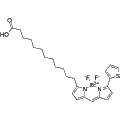
    BODIPY 558/568 C12 is a fluorescent lipid probe based on the BODIPY (boron-dipyrromethene) dye structure. BODIPY dyes are small-molecule fluorophores characterized by strong ultraviolet-visible absorption, sharp fluorescence emission peaks, high quantum yields, and remarkable photostability. They are largely insensitive to environmental polarity and pH, maintaining consistent fluorescence under various physiological conditions. BODIPY 558/568 C12, due to its lipophilic alkyl chain, readily permeates cell membranes and specifically localizes to neutral lipid compartments, enabling selective staining of lipid droplets in both live and fixed cells. It serves as a reliable fluorescent marker for studying lipid metabolism, lipid droplet dynamics, and cellular lipid distribution. The dye exhibits maximum excitation and emission wavelengths at 558 nm and 568 nm, respectively.

    1 mg
    $162.00
    5 mg
    $486.00
    All 4 sizes
  • L 012 sodium salt
    Cat. No.
    A24587

    L 012 sodium salt

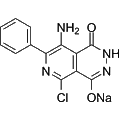
    L-012 sodium salt is a luminol-based chemiluminescent probe widely used for the sensitive detection of reactive oxygen and nitrogen species (ROS and RNS) in biological systems. It is particularly effective in monitoring NADPH oxidase (Nox)-derived superoxide production, providing high signal intensity and low background interference. Compared with conventional luminol, L-012 offers enhanced chemiluminescence sensitivity and stability, enabling real-time detection of oxidative and nitrosative stress in cells, tissues, and *in vivo* models. It is a valuable tool for studying redox signaling, inflammation, and oxidative stress–related pathophysiology.

    5 mg
    $108.00
    10 mg
    $186.00
    All 4 sizes
  • Propidium Iodide
    Cat. No.
    A24597

    Propidium Iodide

    Synonyms: PI

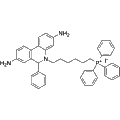
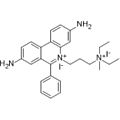
    Propidium Iodide (PI) is a nuclear staining agent that stains DNA. Propidium Iodide is an analogue of ethidine bromide that emits red fluorescence upon embedding in double-stranded DNA. Propidium Iodide cannot pass through living cell membranes, but it can pass through damaged cell membranes to stain the nucleus. Propidium Iodide has a fluorescence wavelength of 493/617 nm and a wavelength of 536/635 nm after Mosaic with DNA. Propidium Iodide is commonly used in the detection of apoptosis (apoptosis) or necrosis (necrosis), and is often used in flow cytometry analysis.

    5 mg
    $25.00
    10 mg
    $30.00
    All 7 sizes
  • HKOH-1
    Cat. No.
    A24599

    HKOH-1

    HKOH-1 is a sensitive green fluorescent probe designed for the selective detection of hydroxyl radicals (·OH) in living cells, utilizing a maximum excitation wavelength of 500 nm and an emission wavelength of 520 nm. This reagent enables researchers to monitor oxidative stress and assess cellular responses to reactive oxygen species. Its application is critical in studies related to redox biology, neurodegenerative diseases, and cancer research.

    1 mg
    $300.00
    5 mg
    $615.00
    All 6 sizes
  • BODIPY 493/503 methyl bromide
    Cat. No.
    A24601

    BODIPY 493/503 methyl bromide

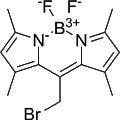
    BODIPY493/503 methyl bromide is a BODIPY dye. BODIPY dye is a small molecule dye with strong ultraviolet absorption ability, its fluorescence peak is relatively sharp, and the quantum yield is high. They are relatively insensitive to the polarity and pH of the environment and are relatively stable under different physiological conditions. Due to its structural asymmetry, BODIPY derives a variety of structural products. BODIPY lipid droplet dyes can well pass through the cell membrane into the cell, and localize the neutral lipids in the cell to specifically stain the lipid droplets, which can be used for labeling of live cells and fixed cells. Maximum excitation/emission wavelength: 493/503 nm.

    1 mg
    $30.00
    5 mg
    $65.00
    All 6 sizes

Items 176-200 of 2505

Added to your cart

View Cart Checkout

    Loading...