
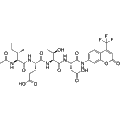
- Cat. No.
- A22810
Ac-IETD-AFC
Ac-IETD-AFC is a fluorogenic substrate of caspase-8, caspase-3, caspase-10, and granzyme B.
In stock
View Details
Search by product name, CAS, target or catalog number. Press Down Arrow to reach product suggestions, Tab to move between links, and Escape to close suggestions.
All Dyes is the single product list for the Fluorescent Dyes, Probes & Stains section. Many dyes here have no application or dye-family subcategory, so the list is the broadest way to browse the range. It suits searches by product name when the required dye is already known. Examples range from the near-infrared cyanine indocyanine green and the ratiometric calcium indicator Fura-2 pentapotassium to the nucleic acid stains Hoechst 33258 trihydrochloride and SYBR Green II. Classical stains such as hematoxylin, reactive labeling dyes and enzyme substrates are listed alongside them. For selection by task or by core structure, the parent Fluorescent Dyes, Probes & Stains page groups dyes by application and dye family.
Ac-IETD-AFC is a fluorogenic substrate of caspase-8, caspase-3, caspase-10, and granzyme B.
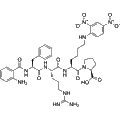
Abz-FR-K(Dnp)-P-OH is an angiotensin I-converting enzyme (ACE) substrate and an internally quenched fluorogenic substrate for real time fluorescent assay.
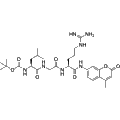
Boc-Leu-Gly-Arg-AMC is a fluorogenic AMC substrate for the convertases. Boc-Leu-Gly-Arg-AMC can be used in enzymatic assays.
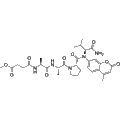
MeOSuc-AAPV-AMC is a fluorogenic substrate for human leukocyte and porcine pancreatic elastase (Km: 362 μM, Ex=380 nm, Em=460 nm).
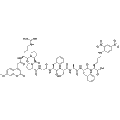
Mca-(ala7,lys(dnp)9)-bradykinin is a sensitive fluorogenic substrate for ECE-1 (endothelin-converting enzyme-1). The incorporation of a (7-methoxycoumarin-4-yl)acetyl (Mca) fluorescent group and a 2,4-dinitrophenyl (Dnp) quenching group has resulted in a large fluorescence increase upon substrate cleavage.
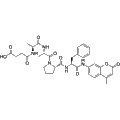
Synonyms: Suc-Ala-Ala-Pro-Phe-AMC
Suc-AAPF-AMC is an α-chymotrypsin fluorogenic substrate for the quantitative determination of chymotrypsin activity.
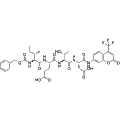
Z-IETD-AFC, a specific fluorescence substrate, can be used to determine the caspase-8 catalytic activity.
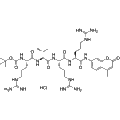
Synonyms: Boc-RVRR-AMC
Boc-Arg-Val-Arg-Arg-AMC hydrochloride (Boc-RVRR-AMC) is a synthetic fluorogenic substrate that is efficiently cleaved by furin.
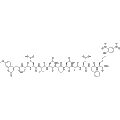
Mca-SEVNLDAEFK(Dnp)-NH2 contains a highly fluorescent 7-methoxycoumarin group that is efficiently quenched by resonance energy transfer to the 2,4-dinitrophenyl group. It can be used to measure the activities of peptidases that are capable of cleaving an amide bond between the fluorescent group and the quencher group, causing an increase in fluorescence, such as can be used to measure the activity of BACE-1.
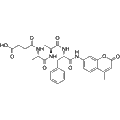
Suc-Ala-Ala-Phe-AMC is a fluorogenic chymotrypsin substrate, can be hydrolyzed by endopeptidase. Suc-Ala-Ala-Phe-AMC has been used in both in vivo assays of the acrosome reaction and in vitro enzyme assays.
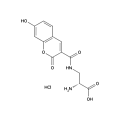
Synonyms: HCC-Amino-D-alanine hydrochloride
HADA hydrochloride (HCC-Amino-D-alanine hydrochloride) is a blue-emitting (λem ≈ 450 nm) fluorescent D-amino acid (FDAA) used for labeling bacterial cell walls. FDAAs are incorporated into peptidoglycan (PG) at sites of active biosynthesis through the action of native transpeptidases, enabling specific and covalent labeling of growing bacterial cells with minimal disruption to normal physiology. HADA hydrochloride provides high spatial and temporal resolution for visualizing bacterial growth dynamics, cell wall synthesis, and morphogenesis in live-cell imaging studies, making it a powerful tool in microbiology and antibiotic mechanism research.
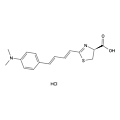
AkaLumine hydrochloride is a luciferin analogue with a Km of 2.06 μM for recombinant firefly luciferase (Fluc) protein. It is commonly used in bioluminescence imaging and reporter assays for enhanced sensitivity and signal stability.
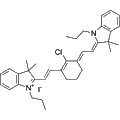
IR780 is a prototypic near-infrared (NIR) heptamethine cyanine dye with a high molar extinction coefficient. It exhibits a maximum excitation wavelength of 777–780 nm and a maximum emission wavelength of 798–823 nm. IR780 is widely used in cancer research for photothermal therapy (PTT), photodynamic therapy (PDT), and imaging applications.
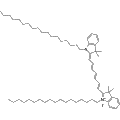
Synonyms: Cy7 DiC18
DiR is a long-chain carbocyanine dye commonly used for labeling and tracking biological structures. As a member of the Di series of dyes, DiR is particularly suited for labeling cells, organelles, liposomes, viruses, and lipoproteins due to its strong membrane affinity and near-infrared fluorescence properties.
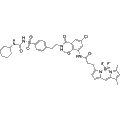
ER-Tracker dye is a BODIPY-based fluorescent probe conjugated with Glibenclamide, exhibiting high selectivity for the endoplasmic reticulum (ER). It is cell-permeable, non-toxic at low concentrations, and retains partial fluorescence after formaldehyde fixation. As an environment-sensitive dye, R-Tracker offers a long fluorescence lifetime and a high extinction coefficient. Glibenclamide, an ATP-sensitive K⁺ channel (Kir6.x, KATP) and CFTR Cl⁻ channel blocker, mediates ER targeting. R-Tracker is not suitable for post-fixation staining.
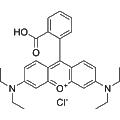
Synonyms: Basic Violet 10; Brilliant Pink B; Rhodamine O; Tetraethylrhodamine
Rhodamine B is a fluorescent dye widely used for staining applications. It is commonly employed in the dyeing of textiles, paper, soap, leather, and various industrial agents.
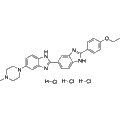
Hoechst 33342 trihydrochloride is a cell-permeable fluorescent dye from the Hoechst series, widely used as a live-cell nuclear marker. It binds preferentially to the minor groove of A/T-rich regions in double-stranded DNA, resulting in enhanced fluorescence intensity. Although it can associate with various nucleic acids, its fluorescence is significantly stronger upon binding to A/T-rich DNA. Hoechst 33342 is suitable for labeling live cells, and its fluorescence intensity increases with rising solution pH.
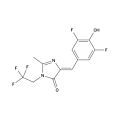
DFHBI-1T is a membrane-permeable fluorescent probe activated by RNA aptamers, with excitation/emission maxima at 472/507 nm. It specifically binds to aptamers such as Spinach, Spinach2, iSpinach, and Broccoli, resulting in bright fluorescence with low background signal. DFHBI-1T is commonly used for live-cell imaging of RNA.
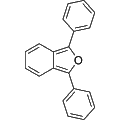
Synonyms: DPBF
1,3-Diphenylisobenzofuran (DPBF) is a fluorescent probe developed for the selective detection and quantification of hydrogen peroxide in the presence of various reactive nitrogen and oxygen species (RNOS). For nearly two decades, DPBF has been widely used as a specific indicator for reactive oxygen species, particularly singlet oxygen, hydroxyl radicals, alkoxyl radicals, and alkylperoxy radicals.
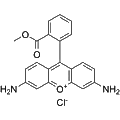
Synonyms: RH-123; R-22420
Rhodamine dyes are membrane-permeable, cationic fluorescent probes that selectively accumulate in mitochondria by recognizing mitochondrial membrane potential. They generate bright fluorescence upon localization and exhibit low cytotoxicity at appropriate concentrations. Rhodamine dyes are widely used for mitochondrial staining in animal cells, plant cells, and microorganisms.
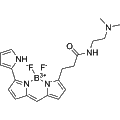
Synonyms: LysoTracker Red DND-99
LysoTracker Red is a red-fluorescent lysosomal probe with excitation/emission maxima at 577/590 nm. It consists of a fluorophore linked to a weakly basic moiety, allowing it to freely cross cell membranes and selectively accumulate in acidic organelles such as lysosomes. LysoTracker Red is commonly used for visualizing lysosomal structures and studying lysosome-related biosynthesis and pathogenesis.
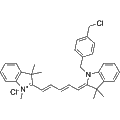
MitoTracker Deep Red FM is a fluorescent dye that selectively accumulates in the mitochondrial matrix and covalently binds to mitochondrial proteins by reacting with free thiol groups of cysteine residues. This allows for stable mitochondrial labeling independent of membrane potential. The dye has excitation/emission maxima at 644/665 nm. Store protected from light.
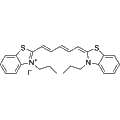
DiSC3(5) is a fluorescent probe commonly used to assess mitochondrial membrane potential, with excitation/emission maxima at 622/670 nm. It can inhibit mitochondrial NAD-linked respiratory activity, with an IC₅₀ of 8 μM. In the presence of the Na⁺/K⁺-ATPase inhibitor ouabain, DiSC3(5) induces membrane hyperpolarization in Ehrlich ascites tumor cells.
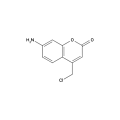
CellTracker Blue CMAC is a non-fluorescent, cell-permeable dye that becomes fluorescent upon enzymatic conversion by intracellular glutathione (GSH). The chloromethyl groups are cleaved to yield a blue fluorescent product (Ex/Em: 360/460 nm). It is suitable for long-term cell tracking (up to 72 hours), cell proliferation studies, and quantification of intracellular GSH levels.
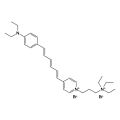
FM4-64 is a highly lipophilic, water-soluble styryl dye that selectively binds to the plasma membrane and internal membrane-bound organelles, producing bright fluorescence. It is widely used as a marker for endocytic and exocytic membrane structures in live-cell imaging studies.