All Dyes

All Dyes is the single product list for the Fluorescent Dyes, Probes & Stains section. Many dyes here have no application or dye-family subcategory, so the list is the broadest way to browse the range. It suits searches by product name when the required dye is already known. Examples range from the near-infrared cyanine indocyanine green and the ratiometric calcium indicator Fura-2 pentapotassium to the nucleic acid stains Hoechst 33258 trihydrochloride and SYBR Green II. Classical stains such as hematoxylin, reactive labeling dyes and enzyme substrates are listed alongside them. For selection by task or by core structure, the parent Fluorescent Dyes, Probes & Stains page groups dyes by application and dye family.

Items 201-225 of 2505

  • BODIPY 493/503
    Cat. No.
    A24603

    BODIPY 493/503 (Pyrromethene 546)

    Synonyms: Pyrromethene 546

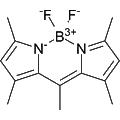
    BODIPY 493/503 is a member of the BODIPY (boron-dipyrromethene) family of small-molecule fluorescent dyes, characterized by strong absorption in the ultraviolet-visible range, narrow and well-defined emission spectra, and high fluorescence quantum yields. These dyes exhibit minimal sensitivity to environmental polarity and pH, maintaining stable photophysical properties under a wide range of physiological conditions. Due to the structural versatility of the BODIPY core, numerous derivatives with tailored properties can be generated. BODIPY-based lipid droplet probes readily permeate cellular membranes and selectively localize to neutral lipid compartments, enabling specific staining of intracellular lipid droplets. This makes them suitable for both live-cell imaging and fixed-cell applications. Maximum excitation/emission wavelengths: 493/503 nm.
    1 mg
    $20.00
    5 mg
    $25.00
    All 6 sizes
  • Mito-TRFS
    Cat. No.
    A24605

    Mito-TRFS

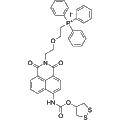
    Mito-TRFS is an innovative off-on probe designed to selectively image mitochondrial thioredoxin reductase (TrxR2) in live cells. This reagent allows for the assessment of the redox status within mitochondria, facilitating the study of oxidative stress and mitochondrial function. Mito-TRFS is particularly valuable in research focusing on cellular responses to stress and the roles of TrxR2 in various disease models.

    1 mg
    $555.00
    5 mg
    $1,700.00
    All 3 sizes
  • MitoTracker Green FM
    Cat. No.
    A24612

    MitoTracker Green FM

    MitoTracker Green FM is a green fluorescent dye that selectively targets the mitochondrial matrix. It covalently binds to mitochondrial proteins through reaction with free mercaptan groups on cysteine residues, facilitating the visualization of mitochondrial structures independently of membrane potential. This dye is widely utilized in cellular and molecular biology research to study mitochondrial dynamics, function, and viability. Excitation and emission wavelengths are 490 nm and 523 nm, respectively.

    0.05 mg
    $130.00
    All 1 sizes
  • PKH 67
    Cat. No.
    A24613

    PKH 67

    PKH 67 is a green fluorescent dye primarily used for staining cell membranes. With an excitation/emission range of 490/502 nm, it enables precise labeling of cells to facilitate studies of cell proliferation in vitro and tracking of cells in both in vitro and in vivo environments. This dye is commonly employed alongside the non-specific red fluorescent dye PKH26 to enhance multi-color cell analysis.

    100 mg
    $255.00
    All 1 sizes
  • ATP-Red 1
    Cat. No.
    A24614

    ATP-Red 1

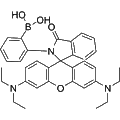
    ATP-Red 1 is a switchable fluorescent probe that selectively binds to ATP, enabling rapid detection of intracellular ATP concentrations in live cells. This probe emits fluorescence with an excitation/emission maxima of 510/590 nm, making it valuable for real-time monitoring of ATP levels. It is suitable for various biological applications, including cellular energy metabolism studies and ATP-related signaling pathways.

    1 mg
    $255.00
    5 mg
    $535.00
    All 4 sizes
  • TSQ
    Cat. No.
    A24615

    TSQ

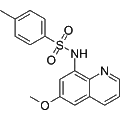
    TSQ is a membrane-permeable fluorescent probe designed for the detection of zinc ions within cells, specifically targeting the cytosolic compartment. It exhibits a fluorescence emission maximum at approximately 495 nm when excited at 334 nm, enabling effective intracellular imaging of zinc-containing proteins. TSQ forms a complex with Zn2+ in the presence of Ca2+ and Mg2+, resulting in a distinctive blue fluorescence signal, making it a valuable tool for research applications involving cellular zinc dynamics and metalloprotein studies.

    2 mg
    $25.00
    5 mg
    $40.00
    All 7 sizes
  • Hydroxyphenyl Fluorescein
    Cat. No.
    A24616

    Hydroxyphenyl Fluorescein

    Synonyms: HPF; 3'-p-(Hydroxyphenyl) fluorescein

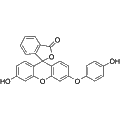
    Hydroxyphenyl Fluorescein (HPF) functions as a stable fluorescent probe specifically targeting reactive oxygen species (ROS). This compound exhibits enhanced specificity and stability compared to traditional probes such as H2DCFDA. It generates strong green fluorescence upon reaction with intracellular peroxynitroso, making it suitable for studying oxidative stress. Hydroxyphenyl Fluorescein can be utilized in various applications, including fluorescence microscopy, high-throughput imaging, luciferase microplate assays, and flow cytometry. Excitation and emission wavelengths are 490 nm and 515 nm, respectively.

    0.5 mg
    $265.00
    1 mg
    $280.00
    All 7 sizes
  • Oil Red O
    Cat. No.
    A24617

    Oil Red O

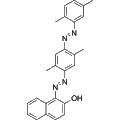
    Oil Red O is a fat-soluble diazol dye that primarily targets neutral lipids and cholesteryl esters, exhibiting maximum absorption at 518 nm. This reagent is widely utilized for the detection and quantification of hepatic steatosis in mouse liver biopsies, allowing for the visualization of significant metabolic changes in tissues. Oil Red O staining serves as an essential tool for researchers studying metabolic diseases and their progression.

    25 g
    $25.00
    All 1 sizes
  • Thiazole Orange
    Cat. No.
    A24618

    Thiazole Orange

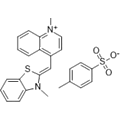
    Thiazole Orange is a fluorescent dye primarily designed for nucleic acid detection. It exhibits significant fluorescence enhancement upon binding to DNA and RNA, making it ideal for applications such as biomolecular detection, gel staining, and reticulocyte analysis. This dye permeates living cell membranes and can be detected using ultraviolet or blue light, with an excitation maximum at 510 nm (also excitable at 488 nm and 470 nm) and an emission maximum at 527 nm.

    50 mg
    $30.00
    100 mg
    $55.00
    All 4 sizes
  • Tris(4,7-diphenyl-1,10-phenanthroline)ruthenium(II) dichloride
    Cat. No.
    A24619

    Tris(4,7-diphenyl-1,10-phenanthroline)ruthenium(II) dichloride

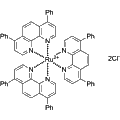
    Tris(4,7-diphenyl-1,10-phenanthroline)ruthenium(II) dichloride serves as an electrochemiluminescent probe and oxygen-sensitive sensor. This compound is effective in detecting sulfates and oxalates through electrochemical reactions that generate excited-state species capable of photon emission via irreversible redox reactions. The fluorescence of Tris(4,7-diphenyl-1,10-phenanthroline)ruthenium(II) dichloride is quenched by oxygen, allowing the fluorescence intensity to serve as a proxy for the metabolic rates of microorganisms or oxygen concentrations in cells and tumors. Its primary applications include microbial detection, studies of antibacterial activity, and research into tumor microenvironments.

    250 mg
    $25.00
    1 g
    $90.00
    All 3 sizes
  • Acridine Orange 10-Nonyl Bromide
    Cat. No.
    A24620

    Acridine Orange 10-Nonyl Bromide

    Synonyms: Nonylacridine orange

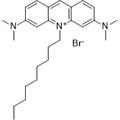
    Acridine Orange 10-Nonyl Bromide is a fluorescent probe primarily targeting cardiolipin. This compound exhibits excitation maximum at 489 nm and emission maximum at 525 nm, making it suitable for studies involving mitochondrial function and apoptosis. It is widely used in various biological research applications, particularly in understanding membrane dynamics and cellular lipid interactions.

    5 mg
    $25.00
    10 mg
    $40.00
    All 6 sizes
  • Cyanine7 NHS ester tetrafluoroborate
    Cat. No.
    A24621

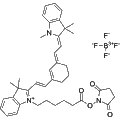
    Cyanine7 NHS ester tetrafluoroborate

    Cyanine7 NHS ester tetrafluoroborate is a near-infrared fluorescent dye designed for biological conjugation applications. It exhibits strong fluorescence properties, making it ideal for imaging and labeling studies in fluorescence microscopy and flow cytometry. This reagent is particularly useful in labeling proteins and other biomolecules for enhanced visualization in various research contexts.

    1 mg
    $80.00
    5 mg
    $200.00
    All 4 sizes
  • DFHBI-BI
    Cat. No.
    A24622

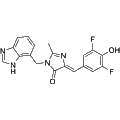
    DFHBI-BI

    DFHBI-BI is a fluorogenic compound that acts as a mimic of the green fluorescent protein chromophore. It binds with high affinity to the Broccoli RNA aptamer, stabilizing the complex and enhancing its fluorescent properties. This compound is effective in preventing thermal unfolding of the Broccoli aptamer at 37°C in mammalian cells, resulting in increased formation of fluorescent Broccoli-BI complexes with emission wavelengths of 559 nm and 635 nm. DFHBI-BI is valuable for applications in live-cell imaging and RNA detection studies.

    1 mg
    $390.00
    5 mg
    $995.00
    All 4 sizes
  • LPd peroxida probe
    Cat. No.
    A24623

    LPd peroxida probe

    LPd peroxida probe is a fluorescent marker specifically designed to detect lipid peroxidation, a key process in ferroptosis. This probe effectively converts lipid hydroperoxides into lipid alcohols, facilitating the imaging of lipid hydroperoxides in live cells. It is an invaluable tool for researchers exploring the implications of lipid peroxidation in various cellular pathophysiologies.

    0.05 mg
    $310.00
    All 1 sizes
  • Rhod-2 AM
    Cat. No.
    A24632

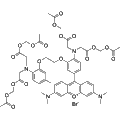
    Rhod-2 AM

    Rhod-2 AM is a high-affinity fluorescent probe specifically designed for the detection of intracellular calcium ions (Ca2+). As an acetyl methyl ester derivative, it possesses cell membrane permeability, allowing it to readily enter cells. Inside the cell, Rhod-2 AM is hydrolyzed by lactesterase to release Rhod-2, which retains its fluorescent properties for monitoring Ca2+ dynamics. This probe exhibits maximum excitation and emission wavelengths of 549 nm and 578 nm, respectively, making it suitable for a variety of cellular studies related to calcium signaling pathways.

    0.05 mg
    $50.00
    1 mg
    $465.00
    All 2 sizes
  • Thioflavine S
    Cat. No.
    A24650

    Thioflavine S

    Synonyms: Thioflavin S; Direct Yellow 7

    Thioflavine S is a fluorescent histochemical marker that specifically targets dense core senile plaques associated with Alzheimer's disease. This reagent is widely utilized in Alzheimer’s research to facilitate the visualization and study of amyloid deposits, contributing valuable insights into the pathophysiology of neurodegenerative disorders.

    50 mg
    $25.00
    100 mg
    $35.00
    All 4 sizes
  • MMP-1/MMP-9 Substrate, Fluorogenic
    Cat. No.
    A24667

    MMP-1/MMP-9 Substrate, Fluorogenic

    Synonyms: Dnp-P-Cha-G-Cys(Me)-HA-K(Nma)-NH2

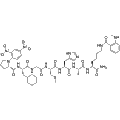
    MMP-1/MMP-9 Substrate, Fluorogenic is a highly sensitive substrate specifically designed for the detection of matrix metalloproteinases MMP-1 and MMP-9. Upon cleavage by these enzymes, it emits fluorescence with excitation and emission wavelengths at 340 nm and 440 nm, respectively. This substrate is ideal for research applications involving extracellular matrix remodeling, cancer metastasis studies, and the assessment of tissue remodeling processes.

    1 mg
    $110.00
    5 mg
    $285.00
    All 4 sizes
  • DeepRed Nucleus Dye
    Cat. No.
    A24676

    DeepRed Nucleus Dye

    DeepRed Nucleus Dye is a far-red fluorescing DNA probe that effectively permeates cell membranes. It excites at 647 nm and emits fluorescence spanning from 665 nm to over 780 nm, allowing for accurate assessment of cellular DNA content. This dye is compatible with FITC and RPE-labelled antibodies, facilitating multiplexing without requiring fluorescence compensation, making it suitable for various research applications in cell biology and molecular studies.

    1 mg
    $20.00
    5 mg
    $50.00
    All 6 sizes
  • Sulfo-Cy5-N3
    Cat. No.
    A24677

    Sulfo-Cy5-N3

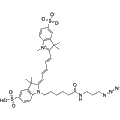
    Sulfo-Cy5-N3 is a versatile fluorescent dye featuring an azide group that enables its use in click chemistry applications. Primarily utilized for imaging, this red fluorescent label (Excitation/Emission=642/670 nm) facilitates the visualization of biomolecules through the copper-catalyzed azide-alkyne cycloaddition (CuAAc) method when paired with alkyne-containing compounds. Additionally, it can participate in the ring strain-promoted alkyne-azide cycloaddition (SPAAC) with DBCO or BCN groups, making it suitable for a variety of biological and chemical research applications.

    5 mg
    $180.00
    10 mg
    $295.00
    All 3 sizes
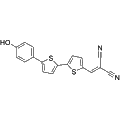
  • NIAD-4
    Cat. No.
    A24678

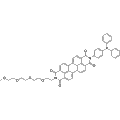
    NIAD-4

    NIAD-4 is a blood-brain barrier permeable fluorophore specifically designed for optical imaging of amyloid-β (Aβ) in the central nervous system, particularly relevant for Alzheimer's disease research. This compound exhibits a high binding affinity to Aβ with a Ki of 10 nM, enabling precise visualization of Aβ aggregates in various experimental models. Its application is crucial for studying the pathophysiology of Alzheimer's disease and assessing the efficacy of therapeutic interventions targeting Aβ accumulation.

    1 mg
    $25.00
    2 mg
    $35.00
    All 7 sizes
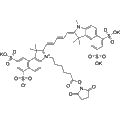
  • Sulfo-CY-5.5 NHS ester tripotassium
    Cat. No.
    A24680

    Sulfo-CY-5.5 NHS ester tripotassium

    Synonyms: Sulfo-Cyanine5.5 NHS ester tripotassium

    Sulfo-CY-5.5 NHS ester tripotassium is an amine-reactive ester derived from the sulfonated far-red fluorophore, Cyanine5.5. This reagent is utilized for labeling antibodies and proteins, enabling effective detection in various biological assays. Additionally, it is suitable for in vivo near-infrared imaging applications, facilitating enhanced visualization in biological research.

    1 mg
    $175.00
    5 mg
    $450.00
    All 4 sizes
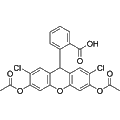
  • H2DCFDA
    Cat. No.
    A24745

    H2DCFDA

    Synonyms: DCFH-DA; 2',7'-Dichlorodihydrofluorescein diacetate

    H2DCFDA is a cell-permeable probe designed for the detection of intracellular reactive oxygen species (ROS). This fluorescent indicator exhibits excitation and emission maxima at 488 nm and 525 nm, respectively. H2DCFDA is widely utilized in research applications involving oxidative stress and cellular signaling, providing insights into ROS-related biological processes.

    5 mg
    $20.00
    10 mg
    $25.00
    All 7 sizes
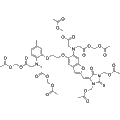
  • Fura Red AM
    Cat. No.
    A24753

    Fura Red AM

    Fura Red AM is a fluorescent dye specifically designed for visualizing Ca2+ distribution within the cytoplasm of undifferentiated cells. This probe exhibits optimal excitation at 488 nm, making it suitable for various fluorescence microscopy applications. Fura Red AM is essential for studies exploring calcium signaling and cellular dynamics in live cell imaging.

    0.05 mg
    $185.00
    1 mg
    $1,040.00
    All 2 sizes
  • TAMRA-PEG3-Azide
    Cat. No.
    A24754

    TAMRA-PEG3-Azide

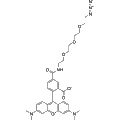
    TAMRA-PEG3-Azide is a fluorescent dye derivative of TAMRA featuring three polyethylene glycol (PEG) units. This compound contains an azide functional group, enabling it to participate in copper-catalyzed azide-alkyne cycloaddition (CuAAc) reactions with alkyne-containing molecules. Additionally, it can engage in strain-promoted alkyne-azide cycloaddition (SPAAC) reactions with DBCO or BCN functionalities. TAMRA-PEG3-Azide is valuable for applications in fluorescent labeling and bioconjugation in chemical biology research.

    1 mg
    $90.00
    5 mg
    $200.00
    All 6 sizes
  • AF647-NHS ester triTEA
    Cat. No.
    A24756

    AF647-NHS ester triTEA

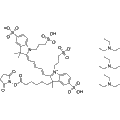
    AF647-NHS ester triTEA is a fluorescent dye with an excitation wavelength of 635 nm, suitable for conventional fluorescence detection, and 620 nm for instantaneous detection. The NHS ester functionality enables covalent binding to amine-containing molecules, including proteins and antibodies, facilitating targeted labeling. This reagent is ideal for a variety of applications in fluorescence microscopy, flow cytometry, and other research techniques requiring precise visualization of biomolecules.

    1 mg
    $170.00
    5 mg
    $550.00
    All 5 sizes

Items 201-225 of 2505

Added to your cart

View Cart Checkout

    Loading...