All Dyes

All Dyes is the single product list for the Fluorescent Dyes, Probes & Stains section. Many dyes here have no application or dye-family subcategory, so the list is the broadest way to browse the range. It suits searches by product name when the required dye is already known. Examples range from the near-infrared cyanine indocyanine green and the ratiometric calcium indicator Fura-2 pentapotassium to the nucleic acid stains Hoechst 33258 trihydrochloride and SYBR Green II. Classical stains such as hematoxylin, reactive labeling dyes and enzyme substrates are listed alongside them. For selection by task or by core structure, the parent Fluorescent Dyes, Probes & Stains page groups dyes by application and dye family.

Items 26-50 of 138

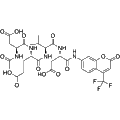
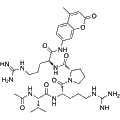
  • Ac-VRPR-AMC
    Cat. No.
    A25451

    Ac-VRPR-AMC

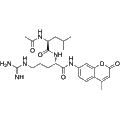
    Ac-VRPR-AMC is a fluorogenic substrate specifically designed for the detection of metacaspase activity. This compound is utilized in biochemical assays to measure metacaspase activity, making it a valuable tool for research in apoptosis and programmed cell death. Its fluorescence properties enable sensitive detection, facilitating studies on metacaspase function in various biological systems.

    Out of stock

    All 3 sizes
  • 4-Methylumbelliferyl phosphate
    Cat. No.
    A36181

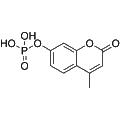
    4-Methylumbelliferyl phosphate

    Synonyms: 4-MUP; MUP

    4-Methylumbelliferyl phosphate is a fluorogenic substrate for acid and alkaline phosphatases. Upon dephosphorylation, it produces a fluorescent product, enabling sensitive detection in enzyme activity assays. This reagent is widely utilized in research applications involving phosphatase activity, enzymatic kinetics, and biological assays requiring fluorescent readout. Additionally, it serves as a nerve agent simulant in various experimental contexts.

    50 mg
    $25.00
    100 mg
    $35.00
    All 4 sizes
  • Bz-FVR-AMC
    Cat. No.
    A39795

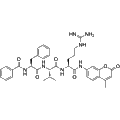
    Bz-FVR-AMC

    Bz-FVR-AMC is a fluorogenic substrate specifically designed for the assay of procathepsin activity. With a kcat/Km value of 1070 mM^-1s^-1, it provides a robust tool for measuring cathepsin enzyme activity in various biological samples. Bz-FVR-AMC is particularly useful for studying proteolytic processes and understanding cysteine protease functions in both physiological and pathological contexts. However, at high concentrations, this substrate may exhibit inhibitory effects.

    5 mg
    $45.00
    10 mg
    $80.00
    All 3 sizes
  • Cathepsin D and E FRET Substrate
    Cat. No.
    A39833

    Cathepsin D and E FRET Substrate

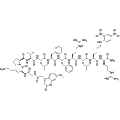
    Cathepsin D and E FRET Substrate is a fluorogenic substrate specifically designed for the selective detection of cathepsins D and E, avoiding interaction with cathepsins B, H, and L. Cleavage occurs at the Phe-Phe amide bond, releasing a fluorescent signal that can be quantitatively measured. This substrate is ideal for routine assays and mechanistic studies, facilitating the investigation of cathepsin activity in various biological contexts.

    1 mg
    $660.00
    5 mg
    $2,715.00
    All 2 sizes
  • Z-Nle-Lys-Arg-AMC
    Cat. No.
    A39881

    Z-Nle-Lys-Arg-AMC

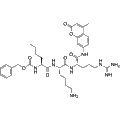
    Z-Nle-Lys-Arg-AMC is a fluorogenic peptide substrate designed to specifically detect cathepsin B activity across a wide pH range. This substrate undergoes cleavage by cathepsin B, resulting in fluorescence which can be quantitatively measured. It is particularly valuable in studies related to protease activity, cell signaling, and understanding pathological processes where cathepsin B is involved.

    Out of stock

    All 3 sizes
  • Nicotinamide 1,N6-ethenoadenine dinucleotide
    Cat. No.
    A41763

    Nicotinamide 1,N6-ethenoadenine dinucleotide

    Synonyms: ε-NAD

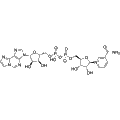
    Nicotinamide 1,N6-ethenoadenine dinucleotide (ε-NAD) acts as a fluorescent substrate with significant utility in biochemical research. This analog of NAD can be cleaved by phosphodiesterase I, sourced from C. adamanteus venom, and demonstrates binding affinity to bovine liver glutamate dehydrogenase. It serves as a substrate for G-ADP ribosylation of G proteins, a process facilitated by bacterial toxins, making it valuable for investigating ADP ribosylation reactions. Its fluorescent properties enhance detection and analysis in experimental applications.

    1 mg
    $80.00
    5 mg
    $365.00
    All 3 sizes
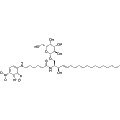
  • C12 NBD Sphingomyelin
    Cat. No.
    A43679

    C12 NBD Sphingomyelin

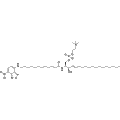
    C12 NBD Sphingomyelin serves as a substrate for sphingomyelinase, incorporating a fluorescent C12 nitrobenzoxadiazole tag. This reagent enables the study of sphingomyelin metabolism and transport under fluorescence microscopy or spectroscopy, with an excitation wavelength of 470 nm and emission at 525 nm. Its application is critical for researchers investigating sphingolipid dynamics and related cellular processes.

    0.1 mg
    $190.00
    All 1 sizes
  • C6 NBD Galactosylceramide
    Cat. No.
    A43730

    C6 NBD Galactosylceramide

    C6 NBD Galactosylceramide serves as a substrate for neutral β-glycosylceramidase (GCase) and is a fluorescently labeled derivative of galactosylceramide, incorporating a C6 nitrobenzoxadiazole moiety. This compound is instrumental in investigating the intracellular localization and metabolic pathways of galactosylceramide. Its distinct fluorescence (Ex=nm, Em=525) enables effective monitoring and analysis in a variety of biological research applications.

    0.1 mg
    $550.00
    All 1 sizes
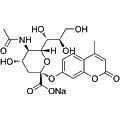
  • 4-MUNANA
    Cat. No.
    A44460

    4-MUNANA

    4-MUNANA is a highly selective fluorescent substrate for influenza virus neuraminidase (NA), undergoing an irreversible enzymatic reaction that releases fluorescent 4-methylumbelliferone (4-MU). The fluorescence intensity of 4-MU provides a quantitative measure of NA activity, making 4-MUNANA a valuable tool in influenza research. Applications include screening for neuraminidase inhibitors, creating new anti-influenza therapies, and investigating the infection mechanisms of influenza viruses.

    1 mg
    $25.00
    5 mg
    $65.00
    All 6 sizes
  • Ac-DEVD-AFC
    Cat. No.
    A44466

    Ac-DEVD-AFC

    Ac-DEVD-AFC is a fluorogenic substrate specifically designed for the detection of caspase-3 activity. Upon cleavage by caspase-3, it releases a fluorescent signal, enabling real-time monitoring of apoptosis. This reagent is widely used in cell biology research to evaluate programmed cell death and assess therapeutic effectiveness in various experimental settings.

    1 mg
    $40.00
    5 mg
    $120.00
    All 6 sizes
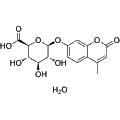
  • 4-Methylumbelliferyl-β-D-glucuronide hydrate
    Cat. No.
    A44471

    4-Methylumbelliferyl-β-D-glucuronide hydrate

    Synonyms: MUG

    4-Methylumbelliferyl-β-D-glucuronide hydrate is a fluorogenic substrate that emits fluorescence upon hydrolysis by β-glucuronidase (λex=362 nm, λem=445 nm). This reagent is primarily utilized for the detection of β-glucuronidase activity, making it valuable in various microbiological applications, including the quantification of Escherichia coli. Its sensitive fluorescence signal enhances detection capabilities in biochemical assays, contributing to effective research in enzymology and microbial studies.

    25 mg
    $25.00
    50 mg
    $30.00
    All 3 sizes
  • Rhodamine 110
    Cat. No.
    A44472

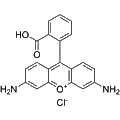
    Rhodamine 110

    Synonyms: Rhodamine 110 chloride; RH110

    Rhodamine 110 is a fluorescent substrate designed for the detection and quantification of proteinases in both solution and living cells. This compound displays high sensitivity and selectivity, making it ideal for various protease activity assays. With an excitation wavelength of 498 nm and an emission wavelength of 521 nm, it is suitable for fluorescence microscopy and flow cytometry applications.

    50 mg
    $35.00
    100 mg
    $55.00
    All 4 sizes
  • Ac-WLA-AMC
    Cat. No.
    A44474

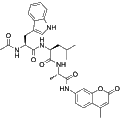
    Ac-WLA-AMC

    Ac-WLA-AMC is a β5-specific fluorogenic substrate designed for the 20S constitutive proteasome. Upon hydrolysis, it emits a fluorescent signal, enabling real-time monitoring of proteasome activity. This substrate is ideal for research applications involving proteasome function, regulation, and potential drug discovery targeting proteasome-related pathways.

    5 mg
    $260.00
    10 mg
    $430.00
    All 2 sizes
  • EDANS
    Cat. No.
    A44482

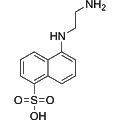
    EDANS

    Synonyms: 1,5-EDANS

    EDANS (1,5-EDANS) is a quenched fluorogenic substrate designed for the assessment of retroviral protease activity through resonance energy transfer (RET). This compound enables sensitive detection and quantification of protease activity, facilitating applications in virology and drug development. Its innovative design allows for an effective evaluation of protease inhibitors and contributes to understanding viral replication mechanisms.

    50 mg
    $25.00
    100 mg
    $30.00
    All 2 sizes
  • Resorufin butyrate
    Cat. No.
    A44489

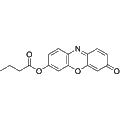
    Resorufin butyrate

    Resorufin butyrate is a fluorogenic substrate primarily utilized for the detection of triglyceride lipases and cholinesterase. With excitation at 570 nm and emission at 580 nm, this compound facilitates sensitive fluorescence-based assays. It is particularly valuable in biochemical studies focusing on lipid metabolism and enzyme activity.

    5 mg
    $55.00
    10 mg
    $90.00
    All 5 sizes
  • 7-Methoxy-4-(trifluoromethyl)coumarin
    Cat. No.
    A44504

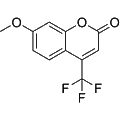
    7-Methoxy-4-(trifluoromethyl)coumarin

    Synonyms: MFC

    7-Methoxy-4-(trifluoromethyl)coumarin is a fluorescent substrate that serves as an effective tool for assessing cytochrome P450 enzyme activity. This compound enables the quantification of CYP activity, facilitating studies in drug metabolism and toxicology research. Its fluorescent properties make it suitable for various bioanalytical applications, providing valuable insights into pharmacokinetics and enzymatic functions.

    100 mg
    $25.00
    250 mg
    $40.00
    All 5 sizes
  • Coumberol
    Cat. No.
    A44508

    Coumberol

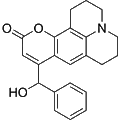
    Coumberol is a fluorescent substrate that specifically targets the AKR1C3 enzyme. This compound serves as a valuable tool for investigating the enzymatic activity of AKR1C3 in various biological contexts. It is particularly useful in research applications focused on metabolic pathways and disease mechanisms where AKR1C3 plays a critical role.

    5 mg
    $245.00
    10 mg
    $410.00
    All 5 sizes
  • 7-Ethoxy-4-trifluoromethylcoumarin
    Cat. No.
    A44517

    7-Ethoxy-4-trifluoromethylcoumarin

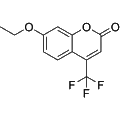
    7-Ethoxy-4-trifluoromethylcoumarin is a fluorescent substrate that targets cytochrome P450 enzymes, facilitating the study of enzymatic activities within this superfamily. Its biological activity makes it particularly useful in drug metabolism research, allowing for the assessment of enzyme specificity and interaction with various compounds. This reagent is an essential tool for investigating the pharmacokinetics and biotransformation processes of therapeutic agents.

    1 mg
    $25.00
    2 mg
    $35.00
    All 4 sizes
  • Ac-Leu-Arg-AMC
    Cat. No.
    A44521

    Ac-Leu-Arg-AMC

    Ac-Leu-Arg-AMC is a fluorogenic peptide substrate designed for the quantitative analysis of protease activity. This compound is particularly useful in studies of proteolytic enzymes, enabling the detection of enzyme activity through fluorescence measurement. Its specificity for certain proteases makes it ideal for applications in biochemical assays and research involving protein degradation pathways.

    5 mg
    $70.00
    10 mg
    $120.00
    All 3 sizes
  • NSP-AS
    Cat. No.
    A44529

    NSP-AS

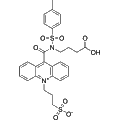
    NSP-AS is a chemiluminescent acridinium substrate that serves as a sensitive detection reagent in homogeneous assays. It facilitates light emission in the presence of target analytes, enabling the quantification of biological molecules. NSP-AS is ideal for applications in clinical diagnostics and research involving biomarker detection and assay development.

    5 mg
    $60.00
    10 mg
    $100.00
    All 5 sizes
  • CUG
    Cat. No.
    A44531

    CUG

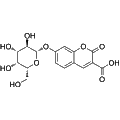
    Synonyms: 3-Carboxyumbelliferyl-β-D-galactopyranoside

    CUG (3-Carboxyumbelliferyl-β-D-galactopyranoside) is a fluorogenic substrate primarily used to detect β-galactosidase activity. It exhibits excitation and emission wavelengths of 386 nm and 445 nm, respectively. This compound is valuable in various biochemical assays and cellular studies to monitor enzyme activity and understand metabolic processes.

    1 mg
    $90.00
    5 mg
    $240.00
    All 2 sizes
  • 5-Bromo-4-chloro-3-indolyl β-D-cellobioside
    Cat. No.
    A44539

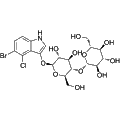
    5-Bromo-4-chloro-3-indolyl β-D-cellobioside

    5-Bromo-4-chloro-3-indolyl β-D-cellobioside is a chromogenic compound that serves as a substrate for the detection of cellobiohydrolases. This reagent facilitates the identification and quantification of enzymatic activity in biochemical assays. Its application is particularly valuable in studies involving cellulose degradation and enzyme characterization in microbial and plant systems.

    5 mg
    $20.00
    10 mg
    $25.00
    All 6 sizes
  • Gly-Gly-AMC
    Cat. No.
    A44540

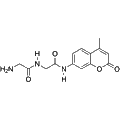
    Gly-Gly-AMC

    Gly-Gly-AMC is a fluorogenic peptide substrate utilized for measuring protease activity. This compound is particularly effective in evaluating the bacterial protease activities of Pseudomonas aeruginosa and Staphylococcus aureus. Researchers can leverage Gly-Gly-AMC for applications in enzymatic assays and studies focused on bacterial pathogenicity and proteolytic processes.

    1 mg
    $90.00
    5 mg
    $265.00
    All 4 sizes
  • 5(6)-Carboxynaphthofluorescein diacetate
    Cat. No.
    A44543

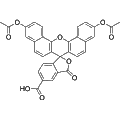
    5(6)-Carboxynaphthofluorescein diacetate

    5(6)-Carboxynaphthofluorescein diacetate is a specific fluorescent substrate utilized in esterase assays. It is cleaved by intracellular esterases, leading to the production of red fluorescence, which can be quantitatively measured to assess enzyme activity. This compound is instrumental in various biological and biochemical research applications, including monitoring esterase activity in live cells.

    Out of stock

    All 3 sizes
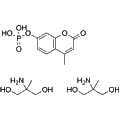
  • 4-Methylumbelliferyl phosphate (2-amino-2-methyl-1,3-propanediol)
    Cat. No.
    A44550

    4-Methylumbelliferyl phosphate (2-amino-2-methyl-1,3-propanediol)

    4-Methylumbelliferyl phosphate (2-amino-2-methyl-1,3-propanediol) serves as a fluorescent substrate primarily utilized in enzyme assays. This compound exhibits fluorescence upon enzymatic hydrolysis, making it an effective tool for studying enzyme activity and kinetics. Its applications extend to various biochemical assays, facilitating the detection and quantification of specific enzymatic reactions.

    10 mg
    $25.00
    25 mg
    $50.00
    All 5 sizes

Items 26-50 of 138

Added to your cart

View Cart Checkout

    Loading...