All Dyes

All Dyes is the single product list for the Fluorescent Dyes, Probes & Stains section. Many dyes here have no application or dye-family subcategory, so the list is the broadest way to browse the range. It suits searches by product name when the required dye is already known. Examples range from the near-infrared cyanine indocyanine green and the ratiometric calcium indicator Fura-2 pentapotassium to the nucleic acid stains Hoechst 33258 trihydrochloride and SYBR Green II. Classical stains such as hematoxylin, reactive labeling dyes and enzyme substrates are listed alongside them. For selection by task or by core structure, the parent Fluorescent Dyes, Probes & Stains page groups dyes by application and dye family.

Items 76-100 of 138

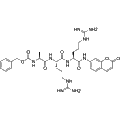
  • Z-Ala-Arg-Arg-AMC
    Cat. No.
    A77300

    Z-Ala-Arg-Arg-AMC

    Synonyms: Fluorogenic Proteasome Substrate; Z-ARR-AMC

    Z-Ala-Arg-Arg-AMC is a fluorogenic proteasome substrate designed to specifically assay the trypsin-like activity of the proteasome. Its unique structure allows for sensitive detection of proteolytic activity, making it a valuable tool for studying protein degradation and turnover in cellular processes. This substrate is widely utilized in research applications focused on proteasome function and its implications in various diseases.

    5 mg
    $105.00
    10 mg
    $170.00
    All 2 sizes
  • Z-Leu-Leu-Leu-AMC
    Cat. No.
    A77322

    Z-Leu-Leu-Leu-AMC

    Synonyms: Z-LLL-AMC

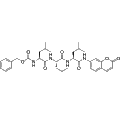
    Z-Leu-Leu-Leu-AMC is a fluorogenic substrate designed for the assessment of chymotrypsin-like protease activity in the 20S proteasome. It provides a sensitive and specific means to monitor proteasomal function and proteolytic activity. This reagent is valuable for research applications involving protein degradation, cellular homeostasis, and the study of proteasome-related diseases.

    1 mg
    $80.00
    5 mg
    $255.00
    All 2 sizes
  • Calpain substrate
    Cat. No.
    A77331

    Calpain substrate

    Calpain substrate is a fluorogenic substrate specifically designed for the assessment of calpain enzymatic activity. It is membrane non-permeable, ensuring precise measurement of calpain activity in biological samples. This reagent is suitable for applications in cellular signaling research and studies investigating calpain's role in various physiological and pathological processes.

    1 mg
    $105.00
    5 mg
    $260.00
    All 4 sizes
  • Ac-KQKLR-AMC TFA
    Cat. No.
    A77639

    Ac-KQKLR-AMC TFA

    Synonyms: Cathepsin S substrate TFA

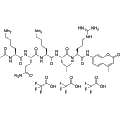
    Ac-KQKLR-AMC TFA is a substrate peptide for Cathepsin S, conjugated with the fluorescent indicator AMC (Excitation/Emission = 354 nm/442 nm). This reagent facilitates the measurement of Cathepsin S activity, enabling researchers to study proteolytic processes and assess enzyme function in various biological contexts. Its application is crucial for investigations into the role of Cathepsin S in physiological and pathological conditions.

    5 mg
    $110.00
    10 mg
    $185.00
    All 4 sizes
  • Ac-KQL-AMC
    Cat. No.
    A77720

    Ac-KQL-AMC

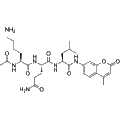
    Ac-KQL-AMC is a fluorogenic substrate designed to quantify Trypsin-like activity. Upon cleavage by the proteasome, it produces a detectable fluorescence, making it a valuable tool for studying proteolytic activities in various biological contexts. This compound is particularly useful in research applications focused on protein degradation and turnover mechanisms.

    Out of stock

    All 3 sizes
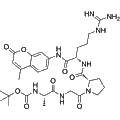
  • Boc-Ala-Gly-Pro-Arg-AMC
    Cat. No.
    A77746

    Boc-Ala-Gly-Pro-Arg-AMC

    Boc-Ala-Gly-Pro-Arg-AMC is a fluorogenic substrate designed for monitoring protease activity, particularly within serine proteases. This substrate is ideal for assessing enzymatic function in research applications involving protease activity, such as studying the oligopeptide enzyme B of Trypanosoma brucei. Its fluorescence allows for sensitive detection of enzymatic events, making it a valuable tool in biochemical and molecular biology studies.

    Out of stock

    All 3 sizes
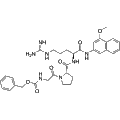
  • Z-Gly-Pro-Arg-4MβNA
    Cat. No.
    A77943

    Z-Gly-Pro-Arg-4MβNA

    Z-Gly-Pro-Arg-4MβNA is a fluorescent substrate specifically designed for the detection of thrombin activity through substrate cleavage. The cleavage releases free 4-methoxy-2-naphthylamine (4MβNA), which can subsequently be captured by 5-nitrosalicylaldehyde, generating a yellow fluorescent product. This characteristic makes Z-Gly-Pro-Arg-4MβNA a valuable tool for studying thrombin activity and related processes in biochemical assays and research applications.

    Out of stock

    All 3 sizes
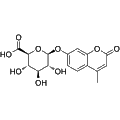
  • 4-Methylumbelliferyl-β-D-glucuronide
    Cat. No.
    A78196

    4-Methylumbelliferyl-β-D-glucuronide

    4-Methylumbelliferyl-β-D-glucuronide is a fluorogenic substrate utilized for the detection of β-glucuronidase activity. Upon enzymatic hydrolysis, it emits fluorescence at an excitation wavelength of 362 nm and an emission wavelength of 445 nm. This compound serves as an effective tool in research applications aimed at quantifying β-glucuronidase activity and monitoring Escherichia coli populations.

    25 mg
    $25.00
    50 mg
    $40.00
    All 3 sizes
  • Mca-SEVNLDAEFK(Dnp)
    Cat. No.
    A78481

    Mca-SEVNLDAEFK(Dnp)

    Mca-SEVNLDAEFK(Dnp) is a fluorescent substrate peptide specifically designed for the estimation of Beta-secretase 1 (BACE-1) activity. Featuring the 'Swedish' mutation of the amyloid precursor protein (APP) β-secretase cleavage site, this substrate undergoes cleavage at the -Leu-Asp- bond, releasing the highly fluorescent 7-methoxycoumarin (Mca) fragment. This release results in a significant increase in fluorescence intensity due to the removal of the quenching effect from the 2,4-dinitrophenyl (Dnp) moiety, making it a valuable tool for research applications in Alzheimer’s disease and related studies of amyloid pathology.

    Out of stock

    All 3 sizes
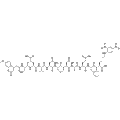
  • β-Secretase substrate VI, fluorogenic
    Cat. No.
    A78495

    β-Secretase substrate VI, fluorogenic

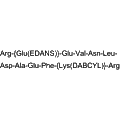
    Synonyms: RE(EDANS)EVNLDAEFK(DABCYL)R

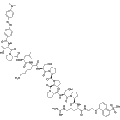
    β-Secretase substrate VI, fluorogenic is a fluorogenic peptide labeled with EDANS and DABCYL, specifically designed for the measurement of β-site amyloid precursor protein cleaving enzyme 1 (BACE1) activity. This substrate enables the quantification of BACE1 enzymatic activity through fluorescence emission (Em=360nm, Ex=528nm), providing a direct correlation between enzyme activity levels and fluorescence intensity. It is an essential tool for researchers studying Alzheimer's disease and related amyloidogenic processes.

    Out of stock

    All 3 sizes
  • Kynuramine dihydrochloride
    Cat. No.
    A78981

    Kynuramine dihydrochloride

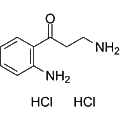
    Kynuramine dihydrochloride serves as a fluorescent substrate and probe for plasma amine oxidase. This compound is an endogenously occurring amine known for its role in amine metabolism. Its ability to interact with amine oxidases makes it valuable for research applications focused on enzymatic activity, neurobiology, and metabolic studies.

    5 mg
    $165.00
    10 mg
    $285.00
    All 2 sizes
  • Kynuramine dihydrobromide
    Cat. No.
    A79060

    Kynuramine dihydrobromide

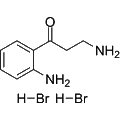
    Kynuramine dihydrobromide is a selective fluorescent substrate for plasma amine oxidase, facilitating the study of its enzymatic activity. This compound serves as a valuable probe in research applications aimed at understanding metabolic processes involving neurotransmitter degradation and related disorders. Its properties make it essential for exploring the role of amine oxidases in various physiological and pathological conditions.

    Out of stock

    All 3 sizes
  • Kynuramine
    Cat. No.
    A79076

    Kynuramine

    Synonyms: Kynurenamine

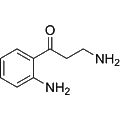
    Kynuramine is an endogenous amine that functions as a fluorescent substrate and probe for plasma amine oxidase. Its primary mechanism involves selective interaction with amine oxidase enzymes, facilitating the study of neurotransmitter degradation and metabolism. Kynuramine is commonly used in research applications focused on neurochemistry and the exploration of amine metabolism in various biological contexts.

    25 mg
    $1,275.00
    All 1 sizes
  • Hippuryl-Arg
    Cat. No.
    A85809

    Hippuryl-Arg

    Synonyms: Bz-Gly-Arg

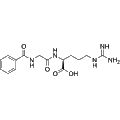
    Hippuryl-Arg (Bz-Gly-Arg) functions as a substrate peptide and serves as a fluorescent indicator in biochemical research. It is specifically designed for the detection of enzymes that cleave peptide bonds adjacent to arginine residues. The compound's aromatic side chain enables visibility under ultraviolet light, facilitating studies on enzyme activity and substrate specificity. This reagent is essential for investigations into proteolytic processes and enzyme characterization in various biochemical applications.

    5 mg
    $30.00
    10 mg
    $45.00
    All 4 sizes
  • H-Gly-Gly-Arg-AMC
    Cat. No.
    A86302

    H-Gly-Gly-Arg-AMC

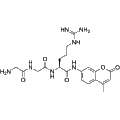
    H-Gly-Gly-Arg-AMC is a fluorogenic substrate designed for the continuous assessment of thrombin generation. This compound features a C-terminal 7-amino-4-methylcoumarin (AMC) moiety, which fluoresces upon cleavage. It is employed in research applications focusing on coagulation pathways and thrombin activity, enabling precise monitoring of thrombin dynamics in biological samples.

    Out of stock

    All 3 sizes
  • Boc-LRR-AMC
    Cat. No.
    A86760

    Boc-LRR-AMC

    Synonyms: Boc-Leu-Arg-Arg-AMC

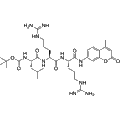
    Boc-LRR-AMC is a fluorogenic substrate designed to detect the trypsin-like activity of both the 26S proteasome and the 20S proteasome core. Its highly sensitive fluorescence allows for precise measurement of proteasomal activity in various biological samples. Boc-LRR-AMC is valuable for research applications involving protein degradation, cellular regulation, and proteasome function assessment.

    1 mg
    $30.00
    5 mg
    $100.00
    All 4 sizes
  • Gly-Phe-AMC
    Cat. No.
    A87357

    Gly-Phe-AMC

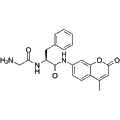
    Gly-Phe-AMC is a fluorogenic peptide substrate that consists of a glycine-phenylalanine sequence linked to the fluorophore AMC. This compound is specifically utilized as a substrate for cathepsin C and is instrumental in detecting the activity of various proteases. Its ability to fluoresce upon cleavage makes Gly-Phe-AMC a valuable tool in biochemical assays and protease activity studies.

    1 mg
    $70.00
    5 mg
    $190.00
    All 3 sizes
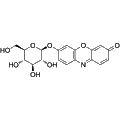
  • Resorufin-β-D-glucopyranoside, 98%
    Cat. No.
    A88443

    Resorufin-β-D-glucopyranoside, 98%

    Synonyms: 3-Phenoxazone 7-(β-D-glucopyranoside); 98%

    Resorufin-β-D-glucopyranoside is a fluorogenic substrate specifically designed for the detection and quantification of β-glucosidase activity. Upon enzymatic cleavage, it produces resorufin, a highly fluorescent compound that serves as an effective indicator of β-glucosidase presence in biological samples. This reagent is widely used in biochemical assays and studies involving enzyme activity, providing valuable insights into cellular and molecular processes.

    5 mg
    $125.00
    10 mg
    $200.00
    All 4 sizes
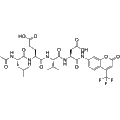
  • Ac-LEVD-AFC
    Cat. No.
    A88511

    Ac-LEVD-AFC

    Ac-LEVD-AFC is a fluorogenic substrate peptide specifically designed for the activity assays of caspase-4. This compound exhibits key biological activity by releasing a fluorescent signal upon cleavage by caspase-4, making it a valuable tool for studying apoptosis and inflammatory processes. It is suitable for various research applications, including cell death studies and the evaluation of caspase activity in different biological systems.

    1 mg
    $45.00
    5 mg
    $165.00
    All 2 sizes
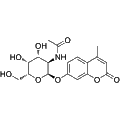
  • 4-Methylumbelliferyl 2-acetamido-2-deoxy-α-D-galactopyranoside
    Cat. No.
    A88517

    4-Methylumbelliferyl 2-acetamido-2-deoxy-α-D-galactopyranoside

    4-Methylumbelliferyl 2-acetamido-2-deoxy-α-D-galactopyranoside serves as a fluorogenic substrate for the assessment of α-galactosidase enzymatic activity. This compound is integral for analyzing enzyme kinetics in various biological samples, providing insights into the physiological roles of α-galactosidase. Additionally, it can be utilized for screening potential inhibitors or activators of this enzyme, facilitating research into its regulatory mechanisms and therapeutic targets.

    1 mg
    $45.00
    5 mg
    $190.00
    All 3 sizes
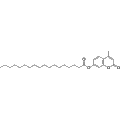
  • 4-Methylumbelliferyl stearate
    Cat. No.
    A89190

    4-Methylumbelliferyl stearate

    4-Methylumbelliferyl stearate is a biochemical reagent commonly utilized as a fluorogenic substrate for the detection of lipase activity. Upon enzymatic hydrolysis, it releases the fluorescent compound 4-methylumbelliferone, facilitating quantitative analysis of lipase in various biological samples. This reagent is widely employed in research applications focusing on lipid metabolism, enzyme kinetics, and the study of lipid-related disorders.

    100 mg
    $30.00
    250 mg
    $60.00
    All 4 sizes
  • ELF97 phosphate
    Cat. No.
    A89245

    ELF97 phosphate

    Synonyms: ELFP

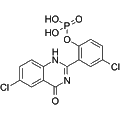
    ELF97 phosphate is a fluorescent substrate designed for the specific detection of phosphatase activity. Upon hydrolysis by phosphatases, it generates a fluorescent, water-insoluble product known as ELF97 alcohol. This compound is valuable for studying and quantifying the activity of extracellular phosphatases in algal species present in natural water environments.

    1 mg
    $65.00
    5 mg
    $155.00
    All 6 sizes
  • 1-NBD-decanoyl-2-decanoyl-sn-glycerol
    Cat. No.
    A89474

    1-NBD-decanoyl-2-decanoyl-sn-glycerol

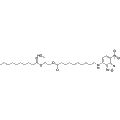
    1-NBD-decanoyl-2-decanoyl-sn-glycerol is a fluorescently labeled diacylglycerol (DAG) derivative, specifically designed as a substrate for diacylglycerol kinase (DGK). This compound enables quantitative detection of DGK enzyme kinetics in vitro, facilitating the study of DAG and phosphatidic acid (PA) dynamics during cellular signaling processes. Its application extends to various research areas, including cell biology and biochemistry, where understanding lipid signaling pathways is critical.

    0.5 mg
    $220.00
    1 mg
    $420.00
    All 3 sizes
  • GDP-azido-fucose
    Cat. No.
    A89509

    GDP-azido-fucose

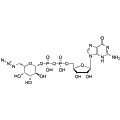
    GDP-azido-fucose is a modified donor substrate that incorporates an azide group, enabling bioorthogonal click reactions. This compound serves as a valuable tool for synthesizing fluorophore-conjugated GDP-fucose, which can facilitate the visualization of glycosylation processes. GDP-azido-fucose is also instrumental in studying glycosyltransferase reactions, allowing researchers to investigate glycan biosynthesis and its implications in various biological contexts.

    Out of stock

    All 3 sizes
  • MUF-diNAG
    Cat. No.
    A89524

    MUF-diNAG

    Synonyms: 4-Methylumbelliferyl N,N-diacetyl-β-D-chitobioside

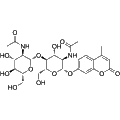
    MUF-diNAG (4-Methylumbelliferyl N,N-diacetyl-β-D-chitobioside) serves as a fluorescent substrate, allowing for the detection of enzymatic activity. This compound is particularly useful in studies involving glycosidases and chitinases, enabling researchers to investigate carbohydrate metabolism and related biochemical pathways. Its fluorescent properties make it an essential tool in various life science applications, including enzyme assays and cellular imaging.

    1 mg
    $140.00
    5 mg
    $360.00
    All 2 sizes

Items 76-100 of 138

Added to your cart

View Cart Checkout

    Loading...