All Dyes

All Dyes is the single product list for the Fluorescent Dyes, Probes & Stains section. Many dyes here have no application or dye-family subcategory, so the list is the broadest way to browse the range. It suits searches by product name when the required dye is already known. Examples range from the near-infrared cyanine indocyanine green and the ratiometric calcium indicator Fura-2 pentapotassium to the nucleic acid stains Hoechst 33258 trihydrochloride and SYBR Green II. Classical stains such as hematoxylin, reactive labeling dyes and enzyme substrates are listed alongside them. For selection by task or by core structure, the parent Fluorescent Dyes, Probes & Stains page groups dyes by application and dye family.

Items 51-75 of 138

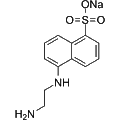
  • EDANS sodium
    Cat. No.
    A44566

    EDANS sodium

    EDANS sodium is a fluorogenic substrate employed primarily in FRET (Förster Resonance Energy Transfer) applications, specifically as a donor in nucleic acid probes and protease assays. When paired with quenchers such as DABCYL or DABSYL, EDANS sodium enhances the sensitivity and specificity of detection methods. The compound exhibits optimal absorbance and emission wavelengths at λabs = 336 nm and λem = 490 nm, making it suitable for various biological research applications involving real-time monitoring of enzymatic reactions and nucleic acid interactions.

    5 mg
    $30.00
    10 mg
    $40.00
    All 4 sizes
  • Ac-IETD-AMC
    Cat. No.
    A44567

    Ac-IETD-AMC

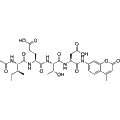
    Ac-IETD-AMC is a fluorogenic substrate specifically designed for the detection and quantification of caspase-8 activity. This compound, which includes an acetyl (Ac) moiety, serves as an efficient tool for studying apoptosis and related pathways mediated by caspase-8 and granzyme B. Its application in research allows for precise measurement of caspase-8 activity in various biological contexts, facilitating insights into cell death mechanisms and potential therapeutic targets.

    Out of stock

    All 3 sizes
  • 3-BTMD
    Cat. No.
    A44570

    3-BTMD

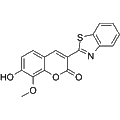
    3-BTMD is a fluorescent compound generated through the action of the COMT enzyme on its substrate, 3-BTD, exhibiting an excitation wavelength of 390 nm and an emission wavelength of 510 nm. This reagent is primarily utilized in fluorescent labeling and imaging applications, facilitating the study of enzymatic activity and biomolecular interactions in various biological contexts. Its distinct fluorescence properties make it a valuable tool for researchers in the fields of biochemistry and molecular biology.

    25 mg
    $1,275.00
    50 mg
    $1,625.00
    All 3 sizes
  • Coumberone
    Cat. No.
    A44625

    Coumberone

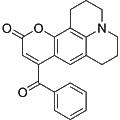
    Coumberone is a selective substrate for all AKR1C isoforms, functioning as a metabolic fluorogenic probe. It can be enzymatically reduced by the four members of the AKR1C family into the fluorescent product coumberol. This compound is useful in studying the catalytic activities and pharmacological roles of AKR1C enzymes in various biological contexts. Its fluorescent properties enable sensitive detection and quantitative analysis in research applications related to enzyme kinetics and metabolic profiling.

    5 mg
    $245.00
    10 mg
    $405.00
    All 5 sizes
  • Dibenzylfluorescein
    Cat. No.
    A44964

    Dibenzylfluorescein

    Synonyms: DBF

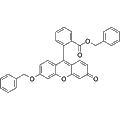
    Dibenzylfluorescein is a fluorogenic probe that serves as a substrate for specific cytochrome P450 isoforms, notably CYP3A4, CYP2C8, CYP2C9, CYP2C19, and aromatase (CYP19). This compound, with optimal usage near its Km value of 0.87-1.9 μM (Ex=485 nm, Em=535 nm), is instrumental in assessing alterations in CYP catalytic activity resulting from pharmaceuticals or pathological conditions. Dibenzylfluorescein is widely utilized in drug metabolism studies and toxicity assessments, providing insights into enzyme function in biochemical and pharmacological research.

    1 mg
    $125.00
    5 mg
    $145.00
    All 5 sizes
  • BG-JF585
    Cat. No.
    A45011

    BG-JF585

    Synonyms: SNAP-JF585

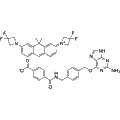
    BG-JF585 is a Benzylguanine-conjugated JF585 fluorophore, which serves as a substrate for SNAP tags. With an absorption maximum at 593 nm and an emission maximum at 611 nm, this compound provides strong fluorescence suitable for various imaging applications. BG-JF585 is invaluable for monitoring protein localization and dynamics in live-cell imaging experiments, facilitating advanced studies in cellular biology and protein function.

    0.5 mg
    $785.00
    1 mg
    $1,230.00
    All 3 sizes
  • Resorufin benzyl ether
    Cat. No.
    A45409

    Resorufin benzyl ether

    Synonyms: BzRes; 7-Benzyloxyresorufin; 7-Benzyloxyphenoxazone

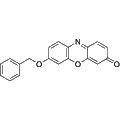
    Resorufin benzyl ether is a fluorogenic substrate primarily utilized for the detection of CYP3A4 enzyme activity. This compound can be further modified with a boronate moiety to enable detection of peroxynitrite (ONOO-) through a self-immolation mechanism. The fluorescence emission occurs at 590 nm when excited between 530 and 570 nm, making it a valuable tool for studies involving enzymatic activity and oxidative stress.

    1 mg
    $30.00
    5 mg
    $135.00
    All 3 sizes
  • Fluorescent brightener 24
    Cat. No.
    A45410

    Fluorescent brightener 24

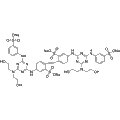
    Fluorescent Brightener 24 is a stilbene-based fluorescent brightening agent that enhances the brightness of various substrates. Its primary mechanism involves the absorption of ultraviolet light and re-emission as visible light, thereby improving the overall fluorescence. This compound is commonly utilized in textile and paper industries as well as in biological assays to enhance signal detection and contrast in fluorescence microscopy.

    25 mg
    $1,275.00
    All 1 sizes
  • 6,7-Diethoxy-4-methylcoumarin
    Cat. No.
    A45468

    6,7-Diethoxy-4-methylcoumarin

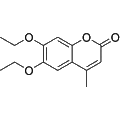
    6,7-Diethoxy-4-methylcoumarin is a fluorogenic substrate utilized for studying enzymatic activity. This compound exhibits fluorescent properties upon enzymatic conversion, making it useful in the detection and quantification of various enzymes in biological samples. Its application extends to areas such as drug metabolism studies and biological research involving Cordyceps militaris metabolites.

    5 mg
    $75.00
    10 mg
    $120.00
    All 5 sizes
  • Cholyl-L-lysine fluorescein disodium
    Cat. No.
    A45510

    Cholyl-L-lysine fluorescein disodium

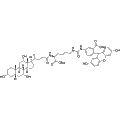
    Cholyl-L-lysine fluorescein disodium is a fluorescent substrate that enables visualization of biological processes in various experimental settings. This reagent is particularly useful in organoid research, facilitating the study of cellular interactions and functions through fluorescence-based assays. Its properties make it an essential tool for investigating compartmentalization and metabolic pathways in complex biological systems.

    Out of stock

    All 3 sizes
  • HIV Protease Substrate 1
    Cat. No.
    A51842

    HIV Protease Substrate 1

    HIV Protease Substrate 1 is a fluorogenic substrate specifically designed for the study of HIV protease activity. This reagent allows for the quantitative assessment of enzymatic function, facilitating investigations into HIV protease inhibitors and their effects on viral replication. It is particularly useful in the development of antiviral therapies and for studying the proteolytic processing of HIV proteins.

    25 mg
    $1,275.00
    All 1 sizes
  • Arg-Val-(Nle-p-nitro)-Phe-Glu-Ala-Nle-NH2
    Cat. No.
    A51852

    Arg-Val-(Nle-p-nitro)-Phe-Glu-Ala-Nle-NH2

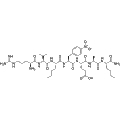
    Arg-Val-(Nle-p-nitro)-Phe-Glu-Ala-Nle-NH2 is a fluorogenic substrate specifically designed for assessing the activity of HIV-1 protease. This compound exhibits a strong interaction with the enzyme, facilitating the measurement of protease activity in research applications related to HIV-1 pathogenesis and antiviral drug development. Its utility in protease assays makes it a valuable tool for studying HIV-1 enzymatic function and evaluating potential therapeutic interventions.

    Out of stock

    All 3 sizes
  • CrBKA
    Cat. No.
    A56988

    CrBKA

    CrBKA is a fluorogenic small-molecule substrate specifically designed for SIRT6, a member of the sirtuin family of NAD+-dependent deacetylases. This compound exhibits weak activity, making it suitable for probing SIRT6 enzymatic function in various biological contexts. Its application in research includes the study of cellular metabolism, aging, and the modulation of gene expression through deacetylation processes.

    5 mg
    $255.00
    10 mg
    $420.00
    All 5 sizes
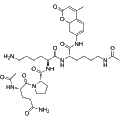
  • Ac-QPKK(Ac)-AMC
    Cat. No.
    A57031

    Ac-QPKK(Ac)-AMC

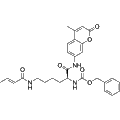
    Ac-QPKK(Ac)-AMC is a fluorogenic substrate specifically designed for sirtuin enzymes, facilitating the study of sirtuin-mediated deacetylation processes. This reagent enables the quantitative analysis of sirtuin activity, making it a valuable tool for investigating the role of sirtuins in various biological processes and disease states, including aging and metabolic disorders. Researchers can leverage Ac-QPKK(Ac)-AMC to explore sirtuin function in high-throughput screening assays and in-depth mechanistic studies.

    1 mg
    $230.00
    5 mg
    $585.00
    All 2 sizes
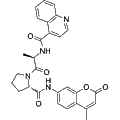
  • ARI-3144
    Cat. No.
    A64622

    ARI-3144

    ARI-3144 is a specific substrate for fibroblast activation protein (FAP), designed for effective detection and quantification. When coupled with the fluorophore 7-Amino-4-methylcoumarin (AMC), this substrate facilitates sensitive analysis of FAP activity in various biological samples. ARI-3144 is valuable in research applications related to cancer biology and tissue remodeling, enabling deeper insights into FAP functions and its role in disease progression.

    5 mg
    $335.00
    10 mg
    $515.00
    All 5 sizes
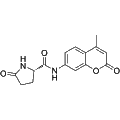
  • L-Pyroglutamic acid 7-amido-4-methylcoumarin
    Cat. No.
    A69435

    L-Pyroglutamic acid 7-amido-4-methylcoumarin

    L-Pyroglutamic acid 7-amido-4-methylcoumarin serves as a fluorogenic substrate for pyroglutamate aminopeptidase 1 (PGP-1). This compound exhibits biological activity by enabling the detection of PGP-1 enzymatic activity through fluorescence development. It is primarily utilized in biochemical assays for characterizing the enzyme's function and studying related pathways in research applications.

    Out of stock

    All 3 sizes
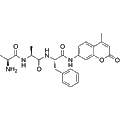
  • Ala-Ala-Phe-AMC
    Cat. No.
    A74254

    Ala-Ala-Phe-AMC

    Ala-Ala-Phe-AMC is a fluorogenic substrate primarily used for the detection of proteolytic activity. Its positively charged characteristics enhance its suitability for various biochemical assays, enabling researchers to investigate protease function in biological samples. This compound is valuable in studies related to protein turnover, cellular signaling, and disease mechanisms involving proteolysis.

    5 mg
    $100.00
    10 mg
    $160.00
    All 3 sizes
  • 4-Methylumbelliferyl β-D-Glucopyranoside
    Cat. No.
    A75029

    4-Methylumbelliferyl β-D-Glucopyranoside

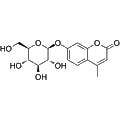
    4-Methylumbelliferyl β-D-Glucopyranoside serves as a fluorogenic substrate specifically for β-glucosidase, facilitating the measurement of β-glucosidase activity in various biological assays. Upon enzymatic cleavage, it releases 4-methylumbelliferone, a highly fluorescent compound with an emission maximum between 445-454 nm. The excitation wavelength of 4-methylumbelliferone is influenced by pH, showing peaks at 330, 370, and 385 nm at pH 4.6, 7.4, and 10.4, respectively, making it a valuable tool for studying enzyme kinetics and related research applications.

    50 mg
    $20.00
    100 mg
    $30.00
    All 5 sizes
  • 4-Methylumbelliferyl-α-D-Glucopyranoside
    Cat. No.
    A75051

    4-Methylumbelliferyl-α-D-Glucopyranoside

    Synonyms: 4-Methylumbelliferyl-α-D-Glucose; 4-Methylumbelliferyl-α-D-Glucoside; 4-MU-α-D-Glucopyranoside

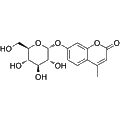
    4-Methylumbelliferyl-α-D-Glucopyranoside is a fluorescent substrate targeting α-glucosidase, which releases the fluorescent moiety 4-methylumbelliferyl (4-MU) upon enzymatic cleavage. This compound exhibits pH-dependent fluorescence, with excitation wavelengths of 320 nm in acidic conditions and 360 nm in alkaline conditions, while its emission increases between 445-455 nm as pH decreases. 4-Methylumbelliferyl-α-D-Glucopyranoside serves as a valuable biomarker for assessing α-glucosidase activity in infant blood spot samples, particularly in the context of Fabry and Pompe diseases.

    5 mg
    $20.00
    10 mg
    $25.00
    All 5 sizes
  • 7-Hydroxycoumarinyl arachidonate
    Cat. No.
    A76554

    7-Hydroxycoumarinyl arachidonate

    Synonyms: 7-HCA; Umbelliferyl Arachidonate; 7-HC-arachidonate

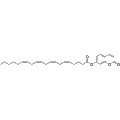
    7-Hydroxycoumarinyl arachidonate is a fluorogenic substrate for cytosolic phospholipase A2 (PLA2) and monoacylglycerol lipase (MAGL). Upon hydrolysis, it generates arachidonic acid (AA) and the highly fluorescent product 7-hydroxyl coumarin (7-HC). The production of 7-HC can be quantitatively assessed using a fluorometer, making this compound valuable for studies investigating the enzymatic activity of PLA2 and MAGL in various biological contexts.

    Out of stock

    All 3 sizes
  • Ac-LVSR-AMC
    Cat. No.
    A76593

    Ac-LVSR-AMC

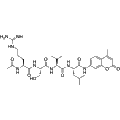
    Ac-LVSR-AMC is a tetrapeptide fluorescent substrate designed to quantitatively assess the specific activity of Malt1 protease in vitro. This compound serves as a valuable tool for studying proteolytic processes and Malt1-related signaling pathways. Its fluorogenic properties enable sensitive detection, making it suitable for applications in biochemical assays and research on immune responses.

    Out of stock

    All 3 sizes
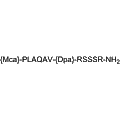
  • Mca-PLAQAV-Dpa-RSSSR-NH2
    Cat. No.
    A76832

    Mca-PLAQAV-Dpa-RSSSR-NH2

    Mca-PLAQAV-Dpa-RSSSR-NH2 is a fluorescent peptide designed as a substrate for TNF-α converting enzyme (TACE; ADAM17), ADAM9, and ADAM10. This peptide utilizes fluorescence resonance energy transfer to monitor enzymatic activity, enabling quantification through changes in fluorescence intensity. It is a valuable tool for studying the roles of these metalloproteinases in various biological processes and may facilitate research in cancer biology and inflammatory diseases.

    5 mg
    $190.00
    10 mg
    $310.00
    All 2 sizes
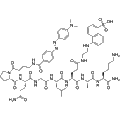
  • TNO211
    Cat. No.
    A76865

    TNO211

    Synonyms: Dabcyl-GABA-Pro-Gln-Gly-Leu-Glu(EDANS)-Ala-Lys-NH2

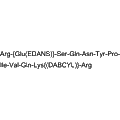
    TNO211 is a fluorogenic substrate designed for the specific detection of matrix metalloproteinase (MMP) activity. It contains a cleavable Gly-Leu bond, allowing for the precise identification of MMPs, and features a fluorophore/quencher pair consisting of EDANS and Dabcyl. This reagent operates optimally at excitation/emission wavelengths of 340/485 nm, making it suitable for various applications in biochemical and molecular biology research focused on MMP functions.

    Out of stock

    All 3 sizes
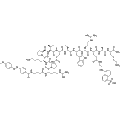
  • TNO003
    Cat. No.
    A76889

    TNO003

    TNO003 is a selective fluorogenic substrate that specifically targets stromelysin-1 (MMP-3). This reagent exhibits superior selectivity for MMP-3 over other matrix metalloproteinases, including MMP-1, MMP-2, MMP-7, MMP-8, MMP-9, and MMP-13. TNO003 is suitable for quantitative determination of stromelysin activity and can be utilized in fluorescence-based assays at an excitation/emission wavelength of 360/490 nm.

    Out of stock

    All 3 sizes
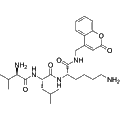
  • D-Val-Leu-Lys-AMC
    Cat. No.
    A77014

    D-Val-Leu-Lys-AMC

    D-Val-Leu-Lys-AMC is a selective fluorogenic peptide substrate for plasmin, enabling the quantification of its enzymatic activity. This compound exhibits increased fluorescence upon cleavage, facilitating studies in fibrinolysis and related processes. It is suitable for applications in enzyme activity assays, offering high sensitivity with excitation at 360-380 nm and emission at 440-460 nm.

    Out of stock

    All 3 sizes

Items 51-75 of 138

Added to your cart

View Cart Checkout

    Loading...