All Dyes

All Dyes is the single product list for the Fluorescent Dyes, Probes & Stains section. Many dyes here have no application or dye-family subcategory, so the list is the broadest way to browse the range. It suits searches by product name when the required dye is already known. Examples range from the near-infrared cyanine indocyanine green and the ratiometric calcium indicator Fura-2 pentapotassium to the nucleic acid stains Hoechst 33258 trihydrochloride and SYBR Green II. Classical stains such as hematoxylin, reactive labeling dyes and enzyme substrates are listed alongside them. For selection by task or by core structure, the parent Fluorescent Dyes, Probes & Stains page groups dyes by application and dye family.

Items 101-125 of 138

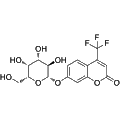
  • 4-Trifluoromethylumbelliferyl-ß-D-galactopyranoside
    Cat. No.
    A89851

    4-Trifluoromethylumbelliferyl-ß-D-galactopyranoside

    Synonyms: TFMU-Gal

    4-Trifluoromethylumbelliferyl-ß-D-galactopyranoside (TFMU-Gal) is a fluorogenic substrate primarily used in biochemical assays for the detection of ß-galactosidase activity. Upon enzymatic cleavage, TFMU-Gal releases a highly fluorescent product, making it a valuable tool in glycobiology research for studying glycosidase activity and carbohydrate metabolism. This compound is essential for understanding the role of glycosides in various biological processes.

    Out of stock

    All 3 sizes
  • NBD-sphinganine
    Cat. No.
    A90702

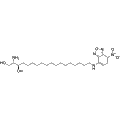
    NBD-sphinganine

    NBD-sphinganine is a fluorescent substrate for ceramide synthase (CerS), enabling the detection of CerS activity. Its fluorescence properties make it a valuable tool for studying sphingolipid metabolism and ceramide signaling pathways in various biological contexts. This compound is useful in research applications focusing on cell signaling, lipid biology, and related diseases.

    Out of stock

    All 3 sizes
  • Boc-Val-Gly-Arg-AMC
    Cat. No.
    A90892

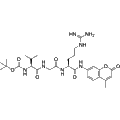
    Boc-Val-Gly-Arg-AMC

    Boc-Val-Gly-Arg-AMC is a peptide substrate designed for the analysis of proteasome activity. This compound serves as a sensitive fluorogenic reporter, enabling the quantification of proteolytic processes in biological samples. Its utility extends to various research applications, including drug discovery and the study of cellular protein degradation mechanisms.

    Out of stock

    All 3 sizes
  • 4-Methylumbelliferyl β-D-fucoside
    Cat. No.
    A91449

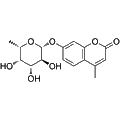
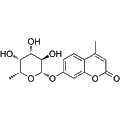
    4-Methylumbelliferyl β-D-fucoside

    4-Methylumbelliferyl β-D-fucoside is a fluorogenic substrate for the enzymatic detection of fucosidase activity. Upon hydrolysis by fucosidases, it releases 4-methylumbelliferone, which exhibits high fluorescent properties. This reagent is widely used in biochemical assays to study fucosidase activity in various biological samples, facilitating research in glycoprotein metabolism and cellular signaling pathways.

    25 mg
    $355.00
    50 mg
    $550.00
    All 4 sizes
  • 4-Methylumbelliferyl β-L-fucoside
    Cat. No.
    A91569

    4-Methylumbelliferyl β-L-fucoside

    Synonyms: 4-Methylumbelliferyl beta-L-fucopyranoside

    4-Methylumbelliferyl β-L-fucoside is a fucose derivative functioning as a fluorogenic substrate for β-L-fucosidase activity. This compound releases a fluorescent product upon cleavage, making it suitable for biochemical assays and glycobiology research. It enables the study of glycan metabolism and the characterization of fucosylated biomolecules, facilitating research in various biological systems.

    5 mg
    $105.00
    10 mg
    $130.00
    All 4 sizes
  • 4-Methylumbelliferyl 3,4,6-tri-O-acetyl-2-deoxy-2-trifluoroacetamido-α-D-glucopyranoside
    Cat. No.
    A92114

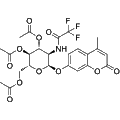
    4-Methylumbelliferyl 3,4,6-tri-O-acetyl-2-deoxy-2-trifluoroacetamido-α-D-glucopyranoside

    Synonyms: A-MUAA

    4-Methylumbelliferyl 3,4,6-tri-O-acetyl-2-deoxy-2-trifluoroacetamido-α-D-glucopyranoside functions as a fluorogenic substrate for carbohydrate-active enzymes, specifically glycosidases. This compound enables the quantitative detection of glycosidase activity through fluorescence emission, making it valuable in enzymology and carbohydrate metabolism research. It aids in studying enzymatic reactions and the characterization of glycosidase specificity, contributing to a better understanding of glycosylation processes in biological systems.

    5 mg
    $120.00
    10 mg
    $130.00
    All 3 sizes
  • 4-Methylumbelliferyl-β-D-lactoside
    Cat. No.
    A92737

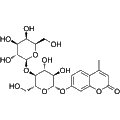
    4-Methylumbelliferyl-β-D-lactoside

    4-Methylumbelliferyl-β-D-lactoside is a fluorogenic substrate primarily targeting β-galactosidase, facilitating the study of enzyme activity in glycobiology. This compound is widely utilized in biochemical assays for the detection and quantification of β-galactosidase activity, making it valuable for research applications involving carbohydrate metabolism and glycan interactions.

    Out of stock

    All 3 sizes
  • Z-LRGG-AMC
    Cat. No.
    A92813

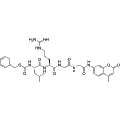
    Z-LRGG-AMC

    Synonyms: Z-Leu-Arg-Gly-Gly-AMC

    Z-LRGG-AMC (Z-Leu-Arg-Gly-Gly-AMC) is a fluorescent substrate that specifically targets proteases for hydrolysis, resulting in the release of the fluorescent molecule 7-amino-4-methylcoumarin (AMC). This compound is utilized in various research applications, particularly for studying protease activity in different biological systems. The fluorescence of AMC can be detected at an excitation/emission wavelength of 360/460 nm, making Z-LRGG-AMC a valuable tool for quantitative protease assays.

    Out of stock

    All 3 sizes
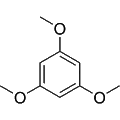
  • 1,3,5-Trimethoxybenzene
    Cat. No.
    A94345

    1,3,5-Trimethoxybenzene

    Synonyms: TRIMETHYL PHLOROGLUCINOL

    1,3,5-Trimethoxybenzene serves as a potent electrophilic substitution reaction substrate, primarily targeting free chlorine (Cl+) and free bromine (Br+). This compound exhibits selective electrophilic addition properties, allowing it to effectively quench residual oxidants and facilitate specific substitution reactions that produce stable halogenated products. It is valuable for water quality testing, enabling the quantitative analysis of free chlorine and bromine concentrations without compromising the stability of redox-sensitive disinfection byproducts. Additionally, in the field of phytochemistry, 1,3,5-Trimethoxybenzene plays a significant role in the study of pollination attraction mechanisms and is a key component of rose fragrance.

    5 g
    $20.00
    10 g
    $25.00
    All 7 sizes
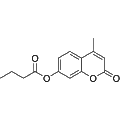
  • 4-Methylumbelliferyl butyrate
    Cat. No.
    B10995

    4-Methylumbelliferyl butyrate

    4-Methylumbelliferyl butyrate is a coumarin-based fluorogenic substrate primarily utilized for the identification of Moraxella catarrhalis C4-esterase. Upon enzymatic cleavage, it is converted to the highly fluorescent 4-methylumbelliferone, enabling sensitive detection and quantification of enzymatic activity. This reagent is valuable in biochemical assays and research applications involving enzyme kinetics and substrate specificity.

    25 mg
    $20.00
    50 mg
    $25.00
    All 5 sizes
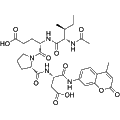
  • Ac-IEPD-AMC
    Cat. No.
    B11052

    Ac-IEPD-AMC

    Ac-IEPD-AMC is a fluorogenic substrate designed for the quantification of protease activity. Upon hydrolysis, Ac-IEPD-AMC releases the fluorescent molecule 7-amino-4-methylcoumarin (AMC), which exhibits strong fluorescence under UV illumination. This compound is valuable for investigating proteolytic enzyme functions and can be utilized in various assays to measure protease activities in biological samples.

    1 mg
    $65.00
    5 mg
    $165.00
    All 3 sizes
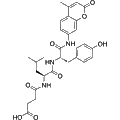
  • Suc-Leu-Tyr-AMC
    Cat. No.
    B11068

    Suc-Leu-Tyr-AMC

    Suc-Leu-Tyr-AMC is a fluorescent peptide substrate designed specifically for µ-calpain and m-calpain enzymes. It is characterized by an excitation wavelength of 360 nm and an emission wavelength of 460 nm, making it suitable for fluorescence-based assays. This reagent serves as a vital tool in studying calpain activity and related biological processes. Its application in research can aid in the understanding of proteolytic cleavage and its implications in various physiological and pathological conditions.

    1 mg
    $30.00
    5 mg
    $70.00
    All 7 sizes
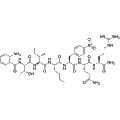
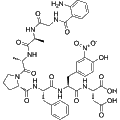
  • Abz-Thr-Ile-Nle-p-nitro-Phe-Gln-Arg-NH2
    Cat. No.
    B11080

    Abz-Thr-Ile-Nle-p-nitro-Phe-Gln-Arg-NH2

    Abz-Thr-Ile-Nle-p-nitro-Phe-Gln-Arg-NH2 is a fluorogenic substrate designed for use in fluorescence-based screening assays. This compound exhibits enhanced fluorescence upon enzymatic cleavage, making it suitable for the study of enzymatic activity and proteolytic processes. Its applications extend to substrate specificity assays and the characterization of proteases in various biological research contexts.

    1 mg
    $80.00
    5 mg
    $205.00
    All 3 sizes
  • Lys-Pro-AMC
    Cat. No.
    B11098

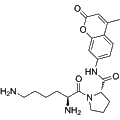
    Lys-Pro-AMC

    Lys-Pro-AMC is a fluorogenic substrate designed for the detection and quantification of specific enzyme activities. Upon cleavage by target enzymes, it releases a highly fluorescent product that can be easily measured, providing a sensitive assay for enzyme kinetics and activity. This substrate is useful in various research applications, including enzyme characterization, drug screening, and biochemical studies focused on proteolytic activity.

    Out of stock

    All 3 sizes
  • Bz-RGFFL-4MβNA
    Cat. No.
    B11130

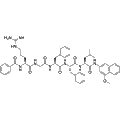
    Bz-RGFFL-4MβNA

    Synonyms: Bz-Arg-Gly-Phe-Phe-Leu-4MβNA

    Bz-RGFFL-4MβNA is a fluorogenic peptide substrate with the sequence Bz-Arg-Gly-Phe-Phe-Leu-4MβNA. This compound is designed for use in enzymatic assays and can facilitate the study of protease activity. Its unique fluorescent properties allow for sensitive detection and quantification in various biological research applications, providing valuable insights into cellular processes and enzyme kinetics.

    Out of stock

    All 3 sizes
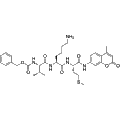
  • Z-Val-Lys-Met-AMC
    Cat. No.
    B11138

    Z-Val-Lys-Met-AMC

    Z-Val-Lys-Met-AMC is a fluorescent substrate designed to detect β-secretase activity, specifically targeting cathepsin B. This compound can be utilized in research applications focused on Alzheimer's disease and other neurodegenerative disorders, facilitating the study of proteolytic enzymes involved in pathogenesis. The fluorescent nature of this substrate allows for easy monitoring and quantification of enzyme activity in vitro.

    Out of stock

    All 3 sizes
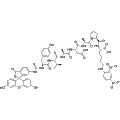
  • FITC-YVADAPK(Dnp)
    Cat. No.
    B11142

    FITC-YVADAPK(Dnp)

    FITC-YVADAPK(Dnp) is a fluorogenic substrate primarily used to study caspase-1 activity. Upon cleavage by caspase-1, the fluorescence intensity increases, allowing for quantitative analysis of enzyme activity in various biological samples. This reagent is suitable for applications in apoptosis research and the investigation of inflammatory responses.

    Out of stock

    All 3 sizes
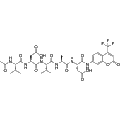
  • Ac-VDVAD-AFC
    Cat. No.
    B11148

    Ac-VDVAD-AFC

    Ac-VDVAD-AFC is a caspase-specific fluorescent substrate designed for the detection of caspase-3 and caspase-2 activities. This reagent serves as a valuable tool for studying apoptosis and investigating mechanisms involved in tumorigenesis and cancer progression. Its fluorescent properties enable quantitative measurement, facilitating research in cell death and therapeutic responses in cancer models.

    25 mg
    $1,010.00
    All 1 sizes
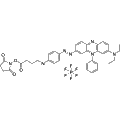
  • (BHQ-3)-OSu hexafluorophosphate
    Cat. No.
    B11149

    (BHQ-3)-OSu hexafluorophosphate

    (BHQ-3)-OSu hexafluorophosphate is a chemical reagent employed in fluorescent labeling of protease substrates. It serves as a vital tool for investigating protease activity, enabling precise tracking and measurement through fluorescence detection. This compound is particularly useful in applications involving cell biology, biochemistry, and molecular research, facilitating the study of enzyme kinetics and signaling pathways.

    5 mg
    $270.00
    25 mg
    $1,285.00
    All 3 sizes
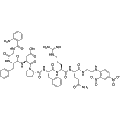
  • Abz-GFDPFRQ-EDDnp
    Cat. No.
    B11167

    Abz-GFDPFRQ-EDDnp

    Abz-GFDPFRQ-EDDnp is a fluorogenic substrate targeting metallothionein oligopeptidase, with excitation and emission wavelengths of 320 nm and 420 nm, respectively. This compound is instrumental in assessing the enzymatic activity of metallothionein oligopeptidase in tissue extracts. Its applications extend to research studies focused on temporal lobe epilepsy, facilitating insights into the enzyme's role in neurological processes.

    Out of stock

    All 3 sizes
  • Fluorescent Substrate for Pro-Specific Proteases
    Cat. No.
    B11172

    Fluorescent Substrate for Pro-Specific Proteases

    Fluorescent Substrate for Pro-Specific Proteases is designed to selectively measure the activity of pro-specific proteases. This substrate emits fluorescence upon hydrolysis, allowing for the quantitative assessment of enzyme activity in various biological samples. It is suitable for applications in enzyme kinetics, protease activity assays, and for understanding proteolytic processes in cellular environments.

    Out of stock

    All 3 sizes
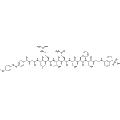
  • Dabcyl-GLRTQSFS-EDANS
    Cat. No.
    B11181

    Dabcyl-GLRTQSFS-EDANS

    Dabcyl-GLRTQSFS-EDANS is a fluorogenic peptide substrate designed to assess the enzymatic activity of Hepatitis A Virus 3C proteinase. This substrate provides a means to study proteolytic processes and the dynamics of viral infections. Its fluorescent characteristics enable the sensitive detection of enzymatic cleavage, making it a valuable tool in virology research and drug development studies.

    Out of stock

    All 3 sizes
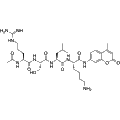
  • Ac-RSLK-AMC
    Cat. No.
    B11184

    Ac-RSLK-AMC

    Ac-RSLK-AMC is a fluorogenic peptide substrate designed to target site-1 protease (S1P). It serves as a powerful tool for quantifying the enzymatic activity of S1P in biochemical assays. This reagent is instrumental in studies related to proteolytic processing, providing insights into cellular mechanisms and regulatory pathways influenced by S1P activity.

    Out of stock

    All 3 sizes
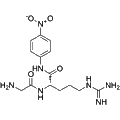
  • Gly-Arg-pNA
    Cat. No.
    B11185

    Gly-Arg-pNA

    Gly-Arg-pNA is a fluorogenic substrate utilized for the assessment of protease activity. Upon hydrolysis, it releases p-nitroaniline, a compound that exhibits fluorescence under ultraviolet light. This property enables the quantification of protease activity through the measurement of emitted fluorescent signals, making it a valuable tool in biochemical and molecular research applications.

    Out of stock

    All 3 sizes
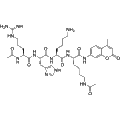
  • Ac-RHKK(Ac)-AMC
    Cat. No.
    B11195

    Ac-RHKK(Ac)-AMC

    Ac-RHKK(Ac)-AMC is a fluorescent substrate designed for the investigation of SITR6 activity, which plays a role in the regulation of p53. By mimicking the H3K56 deacetylation site, this compound enhances the deacetylation signal while maintaining a low signal-to-background ratio. Ac-RHKK(Ac)-AMC is suitable for applications in aging and cancer research, providing valuable insights into the dynamics of protein acetylation and its implications in cellular processes.

    1 mg
    $40.00
    5 mg
    $100.00
    All 3 sizes

Items 101-125 of 138

Added to your cart

View Cart Checkout

    Loading...