Search by product name, CAS, target or catalog number. Press Down Arrow to reach product suggestions, Tab to move between links, and Escape to close suggestions.
USD – US Dollar✓Current currency
Account
Fluorescent Labeling Dyes
Begin with the molecule you want to label and the functional group available for reaction. The examples below compare the free-acid and succinimidyl-ester forms of 5(6)-TAMRA using documented coupling examples. [1][2] Check whether activation is required and whether the reaction partner matches the method. Treat general coupling chemistry as a planning principle, not a promise of performance, and assess the resulting conjugate separately from the starting dye. [2][3]
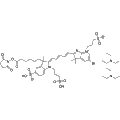
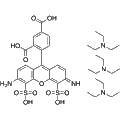
Alexa Fluor 680 NHS ester diTEA is a near-infrared (NIR) fluorescent dye that facilitates the labeling of primary amines in proteins, amine-modified oligonucleotides, and other amine-containing compounds. Utilizing its NHS ester functionality, this dye allows for efficient conjugation to amine groups, providing enhanced fluorescent properties (Ex/Em = 679/702 nm). It is particularly useful in various applications such as molecular imaging, fluorescence microscopy, and flow cytometry, enabling researchers to study biochemical interactions with high sensitivity.
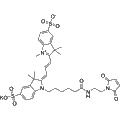
Sulfo-Cy3 maleimide potassium is a fluorescent dye that features a maleimide group linked by a short alkyl chain. This reagent is primarily employed for the specific labeling of antibodies and sensitive proteins, enabling enhanced visualization in various biological assays. Its strong fluorescent properties facilitate applications in immunofluorescence and other microscopy techniques, making it a valuable tool for researchers in chemical biology and protein analysis.
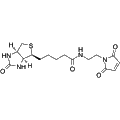
Biotin-C2-maleimide is a versatile linking agent that targets thiol groups in biomolecules via maleimide chemistry. This compound facilitates the conjugation of biotin to proteins and other molecules while preserving their native biological activity. It is commonly used in various applications, including protein labeling, affinity purification, and detection methods in biochemical research.
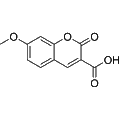
7-Methoxycoumarin-3-carboxylic acid is a fluorescent dye that exhibits excitation at 355 nm and emission at 405 nm. This compound is utilized for peptide labeling, making it valuable in various biological research applications, including biochemical assays and imaging studies. Its fluorescence properties enhance visualization and tracking of peptides in cellular and molecular studies.
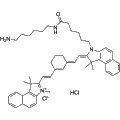
Cyanine7.5 amine is a near-infrared (NIR) fluorescent dye characterized by its free amino group, which enables coupling with activated carboxylic acid derivatives. This unique feature allows for versatile applications in bioconjugation and labeling studies. With its strong fluorescence properties, Cyanine7.5 amine is ideally suited for applications in imaging, diagnostics, and other research endeavors that require high sensitivity and specificity in detection.
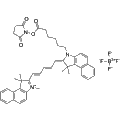
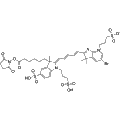
Cyanine5.5 NHS ester tetrafluoroborate is a fluorescent dye that functions as a labeling reagent, enabling the conjugation of biomolecules. This compound exhibits strong fluorescence properties, making it suitable for imaging and detection applications in various biological assays. It can intercalate with double-helical DNA, resulting in enhanced fluorescence upon binding, thereby facilitating studies in molecular biology and biochemistry.
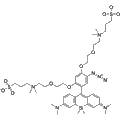
CalFluor 647 azide is a fluorogenic azide probe that is activated through Cu-catalyzed or metal-free click reactions. This reagent remains non-fluorescent until it reacts with terminal alkynes, offering a highly efficient method for labeling biomolecules in chemical biology studies. It is particularly valuable for applications in bioorthogonal labeling, imaging, and tracking of cellular processes.
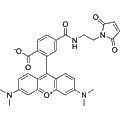
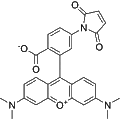
6-TAMRA maleimide is a fluorescent dye that targets thiol groups through its maleimide moiety. It is commonly used in biochemical assays for labeling proteins and biomolecules, allowing for sensitive detection and visualization. This reagent is particularly valuable in various applications including flow cytometry, fluorescence microscopy, and protein conjugation studies.
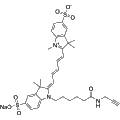
DiSulfo-Cy5 alkyne is a click chemistry reagent featuring a fluorescent dye. It enables efficient labeling of biomolecules through the copper-catalyzed azide-alkyne cycloaddition reaction. This compound is particularly useful in applications such as live-cell imaging, bioconjugation, and the development of fluorescent biosensors. Its strong fluorescence properties enhance the visibility of targeted structures in diverse biological research settings.
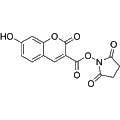
7-Hydroxycoumarin-3-carboxylic acid N-succinimidyl ester is an amine-reactive derivative of 7-Hydroxycoumarin-3-carboxylic acid, serving as a fluorescent dye. This compound exhibits blue fluorescence, making it suitable for the labeling of proteins and nucleic acids in various biological research applications. Its ability to conjugate with amines facilitates its use in tracking and visualization studies in cellular and molecular biology.
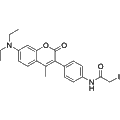
DCIA is a fluorescent dye that features a coumarin fluorophore, enabling specific conjugation to free cysteines in proteins. This property makes DCIA a valuable tool for the study of protein localization and interactions. Its applications include protein labeling and tracking in various biological systems, aiding in the visualization and analysis of protein dynamics in research studies.
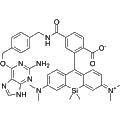
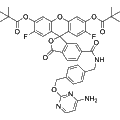
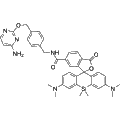
SiR-SNAP is a near-infrared fluorescent probe labeled with SiR, specifically targeting the SNAP tag (Ex/Em: 645 nm/661 nm). This reagent offers optimal optical properties and high cell membrane permeability, making it ideal for dynamic studies of protein behavior in living cells. Its environmentally sensitive fluorescence enhances the visualization of protein interactions and localization, facilitating advanced research in cellular biology.
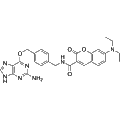
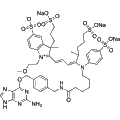
SNAP-430 is a fluorescent probe labeled with (diethylamino) coumarin, designed for use with the SNAP-tag technology. This reagent facilitates the development of SNAP-tag fusion proteins in living cells, on cell surfaces, or in vitro, enabling real-time monitoring of protein dynamics and localization. Its application is crucial for studies involving protein interactions, gene expression, and cellular imaging.
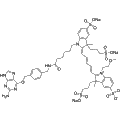
SNAP-649 is a fluorescent probe that utilizes a DY-649P1 label for enhanced imaging capabilities. It selectively targets SNAP tags, allowing for precise visualization of protein localization and dynamics in live cells. This probe is suitable for applications in cellular imaging, protein interaction studies, and monitoring biological processes in real-time.
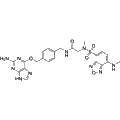
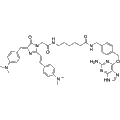
BGSBD is a SNAP-tag-based fluorescent probe that exhibits excitation and emission maxima at 435 nm and 516 nm, respectively. This probe is engineered with the environmentally sensitive SBD fluorescent group, allowing for direct protein labeling in live cells without the need for washing steps. BGSBD demonstrates a significant fluorescence enhancement of 280-fold upon labeling, leveraging the hydrophobic binding pocket of the SNAP-tag protein. This unique characteristic makes it a valuable tool for real-time visualization and monitoring of protein dynamics within cellular environments.
BC-OG is a fluorescent probe labeled with Oregon Green, designed to specifically target CLIP-tagged fusion proteins. This reagent enables effective labeling of CLIP-tag fusion proteins within cellular environments, facilitating visualization and tracking in various biological studies. BC-OG is ideal for applications in protein interaction and localization analyses, contributing to advancements in cell biology research.
BG-Kaede chromophore is a fluorescent probe specifically designed for SNAP-tag labeling, utilizing the chromophore of the red fluorescent protein Kaede. This compound serves as a valuable tool for visualizing proteins in living cells, enabling real-time monitoring of protein dynamics and interactions. Its distinct fluorescent properties aid in various applications including cellular imaging and tracking of protein localization in biological research.
SNAP-549 is a DY-549P1-labeled fluorescent probe targeting SNAP-tag fusion proteins. This compound is designed for single-molecule imaging and dynamic tracking of proteins within living cells, ensuring low background signals and forming irreversible connections. Its specificity and durability make SNAP-549 an ideal tool for long-term observations in cellular studies.
SiR-CLIP is a SiR-carboxyl derivative that serves as a fluorescent dye for the covalent labeling of CLIP tags. This reagent enables precise visualization of proteins and other biomolecules tagged with CLIP tags in live cell imaging and protein tracking studies. SiR-CLIP is valuable for applications in cellular biology and biochemistry, contributing to the understanding of protein interactions and dynamics.
5(6)-CR6G,SE (5(6)-Carboxyrhodamine 6G) is a fluorescent labeling reagent designed for fluorescence imaging applications, particularly in protein crystallization studies. This compound effectively binds to proteins, resulting in distinct fluorescence under defined excitation conditions. It has a peak absorption wavelength of approximately 525 nm and emits fluorescence with a peak wavelength around 550 nm when excited by a 530 nm green LED, making it an essential tool for visualizing protein interactions and dynamics in various research contexts.
BP Fluor 488 acid triTEA is a labeling dye that targets amine groups in antibodies, proteins, peptides, amino-modified oligonucleotides, and other biomolecules. It features an excitation peak at 499 nm and an emission peak at 520 nm, making it suitable for a variety of fluorescent applications. The resulting conjugates are extensively utilized in microscopy and flow cytometry, facilitating the visualization and analysis of cellular components.
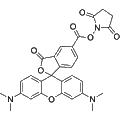
5-TAMRA-NHS is a fluorescent dye utilizing a hydroxysuccinimide (NHS) group, which enables the covalent labeling of amine-containing biomolecules. This reagent exhibits strong fluorescent properties, with excitation and emission wavelengths of 541 nm and 567 nm, respectively. It is widely used in fluorescent imaging applications and assays, allowing for effective visualization and tracking of cellular processes in research settings.
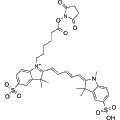
MeCY5-NHS ester is a reactive dye that facilitates the covalent labeling of proteins and nucleic acids. This compound is particularly useful in fluorescence-based applications, enabling the visualization and tracking of biomolecules in complex biological systems. Its strong fluorescence properties make it an essential tool for various research applications, including imaging and analysis in cellular and molecular biology.
Alexa Fluor 680 NHS ester is a near-infrared (NIR) fluorescent dye that targets primary amines through its NHS ester functionality. It effectively labels proteins, amine-modified oligonucleotides, and other amine-containing molecules, emitting fluorescence with an excitation wavelength of 679 nm and an emission wavelength of 702 nm. This reagent is ideal for applications in imaging, diagnostics, and various studies requiring sensitive detection methods in the near-infrared spectrum.
Tetramethylrhodamine-5-maleimide is a fluorescent dye that primarily targets thiol groups in biomolecules. This dye exhibits high quantum yield and excellent photostability, making it suitable for live-cell imaging and fluorescence microscopy. It is widely utilized in biological research for tracking protein interactions, evaluating cellular functions, and studying tissue pathology. Additionally, Tetramethylrhodamine-5-maleimide can assist in the detection of biomolecules and distinguishing different cell types, thereby facilitating a range of applications from basic research to diagnostic endeavors.
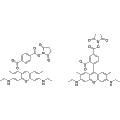
The free acid and succinimidyl ester are different reagents. A study coupled 5(6)-TAMRA-COOH to a cyclic beta-tripeptide using PyBOP-mediated activation. A separate study used 5(6)-succinimidyl TAMRA with cystamine. These examples establish specific reactions, not universal labeling conditions. [1][2]
Identify the reaction partner.
For amine coupling, distinguish activation of a carboxylic acid from reaction of an already activated ester. For azide chemistry more generally, copper-catalyzed and strain-promoted azide–alkyne routes have different partner and catalyst requirements. These are general principles, separate from the specific examples in the table. [3]
Evaluate the product of labeling.
TAMRA derivative formation changed optical behavior in the cited dimer study. Do not assign a conjugate’s reported fluorescence to the starting reagent or transfer performance between different isomer forms. [2]
Representative Reagent Comparison
Selected examples for this topic; independent of the current product page or filters.
Representative reagents and selection considerations
Attachment to an amine-bearing cyclic beta-tripeptide scaffold.
The reported synthesis used PyBOP and DIEA for coupling. This is an activation-dependent example, not a ready-made NHS ester or a universal biomolecule-labeling recipe. [1]
Reaction with cystamine hydrochloride to prepare a TAMRA disulfide dimer.
Already supplied as an activated ester. The paper supports this specific derivatization; the dimer’s optical properties should not be assigned to the starting ester. [2]
Attachment to an amine-bearing cyclic beta-tripeptide scaffold.
Activation / selection boundary
The reported synthesis used PyBOP and DIEA for coupling. This is an activation-dependent example, not a ready-made NHS ester or a universal biomolecule-labeling recipe. [1]
Reaction with cystamine hydrochloride to prepare a TAMRA disulfide dimer.
Activation / selection boundary
Already supplied as an activated ester. The paper supports this specific derivatization; the dimer’s optical properties should not be assigned to the starting ester. [2]
Check the reagent form, reaction partner and method requirements before labeling. These examples do not promise labeling efficiency or compatibility with every sample.