All Dyes

All Dyes is the single product list for the Fluorescent Dyes, Probes & Stains section. Many dyes here have no application or dye-family subcategory, so the list is the broadest way to browse the range. It suits searches by product name when the required dye is already known. Examples range from the near-infrared cyanine indocyanine green and the ratiometric calcium indicator Fura-2 pentapotassium to the nucleic acid stains Hoechst 33258 trihydrochloride and SYBR Green II. Classical stains such as hematoxylin, reactive labeling dyes and enzyme substrates are listed alongside them. For selection by task or by core structure, the parent Fluorescent Dyes, Probes & Stains page groups dyes by application and dye family.

Items 2251-2275 of 2505

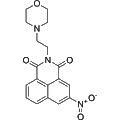
  • LysoFP-NO2
    Cat. No.
    B11087

    LysoFP-NO2

    LysoFP-NO2 is a turn-on fluorescent probe specifically designed for the detection of carbon monoxide (CO) in lysosomal compartments. Upon interaction with lysosomal CO, LysoFP-NO2 is converted to the highly fluorescent LysoFP-NH2, enabling enhanced detection capabilities. This probe exhibits remarkable selectivity for CO, distinguishing it from various reactive nitrogen, oxygen, and sulfur species. It has excitation and emission maxima at 440 nm and 528 nm, respectively, and demonstrates low cytotoxicity in HepG2 cells at a concentration of 30 μM for up to five hours, making it suitable for various cellular imaging applications.

    1 mg
    $65.00
    5 mg
    $175.00
    All 4 sizes
  • Cyanine
    Cat. No.
    B11088

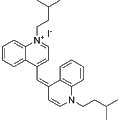
    Cyanine

    Synonyms: Quinoline Blue

    Cyanine is a versatile fluorescent core scaffold that serves as a foundation for the development of fluorescent probes. Its ability to undergo covalent conjugation with various potent compounds enhances their efficacy and broadens their application potential. Cyanine is particularly valuable in the advancement of theranostic agents for cancer treatment and is widely utilized in cancer research for imaging and diagnostic purposes.

    5 mg
    $20.00
    10 mg
    $30.00
    All 6 sizes
  • Fluorescent brightener 28 (Technical Grade)
    Cat. No.
    B11090

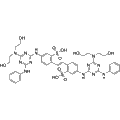
    Fluorescent brightener 28 (Technical Grade)

    Fluorescent Brightener 28 is a fluorescent whitening agent and photoinitiator that enhances brightness in textile applications. It effectively stains polysaccharides like cellulose, weakly labeling the cytoplasm and intensely marking the cell nucleus upon plasma membrane disruption. This compound is also employed for detecting intracellular chitin within living cells and serves as a light-sensitive photoinitiator for free radical photopolymerizations using visible LED light. Its versatile applications make it a valuable tool in both biological research and material science.

    10 mg
    $40.00
    25 mg
    $75.00
    All 3 sizes
  • NIR-641 N-succinimidyl ester bromide
    Cat. No.
    B11091

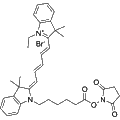
    NIR-641 N-succinimidyl ester bromide

    NIR-641 N-succinimidyl ester bromide is a fluorescent dye that primarily targets amine groups for conjugation in biomolecular studies. It exhibits high sensitivity and stability, making it suitable for a variety of imaging applications. This reagent is particularly valuable for visualizing cellular processes, assessing gene expression, and enhancing detection in various fluorescence-based assays.

    5 mg
    $165.00
    10 mg
    $250.00
    All 2 sizes
  • Boc-Gln-Arg-Arg-AMC
    Cat. No.
    B11093

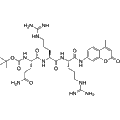
    Boc-Gln-Arg-Arg-AMC

    Boc-Gln-Arg-Arg-AMC is a fluorogenic substrate specifically designed for the assessment of protease activity. Upon hydrolysis, this compound releases the fluorescent product 7-amino-4-methylcoumarin (AMC), which exhibits fluorescence under ultraviolet light. This property makes Boc-Gln-Arg-Arg-AMC a valuable tool in biochemical research for studying protease functions and kinetics in various biological systems.

    Out of stock

    All 3 sizes
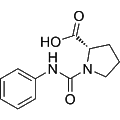
  • 1-(Anilinocarbonyl)proline
    Cat. No.
    B11094

    1-(Anilinocarbonyl)proline

    1-(Anilinocarbonyl)proline serves as a probe targeting key pathways involved in Huntington's disease pathology. This compound has shown potential in identifying dual-action mechanisms within cellular models of the disease. Its application facilitates the investigation of therapeutic strategies aimed at mitigating neurodegeneration associated with Huntington's, making it a valuable tool for biochemical and pharmacological research.

    2 mg
    $20.00
    5 mg
    $55.00
    All 6 sizes
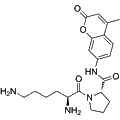
  • Lys-Pro-AMC
    Cat. No.
    B11098

    Lys-Pro-AMC

    Lys-Pro-AMC is a fluorogenic substrate designed for the detection and quantification of specific enzyme activities. Upon cleavage by target enzymes, it releases a highly fluorescent product that can be easily measured, providing a sensitive assay for enzyme kinetics and activity. This substrate is useful in various research applications, including enzyme characterization, drug screening, and biochemical studies focused on proteolytic activity.

    Out of stock

    All 3 sizes
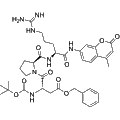
  • Boc-Asp(OBzl)-Pro-Arg-AMC
    Cat. No.
    B11099

    Boc-Asp(OBzl)-Pro-Arg-AMC

    Boc-Asp(OBzl)-Pro-Arg-AMC is a fluorogenic substrate specifically designed for assessing protease activity. Upon hydrolysis, this compound releases 7-amino-4-methylcoumarin (AMC), a fluorescent product, allowing for quantitative analysis. The substrate exhibits excitation and emission wavelengths at 351 nm and 430 nm, respectively, making it suitable for various fluorescence-based assays in proteomics and enzymology research.

    Out of stock

    All 3 sizes
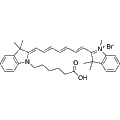
  • Cyanine 7 free acid bromide
    Cat. No.
    B11101

    Cyanine 7 free acid bromide

    Cyanine 7 free acid bromide is a near-infrared fluorescent dye that targets amine groups on biomolecules, including antibodies, nucleic acids, and proteins. This reagent facilitates the labeling process, allowing for sensitive detection using various fluorescence techniques such as microscopy and flow cytometry. Its application in biological research supports studies in cellular imaging and molecular interaction analysis.

    1 mg
    $100.00
    5 mg
    $220.00
    All 3 sizes
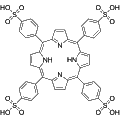
  • TPPS
    Cat. No.
    B11102

    TPPS

    TPPS is a non-cytotoxic tumor probe that selectively targets and highlights tumor locations in various biological systems. Its unique photonic properties enable effective tumor imaging, making it a valuable tool in cancer research and diagnostics. TPPS is instrumental in facilitating studies aimed at understanding tumor heterogeneity and evaluating therapeutic responses.

    50 mg
    $45.00
    100 mg
    $70.00
    All 2 sizes
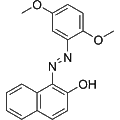
  • Citrus red 2
    Cat. No.
    B11103

    Citrus red 2

    Synonyms: C.I. Solvent red 80

    Citrus Red 2 is a synthetic fluorescent dye known for its strong coloring properties and antioxidant effects. It is primarily utilized in food and cosmetic applications to impart vibrant coloration. Additionally, Citrus Red 2 serves as a reference substance in various analytical tests, contributing to the accuracy and consistency of research findings.

    1 mg
    $30.00
    5 mg
    $95.00
    All 4 sizes
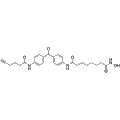
  • SAHA-BPyne
    Cat. No.
    B11105

    SAHA-BPyne

    SAHA-BPyne is an activity-based protein profiling (ABPP) probe designed for the detection of histone deacetylase (HDAC) activity. This compound covalently labels proximal proteins upon photoactivation, allowing for enhanced profiling of HDAC dynamics. SAHA-BPyne exhibits inhibitory activity against HDAC in HeLa nuclear lysates, offering an IC50 of less than 5 μM, making it a valuable tool for research applications involving epigenetics and protein modification studies.

    0.1 mg
    $270.00
    1 mg
    $1,320.00
    All 3 sizes
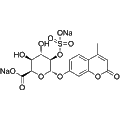
  • 4-Methylumbelliferyl-α-L-iduronide 2-sulfate sodium
    Cat. No.
    B11106

    4-Methylumbelliferyl-α-L-iduronide 2-sulfate sodium

    Synonyms: 4-MU-α-idoa 2-sulfate sodium

    4-Methylumbelliferyl-α-L-iduronide 2-sulfate sodium is a fluorogenic substrate specifically for iduronate-2-sulfatase (I2S). Upon hydrolysis by the lysosomal enzyme α-L-iduronidase (IDUA), it releases the fluorophore 4-Methylumbelliferone, allowing for sensitive detection of enzymatic activity. This reagent is particularly useful in research focused on lysosomal storage disorders, including Hurler syndrome, facilitating the assessment of enzyme function and disease progression.

    1 mg
    $530.00
    All 1 sizes
  • DCP-Bio3
    Cat. No.
    B11109

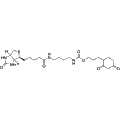
    DCP-Bio3

    DCP-Bio3 is a biotin-coupled probe designed for the detection of labeled proteins in polyacrylamide gels. This reagent facilitates the identification of oxidized and modified proteins, making it a valuable tool in research applications focused on protein modifications and redox biology. Its ability to selectively bind biotinylated targets enhances its utility in various biochemical assays and protein analysis workflows.

    0.5 mg
    $210.00
    1 mg
    $370.00
    All 3 sizes
  • Cy5.5 bis-COOH bromide
    Cat. No.
    B11112

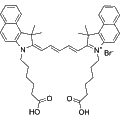
    Cy5.5 bis-COOH bromide

    Cy5.5 bis-COOH bromide is a fluorescent dye that features carboxyl groups enabling the formation of covalent bonds with amines. It exhibits absorption and emission maxima at 680 nm and 710 nm, respectively. This reagent is ideal for applications in fluorescence imaging, providing enhanced sensitivity and specificity in labeling and detecting biomolecules in various biological assays.

    5 mg
    $445.00
    10 mg
    $670.00
    All 2 sizes
  • Melanin probe-1
    Cat. No.
    B11114

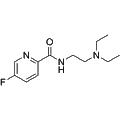
    Melanin probe-1

    Melanin probe-1 is an 18F-picolinamide-based PET imaging reagent targeting melanin. It is designed for the in vivo imaging of malignant melanoma, demonstrating high tumor targeting efficiency and excellent imaging contrast. With favorable biodistribution patterns and stability, this probe is an effective tool for studying melanoma progression and treatment responses in preclinical research.

    2 mg
    $55.00
    5 mg
    $100.00
    All 6 sizes
  • Tropaeolin O
    Cat. No.
    B11115

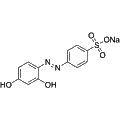
    Tropaeolin O

    Tropaeolin O is an acidic monoazo dye that participates in a coupling reaction at pH 10.5, resulting in the formation of a blue disazo dye. This compound is utilized in analytical chemistry for the detection and quantification of palladium(II), osmium(IV), albumin, and casein. Its unique properties make it valuable for various biochemical assays and research applications.

    25 mg
    $20.00
    50 mg
    $25.00
    All 4 sizes
  • DAR-4M
    Cat. No.
    B11116

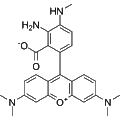
    DAR-4M

    DAR-4M is a fluorescent indicator specifically designed for the detection of nitric oxide (NO), utilizing the rhodamine chromophore. With excitation and emission wavelengths of 550 nm and 572 nm, respectively, this reagent enables sensitive and selective measurement of NO levels in biological systems. It is particularly useful in fluorescence microscopy and cellular studies involving nitric oxide signaling pathways.

    1 mg
    $470.00
    All 1 sizes
  • BP Fluor 488 DBCO
    Cat. No.
    B11118

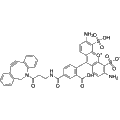
    BP Fluor 488 DBCO

    BP Fluor 488 DBCO is a fluorescent dye designed for use in copper-free Click Chemistry reactions, specifically targeting azide-containing biomolecules such as antibodies, proteins, and peptides. It exhibits strong fluorescent properties, with an excitation peak at 499 nm and an emission peak at 520 nm, making it suitable for applications in microscopy and flow cytometry. This dye is derived from a pure 5-sulfonated rhodamine molecule, ensuring consistent performance and minimizing lot-to-lot variability caused by isomer ratio differences.

    5 mg
    $600.00
    10 mg
    $985.00
    All 4 sizes
  • Hexaammineruthenium(II) chloride
    Cat. No.
    B11119

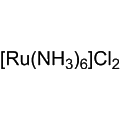
    Hexaammineruthenium(II) chloride

    Hexaammineruthenium(II) chloride is a coordination compound known for its application as a fluorescent dye. This compound is utilized in a variety of chemical reactions, including hydrogenation, isomerization, and oxidation, and acts as a redox probe in electroanalytical techniques. Its unique properties make it suitable for diverse research applications, particularly in studies related to redox processes and fluorescent imaging.

    25 mg
    $25.00
    50 mg
    $35.00
    All 5 sizes
  • HL1
    Cat. No.
    B11120

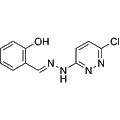
    HL1

    HL1 is a tridentate Schiff base ligand that serves as a fluorescent probe for metal ions. This compound exhibits photoluminescence upon excitation, with peak emissions observed at wavelengths of 415 nm, allowing for sensitive detection of metal ion interactions. HL1 is suitable for various research applications, including metal ion probing in biological systems and environmental analysis.

    5 mg
    $50.00
    10 mg
    $80.00
    All 5 sizes
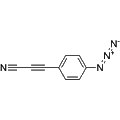
  • APN-Azide
    Cat. No.
    B11121

    APN-Azide

    Synonyms: 3-(4-Azidophenyl)propiolonitrile

    APN-Azide (3-(4-Azidophenyl)propiolonitrile) serves as a fluorescent dye, enabling selective labeling of target molecules due to its distinctive chemical structure. This compound is instrumental for bioimaging applications and the creation of molecular probes aimed at investigating various biological processes within cellular environments. Its codon-active properties enhance its utility in detailed studies of cellular and molecular dynamics.

    25 mg
    $80.00
    50 mg
    $120.00
    All 2 sizes
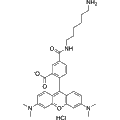
  • TAMRA amine, 5-isomer hydrochloride
    Cat. No.
    B11124

    TAMRA amine, 5-isomer hydrochloride

    TAMRA amine, 5-isomer hydrochloride is a fluorescent dye with excitation and emission maxima at 553 nm and 575 nm, respectively. The primary mechanism involves the amine group, which exhibits reactivity towards carboxylic acids, activated NHS esters, and carbonyl groups, including ketones and aldehydes. This versatility enables its application in a variety of labeling and tagging studies, facilitating visualization in biochemical assays and cellular imaging.

    5 mg
    $130.00
    10 mg
    $175.00
    All 3 sizes
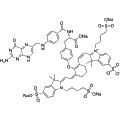
  • Pafolacianine tetrasodium
    Cat. No.
    B11126

    Pafolacianine tetrasodium

    Synonyms: OTL 38 tetrasodium

    Pafolacianine tetrasodium is a fluorescent imaging agent utilizing a near-infrared dye for the detection of tumor lesions in surgical settings. It excites at wavelengths of 774 to 775 nm and emits fluorescence at 794 to 796 nm, providing precise visualization of malignancies. This compound is instrumental in real-time imaging applications, enhancing the operational accuracy and efficacy during tumor resections.

    Out of stock

    All 3 sizes
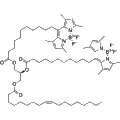
  • 18:1-C11 BODIPY 505/515-C11 BODIPY 505/515 TG
    Cat. No.
    B11129

    18:1-C11 BODIPY 505/515-C11 BODIPY 505/515 TG

    18:1-C11 BODIPY 505/515 is a fluorescently labeled triglyceride designed to study lipid metabolism by quantifying the activity of triacylglycerol hydrolases. With an excitation and emission wavelength of 495/503 nm, this reagent enables sensitive detection and visualization of lipid dynamics in various biological systems. Its application in fluorescence microscopy and high-throughput screening facilitates research in lipid biology and related metabolic disorders.

    Out of stock

    All 3 sizes

Items 2251-2275 of 2505

Added to your cart

View Cart Checkout

    Loading...