Search by product name, CAS, target or catalog number. Press Down Arrow to reach product suggestions, Tab to move between links, and Escape to close suggestions.
USD – US Dollar✓Current currency
Account
Enzyme Activity Probes & Substrates
Browse substrates and optical reporter reagents for enzyme-activity assays. Enzyme-activated fluorogenic probes can convert a chemical transformation into a fluorescence readout.[1] Choose the exact reagent for your enzyme, sample and detection method, and distinguish fluorescent from color-based readouts. This collection does not imply that every substrate is selective for one enzyme or suitable for use in living cells.
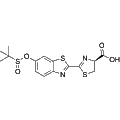
SEluc-2 is a bioluminescent probe that specifically targets thiols in living cells. This small-molecule compound is derived from firefly luciferin and is designed for sensitive and selective detection of thiol-containing compounds. Its capability to generate bioluminescent signals makes it a valuable tool for research applications in cellular biology and redox biology.
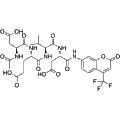
Ac-DEVD-AFC is a fluorogenic substrate specifically designed for the detection of caspase-3 activity. Upon cleavage by caspase-3, it releases a fluorescent signal, enabling real-time monitoring of apoptosis. This reagent is widely used in cell biology research to evaluate programmed cell death and assess therapeutic effectiveness in various experimental settings.
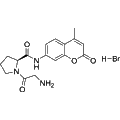
Gly-Pro-AMC hydrobromide is a fluorescent dye designed for the specific detection of dipeptidyl peptidase IV (DPP-IV) activity. This substrate enables sensitive fluorescence measurements ideal for studying enzyme kinetics and activity in various biological samples. It serves as a valuable tool for researchers investigating DPP-IV's role in metabolic processes and its implications in conditions such as diabetes and obesity.
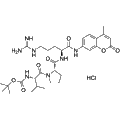
Boc-Val-Pro-Arg-AMC hydrochloride is a fluorogenic substrate specifically designed for the quantitative assessment of trypsin-like serine protease activity. It exhibits high sensitivity, enabling researchers to accurately measure the enzymatic activity of serine proteases in various biological samples. This reagent is useful in studies investigating protease function, substrate specificity, and screening of protease inhibitors.
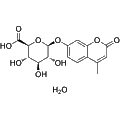
4-Methylumbelliferyl-β-D-glucuronide hydrate is a fluorogenic substrate that emits fluorescence upon hydrolysis by β-glucuronidase (λex=362 nm, λem=445 nm). This reagent is primarily utilized for the detection of β-glucuronidase activity, making it valuable in various microbiological applications, including the quantification of Escherichia coli. Its sensitive fluorescence signal enhances detection capabilities in biochemical assays, contributing to effective research in enzymology and microbial studies.
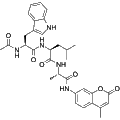
Ac-WLA-AMC is a β5-specific fluorogenic substrate designed for the 20S constitutive proteasome. Upon hydrolysis, it emits a fluorescent signal, enabling real-time monitoring of proteasome activity. This substrate is ideal for research applications involving proteasome function, regulation, and potential drug discovery targeting proteasome-related pathways.
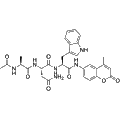
Ac-ANW-AMC is a fluorogenic substrate specifically designed for the immunoproteasome, targeting the β5i subunit. It exhibits fluorescent properties, allowing for the quantitative measurement of β5i activity with excitation at 345 nm and emission at 445 nm. This reagent is useful in research applications focused on proteasome dynamics and immune response mechanisms.
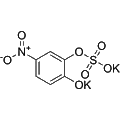
4-Nitrocatechol sulfate dipotassium salt is a chromogenic substrate specifically designed for the activity assessment of sulfatases. This compound plays a significant role in evaluating the enzymatic activity of glycosaminoglycan (GAG) degrading enzymes, including aryl sulfatase B and exonucleosidase. Its utility in biochemical assays makes it a valuable reagent for research in enzymology and polysaccharide degradation studies.
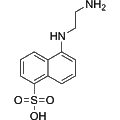
EDANS (1,5-EDANS) is a quenched fluorogenic substrate designed for the assessment of retroviral protease activity through resonance energy transfer (RET). This compound enables sensitive detection and quantification of protease activity, facilitating applications in virology and drug development. Its innovative design allows for an effective evaluation of protease inhibitors and contributes to understanding viral replication mechanisms.
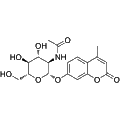
4-Methylumbelliferyl-2-acetamido-2-deoxy-β-D-Glucopyranoside functions as a fluorogenic substrate specifically for N-acetyl-β-D-glucosaminidase. This compound releases a fluorescent signal upon enzymatic cleavage, enabling sensitive detection and quantification of enzymatic activity. It is widely utilized in biochemical assays to study enzyme kinetics, facilitate substrate specificity analysis, and explore metabolic pathways involving glycosaminoglycans.
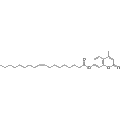
4-Methylumbelliferyl oleate is a fluorogenic substrate specifically designed for the activity detection of acid and alkaline lipases. Upon cleavage by lipases, it releases 4-Methylumbelliferyl, which can be detected via fluorescence with excitation and emission wavelengths of 320 nm and 450 nm, respectively. This compound is valuable for studying lipase activity in various biological contexts, including enzyme kinetics and metabolic research.
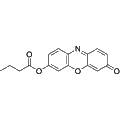
Resorufin butyrate is a fluorogenic substrate primarily utilized for the detection of triglyceride lipases and cholinesterase. With excitation at 570 nm and emission at 580 nm, this compound facilitates sensitive fluorescence-based assays. It is particularly valuable in biochemical studies focusing on lipid metabolism and enzyme activity.
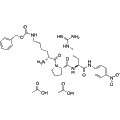
D-Lys(Z)-Pro-Arg-pNA diacetate is a chromogenic substrate specifically designed for activated protein C (APC). It exhibits a distinct color change upon cleavage by APC, enabling the quantification of enzyme activity. This reagent is pivotal in studying coagulation pathways and evaluating the functionality of APC in various biological research applications.
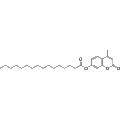
4-Methylumbelliferyl palmitate is a fluorogenic substrate specifically designed to measure acid lipase activity in human leukocytes. Its fluorescence is significantly influenced by pH and solvent conditions, exhibiting strong emission at 445 nm in near-neutral aqueous solutions and enhanced fluorescence at 445 nm in weak alkaline environments. This compound is valuable for research applications focusing on lipid metabolism and enzymatic activity assays.
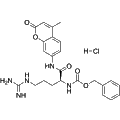
Z-Arg-AMC hydrochloride is a fluorogenic substrate specifically designed for the activity assays of trypsin and papain. This compound enables the monitoring of protease activity through fluorescence, with excitation and emission wavelengths at 355 nm and 460 nm, respectively. It is widely utilized in biochemical research to study proteolytic enzymes and their roles in various biological processes.
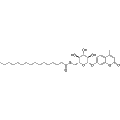
Mu-6S-Palm-β-Glc is a fluorogenic substrate specifically designed for palmitoyl-protein thioesterase (PPT). This compound exhibits key biological activity suitable for investigating palmitoylation processes and can be utilized in research related to neuronal ceroid lipofuscin disease in infants. Its fluorescent properties make it an essential tool for studying protein modifications and their implications in neurodegenerative disorders.
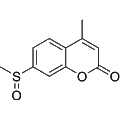
Msr-blue is a novel turn-on fluorescent probe specifically designed to detect methionine sulfoxide reductase (Msr) activity. This probe exhibits a fluorescence increase of over 100-fold, enabling sensitive monitoring of enzyme activity in live cells with excitation at 340 nm and emission at 440 nm. Its application includes studying oxidative stress and redox signaling pathways in various biological contexts.
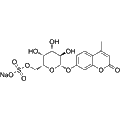
4-Methylumbelliferyl-β-D-galactopyranoside 6-sulfate sodium is a fluorescent dye primarily targeting galactose-6-sulphate sulphatase. This compound is utilized in the diagnosis of mucopolysaccharidosis IV A by enabling the detection of enzymatic activity associated with this disorder. Its fluorescence facilitates quantitative analysis and biochemical research in cellular and tissue samples related to lysosomal storage diseases.
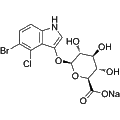
X-Gluc sodium is a chromogenic substrate specifically designed for the detection of β-glucuronidase (GUS), an enzyme commonly expressed by E. coli. This reagent facilitates the identification of E. coli contamination in various samples, including food, water, and urine, with GUS serving as a reliable indicator. In addition, X-Gluc sodium is widely utilized in molecular biology for labeling and visualizing target gene expression, producing a blue precipitate upon reaction with GUS.
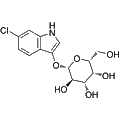
Rose-β-D-Gal is a chromogenic substrate specifically designed for the detection of β-galactosidase activity. Upon enzymatic reaction, it produces a distinctive pink/magenta color, facilitating the visualization of β-gal activity in various biological samples. This reagent is valuable in research applications involving gene expression studies, cellular aging, and the analysis of developmental processes where β-galactosidase serves as a crucial marker.
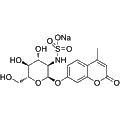
4-MU-α-GlcNS sodium is a fluorogenic substrate for heparin sulphamidase, which is desulfurized to produce 4-MU-α-GlcNH2. This metabolite is then hydrolyzed by α-glucosaminidase, resulting in the release of 4-methylumbelliferone (4-MU), a fluorescent compound with maximum emission wavelengths between 445-454 nm. 4-MU-α-GlcNS sodium is valuable in studying heparin sulphamidase deficiencies related to Mucopolysaccharidosis IIIA and other lysosomal disorders.
Msr-Ratio is a ratiometric fluorescent probe designed for the detection of methionine sulfoxide reductase, with an excitation wavelength of 375 nm and an emission wavelength of 550 nm. This probe enables the monitoring of enzyme activity both in vitro and within live cells, providing valuable insights into redox regulation and oxidative stress mechanisms. Its application facilitates studies in cellular biology and biochemical pathways involving methionine sulfoxide reductase.
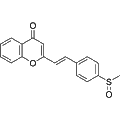
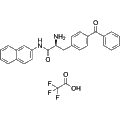
PL553 is a high-affinity fluorogenic substrate targeting leukotriene A4 hydrolase. With an excitation wavelength (λmax) of 210 nm and emission wavelength (λem) of 410 nm, this fluorescent dye is designed for specific detection in biological assays. Its robust fluorescence enables applications in studying leukotriene metabolism and related inflammatory pathways.
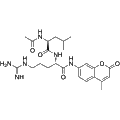
Ac-Leu-Arg-AMC is a fluorogenic peptide substrate designed for the quantitative analysis of protease activity. This compound is particularly useful in studies of proteolytic enzymes, enabling the detection of enzyme activity through fluorescence measurement. Its specificity for certain proteases makes it ideal for applications in biochemical assays and research involving protein degradation pathways.
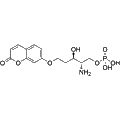
SGPL1 fluorogenic substrate is a potent substrate for sphingosine-1-phosphate lyase (SGPL1), designed to facilitate the measurement of SGPL1 activity. This substrate enables the detection of enzymatic activity through fluorescence, making it a valuable tool for studying sphingolipid metabolism. It is applicable in various biochemical assays aimed at understanding cellular signaling pathways and disease mechanisms associated with sphingosine-1-phosphate regulation.