Search by product name, CAS, target or catalog number. Press Down Arrow to reach product suggestions, Tab to move between links, and Escape to close suggestions.
USD – US Dollar✓Current currency
Account
Enzyme Activity Probes & Substrates
Browse substrates and optical reporter reagents for enzyme-activity assays. Enzyme-activated fluorogenic probes can convert a chemical transformation into a fluorescence readout.[1] Choose the exact reagent for your enzyme, sample and detection method, and distinguish fluorescent from color-based readouts. This collection does not imply that every substrate is selective for one enzyme or suitable for use in living cells.
Abl Cytosolic Substrate serves as an active substrate for the Abelson tyrosine kinase (Abl). This substrate is vital for studying the enzymatic activity of Abl, a truncated form of the v-Abl protein associated with the Gag-Abl fusion protein in Abelson murine leukemia virus. It is primarily utilized in research applications focusing on signal transduction and oncogenic processes mediated by tyrosine phosphorylation.
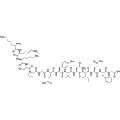
IGF1Rtide is a specific substrate for Ret proto-oncogene kinase (RET) that facilitates the assessment of RET kinase activity in various biochemical assays. This peptide is instrumental in evaluating RET signaling pathways and investigating the role of RET in cancer biology and cellular signaling processes. Its use in kinase assays aids in the development of RET-targeted therapies and drug discovery efforts.
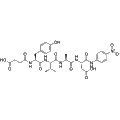
Suc-YVAD-pNA is a substrate specifically designed for the interleukin-1β-converting enzyme (ICE), a cysteine protease that facilitates the conversion of pre-interleukin-1β (pre-IL-1β) to its active form. This reagent is instrumental in studying apoptosis and inflammatory processes through the modulation of interleukin-1β signaling. Its application extends to various research fields, including immunology and cell biology, where understanding ICE activity is crucial for elucidating cytokine regulation and its implications in disease states.
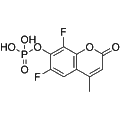
DiFMUP is a fluorogenic substrate specifically designed for the continuous detection of phosphatase activities. Upon hydrolysis by phosphatases, DiFMUP releases the fluorescent compound DIFMU, enabling real-time monitoring of enzymatic reactions using a fluorescence reader. This reagent is valuable for studying phosphatase functions in various biological contexts and contributes to the understanding of cellular signaling pathways.
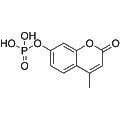
4-Methylumbelliferyl phosphate is a fluorogenic substrate for acid and alkaline phosphatases. Upon dephosphorylation, it produces a fluorescent product, enabling sensitive detection in enzyme activity assays. This reagent is widely utilized in research applications involving phosphatase activity, enzymatic kinetics, and biological assays requiring fluorescent readout. Additionally, it serves as a nerve agent simulant in various experimental contexts.
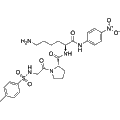
Tos-Gly-Pro-Lys-pNA is a substrate specifically designed for the serine protease alkaline phosphatase (ALP). Upon cleavage by ALP, it releases p-nitroaniline (pNA), allowing for quantitative assessment of enzyme activity. This reagent is useful in various biochemical assays for studying ALP activity and can aid in research related to metabolic disorders, cancer, and other physiological processes.
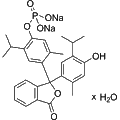
Thymolphthalein monophosphate disodium hydrate serves as a chromogenic substrate for the detection of acid and alkaline phosphatases. Upon enzymatic hydrolysis, it releases thymolphthalein, which increases the medium's pH, facilitating colorimetric detection and cessation of hydrolysis. This reagent is particularly valuable for the specific identification of prostatic phosphatase in serum samples, making it an essential tool in biochemical research and clinical diagnostics.
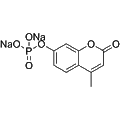
4-Methylumbelliferyl phosphate disodium is a fluorogenic substrate specifically designed for detecting acid and alkaline phosphatase activity. Upon dephosphorylation, it produces a highly fluorescent compound, enabling sensitive measurement and analysis of phosphatase activity in various biological samples. This reagent is utilized primarily in biochemical assays and research applications focused on enzyme characterization and activity monitoring. Additionally, it serves as a nerve agent simulant for studies related to neurotoxicity and pharmaceutical development.
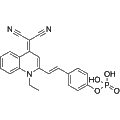
ALP Green is an amphiphilic fluorescent probe designed for detecting alkaline phosphatase (ALP) activity, with an emission wavelength of 550 nm. This probe is particularly useful in studying liver injury induced by acetaminophen (APAP) through its specific interaction with ALP. Researchers can utilize ALP Green to gain insights into liver function and enzyme activity in various biological assays.
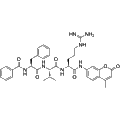
Bz-FVR-AMC is a fluorogenic substrate specifically designed for the assay of procathepsin activity. With a kcat/Km value of 1070 mM^-1s^-1, it provides a robust tool for measuring cathepsin enzyme activity in various biological samples. Bz-FVR-AMC is particularly useful for studying proteolytic processes and understanding cysteine protease functions in both physiological and pathological contexts. However, at high concentrations, this substrate may exhibit inhibitory effects.
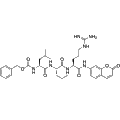
Z-Leu-Leu-Arg-AMC is a synthetic peptide substrate specifically designed for cathepsin S. This compound serves as a fluorogenic substrate, enabling the measurement of cathepsin S activity in various biological samples. It is utilized in research applications focusing on protease activity, cellular degradation processes, and the study of lysosomal function and related diseases.
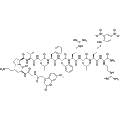
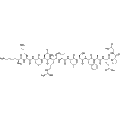
Cathepsin D and E FRET Substrate is a fluorogenic substrate specifically designed for the selective detection of cathepsins D and E, avoiding interaction with cathepsins B, H, and L. Cleavage occurs at the Phe-Phe amide bond, releasing a fluorescent signal that can be quantitatively measured. This substrate is ideal for routine assays and mechanistic studies, facilitating the investigation of cathepsin activity in various biological contexts.
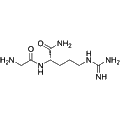
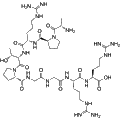
H-Gly-Arg-NH2 is a substrate specifically designed for the assessment of bovine spleen cathepsin C activity. This compound demonstrates key biological activity by providing a measurable reaction that facilitates enzyme kinetics studies. Its applications extend to research focused on proteolytic enzyme characterization and related biochemical pathways.
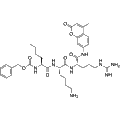
Z-Nle-Lys-Arg-AMC is a fluorogenic peptide substrate designed to specifically detect cathepsin B activity across a wide pH range. This substrate undergoes cleavage by cathepsin B, resulting in fluorescence which can be quantitatively measured. It is particularly valuable in studies related to protease activity, cell signaling, and understanding pathological processes where cathepsin B is involved.
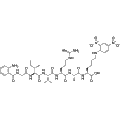
Abz-GIVRAK(Dnp) is a chromogenic substrate specifically designed for the selective detection of cathepsin B among lysosomal cysteine proteases. Upon hydrolysis by the enzyme, it releases aminoacylbenziminosulfosuccinic acid (Abz-SAS) and dinitrobenzoyl (Dnp). The released Abz-SAS exhibits strong fluorescence under ultraviolet light, making it an effective tool for quantifying cathepsin B activity in various biological research applications.
Ziptide is a substrate for various kinases, including MAPK-activated protein kinase 2 (MAPKAPK2) with a Km of 5 μM, MAPKAPK3 (Km = 30 μM), and PARK (Km = 40 μM). Additionally, it acts on checkpoint kinase 1 (Chk1, Km = 5 μM), AMP-activated protein kinase (AMPK, Km = 75 μM), and calcium/calmodulin-dependent protein kinase II (CamKII, Km = 300 μM). Ziptide's specificity makes it valuable for investigating MAPK signaling pathways and related biological processes in various cellular contexts.
MBP MAPK Substrate is a specific substrate designed for the study of Mitogen-Activated Protein Kinase (MAPK) signaling pathways. It is utilized in various assays to assess MAPK activity and phosphorylation events. This substrate serves as a valuable tool in biochemical and cellular research, enabling the investigation of the role of MAPK in cell signaling, regulation of gene expression, and cellular responses to extracellular stimuli.
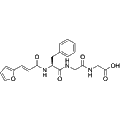
N-[3-(2-Furyl)acryloyl]-Phe-Gly-Gly (FAPGG) is a specific chromogenic substrate for angiotensin-converting enzyme (ACE) with a Ki of 2.546×10^-4 M. Upon hydrolysis by ACE, FAPGG produces N-[3-(2-furyl)acryloyl]-Phe (FAP) and Gly-Gly, allowing for the quantitative detection of ACE activity via photometry. FAPGG competitively binds to the active site of ACE, making it an essential tool for screening ACE inhibitors and advancing research in hypertension and the renin-angiotensin system.
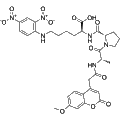
Mca-Ala-Pro-Lys(Dnp)-OH is a quenched fluorogenic substrate specifically designed for the detection of angiotensin-converting enzyme 2 (ACE2) activity. This compound facilitates the measurement of ACE2 function in various biological contexts, including urinary, cardiac, and pulmonary tissues. Researchers can utilize this substrate to investigate the role of ACE2 in various physiological and pathological processes.
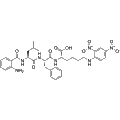
Abz-LFK(Dnp)-OH is an angiotensin I-converting enzyme (ACE) peptide substrate, specifically selective for the C domain of ACE. This compound is instrumental for evaluating ACE activity in various research applications, particularly in studies related to cardiovascular health and hypertension. Its unique structural features facilitate the understanding of ACE's functional dynamics in enzymatic reactions.
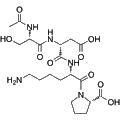
N-Acetyl-Ser-dAsp-Lys-Pro is a specific substrate for the N-terminal site of Angiotensin-Converting Enzyme (ACE). This endogenous tetrapeptide, derived from bone marrow, plays a critical role in physiological processes related to blood pressure regulation and homeostasis. Its unique properties make it valuable for research into ACE enzymatic mechanisms and the development of therapeutic agents targeting cardiovascular disorders.
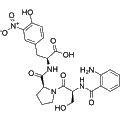
Abz-Ser-Pro-3-nitro-Tyr is a substrate for angiotensin-converting enzyme-2 (ACE2). This compound is valuable in studying ACE2 activity and its role in regulating cardiovascular function and inflammation. Researchers utilize Abz-Ser-Pro-3-nitro-Tyr for investigating enzyme kinetics and developing therapeutics targeting the renin-angiotensin system.
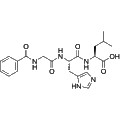
Hippuryl-His-Leu-OH is a specific substrate for angiotensin-converting enzyme (ACE I), utilized as a molecular tool for detecting ACE activity in vitro. It undergoes hydrolysis by ACE, releasing hippuric acid (HA), which serves as a quantitative measure of ACE activity and aids in screening for ACE inhibitors. The release of His-Leu can further react with o-phthalaldehyde or Fluorescamine for fluorescence detection. This reagent is applicable in the in vitro evaluation of ACE inhibitors related to hypertension and cardiovascular diseases, and contributes to studies on ACE activity alterations in various physiological and pathological conditions, including renal compensatory hypertrophy.
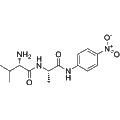
H-Val-Ala-pNA is a specific substrate for the dipeptide aminopeptidase (DPAPase) derived from Streptococcus bovis. This compound is valuable for quantifying DPAPase activity in enzymatic assays, facilitating the study of protease kinetics and specific substrate recognition. Its application is essential in the characterization of enzyme-substrate interactions in biochemical research.
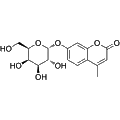
4-Methylumbelliferyl-α-D-galactopyranoside is a pro-fluorogenic substrate specifically designed for α-galactosidase A (GLA) activity. Upon enzymatic cleavage by GLA, this compound yields galactose and the fluorescent product 4-methylumbelliferone, which enables the visualization and quantification of enzymatic activity. It is widely utilized in biochemical assays and research applications to study GLA function and activity.