Search by product name, CAS, target or catalog number. Press Down Arrow to reach product suggestions, Tab to move between links, and Escape to close suggestions.
USD – US Dollar✓Current currency
Account
Enzyme Activity Probes & Substrates
Browse substrates and optical reporter reagents for enzyme-activity assays. Enzyme-activated fluorogenic probes can convert a chemical transformation into a fluorescence readout.[1] Choose the exact reagent for your enzyme, sample and detection method, and distinguish fluorescent from color-based readouts. This collection does not imply that every substrate is selective for one enzyme or suitable for use in living cells.
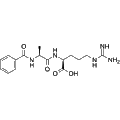
Bz-Ala-Arg is a dipeptide that acts as a substrate for human pancreatic carboxypeptidase B and plasma carboxypeptidase N. It is utilized in biochemical research to study proteolytic enzyme activity and the regulation of protein metabolism. This compound is valuable for investigating the enzymatic characteristics and kinetics of carboxypeptidases in various physiological and pathological contexts.
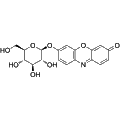
Resorufin-β-D-glucopyranoside is a fluorogenic substrate specifically designed for the detection and quantification of β-glucosidase activity. Upon enzymatic cleavage, it produces resorufin, a highly fluorescent compound that serves as an effective indicator of β-glucosidase presence in biological samples. This reagent is widely used in biochemical assays and studies involving enzyme activity, providing valuable insights into cellular and molecular processes.
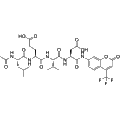
Ac-LEVD-AFC is a fluorogenic substrate peptide specifically designed for the activity assays of caspase-4. This compound exhibits key biological activity by releasing a fluorescent signal upon cleavage by caspase-4, making it a valuable tool for studying apoptosis and inflammatory processes. It is suitable for various research applications, including cell death studies and the evaluation of caspase activity in different biological systems.
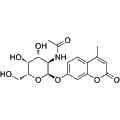
4-Methylumbelliferyl 2-acetamido-2-deoxy-α-D-galactopyranoside serves as a fluorogenic substrate for the assessment of α-galactosidase enzymatic activity. This compound is integral for analyzing enzyme kinetics in various biological samples, providing insights into the physiological roles of α-galactosidase. Additionally, it can be utilized for screening potential inhibitors or activators of this enzyme, facilitating research into its regulatory mechanisms and therapeutic targets.
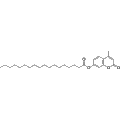
4-Methylumbelliferyl stearate is a biochemical reagent commonly utilized as a fluorogenic substrate for the detection of lipase activity. Upon enzymatic hydrolysis, it releases the fluorescent compound 4-methylumbelliferone, facilitating quantitative analysis of lipase in various biological samples. This reagent is widely employed in research applications focusing on lipid metabolism, enzyme kinetics, and the study of lipid-related disorders.
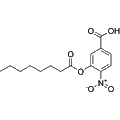
NOBA is a synthetic chromogenic substrate designed for the detection of AplTX-II enzyme activity. It facilitates the study of phospholipid hydrolysis and is valuable for research applications focused on enzymatic processes involving phospholipids. Researchers can utilize NOBA to gain insights into the functional dynamics of AplTX-II in various biological contexts.
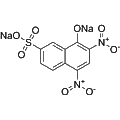
Naphthol Yellow S is a basic protein-binding dye utilized as an alkaline protein stain. This reagent demonstrates high affinity for proteins, making it suitable for detecting enzyme activity in various biological studies. Its ability to selectively bind to proteins allows for effective visualization in electrophoretic applications and other analytical techniques.
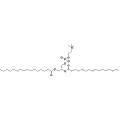
Palmitoyl thio-PC is a chromogenic substrate specifically designed for phospholipase A2 (PLA2) activity. Its palmitoyl thioester modification at the sn-2 position enables sensitive measurement of bee venom sPLA2 activity within phospholipid systems. This reagent is valuable for research applications focusing on enzyme kinetics and activities related to PLA2 in various biological contexts.
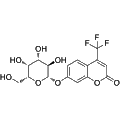
4-Trifluoromethylumbelliferyl-ß-D-galactopyranoside (TFMU-Gal) is a fluorogenic substrate primarily used in biochemical assays for the detection of ß-galactosidase activity. Upon enzymatic cleavage, TFMU-Gal releases a highly fluorescent product, making it a valuable tool in glycobiology research for studying glycosidase activity and carbohydrate metabolism. This compound is essential for understanding the role of glycosides in various biological processes.
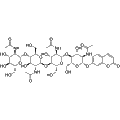
4-Methylumbelliferyl β-D-N,N',N'',N'''-tetraacetylchitotetraoside is a fluorogenic substrate specifically designed for lysozyme assays. This reagent facilitates the study of enzyme activity, making it valuable for various biomedical research applications. Its high sensitivity enhances the analysis of enzyme reactions in biological samples, providing reliable results for researchers investigating enzymatic processes.
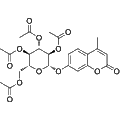
4-Methylumbelliferyl 2,3,4,6-tetra-O-acetyl-β-D-glucopyranoside is a biochemical assay reagent primarily utilized for the detection of β-D-glucosidase activity. This compound serves as a fluorogenic substrate, releasing 4-methylumbelliferone upon enzymatic hydrolysis, allowing for sensitive measurement of enzyme activity. It is commonly employed in various biochemical research applications, including studies on enzyme kinetics and carbohydrate metabolism.
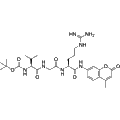
Boc-Val-Gly-Arg-AMC is a peptide substrate designed for the analysis of proteasome activity. This compound serves as a sensitive fluorogenic reporter, enabling the quantification of proteolytic processes in biological samples. Its utility extends to various research applications, including drug discovery and the study of cellular protein degradation mechanisms.
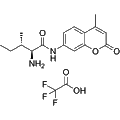
H-L-Ile-Amc TFA is a fluorescent dye that serves as a substrate for aminopeptidases, enabling the detection of yeasts and molds in various samples. This compound is particularly useful in microbiological research and diagnostics, facilitating the identification and quantification of fungal contamination. Its sensitivity and specificity make it a valuable tool in microbial monitoring and food safety applications.
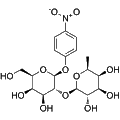
4-Nitrophenyl 2-O-(β-L-Fucopyranosyl)-β-D-Galactopyranoside is a synthetic chromogenic substrate primarily utilized for the assessment of α-fucosidase activity. This compound is hydrolyzed by α-fucosidase, releasing a measurable p-nitrophenol as a product, which can be quantified through subsequent action of exogenous exo-β-D-galactosidase. It is valuable in biochemical research involving fucosidase assays and the study of glycosidic bond hydrolysis.
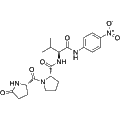
Glp-Pro-Val-pNA is a substrate specifically designed for granulocyte elastase activity. It is utilized in assays to quantify the release of elastase, providing insights into inflammatory processes and neutrophil activity. This reagent is critical for research applications focused on immune response, inflammation, and related pathophysiological conditions.
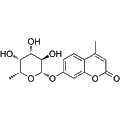
4-Methylumbelliferyl β-D-fucoside is a fluorogenic substrate for the enzymatic detection of fucosidase activity. Upon hydrolysis by fucosidases, it releases 4-methylumbelliferone, which exhibits high fluorescent properties. This reagent is widely used in biochemical assays to study fucosidase activity in various biological samples, facilitating research in glycoprotein metabolism and cellular signaling pathways.
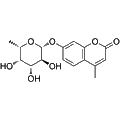
4-Methylumbelliferyl β-L-fucoside is a fucose derivative functioning as a fluorogenic substrate for β-L-fucosidase activity. This compound releases a fluorescent product upon cleavage, making it suitable for biochemical assays and glycobiology research. It enables the study of glycan metabolism and the characterization of fucosylated biomolecules, facilitating research in various biological systems.
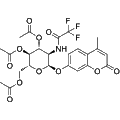
4-Methylumbelliferyl 3,4,6-tri-O-acetyl-2-deoxy-2-trifluoroacetamido-α-D-glucopyranoside functions as a fluorogenic substrate for carbohydrate-active enzymes, specifically glycosidases. This compound enables the quantitative detection of glycosidase activity through fluorescence emission, making it valuable in enzymology and carbohydrate metabolism research. It aids in studying enzymatic reactions and the characterization of glycosidase specificity, contributing to a better understanding of glycosylation processes in biological systems.
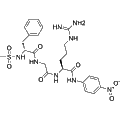
Chromozym t-PA is a substrate specifically designed for the quantification of tissue plasminogen activator (t-PA) concentration. It enables sensitive measurement of t-PA activity, facilitating research in coagulation and fibrinolysis studies. This reagent is suitable for various applications, including diagnostic assays and the evaluation of therapeutic strategies targeting the fibrinolytic system.
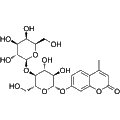
4-Methylumbelliferyl-β-D-lactoside is a fluorogenic substrate primarily targeting β-galactosidase, facilitating the study of enzyme activity in glycobiology. This compound is widely utilized in biochemical assays for the detection and quantification of β-galactosidase activity, making it valuable for research applications involving carbohydrate metabolism and glycan interactions.
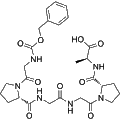
Z-Gly-Pro-Gly-Gly-Pro-Ala-OH serves as a collagenase substrate, enabling the study of collagenase activity and its effects on cellular processes. This compound is utilized in research focusing on biomaterial interactions and tissue engineering, particularly in the context of planulae settlement. Its unique peptide structure facilitates targeted enzymatic cleavage, making it a valuable tool for investigating collagen dynamics in various biological systems.
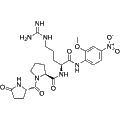
pGlu-Pro-Arg-MNA is a chromogenic substrate designed for use in enzyme assays. It serves as a substrate for various proteolytic enzymes, facilitating the study of enzyme kinetics and activity. This compound is particularly valuable in research applications involving protease activity, enabling researchers to investigate proteolytic processes in biochemical studies.
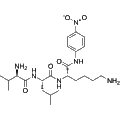
D-Val-Leu-Lys-pNA is a chromogenic peptide substrate targeting plasmin and plasminogen. This compound serves as a sensitive substrate for the DFE27 serine protease from Bacillus subtilis DC27. Upon catalysis by plasmin, D-Val-Leu-Lys-pNA undergoes hydrolysis, releasing p-nitroaniline (pNA), which can be quantitatively detected at 405 nm, making it a valuable tool for assessing fibrinolytic activity in biochemical research.
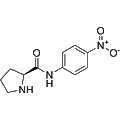
H-Pro-Pna is a chromogenic substrate specifically designed for peptidase activity assessment. It serves as an effective tool for the determination of enzyme activity, including that of leukotriene A4 hydrolase. This reagent is valuable in various biochemical assays and research applications, facilitating the study of enzymatic processes and their regulation in biological systems.
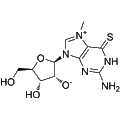
7-Methyl-6-thioguanosine (MESG) serves as a chromogenic substrate for purine nucleoside phosphorylase, converting to 7-methyl-6-thioguanine in the presence of inorganic phosphate. This compound is instrumental in quantifying inorganic phosphate levels, making it valuable for studies involving nucleotide metabolism. Additionally, MESG can be utilized to assess the activity of purine nucleoside phosphorylase and protein phosphatases in various biochemical assays, facilitating research in enzymology and cellular signaling pathways.