Search by product name, CAS, target or catalog number. Press Down Arrow to reach product suggestions, Tab to move between links, and Escape to close suggestions.
USD – US Dollar✓Current currency
Account
Enzyme Activity Probes & Substrates
Browse substrates and optical reporter reagents for enzyme-activity assays. Enzyme-activated fluorogenic probes can convert a chemical transformation into a fluorescence readout.[1] Choose the exact reagent for your enzyme, sample and detection method, and distinguish fluorescent from color-based readouts. This collection does not imply that every substrate is selective for one enzyme or suitable for use in living cells.
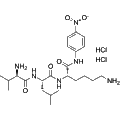
Synonyms: D-Val-Leu-Lys-p-itoailide dihydrochloride; D-VLK-pNA dihydrochloride; S 2251 dihydrochloride
D-Val-Leu-Lys-pNA dihydrochloride is a chromogenic peptide substrate specifically designed for plasmin and plasminogen. It serves as a sensitive substrate for the DFE27 serine protease from Bacillus subtilis DC27. Upon catalysis by plasmin, D-Val-Leu-Lys-pNA dihydrochloride undergoes hydrolysis to release p-nitroaniline (pNA), enabling quantitative measurement of fibrinolytic activity via colorimetric detection at 405 nm. This reagent is essential for studies involving fibrinolysis and related processes.
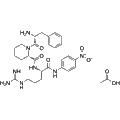
H-D-Phe-Pip-Arg-pNA acetate is a chromogenic substrate specifically designed for thrombin. By mimicking the N-terminal region of the A alpha chain of fibrinogen, it allows for precise measurement of antithrombin-heparin cofactor (AT-III) activity. This substrate provides a sensitive and accurate assay for AT-III quantification, making it a valuable tool in coagulation studies and related research applications.
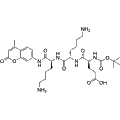
Boc-Glu-Lys-Lys-AMC is a fluorogenic substrate specifically designed for urokinase-activated plasmin. This compound enables the sensitive detection of plasmin activity, facilitating research in fibrinolysis and related biological processes. Its applications extend to studying proteolytic activity in various physiological and pathological conditions.
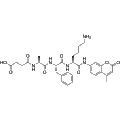
Suc-Ala-Phe-Lys-AMC is a fluorogenic substrate specific for plasmin, enabling sensitive detection and quantification of enzymatic activity. This compound is also utilized in assays for the gingipain K enzyme, facilitating research on pathological processes related to periodontal diseases. Its ability to generate fluorescence upon cleavage makes it a valuable tool for studying proteolytic activity in various biological contexts.
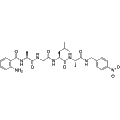
Abz-AGLA-Nba is a fluorogenic substrate specifically designed for the detection and quantification of protease activity. Upon hydrolysis, it releases aminoacyl benzimide (Abz-AGLA) and 2-naphthylaminoacyl (Nba), with Abz-AGLA exhibiting fluorescence under ultraviolet light. This property enables sensitive monitoring of protease interactions and enzymatic activity in various biological research applications.
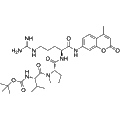
Boc-Val-Pro-Arg-AMC acts as a fluorogenic substrate specifically for assessing the activity of trypsin-like serine proteases. Upon cleavage by these enzymes, it releases an AMC (7-amino-4-methylcoumarin) fluorophore, enabling sensitive quantification of protease activity. This reagent is particularly useful in biochemical assays focusing on serine protease research and can aid in the study of various physiological and pathological processes where proteolytic activity is implicated.
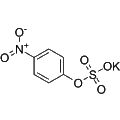
Potassium p-nitrophenyl sulfate acts as a chromogenic substrate specifically for arylsulfatases. Upon enzymatic cleavage by arylsulfatases, it releases nitrophenol, facilitating the quantitative determination of enzyme activity through colorimetric detection at 400 nm. This reagent is routinely utilized in enzyme inhibition assays and studies involving metabolite analogs.
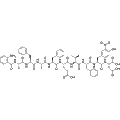
Fluorescent Substrate for Glu-Specific Proteases is designed as a chromogenic substrate specifically for V8 protease. It exhibits fluorescence upon cleavage, allowing for easy monitoring of protease activity. This substrate is useful in biochemical assays aimed at studying enzymatic mechanisms and the role of V8 protease in various biological processes.
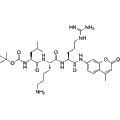
Boc-Leu-Lys-Arg-AMC is a fluorogenic substrate specifically designed for the Kex2 endoprotease. This compound exhibits high sensitivity and selectivity, enabling real-time monitoring of Kex2 activity. It is widely utilized in biochemical assays to study protease function and characterization in various biological systems.
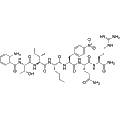
Abz-Thr-Ile-Nle-p-nitro-Phe-Gln-Arg-NH2 is a fluorogenic substrate designed for use in fluorescence-based screening assays. This compound exhibits enhanced fluorescence upon enzymatic cleavage, making it suitable for the study of enzymatic activity and proteolytic processes. Its applications extend to substrate specificity assays and the characterization of proteases in various biological research contexts.
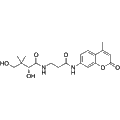
Pantothenate-AMC is a fluorogenic substrate specifically designed for the detection of vanin-1 enzymatic activity, which plays a crucial role in L-pantothenic acid recycling. Upon cleavage by vanin-1, the substrate releases 7-amino-7-methylcoumarin (AMC), resulting in fluorescence that can be quantitatively measured. With excitation and emission maxima at 340-360 nm and 440-460 nm, respectively, Pantothenate-AMC is a valuable tool for research applications focused on enzymatic assays and metabolic studies.
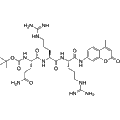
Boc-Gln-Arg-Arg-AMC is a fluorogenic substrate specifically designed for the assessment of protease activity. Upon hydrolysis, this compound releases the fluorescent product 7-amino-4-methylcoumarin (AMC), which exhibits fluorescence under ultraviolet light. This property makes Boc-Gln-Arg-Arg-AMC a valuable tool in biochemical research for studying protease functions and kinetics in various biological systems.
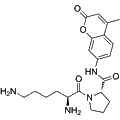
Lys-Pro-AMC is a fluorogenic substrate designed for the detection and quantification of specific enzyme activities. Upon cleavage by target enzymes, it releases a highly fluorescent product that can be easily measured, providing a sensitive assay for enzyme kinetics and activity. This substrate is useful in various research applications, including enzyme characterization, drug screening, and biochemical studies focused on proteolytic activity.
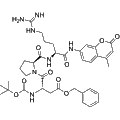
Boc-Asp(OBzl)-Pro-Arg-AMC is a fluorogenic substrate specifically designed for assessing protease activity. Upon hydrolysis, this compound releases 7-amino-4-methylcoumarin (AMC), a fluorescent product, allowing for quantitative analysis. The substrate exhibits excitation and emission wavelengths at 351 nm and 430 nm, respectively, making it suitable for various fluorescence-based assays in proteomics and enzymology research.
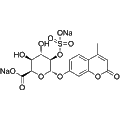
4-Methylumbelliferyl-α-L-iduronide 2-sulfate sodium is a fluorogenic substrate specifically for iduronate-2-sulfatase (I2S). Upon hydrolysis by the lysosomal enzyme α-L-iduronidase (IDUA), it releases the fluorophore 4-Methylumbelliferone, allowing for sensitive detection of enzymatic activity. This reagent is particularly useful in research focused on lysosomal storage disorders, including Hurler syndrome, facilitating the assessment of enzyme function and disease progression.
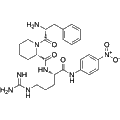
H-D-Phe-Pip-Arg-pNA is a chromogenic substrate specifically designed for thrombin activity. By mimicking the N-terminal sequence of the A alpha chain of fibrinogen, it effectively facilitates the assessment of thrombin's enzymatic function. This reagent is commonly employed in assays to measure the activity of antithrombin-heparin cofactor (AT-III), providing a sensitive and precise method for evaluating anticoagulant therapies and thrombotic disorders.
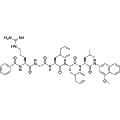
Bz-RGFFL-4MβNA is a fluorogenic peptide substrate with the sequence Bz-Arg-Gly-Phe-Phe-Leu-4MβNA. This compound is designed for use in enzymatic assays and can facilitate the study of protease activity. Its unique fluorescent properties allow for sensitive detection and quantification in various biological research applications, providing valuable insights into cellular processes and enzyme kinetics.
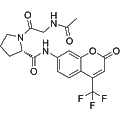
Ac-Gly-Pro-AFC is a fluorogenic substrate specifically designed to assess fibroblast activation protein (FAP) endopeptidase activity. This compound exhibits high sensitivity and selectivity, making it useful for studying FAP's role in tumor microenvironments and fibrosis. It is applicable in various research domains, including cancer biology and tissue remodeling studies, facilitating the quantification of enzymatic activity in biological samples.
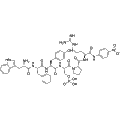
H-Trp-Phe-Tyr-Ser(PO3H2)-Pro-Arg-pNA is a chromogenic substrate specifically designed for the prolyl isomerase Pin1. This reagent facilitates the study of Pin1 activity by enabling the detection of phosphoserine-proline bonds in mitotic phosphoproteins, critical for understanding cell cycle regulation. The compound is invaluable in biochemical assays and research focused on mitosis and related signaling pathways.
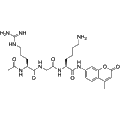
Ac-Arg-Gly-Lys-AMC is a fluorogenic substrate specifically designed for the assessment of protease activity. Upon hydrolysis by active proteases, it releases the fluorescent compound 7-amino-4-methylcoumarin (AMC), which exhibits strong fluorescence when exposed to UV light. This reagent is instrumental in various biochemical assays and applications focused on studying protease function and regulation.
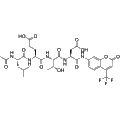
Ac-LETD-AFC is a fluorogenic substrate specifically designed for the quantification of caspase-8 activity. This compound enables the measurement of caspase-8-mediated proteolytic activity, serving as a valuable tool for studying cancer cell apoptosis and oxidative stress metabolism. Its application supports research in cellular signaling pathways related to programmed cell death and various stress responses.
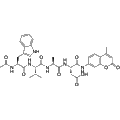
Ac-WVAD-AMC is a fluorogenic substrate specifically designed to target caspase 1. This compound enables the quantitative measurement of caspase 1 enzymatic activity through fluorescence detection. Its utility in various biological research applications includes studies on apoptosis, inflammation, and cell death pathways, making it a valuable tool for investigating the role of caspases in cellular processes.
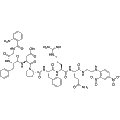
Abz-GFDPFRQ-EDDnp is a fluorogenic substrate targeting metallothionein oligopeptidase, with excitation and emission wavelengths of 320 nm and 420 nm, respectively. This compound is instrumental in assessing the enzymatic activity of metallothionein oligopeptidase in tissue extracts. Its applications extend to research studies focused on temporal lobe epilepsy, facilitating insights into the enzyme's role in neurological processes.
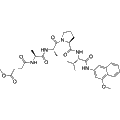
MeOSuc-Ala-Ala-Pro-Val-4-MNA is a fluorogenic substrate specifically designed for the detection of elastase activity. Upon enzymatic cleavage, it emits fluorescence detectable at 425 nm with an excitation wavelength of 340 nm. This compound is valuable for research applications involving protease activity assays and can aid in the study of various pathologies where elastase plays a key role.
Suc-Ala-Leu-Pro-Phe-AMC is a fluorogenic substrate specifically designed for the study of peptidyl-prolyl isomerase (PPIase) activity. Its unique structure allows for the sensitive detection of PPIase activity through fluorescence, making it an essential tool for researchers exploring protein folding and regulation. This substrate is widely applicable in biochemical assays investigating chaperone functions and the role of PPIases in various biological processes.