Search by product name, CAS, target or catalog number. Press Down Arrow to reach product suggestions, Tab to move between links, and Escape to close suggestions.
USD – US Dollar✓Current currency
Account
Enzyme Activity Probes & Substrates
Browse substrates and optical reporter reagents for enzyme-activity assays. Enzyme-activated fluorogenic probes can convert a chemical transformation into a fluorescence readout.[1] Choose the exact reagent for your enzyme, sample and detection method, and distinguish fluorescent from color-based readouts. This collection does not imply that every substrate is selective for one enzyme or suitable for use in living cells.
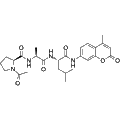
Ac-PAL-AMC is a fluorogenic substrate specifically designed for the 20S proteasome LMP2/β1i activity. It is utilized in biochemical assays to monitor proteasomal degradation processes, facilitating research into protein turnover and associated cellular functions. This substrate can enable real-time measurement of protease activity, making it an essential tool for studies in cancer, neurodegeneration, and other diseases linked to proteostasis.
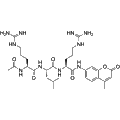
Ac-RLR-AMC is a fluorogenic substrate specifically designed for the 26S proteasome pathway. Upon proteolytic cleavage, the release of 7-amino-4-methylcoumarin (AMC) generates fluorescence, facilitating the quantification of trypsin-like activity within the proteasome. This reagent is valuable for research applications focused on proteasome function, cellular regulation, and related biochemical assays.
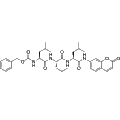
Z-Leu-Leu-Leu-AMC is a fluorogenic substrate designed for the assessment of chymotrypsin-like protease activity in the 20S proteasome. It provides a sensitive and specific means to monitor proteasomal function and proteolytic activity. This reagent is valuable for research applications involving protein degradation, cellular homeostasis, and the study of proteasome-related diseases.
Calpain substrate is a fluorogenic substrate specifically designed for the assessment of calpain enzymatic activity. It is membrane non-permeable, ensuring precise measurement of calpain activity in biological samples. This reagent is suitable for applications in cellular signaling research and studies investigating calpain's role in various physiological and pathological processes.
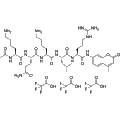
Ac-KQKLR-AMC TFA is a substrate peptide for Cathepsin S, conjugated with the fluorescent indicator AMC (Excitation/Emission = 354 nm/442 nm). This reagent facilitates the measurement of Cathepsin S activity, enabling researchers to study proteolytic processes and assess enzyme function in various biological contexts. Its application is crucial for investigations into the role of Cathepsin S in physiological and pathological conditions.
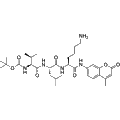
Boc-Val-Leu-Lys-AMC is a sensitive fluorogenic substrate specifically designed for the enzyme plasmin. This compound also serves as a substrate for acrosin derived from the ascidian Halocynthia roretzi, as well as porcine calpain isozymes I and II, and papain. Its distinct properties make it an invaluable tool for studying proteolytic activity and enzyme kinetics in various biological research applications.
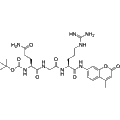
Boc-Gln-Gly-Arg-AMC is a fluorogenic substrate specifically designed for the serine proteases factor XIIa and trypsin. Upon cleavage of the amide bond between arginine and the methylcoumarin amide moiety, it releases the fluorescent compound 7-Amino-4-methylcoumarin, enabling sensitive detection. This substrate is instrumental in studying proteolytic activity and can be utilized in various biochemical assays to monitor enzyme function.
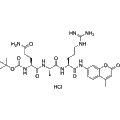
Boc-Gln-Ala-Arg-AMC hydrochloride is a fluorogenic substrate specifically designed for the enzyme trypsin. It serves as an effective tool for measuring proteolytic activity, including that of TMPRSS2. This compound is valuable in various biochemical assays and research applications focused on proteolysis and enzyme activity analysis.
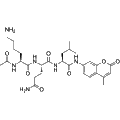
Ac-KQL-AMC is a fluorogenic substrate designed to quantify Trypsin-like activity. Upon cleavage by the proteasome, it produces a detectable fluorescence, making it a valuable tool for studying proteolytic activities in various biological contexts. This compound is particularly useful in research applications focused on protein degradation and turnover mechanisms.
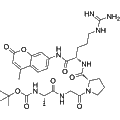
Boc-Ala-Gly-Pro-Arg-AMC is a fluorogenic substrate designed for monitoring protease activity, particularly within serine proteases. This substrate is ideal for assessing enzymatic function in research applications involving protease activity, such as studying the oligopeptide enzyme B of Trypanosoma brucei. Its fluorescence allows for sensitive detection of enzymatic events, making it a valuable tool in biochemical and molecular biology studies.
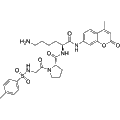
Tos-Gly-Pro-Lys-AMC is a fluorogenic peptide substrate specifically designed for tryptase enzyme activity. This compound facilitates the detection and quantification of tryptase activity through fluorescence, making it a valuable tool in research related to protease biology and inflammation. Its application in biochemical assays allows for the exploration of tryptase's role in various physiological and pathological processes.
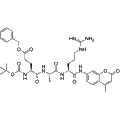
Boc-Glu(OBzl)-Ala-Arg-AMC serves as a fluorogenic substrate specifically for coagulation factor XIa and trypsin. The enzymatic cleavage of the amide bond located between arginine and the methylcoumarin amide moiety leads to the release of the fluorescent compound 7-Amino-4-methylcoumarin. This reagent is valuable for research applications focused on protease activity detection and the study of coagulation pathways.
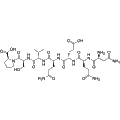
NQEQVSP is a peptide derived from fibrin-binding proteins that acts as a substrate for Factor XIIIa. This compound is specifically recognized by Factor XIII and is enzymatically conjugated into fibrin during the polymerization process. NQEQVSP is valuable for research applications studying coagulation, fibrin formation, and related processes in hemostasis and thrombosis.
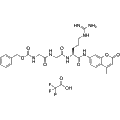
Z-Gly-Gly-Arg-AMC TFA is a thrombin-specific fluorogenic substrate that enables the assessment of thrombin generation in both platelet-rich plasma (PRP) and platelet-poor plasma (PPP). This TFA salt form enhances its utility as a fluorescent dye, emitting at 480 nm when excited at 390 nm. It is particularly valuable in research applications focused on coagulation and hemostasis mechanisms.
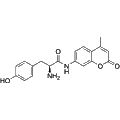
H-Tyr-AMC is a fluorogenic substrate specifically designed for tyrosine aminopeptidases. Its biological activity includes serving as an inhibitor of tobacco and potato hydroxycinnamoyl-CoA:tyramine N-(hydroxycinnamoyl)transferase (THT), demonstrating Ki values of 0.72 μM and 0.42 μM, respectively. This compound is valuable for research applications involving enzyme kinetics and substrate specificity in plant biochemistry.
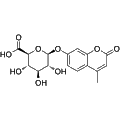
4-Methylumbelliferyl-β-D-glucuronide is a fluorogenic substrate utilized for the detection of β-glucuronidase activity. Upon enzymatic hydrolysis, it emits fluorescence at an excitation wavelength of 362 nm and an emission wavelength of 445 nm. This compound serves as an effective tool in research applications aimed at quantifying β-glucuronidase activity and monitoring Escherichia coli populations.
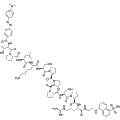
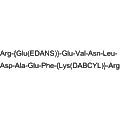
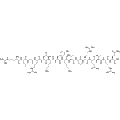
β-Secretase substrate VI, fluorogenic is a fluorogenic peptide labeled with EDANS and DABCYL, specifically designed for the measurement of β-site amyloid precursor protein cleaving enzyme 1 (BACE1) activity. This substrate enables the quantification of BACE1 enzymatic activity through fluorescence emission (Em=360nm, Ex=528nm), providing a direct correlation between enzyme activity levels and fluorescence intensity. It is an essential tool for researchers studying Alzheimer's disease and related amyloidogenic processes.
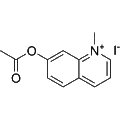
7-Acetoxy-1-methylquinolinium iodide is a fluorogenic substrate specifically targeting cholinesterase. Upon hydrolysis, it emits fluorescence at 410 nm when excited at 320 nm, facilitating the detection and identification of cholinesterase inhibitors. This compound is widely utilized in fluorometric assays, contributing significantly to biochemical research and drug discovery efforts focused on cholinergic pathways.
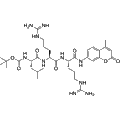
Boc-LRR-AMC is a fluorogenic substrate designed to detect the trypsin-like activity of both the 26S proteasome and the 20S proteasome core. Its highly sensitive fluorescence allows for precise measurement of proteasomal activity in various biological samples. Boc-LRR-AMC is valuable for research applications involving protein degradation, cellular regulation, and proteasome function assessment.
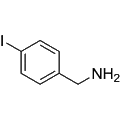
4-Iodobenzylamine, also known as (4-Iodophenyl)methanamine, serves as a probe for the detection of binding patterns in serine proteases, specifically those resembling trypsin, as well as urokinase-type plasminogen activator (uPA). It demonstrates stability in aqueous solutions, making it suitable for various biochemical assays. This compound is valuable for research applications focused on proteolytic enzyme activity and interaction studies.
LRRKtide is a substrate specifically designed for LRRK (Leucine-Rich Repeat Kinase) kinase. This peptide is utilized in biochemical assays to study LRRK kinase activity and its role in various cellular processes. Research applications include investigations into neurodegenerative diseases, particularly those associated with Parkinson's disease, where LRRK kinase has been implicated in pathogenic mechanisms.
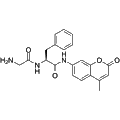
Gly-Phe-AMC is a fluorogenic peptide substrate that consists of a glycine-phenylalanine sequence linked to the fluorophore AMC. This compound is specifically utilized as a substrate for cathepsin C and is instrumental in detecting the activity of various proteases. Its ability to fluoresce upon cleavage makes Gly-Phe-AMC a valuable tool in biochemical assays and protease activity studies.
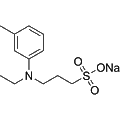
TOPS is a chromogenic substrate that participates in an oxidative coupling reaction with 4-aminoantipyrine in the presence of hydrogen peroxide and nanocrystalline cobalt selenide. This compound serves as an essential tool for the detection of uric acid, enabling studies related to purine metabolism and related disorders. Its specific reactivity and capacity to produce measurable color changes make TOPS valuable for various biochemical analyses and diagnostics.
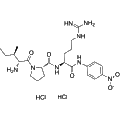
D-Ile-Pro-Arg p-nitroanilide dihydrochloride serves as a chromogenic peptide substrate for tissue plasminogen activator (tPA). This compound enables the study of tPA activity through the quantification of its enzymatic cleavage, facilitating investigations into fibrinolytic processes. It is commonly utilized in research applications focused on thrombolysis and related cardiovascular studies.
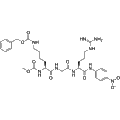
Me-CO-Lys(Cbo)-Gly-Arg-pNA is a specific substrate for C1 esterase, facilitating the study of this enzyme's catalytic action. It is designed to yield a cleavage product that can be quantitatively measured, enabling researchers to investigate C1 esterase activity in various biological contexts. This compound is valuable for assays aimed at understanding enzymatic processes and exploring potential therapeutic applications related to C1 esterase dysfunction.