
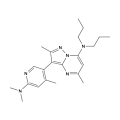
- Cat. No.
- A13535
R-121919
Synonyms: NBI 30775
R121919 is a potent small-molecule CRF1 receptor antagonist.
In stock
View Details
Search by product name, CAS, target or catalog number. Press Down Arrow to reach product suggestions, Tab to move between links, and Escape to close suggestions.
Corticotropin-releasing factor receptor (CRFR) antagonists act on key receptors of the stress response. The peptide corticotropin-releasing factor (CRF) was characterized in 1981 as a 41-residue hypothalamic peptide that stimulates corticotropin secretion. Expression cloning of a human CRF receptor, now called CRF1, followed in 1993, and a second subtype, CRF2, was identified later. Through the hypothalamic-pituitary-adrenal (HPA) axis, CRF1 signaling links stress to glucocorticoid release and anxiety-like behavior. Most compounds here are small-molecule CRF1 antagonists, including pexacerfont, verucerfont, R-121919 and CP 376395. The list also holds Corticotropin Releasing Factor, bovine, and tetracosactide, a corticotropin fragment that acts on melanocortin receptors.
Synonyms: NBI 30775
R121919 is a potent small-molecule CRF1 receptor antagonist.
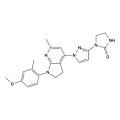
Synonyms: GW876008; GW 876008X
Emicerfont, also known as GW876008, is a CRF-1 antagonist. Emicerfont blocks the CRH-1 receptor, and so reduces ACTH release.
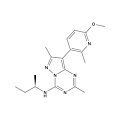
Synonyms: BMS-562086
Pexacerfont is a selective corticotropin-releasing factor (CRF1) receptor antagonist with IC50 of 6.1±0.6 nM for human CRF1 receptor.

Synonyms: Bovine ACTH-releasing factor
Corticotropin Releasing Factor, bovine, neurotransmitter and CRF receptor antagonist.
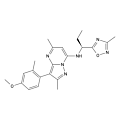
Synonyms: GSK561679; SK-561,679; GSK561679A; NBI77860
Verucerfont, also known as GSK561679 and NBI77860, is a CRF-1 antagonist. Verucerfont blocks the CRH-1 receptor, and so reduces ACTH release following chronic stress.
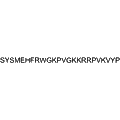
Synonyms: Tetracosactrin; ACTH(1–24)
Tetracosactide is a potent agonist of the melanocortin-4 receptor (MC4R), activating human MC4R with an EC50 of 0.65 nM. This synthetic analogue of adrenocorticotrophic hormone (ACTH) is known to stimulate the release of corticosteroids, including cortisol, from the adrenal gland. Tetracosactide is utilized in research investigating conditions such as ulcerative colitis, Crohn's disease, and various forms of arthritis, including juvenile and adult rheumatoid arthritis and osteoarthrosis.
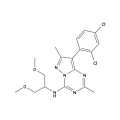
Synonyms: DMP 696,DMP-696
DMP 696 is a selective corticotropin-releasing hormone receptor 1 (CRHR1) antagonist, used for the treatment of anxiety and depression.
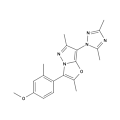
NVS-CRF38 is a novel corticotropin-releasing factor receptor 1 (CRF1) antagonist with low water solubility.
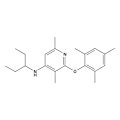
CP 376395 is a potent and selective Corticotropin releasing factor 1 (CRF1) receptor antagonist.
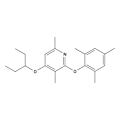
CP 316311 is a potent and selective CRF1 receptor antagonist with an IC50 value of 6.8 nM.
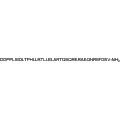
Synonyms: Urocortin (Rattus norvegicus); Rat urocortin
Urocortin, rat (Urocortin (Rattus norvegicus)) is a neuropeptide and a potent endogenous CRFR agonist with Kis of 13 nM, 1.5 nM, and 0.97 nM for human CRF1, rat CRF2α and mouse CRF2β, respectively.
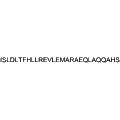
CRF(6-33)(human) is a CRF binding protein (CRF-BP) ligand inhibitor. CRF(6-33)(human) competitively binds the CRF-BP but not the post-synaptic CRF receptors. CRF(6-33)(human) has anti-obesity effect.
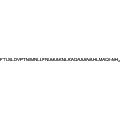
Urocortin III (human) is a corticotropin-releasing factor (CRF)-related peptide. Urocortin III (human) preferentially binds and activates CRF-R2 and has a discrete central nervous system and peripheral distribution. Urocortin III (human) selectively binds to type 2 CRF receptors with Ki values of 13.5, 21.7, and >100 nM for mCRF2β, rCRF2α, and hCRF1, respectively. Urocortin III (human) mediates somatostatin-dependent negative feedback control of Insulin (human) secretion.
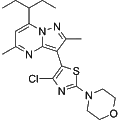
Synonyms: SPR001; LY2371712
Tildacerfont is a potent and orally active corticotropin-releasing factor type 1 (CRF1) receptor antagonist. It effectively reduces levels of adrenocorticotropic hormone (ACTH) and adrenal androgens, demonstrating a favorable safety profile. Tildacerfont is being investigated for the treatment of congenital adrenal hyperplasia (CAH) and holds promise for research into disorders of the hypothalamic-pituitary-adrenal (HPA) axis.
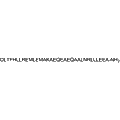
α-Helical CRF(9-41) is a competitive antagonist of the corticotropin-releasing factor receptor 2 (CRF₂) with a K\_B of approximately 100 nM. It also acts as a partial agonist at the CRF₁ receptor, with an EC₅₀ of 140 nM. This dual activity makes it a useful tool for studying CRF receptor signaling and stress-related physiological responses.
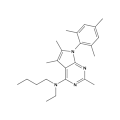
Antalarmin is a selective, nonpeptide antagonist of corticotropin-releasing factor receptor 1 (CRHR1), with a Ki of 2.7 nM. It is capable of crossing the blood–brain barrier, making it a valuable compound for investigating CRHR1-mediated central nervous system functions and stress-related disorders.
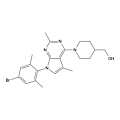
Synonyms: R317573; CRA5626; TAI041
JNJ19567470 (R317573) is a selective, non-peptidergic corticotropin-releasing factor type 1 (CRF₁) receptor antagonist. It effectively blocks sodium lactate (NaLac)-induced panic-like behavior and associated cardiovascular responses. JNJ19567470 also reduces regional glucose utilization in the amygdala and attenuates anxiety-related responses
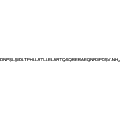
Synonyms: Urocortin (human); Human urocortin; Human urocortin 1; Human urocortin I
Urocortin, human, is a 40-amino acid neuropeptide that functions as a selective agonist of the endogenous corticotropin-releasing factor receptor 2 (CRF₂). It exhibits high binding affinity with Kᵢ values of 0.4 nM for human CRF₁, 0.3 nM for rat CRF₂α, and 0.5 nM for mouse CRF₂β. Urocortin plays a role in modulating stress responses, cardiovascular function, and feeding behavior.
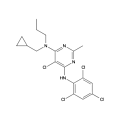
NBI-27914 is a potent and selective antagonist of corticotropin-releasing factor receptor 1 (CRFR1), a member of the G protein-coupled receptor (GPCR) superfamily. By selectively blocking CRFR1, NBI-27914 is useful for studying stress-related pathways and disorders mediated by CRF signaling, such as anxiety and depression.
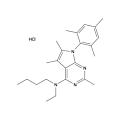
Antalarmin hydrochloride is an orally active, non-peptide antagonist of corticotropin-releasing hormone receptor 1 (CRHR1) with a Ki of 1 nM. It effectively suppresses CRH-induced adrenocorticotropic hormone (ACTH) secretion and blocks both CRH- and novelty-induced anxiety-like behaviors in animal models. Antalarmin hydrochloride also exhibits anti-inflammatory activity in arthritis models and alleviates stress-induced gastric ulceration, supporting its potential in research related to irritable bowel syndrome and stress-related inflammatory conditions.
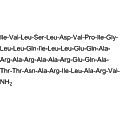
Urocortin II, human is a selective agonist of the type-2 corticotropin-releasing factor (CRF2) receptor, exhibiting key biological activities that include promoting satiety and providing neuroprotective effects. This peptide also demonstrates bactericidal and antiparasitic properties, as well as pro-inflammatory activity. Additionally, Urocortin II, human can activate the NF-κB pathway and ERK1/2 MAP kinase, making it relevant for research in pulmonary arterial hypertension and cardiac protection. Its diverse applications extend to studies in infection, inflammation, metabolic disorders, neurological conditions, and cardiovascular diseases.
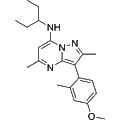
DMP 904 is a noncompetitive antagonist of the corticotropin-releasing factor receptor (CRFR), effectively inhibiting CRF-stimulated adenylate cyclase activity and adrenocorticotropic hormone (ACTH) release. This compound demonstrates significant antidepressant and anxiolytic properties, making it a valuable tool for research in stress-related disorders and neuropsychiatric conditions. Its mechanism of action can provide insights into the therapeutic potential for anxiety and depression treatments.
Out of stock
All 3 sizes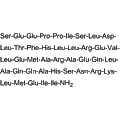
Synonyms: Human CRF; Human corticotropin-releasing factor
Corticotropin-releasing factor (human) acts as a modulator of corticotropin-releasing factor receptors (CRFR). It plays a crucial role in the hypothalamic-pituitary-adrenal (HPA) axis by stimulating the synthesis and secretion of adrenocorticotropin (ACTH) in the anterior pituitary. This reagent is essential for research in stress response, neuroendocrine regulation, and related pathophysiological conditions. Its applications extend to studies in anxiety, depression, and other mood disorders, providing insight into the molecular mechanisms of HPA axis regulation.
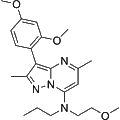
NBI 30545 is a selective antagonist of the corticotropin-releasing factor 1 receptor (CRF1R), demonstrating a Ki value of 3.4 nM for the human receptor. This compound effectively inhibits CRF-stimulated intracellular cAMP accumulation and subsequent ACTH release. NBI 30545 is valuable for research focusing on depression, anxiety disorders, and stress-related diseases.
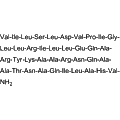
Urocortin II, mouse is a selective agonist of the type-2 corticotropin-releasing factor (CRF2) receptor, exhibiting a high affinity with a Ki value of 0.66 nM for CRFR2 and over 100 nM for CRFR1. It activates CRF2 receptors via cAMP/PKA and Ca2+/CaMKII signaling pathways. This peptide is predominantly expressed in specific regions of the central nervous system and plays a crucial role in processing visceral sensory information while modulating autonomic functions, making it valuable for research in neurobiology and stress response.