All Dyes

All Dyes is the single product list for the Fluorescent Dyes, Probes & Stains section. Many dyes here have no application or dye-family subcategory, so the list is the broadest way to browse the range. It suits searches by product name when the required dye is already known. Examples range from the near-infrared cyanine indocyanine green and the ratiometric calcium indicator Fura-2 pentapotassium to the nucleic acid stains Hoechst 33258 trihydrochloride and SYBR Green II. Classical stains such as hematoxylin, reactive labeling dyes and enzyme substrates are listed alongside them. For selection by task or by core structure, the parent Fluorescent Dyes, Probes & Stains page groups dyes by application and dye family.

Items 376-400 of 2505

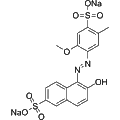
  • Allura Red AC
    Cat. No.
    A26305

    Allura Red AC

    Synonyms: FD&C RED NO. 40; CI 16035

    Allura Red AC is a food colorant that functions as a deep red, water-soluble compound. It is widely utilized in a variety of applications including beverages, syrups, candies, and cereals. Notably, Allura Red AC can statically quench the intrinsic fluorescence of human serum albumin (HSA) and serves as a pro-inflammatory agent linked to the 5-hydroxytryptamine (5-HT) pathway, which may exacerbate conditions like experimental colitis. This compound is valuable for research focusing on inflammatory bowel disease, intestinal barrier function, and the safety of food additives.

    50 mg
    $30.00
    100 mg
    $40.00
    All 2 sizes
  • BG14
    Cat. No.
    A26315

    BG14

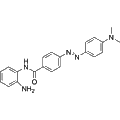
    BG14 is a chemical optical modulation of epigenetic transcriptional probe that enables high-resolution optical control of epigenetic mechanisms via visible light. This compound photochromically inhibits human histone deacetylases (HDACs), providing a unique tool for studying the dynamic regulation of the human genome. BG14 is applicable in research areas focused on epigenetic regulation and transcriptional modulation, allowing for precise dissection of gene expression pathways.

    25 mg
    $1,275.00
    50 mg
    $1,625.00
    All 3 sizes
  • Coumarin-SAHA
    Cat. No.
    A26329

    Coumarin-SAHA

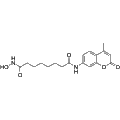
    Coumarin-SAHA is a fluorescent probe designed to investigate the binding affinities (kd) and dissociation off-rates (koff) of histone deacetylase 8 (HDAC8) inhibitor complexes. This compound is particularly valuable in research applications focused on epigenetic regulation and cancer biology. The fluorescent properties of Coumarin-SAHA enable real-time monitoring of molecular interactions, enhancing the understanding of HDAC functions and their role in disease mechanisms.

    1 mg
    $65.00
    10 mg
    $405.00
    All 3 sizes
  • Estrogen receptor β/HDAC probe 1
    Cat. No.
    A26518

    Estrogen receptor β/HDAC probe 1

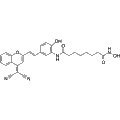
    Estrogen Receptor β/HDAC Probe 1 is a near-infrared fluorescent probe designed to simultaneously target the estrogen receptor β and histone deacetylase (HDAC). This probe enables the study of dynamic interactions between these two critical proteins, facilitating the investigation of their roles in cellular signaling and gene regulation. It is particularly useful in cancer research and other studies involving estrogen signaling pathways and epigenetic modifications.

    Out of stock

    All 3 sizes
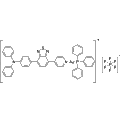
  • BODIQPy-TPA
    Cat. No.
    A26871

    BODIQPy-TPA

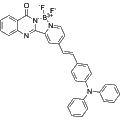
    BODIQPy-TPA is a lipophilic probe that induces ferroptosis in B16 and HepG2 cells upon exposure to light, primarily through the mechanism of lipid peroxidation. This compound exhibits a maximum absorption wavelength of 488 nm and a maximum emission wavelength exceeding 640 nm. BODIQPy-TPA is useful for studies investigating the role of ferroptosis in cancer biology and for exploring light-mediated therapeutic strategies.

    Out of stock

    All 3 sizes
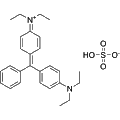
  • Brilliant green
    Cat. No.
    A27897

    Brilliant green

    Brilliant green is a cationic dye primarily utilized in the coloring of silk and wool. It exhibits antimicrobial activity by inhibiting the growth of Gram-positive bacteria, fungi, and certain intestinal parasites. This compound is also used in various biological research applications to study microbial resistance and the effects of dyes on cellular processes.

    5 mg
    $55.00
    10 mg
    $90.00
    All 3 sizes
  • Cetuximab sarotalocan
    Cat. No.
    A28680

    Cetuximab sarotalocan

    Synonyms: RM-1929; Cetuximab-IRDye-700DX

    Cetuximab sarotalocan is a conjugate of the anti-EGFR monoclonal antibody Cetuximab with the near-infrared photosensitizing dye IRdye700DX. This reagent is designed for applications in the research of head and neck cancers, specifically targeting epidermal growth factor receptors to facilitate imaging and therapeutic interventions. Its unique properties enable enhanced visualization in oncological studies, aiding in the exploration of tumor biology and treatment efficacy.

    Out of stock

    All 3 sizes
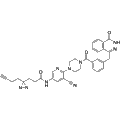
  • PARPYnD
    Cat. No.
    A29126

    PARPYnD

    PARPYnD is a photoaffinity probe for the poly(ADP-ribose) polymerase (PARP) family, specifically targeting PARP1, PARP2, and PARP6. This compound demonstrates significant biological activity with IC50 values of 38 nM for PARP1, 6 nM for PARP2, and 230 nM for PARP6. PARPYnD is effective in enriching recombinant PARP6 in cell lysates and inhibiting its activity in cell-free assays, making it a valuable tool for research in cancer biology, particularly in studies involving multipolar spindle formation in breast cancer cells. However, it does not label PARP6 in intact cellular environments.

    1 mg
    $125.00
    2 mg
    $190.00
    All 5 sizes
  • ARHB
    Cat. No.
    A29165

    ARHB

    ARHB is a selective and sensitive fluorescent probe targeting N-acetyltransferase 2 (NAT2), enabling real-time detection of NAT2 activity in various bacterial species. This probe effectively penetrates bacterial cells, with fluorescence intensity correlating positively with NAT2 expression levels. ARHB is particularly valuable for high-throughput screening of natural inhibitors aimed at combatting tuberculosis.

    Out of stock

    All 3 sizes
  • R-PE
    Cat. No.
    A30120

    R-PE (R-Phycoerythrin)

    Synonyms: R-Phycoerythrin

    R-Phycoerythrin (R-PE) is an orange-red fluorescent dye derived from the red algae Heterosiphonia japonica. This fluorescent probe consists of α, β, and γ subunits and is widely utilized in fluorescence microscopy, flow cytometry, and immunofluorescence analysis, with an excitation wavelength of 495 nm. Additionally, R-PE is employed in photodynamic therapy (PDT) for inducing apoptosis in tumor cells, making it a valuable tool in cancer research and diagnostics.

    Out of stock

    All 3 sizes
  • Hematoporphyrin dihydrochloride
    Cat. No.
    A30124

    Hematoporphyrin dihydrochloride

    Synonyms: Hematoporphyrin IX dihydrochloride

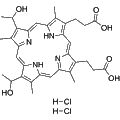
    Hematoporphyrin dihydrochloride is a potent photosensitizer known for its ability to induce apoptosis in cancer cells. It has been shown to effectively reduce tumor growth in vivo when subjected to red light exposure. Additionally, this compound serves as a substrate for the affinity chromatography of heme-binding proteins, making it valuable for research applications in cancer therapy and protein interaction studies.

    100 mg
    $25.00
    200 mg
    $35.00
    All 3 sizes
  • IR-783
    Cat. No.
    A30200

    IR-783

    Synonyms: ADS 780WS

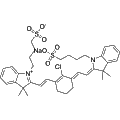
    IR-783 is a near-infrared heptamethine cyanine fluorescent probe that serves as an effective tool for tumor imaging and tracking. It demonstrates significant inhibitory effects on tumor growth and induces apoptosis in the MDA-MB-231 xenograft model, making it valuable for breast cancer research. Its fluorescence properties allow for enhanced visualization of tumor dynamics in various biological studies.

    10 mg
    $20.00
    25 mg
    $25.00
    All 7 sizes
  • Hematoporphyrin monomethyl ether
    Cat. No.
    A30341

    Hematoporphyrin monomethyl ether

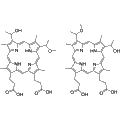
    Hematoporphyrin monomethyl ether is a porphyrin-related photosensitizer that efficiently generates singlet oxygen upon activation. Its high selectivity and low toxicity make it a valuable tool for the diagnosis and treatment of various tumors, including lung cancer, bladder cancer, nevus flammeus, and brain glioma. This compound's unique properties facilitate its use in photodynamic therapy and cancer research applications.

    1 mg
    $40.00
    5 mg
    $100.00
    All 6 sizes
  • Methyl pyropheophorbide-a
    Cat. No.
    A30587

    Methyl pyropheophorbide-a

    Synonyms: Pyropheophorbide-a methyl ester

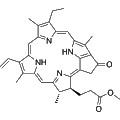
    Methyl pyropheophorbide-a is a chlorophyll-a derivative functioning as a potent photosensitizer in photodynamic therapy (PDT) for cancer treatment. This compound exhibits significant photodynamic activity, capable of inducing apoptosis in targeted cells while effectively inhibiting tumor growth. Its unique properties make it a valuable reagent in cancer research and therapeutic applications.

    1 mg
    $25.00
    5 mg
    $75.00
    All 6 sizes
  • Triphenylamine
    Cat. No.
    A31062

    Triphenylamine

    Synonyms: N,N-Diphenylbenzenamine

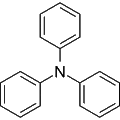
    Triphenylamine is a potent apoptosis inducer that targets cellular death pathways. Known for its strong fluorescent properties, this compound is utilized in a variety of research applications, including photodynamic therapy and as a fluorescent dye in biological studies. Its ability to induce apoptosis makes it a valuable tool for investigating cancer mechanisms and therapeutic strategies.

    1 mg
    $20.00
    25 g
    $25.00
    All 5 sizes
  • Hematoporphyrin
    Cat. No.
    A31415

    Hematoporphyrin

    Synonyms: Hematoporphyrin IX

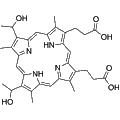
    Hematoporphyrin is a potent photosensitizer primarily used in photodynamic therapy. It has been shown to induce apoptosis in U87 glioma cells and effectively reduce tumor growth in vivo upon exposure to red light. Additionally, Hematoporphyrin serves as a substrate for affinity chromatography of heme-binding proteins, making it valuable for various biochemical research applications.

    100 mg
    $60.00
    All 1 sizes
  • PAO-Nap
    Cat. No.
    A31731

    PAO-Nap

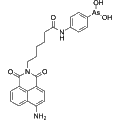
    PAO-Nap is a selective thioredoxin reductase (TrxR) inhibitor modified with a naphthalimide fluorophore linked via aminocaproic acid. This compound induces oxidative stress-mediated apoptosis in HL-60 cells, making it a valuable tool for studying apoptotic pathways and oxidative stress mechanisms in cancer research. Its unique fluorescent properties also facilitate real-time monitoring of cellular responses to TrxR inhibition.

    Out of stock

    All 3 sizes
  • Antitumor photosensitizer-6
    Cat. No.
    A31980

    Antitumor photosensitizer-6

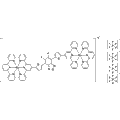
    Antitumor Photosensitizer-6 (Compound Ru2) is a novel photosensitizer that exhibits synergistic type I/II photosensitization and photocatalytic activity when activated by 595 nm light. This compound induces an intracellular redox imbalance, impacting biosynthetic and metabolic pathways, ultimately promoting cell apoptosis. Antitumor Photosensitizer-6 is an effective tool for advancing research in photodynamic therapy (PDT) applications.

    Out of stock

    All 3 sizes
  • Iotrolan
    Cat. No.
    A32376

    Iotrolan

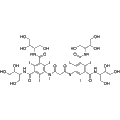
    Iotrolan is a traditional contrast agent primarily used in medical imaging to enhance visualization of internal structures. This compound does not affect neural progenitor cell viability or induce apoptosis, making it a safe choice for enhancing imaging clarity without compromising cell health. It is widely utilized in various imaging modalities to improve diagnostic accuracy.

    Out of stock

    All 3 sizes
  • CPT-Se4
    Cat. No.
    A32477

    CPT-Se4

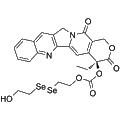
    CPT-Se4 is a fluorogenic camptothecin prodrug that targets cancer cells through enhanced cytotoxicity. This compound effectively reduces the GSH/GSSG ratio and total thiol levels while increasing reactive oxygen species (ROS) in Hep G2 cells, leading to the induction of apoptosis. CPT-Se4 demonstrates significant antitumor activity across various cancer cell lines, including HeLa, Hep G2, A549, and SMMC-7721, with an IC50 range of 2.54-6.4 μM, making it a valuable tool for cancer research applications.

    25 mg
    $1,405.00
    50 mg
    $1,790.00
    All 3 sizes
  • CPT-Se3
    Cat. No.
    A32718

    CPT-Se3

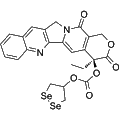
    CPT-Se3 is a fluorogenic camptothecin prodrug that targets cancerous cells by enhancing cytotoxic activity. It demonstrates improved potency in inducing apoptosis and inhibiting tumor growth through mechanisms that decrease the GSH/GSSG ratio, lower total thiol levels, and elevate reactive oxygen species (ROS) in Hep G2 cells. CPT-Se3 exhibits significant cytotoxic effects against various cancer cell lines, including HeLa, Hep G2, A549, and SMMC-7721, with IC50 values ranging from 2.19 to 4.7 μM. This compound is useful for research focused on cancer therapy and the evaluation of prodrug strategies.

    25 mg
    $1,405.00
    50 mg
    $1,790.00
    All 3 sizes
  • Photosensitizer-6
    Cat. No.
    A32861

    Photosensitizer-6

    Photosensitizer-6 is a gold (I) complex that functions as a potent photosensitizer and exhibits inhibitory activity against thioredoxin reductase (TrxR). This compound induces apoptosis in 4T1 cancer cells and effectively targets and eradicates tumors through chemo-phototherapy and immunogenic cell death when exposed to light. Additionally, Photosensitizer-6 is valuable for tumor imaging applications.

    Out of stock

    All 3 sizes
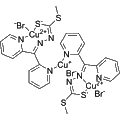
  • Complex 3
    Cat. No.
    A33085

    Complex 3

    Complex 3 is a fluorescent dithiocarbazate-copper complex targeting mitochondrial function, demonstrating significant anticancer properties. It exhibits excitation and emission maxima of 455-495 nm and 535 nm, respectively. Complex 3 effectively inhibits the proliferation of several pancreatic cancer cell lines, including BxPC-3, AsPC-1, PANC-1, and WI38, with IC50 values of 0.74, 0.41, 0.62, and 2.06 µM, respectively. Additionally, it induces lipid peroxidation, mitochondrial rupture, and apoptosis, while also disrupting cytokine-cytokine receptor interactions in AsPC-1 cells. In vivo, Complex 3 has demonstrated efficacy by reducing tumor volume in an AsPC-1 mouse xenograft model, making it a valuable tool for cancer research.

    Out of stock

    All 3 sizes
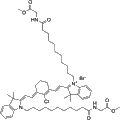
  • IR-58
    Cat. No.
    A33094

    IR-58

    IR-58 is a mitochondria-targeting near-infrared fluorophore that enhances autophagy. It effectively induces apoptosis in tumor cells by promoting excessive autophagy through the activation of the reactive oxygen species (ROS)-Akt-mTOR signaling pathway. This compound is valuable for research applications focused on cancer biology, autophagy modulation, and therapeutic development.

    Out of stock

    All 3 sizes
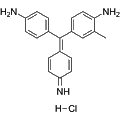
  • Fuchsine base monohydrochloride
    Cat. No.
    A33201

    Fuchsine base monohydrochloride

    Synonyms: Magenta base monohydrochloride; Basic Fuchsin monohydrochloride; Rosaniline Base monohydrochloride

    Fuchsine base monohydrochloride is a triaminotriphenylmethane dye known for its application as a magenta dye. It exhibits notable bactericidal, fungicidal, and anesthetic properties, making it valuable in various biological studies. This reagent can effectively stain collagen, muscle tissue, mitochondria, and is particularly useful in highlighting tuberculosis during microscopy. Additionally, Fuchsine base monohydrochloride serves as a reliable counterstain in Gram staining procedures, enhancing the differentiation of microbial cell walls.

    1 g
    $20.00
    5 g
    $25.00
    All 6 sizes

Items 376-400 of 2505

Added to your cart

View Cart Checkout

    Loading...