All Dyes

All Dyes is the single product list for the Fluorescent Dyes, Probes & Stains section. Many dyes here have no application or dye-family subcategory, so the list is the broadest way to browse the range. It suits searches by product name when the required dye is already known. Examples range from the near-infrared cyanine indocyanine green and the ratiometric calcium indicator Fura-2 pentapotassium to the nucleic acid stains Hoechst 33258 trihydrochloride and SYBR Green II. Classical stains such as hematoxylin, reactive labeling dyes and enzyme substrates are listed alongside them. For selection by task or by core structure, the parent Fluorescent Dyes, Probes & Stains page groups dyes by application and dye family.

Items 426-450 of 2505

  • HKSOX-1m (5/6-mixture)
    Cat. No.
    A39003

    HKSOX-1m (5/6-mixture)

    HKSOX-1m (5/6-mixture) is a fluorescent probe designed for selective and sensitive detection of oxygen in mitochondria, with excitation and emission wavelengths of 509 nm and 534 nm, respectively. This probe demonstrates excellent selectivity for O2 across a wide pH range and is resistant to interference from strong oxidants and abundant reductants present in cellular environments. It is a valuable tool for studies investigating mitochondrial function, oxidative stress, and cellular metabolism.

    1 mg
    $200.00
    5 mg
    $615.00
    All 3 sizes
  • Dihydrorhodamine 6G
    Cat. No.
    A39027

    Dihydrorhodamine 6G

    Synonyms: DHR 6G

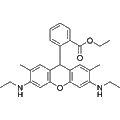
    Dihydrorhodamine 6G (DHR 6G) serves as a fluorescent probe targeting mitochondrial membranes. This nonfluorescent compound easily penetrates cells and is oxidized by reactive oxidative species or cellular redox systems, converting into the fluorescent rhodamine 6G. DHR 6G is valuable for the detection of reactive oxygen species (ROS), including superoxide, making it a crucial tool for research involving oxidative stress and mitochondrial function.

    5 mg
    $20.00
    10 mg
    $35.00
    All 2 sizes
  • Phytoene
    Cat. No.
    A39112

    Phytoene

    Synonyms: trans-Phytoene

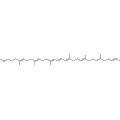
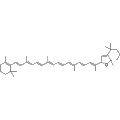
    Phytoene is a carotene pigment and serves as the precursor to all carotenoids. It is the predominant geometric isomer found in many carotenogenic organisms and has been shown to delay the appearance of skin tumors and reduce their incidence in UV-B light-induced models. Additionally, phytoene provides protection against oxidative stress and inhibits malignant transformation, demonstrating anti-proliferative effects in breast cancer cells. These properties make phytoene a valuable compound for research in cancer biology and skin health.

    1 mg
    $215.00
    5 mg
    $1,105.00
    All 2 sizes
  • PCL-2
    Cat. No.
    A39222

    PCL-2

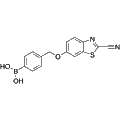
    PCL-2 is a reactive oxygen species-responsive fluorescent probe targeting hydrogen peroxide. It selectively reacts with hydrogen peroxide to produce 6-hydroxy-2-cyanobenzothiazole, exhibiting minimal response to other biologically relevant reactive oxygen species. PCL-2 is suitable for chemoselective imaging of hydrogen peroxide in in vitro models and can be applied in acute inflammation research using mouse models. This probe allows for the investigation of hydrogen peroxide's role in acute inflammatory processes.

    Out of stock

    All 3 sizes
  • 7-Hydroxy-4-methyl-2(1H)-quinolone
    Cat. No.
    A39223

    7-Hydroxy-4-methyl-2(1H)-quinolone

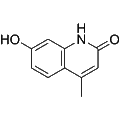
    7-Hydroxy-4-methyl-2(1H)-quinolone is a fluorescent probe that effectively targets hydroxyl radicals. It plays a critical role in detecting DNA damage induced by oxidative stress, providing valuable insights into cellular damage mechanisms. This compound is utilized in various research applications, including studies focused on oxidative stress and DNA repair processes.

    25 mg
    $1,275.00
    50 mg
    $1,625.00
    All 3 sizes
  • Mutatochrome
    Cat. No.
    A39294

    Mutatochrome

    Synonyms: Citroxanthin

    Mutatochrome, also known as Citroxanthin, is a naturally occurring carotenoid pigment found in various plant species. This compound exhibits antioxidant properties, contributing to cellular protection against oxidative damage from free radicals. Research applications include investigations into its anti-inflammatory and anticancer effects, making it a valuable reagent for studies focused on these biological processes.

    Out of stock

    All 3 sizes
  • NCIC-VIS
    Cat. No.
    A39622

    NCIC-VIS

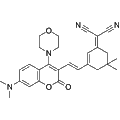
    NCIC-VIS is a lysosome-targeted, viscosity-sensitive two-photon near-infrared fluorescent probe. Its rigid molecular structure minimizes torsional motion, enhancing the fluorescence quantum yield and two-photon absorption cross-section. NCIC-VIS facilitates real-time imaging of autophagy processes within cells, making it a valuable tool for researchers investigating cellular dynamics and lysosomal function.

    Out of stock

    All 3 sizes
  • Z-Val-Val-Arg-AMC
    Cat. No.
    A39792

    Z-Val-Val-Arg-AMC

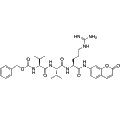
    Z-Val-Val-Arg-AMC is a fluorescent peptide substrate specifically designed for the assessment of cathepsin enzyme activity. This compound exhibits a high degree of specificity, facilitating the study of cathepsin-mediated biological processes. It is valuable in research applications involving proteolytic activity and enzyme kinetics, enabling researchers to investigate the roles of cathepsins in various physiological and pathological conditions.

    5 mg
    $80.00
    10 mg
    $125.00
    All 3 sizes
  • Bz-FVR-AMC
    Cat. No.
    A39795

    Bz-FVR-AMC

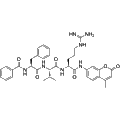
    Bz-FVR-AMC is a fluorogenic substrate specifically designed for the assay of procathepsin activity. With a kcat/Km value of 1070 mM^-1s^-1, it provides a robust tool for measuring cathepsin enzyme activity in various biological samples. Bz-FVR-AMC is particularly useful for studying proteolytic processes and understanding cysteine protease functions in both physiological and pathological contexts. However, at high concentrations, this substrate may exhibit inhibitory effects.

    5 mg
    $45.00
    10 mg
    $80.00
    All 3 sizes
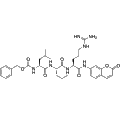
  • Z-Leu-Leu-Arg-AMC
    Cat. No.
    A39826

    Z-Leu-Leu-Arg-AMC

    Z-Leu-Leu-Arg-AMC is a synthetic peptide substrate specifically designed for cathepsin S. This compound serves as a fluorogenic substrate, enabling the measurement of cathepsin S activity in various biological samples. It is utilized in research applications focusing on protease activity, cellular degradation processes, and the study of lysosomal function and related diseases.

    1 mg
    $80.00
    5 mg
    $205.00
    All 3 sizes
  • Cathepsin D and E FRET Substrate
    Cat. No.
    A39833

    Cathepsin D and E FRET Substrate

    Cathepsin D and E FRET Substrate is a fluorogenic substrate specifically designed for the selective detection of cathepsins D and E, avoiding interaction with cathepsins B, H, and L. Cleavage occurs at the Phe-Phe amide bond, releasing a fluorescent signal that can be quantitatively measured. This substrate is ideal for routine assays and mechanistic studies, facilitating the investigation of cathepsin activity in various biological contexts.

    1 mg
    $660.00
    5 mg
    $2,715.00
    All 2 sizes
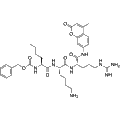
  • Z-Nle-Lys-Arg-AMC
    Cat. No.
    A39881

    Z-Nle-Lys-Arg-AMC

    Z-Nle-Lys-Arg-AMC is a fluorogenic peptide substrate designed to specifically detect cathepsin B activity across a wide pH range. This substrate undergoes cleavage by cathepsin B, resulting in fluorescence which can be quantitatively measured. It is particularly valuable in studies related to protease activity, cell signaling, and understanding pathological processes where cathepsin B is involved.

    Out of stock

    All 3 sizes
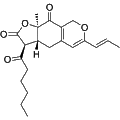
  • Monascin
    Cat. No.
    A39937

    Monascin

    Monascin is an azaphilonoid pigment derived from Monascus pilosus-fermented rice, commonly known as red-mold rice. This compound demonstrates anti-tumor-initiating and anti-inflammatory activities, particularly upon oral administration. Monascin functions as a Nrf2 activator and a PPARγ agonist, while also inhibiting NOR1 activation in response to nitric oxide donors. Its unique biological properties make it a valuable reagent for research in cancer biology and inflammation.

    0.5 mg
    $105.00
    1 mg
    $210.00
    All 3 sizes
  • MR2-cy5
    Cat. No.
    A40513

    MR2-cy5

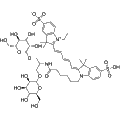
    MR2-cy5 is a fluorescent dye specifically designed to target CD206, a receptor expressed on macrophages. This reagent enables precise tracking of CD206+ macrophages in various biological samples, facilitating studies in immunology and cellular biology. MR2-cy5 is ideal for applications such as flow cytometry and imaging, contributing to the understanding of macrophage function and behavior in health and disease.

    Out of stock

    All 3 sizes
  • α-Synuclein aggregate binder 1
    Cat. No.
    A41628

    α-Synuclein aggregate binder 1

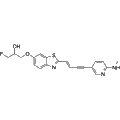
    α-Synuclein aggregate binder 1 is a selective inhibitor of α-synuclein aggregation, targeting pathological fibril formation associated with neurodegenerative diseases. This compound serves as a fluorescent probe for optical imaging, with an excitation wavelength of 900 nm and a detection range of 500-550 nm. Additionally, it can be labeled with 18F for use in positron emission tomography (PET) imaging, facilitating visual diagnosis of brain lesions and advancing research into the mechanisms underlying conditions like Parkinson's disease and Lewy body dementia.

    5 mg
    $650.00
    10 mg
    $1,060.00
    All 5 sizes
  • Nicotinamide 1,N6-ethenoadenine dinucleotide
    Cat. No.
    A41763

    Nicotinamide 1,N6-ethenoadenine dinucleotide

    Synonyms: ε-NAD

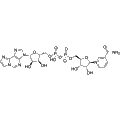
    Nicotinamide 1,N6-ethenoadenine dinucleotide (ε-NAD) acts as a fluorescent substrate with significant utility in biochemical research. This analog of NAD can be cleaved by phosphodiesterase I, sourced from C. adamanteus venom, and demonstrates binding affinity to bovine liver glutamate dehydrogenase. It serves as a substrate for G-ADP ribosylation of G proteins, a process facilitated by bacterial toxins, making it valuable for investigating ADP ribosylation reactions. Its fluorescent properties enhance detection and analysis in experimental applications.

    1 mg
    $80.00
    5 mg
    $365.00
    All 3 sizes
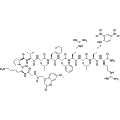
  • Mca-Ala-Pro-Lys(Dnp)-OH
    Cat. No.
    A42272

    Mca-Ala-Pro-Lys(Dnp)-OH

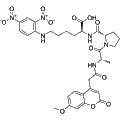
    Mca-Ala-Pro-Lys(Dnp)-OH is a quenched fluorogenic substrate specifically designed for the detection of angiotensin-converting enzyme 2 (ACE2) activity. This compound facilitates the measurement of ACE2 function in various biological contexts, including urinary, cardiac, and pulmonary tissues. Researchers can utilize this substrate to investigate the role of ACE2 in various physiological and pathological processes.

    5 mg
    $115.00
    10 mg
    $185.00
    All 2 sizes
  • C.I. Acid yellow 151
    Cat. No.
    A42457

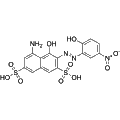
    C.I. Acid yellow 151

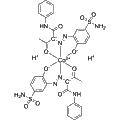
    C.I. Acid Yellow 151 is a fluorescent dye known for its strong adsorption properties. It is commonly used in various biological assays and microscopy applications to visualize cellular components. Additionally, C.I. Acid Yellow 151 can be effectively removed by bentone, making it suitable for various purification processes in chemical research.

    Out of stock

    All 3 sizes
  • PFI-7
    Cat. No.
    A42498

    PFI-7

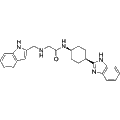
    PFI-7 is a specific probe that targets human GID4, exhibiting a binding affinity with a KD of 79 nM. This compound effectively antagonizes the interaction of Pro/N-degrons, making it a valuable tool for studies focused on the C-terminal to LisH (CTLH) complex. PFI-7 is useful in the exploration of mechanisms underlying targeted protein degradation, facilitating advancements in this area of research.

    25 mg
    $1,530.00
    50 mg
    $1,950.00
    All 3 sizes
  • Cy5.5 DBCO
    Cat. No.
    A42762

    Cy5.5 DBCO

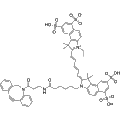
    Cy5.5 DBCO is a cycloalkyne-based click chemistry reagent featuring a cyanine 5.5 fluorophore. The presence of the DBCO moiety facilitates copper-free, biocompatible click reactions characterized by rapid kinetics and enhanced stability. This reagent is widely utilized in bioconjugation applications, enabling efficient labeling of biomolecules for imaging and detection in various biological studies.

    1 mg
    $240.00
    5 mg
    $680.00
    All 2 sizes
  • 4-Azido-2,3,5,6-tetrafluorobenzoic Acid
    Cat. No.
    A42912

    4-Azido-2,3,5,6-tetrafluorobenzoic Acid

    Synonyms: N3-TFBA

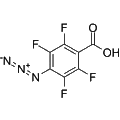
    4-Azido-2,3,5,6-tetrafluorobenzoic Acid (N3-TFBA) is a click chemistry reagent characterized by its azide functionality, making it suitable for applications in DNA probing. This compound forms complexes with FAM-labeled DNA probes, facilitating investigations into biological receptors through photoaffinity labeling. N3-TFBA is capable of participating in copper-catalyzed azide-alkyne cycloaddition (CuAAc) in conjunction with alkyne-containing molecules, as well as ring strain-promoted alkyne-azide cycloaddition (SPAAC) with DBCO or BCN-functionalized substrates.

    100 mg
    $35.00
    250 mg
    $75.00
    All 4 sizes
  • C.I. Acid brown 83
    Cat. No.
    A43268

    C.I. Acid brown 83

    C.I. Acid Brown 83 is a fluorescent dye that exhibits strong adsorption properties. Its ability to bind and be removed by bentone clay makes it valuable in various analytical and biotechnological applications. This compound is commonly utilized in research involving fluorescence microscopy and dye-binding assays.

    Out of stock

    All 3 sizes
  • C.I. Mordant green 17
    Cat. No.
    A43339

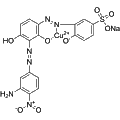
    C.I. Mordant green 17

    C.I. Mordant Green 17 is a fluorescent dye characterized by its azo structure. It exhibits strong absorption and fluorescence properties, making it suitable for various biological staining applications. This dye is commonly used in histology and cytology for the visualization of cellular components, enabling researchers to study tissue morphology and cellular interactions effectively.

    25 mg
    $1,275.00
    50 mg
    $1,625.00
    All 3 sizes
  • DPP-8/9 probe-1
    Cat. No.
    A43526

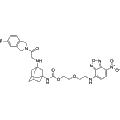
    DPP-8/9 probe-1

    DPP-8/9 probe-1 is a selective inhibitor targeting Dipeptidyl Peptidase DPP8/9, designed for use in fluorescence microscopy. This fluorescent probe features a nitrobenzoxadiazole (NBD) tag, demonstrating high affinity for DPP8/9 with an IC50 of 15 nM, while showing minimal activity against related S9 family members (IC50 of 210 nM). DPP-8/9 probe-1 enables visualization of active DPP8/9 in vitro, making it a valuable tool for studying the biological functions and pathways associated with this enzyme in research settings.

    25 mg
    $1,405.00
    50 mg
    $1,790.00
    All 3 sizes
  • Isosulfan blue
    Cat. No.
    A43669

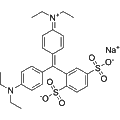
    Isosulfan blue

    Isosulfan blue is a lymphatic dye primarily used for the visualization of lymphatic vessels during lymphangiography. It is particularly instrumental in sentinel lymph node biopsies, especially in the context of breast cancer surgery. While effective in identifying lymphatic pathways, it is important to note that allergic reactions may occur during its use in clinical applications.

    2 mg
    $25.00
    5 mg
    $40.00
    All 7 sizes

Items 426-450 of 2505

Added to your cart

View Cart Checkout

    Loading...