
- Cat. No.
- A12997
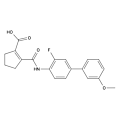
Vidofludimus (4SC-101)
Synonyms: 4SC 101; SC12267
Vidofludimus is a novel orally active and potent DHODH inhibitor.
In stock
View Details
Search by product name, CAS, target or catalog number. Press Down Arrow to reach product suggestions, Tab to move between links, and Escape to close suggestions.
Dihydroorotate dehydrogenase (DHODH) inhibitors block a key step in de novo pyrimidine synthesis. The enzyme oxidizes dihydroorotate to orotate on the inner mitochondrial membrane and passes electrons to ubiquinone. Rapidly dividing cells need this route for uridine and cytidine nucleotides, which makes DHODH a common target in proliferation and immunology research. In 2016 DHODH inhibition was reported to overcome the differentiation block of acute myeloid leukemia cells. Vidofludimus, BAY-2402234 and ASLAN003 inhibit the human enzyme in cell and enzyme assays. Species differences also allow selective inhibitors: DSM265, reported in 2015, targets the malaria parasite enzyme, and olorofim, first described as F901318, acts on the fungal enzyme.
Synonyms: 4SC 101; SC12267
Vidofludimus is a novel orally active and potent DHODH inhibitor.
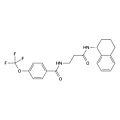
ML390 is a potent dihydroorotate dehydrogenase (DHODH) inhibitor. ML390 is an inducer of myeloid differentiation and causes myeloid differentiation in murine (ER-HoxA9) and human (U937 and THP1) acute myeloid leukemia (AML) models.
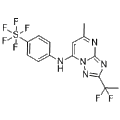
DSM265 is a long-duration, potent and selective dihydroorotate dehydrogenase (DHODH)) inhibitor.
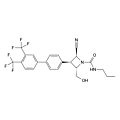
Synonyms: BRD 9185.
BRD9185 is a Dihydroorotate dehydrogenase (DHODH) inhibitor.
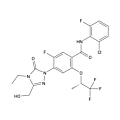
BAY-2402234 is a selective dihydroorotate dehydrogenase (DHODH) inhibitor for the treatment of myeloid malignancies.
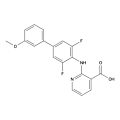
ASLAN003 is an orally active and potent Dihydroorotate Dehydrogenase (DHODH) inhibitor with an IC50 of 35 nM for human DHODH enzyme.
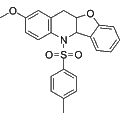
DHODH-IN-33 is a selective inhibitor of dihydroorotate dehydrogenase (DHODH), exhibiting potent anti-cancer activity with IC50 values of 5.22 μM in A549 cells and 3.03 μM in 5637 cells. This compound induces autophagy-dependent ferroptosis characterized by mitochondrial dysfunction, lipid peroxidation, and reactive oxygen species (ROS) accumulation, while demonstrating minimal toxicity in vivo. DHODH-IN-33 is a valuable tool for researching therapeutic strategies targeting non-small cell lung cancer and bladder cancer through the autophagy-mediated degradation of DHODH.
Out of stock
All 3 sizes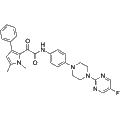
Synonyms: F901318
Olorofim is a selective inhibitor of dihydroorotate dehydrogenase (DHODH), a crucial enzyme in the pyrimidine biosynthesis pathway. It demonstrates potent antifungal activity, particularly against Aspergillus fumigatus and other species within the Aspergillus genus. Olorofim is a valuable tool for research focused on fungal infections and the development of antifungal therapies.
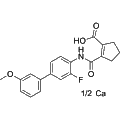
Synonyms: 4sc-101 hemicalcium; SC12267 hemicalcium
Vidofludimus hemicalcium is an orally active inhibitor of dihydroorotate dehydrogenase (DHODH) and a novel modulator of the farnesoid X receptor (FXR). This compound exhibits immunomodulatory properties, making it a valuable tool for investigating autoimmune disorders, including inflammatory bowel disease (IBD). Additionally, Vidofludimus hemicalcium is relevant for research in hepatic lipid metabolism and fatty liver disease due to its targeting of FXR.
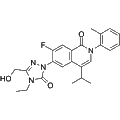
Synonyms: DHODH-IN-16
JNJ-74856665 is a potent inhibitor of dihydroorotate dehydrogenase (DHODH), exhibiting an IC50 of 0.396 nM for human DHODH. This compound disrupts pyrimidine synthesis, making it a valuable tool for studying the role of DHODH in various biological processes, including cell proliferation and immune response modulation. JNJ-74856665 has potential applications in research related to autoimmune diseases and cancer therapeutic strategies.
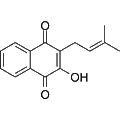
Lapachol is a potent inhibitor of dihydroorotate dehydrogenase (DHODH), demonstrating significant immunosuppressive effects on lymphocytes by disrupting pyrimidine synthesis. This natural naphthoquinone exhibits antitumor properties, inhibiting DNA and RNA synthesis in neoplastic cells. Additionally, Lapachol has shown efficacy against Leishmania, suggesting its potential in parasitological research and therapeutic applications.
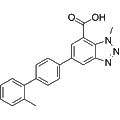
AG-636 is a selective and reversible inhibitor of dihydroorotate dehydrogenase (DHODH), exhibiting an IC50 value of 17 nM. This compound demonstrates significant anticancer activity, making it a valuable tool in cancer research and pharmacological studies targeting the de novo pyrimidine synthesis pathway. Its oral bioavailability further enhances its utility in preclinical and clinical studies.
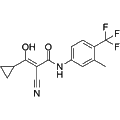
Synonyms: HR325
Laflunimus is an immunomodulator that primarily functions as an inhibitor of dihydroorotate dehydrogenase (DHODH). This compound effectively suppresses the secretion of immunoglobulins, demonstrating IC50 values of 2.5 µM for IgM and 2 µM for IgG. Additionally, Laflunimus serves as an inhibitor of prostaglandin endoperoxide H synthases (PGHS-1 and PGHS-2), making it valuable for research applications focused on immunosuppression and inflammatory pathways.
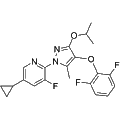
DHODH-IN-1 is a potent inhibitor of Dihydroorotate Dehydrogenase (DHODH), exhibiting an IC50 of 25 nM. By targeting the DHODH enzyme, this compound effectively disrupts the pyrimidine biosynthesis pathway, making it a valuable tool for researchers investigating cellular proliferation and metabolic regulation. Its application spans the study of autoimmune diseases, cancer research, and other conditions where modulation of pyrimidine synthesis is critical.
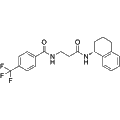
hDHODH-IN-5 is a potent inhibitor of human dihydroorotate dehydrogenase (DHODH), exhibiting an IC50 value of 0.91 μM. This compound has been demonstrated to induce differentiation in acute myeloid leukemia cells, highlighting its potential utility in cancer research. hDHODH-IN-5 serves as a valuable tool for investigating the role of DHODH in cellular differentiation and proliferation pathways.
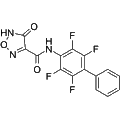
DHODH-IN-14 is a selective inhibitor of dihydroorotate dehydrogenase (DHODH), exhibiting an IC50 of 0.49 μM against rat liver DHODH. This hydroxyfurazan analog of A771726 demonstrates significant potential in the treatment of rheumatoid arthritis. Its inhibitory capacity on DHODH suggests applications in modulating pyrimidine synthesis, providing a valuable tool for research in autoimmune disorders and related therapeutic development.
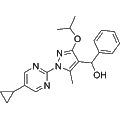
hDHODH-IN-4 is a selective inhibitor of human dihydroorotate dehydrogenase (DHODH), exhibiting a pIC50 of 7.8 against human recombinant DHODH. This compound effectively inhibits measles virus replication, demonstrated by a pMIC50 of 8.8. As a DHODH inhibitor, hDHODH-IN-4 is valuable for research into viral infections and the modulation of pyrimidine metabolism.
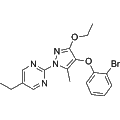
hDHODH-IN-3 is a potent inhibitor of human dihydroorotate dehydrogenase (HsDHODH), which plays a critical role in the de novo pyrimidine synthesis pathway. This compound has demonstrated significant antiviral activity, particularly inhibiting measles virus replication with a pMIC50 value of 8.6. hDHODH-IN-3 is particularly valuable for research in virology and metabolic diseases.
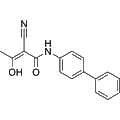
hDHODH-IN-1 is a potent inhibitor of human dihydroorotate dehydrogenase (hDHODH), an enzyme essential for de novo pyrimidine synthesis. This compound exhibits significant anti-inflammatory activity, making it a valuable tool for research in autoimmune diseases and inflammatory conditions. Its mechanism of action allows for exploration in therapeutic applications aimed at modulating immune responses and cellular proliferation.
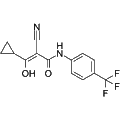
PfDHODH-IN-1 is an inhibitor of Plasmodium falciparum dihydroorotate dehydrogenase (PfDHODH). This compound exhibits significant antimalarial activity by disrupting the pyrimidine biosynthesis pathway in the malaria parasite. PfDHODH-IN-1 serves as a valuable tool for research focused on malaria treatment and the exploration of novel therapeutic strategies against Plasmodium falciparum infections.
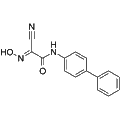
DHODH-IN-11 is a Leflunomide derivative that functions primarily as a dihydroorotate dehydrogenase (DHODH) inhibitor. This compound demonstrates weak inhibitory activity against DHODH, an essential enzyme in the de novo pyrimidine synthesis pathway. It is particularly relevant for research in cellular metabolism and immunology, providing insights into therapeutic strategies for autoimmune disorders and certain cancers.
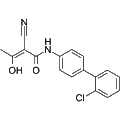
DHODH-IN-8 is a selective inhibitor of dihydroorotate dehydrogenase (DHODH) in both human and Plasmodium falciparum, exhibiting IC50 values of 0.13 μM and 47.4 μM, respectively. Additionally, it demonstrates Kis of 0.016 μM for human DHODH and 5.6 μM for the parasite's enzyme. This compound shows significant antimalarial activity, making it a valuable tool for research into malaria treatment and the inhibition of the pyrimidine biosynthesis pathway.
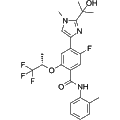
DHODH-IN-20 is a potent inhibitor of dihydroorotate dehydrogenase (DHODH), an iron-containing flavin-dependent enzyme located in the inner mitochondrial membrane of human cells. By inhibiting DHODH, this compound exhibits significant anti-tumor activity, making it a valuable tool in the study of cancer biology. DHODH-IN-20 is particularly relevant for research focused on acute myelogenous leukemia, offering insights into potential therapeutic strategies.
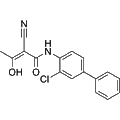
DHODH-IN-3 is a selective inhibitor of Human Dihydroorotate Dehydrogenase (HsDHODH), demonstrating a potent inhibitory effect with an IC50 value of 261 nM. By targeting the ubiquinone binding sites within the enzyme, DHODH-IN-3 exhibits a competitive inhibition profile, characterized by a Kiapp of 32 nM. This compound shows promise for therapeutic applications in malaria research, potentially contributing to the development of novel treatments.
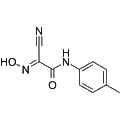
DHODH-IN-12 is a derivative of Leflunomide that functions as a dihydroorotate dehydrogenase (DHODH) inhibitor. This compound displays weak inhibitory activity against DHODH, making it a valuable tool for studying the modulation of pyrimidine metabolism. Its applications include investigations into immunological diseases and the development of therapeutics targeting nucleotide synthesis pathways. The pKa of 5.07 further informs its solubility and stability characteristics in biological systems.