- Cat. No.
- A14396
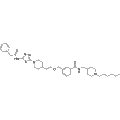
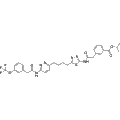
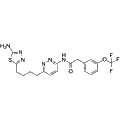
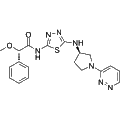
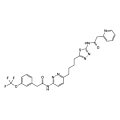
Telaglenastat (CB-839)
Synonyms: CB839
CB-839 an is orally bioavailable inhibitor of glutaminase, with potential antineoplastic activity. CB-839 (Telaglenastat) also inudces autophagy and has antitumor activity.
Search by product name, CAS, target or catalog number. Press Down Arrow to reach product suggestions, Tab to move between links, and Escape to close suggestions.
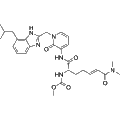
Glutaminase inhibitors block conversion of glutamine to glutamate, the first step of glutaminolysis. The glutaminase 1 (GLS1) gene encodes kidney-type glutaminase (KGA) and its splice variant glutaminase C (GAC), while the glutaminase 2 (GLS2) gene encodes the liver-type enzyme. In 2009 the transcription factor c-Myc was shown to raise mitochondrial glutaminase levels by suppressing two microRNAs. A 2010 study linked mitochondrial glutaminase activity to oncogenic transformation driven by Rho GTPases. Telaglenastat, BPTES and UPGL00004 are allosteric inhibitors of GLS1 enzymes. 6-Diazo-5-oxo-L-norleucine and its prodrug JHU-083 act more broadly as glutamine antagonists. ZED-1227 and GK921 inhibit transglutaminase 2, a distinct enzyme also listed here.
Synonyms: CB839
CB-839 an is orally bioavailable inhibitor of glutaminase, with potential antineoplastic activity. CB-839 (Telaglenastat) also inudces autophagy and has antitumor activity.
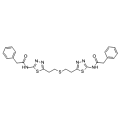
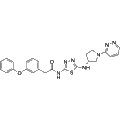
BPTES is a potent and selective Glutaminase GLS1 (KGA) inhibitor with IC50 of 0.16 μM.
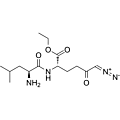
HU-083 is a HU-083 is a Glutamine antagonist, a DON prodrug., a DON prodrug.
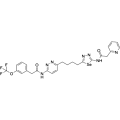
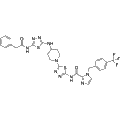
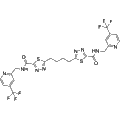
Glutaminase-IN-1 (CB839 derivative), a CB839 derivative, is an allosteric inhibitor of 1,3,4-selenadiazole-containing kidney-type glutaminase (KGA), with an IC50 of 1 nM.
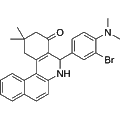
UPGL00004 is a potent allosteric glutaminase C (GAC) inhibitor (IC50=29 nM; Kd=27 nM). UPGL00004 strongly inhibits the proliferation of highly aggressive triple-negative breast cancer cell lines.
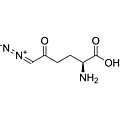
Synonyms: Diazooxonorleucine; L-6-Diazo-5-oxonorleucine; DON
6-Diazo-5-oxo-L-nor-Leucine is a glutamine antagonist that shows good anticancer activity (especially in pancreatic cancer) and reduces the self-renewal potential and metastatic capacity of tumour cells.
GLS1 Inhibitor-6 is a selective inhibitor of glutaminase 1 (GLS1), exhibiting an IC50 of 68 nM and demonstrating 220-fold selectivity over GLS2. This compound exhibits significant anti-tumor activity, effectively inhibiting cell proliferation and inducing apoptosis in cancer cells. GLS1 Inhibitor-6 is a valuable tool for research in cancer metabolism and therapeutic strategies targeting glutamine dependency in tumor growth.
Out of stock
All 3 sizes
GLS1 Inhibitor-4 is a potent inhibitor of glutaminase 1 (GLS1), demonstrating an IC50 of 11.86 nM. It effectively disrupts glutamine metabolism, leading to increased reactive oxygen species (ROS) production and subsequent induction of apoptosis. With strong GLS1 binding affinity and metabolic stability, GLS1 Inhibitor-4 exhibits significant antiproliferative effects and shows promise in antitumor research applications.
LWG-301 is an allosteric inhibitor of Glutaminase 1 (GLS1), exhibiting an IC50 value of 7 nM. This compound effectively inhibits glutamine metabolism, leading to increased intracellular reactive oxygen species (ROS) and subsequent induction of apoptosis. LWG-301 demonstrates moderate antitumor activity in HCT116 xenograft models, making it a valuable tool for cancer research focusing on metabolic pathways.
Out of stock
All 3 sizes
Glutaminase C-IN-3 is a potent allosteric inhibitor of Glutaminase C (GAC) with an EC50 of 116 nM. This compound modulates cellular metabolites and enhances reactive oxygen species (ROS) production by inhibiting glutamine metabolism. Glutaminase C-IN-3 demonstrates significant antitumor activity in A549 xenograft mouse models, making it a valuable tool for research in non-small cell lung cancer (NSCLC).
Out of stock
All 3 sizes
Glutaminase C-IN-2 is an allosteric inhibitor of glutaminase C (GAC), exhibiting an IC50 value of 10.64 nM. This compound modulates cellular metabolism by inhibiting glutamine utilization, leading to elevated levels of reactive oxygen species (ROS). Glutaminase C-IN-2 demonstrates potential anticancer activity, making it a valuable tool for research in cancer biology and therapeutic development.
Synonyms: CB-839 hydrochloride
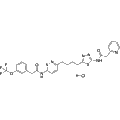
Telaglenastat hydrochloride is a selective, reversible inhibitor of glutaminase 1 (GLS1), exhibiting oral bioavailability. This compound selectively targets GLS1 splice variants KGA and GAC, demonstrating IC50 values of 23 nM and 28 nM for endogenous glutaminase in mouse kidney and brain tissues, respectively. Telaglenastat hydrochloride is shown to induce autophagy and possesses significant antitumor activity, making it valuable for research in cancer metabolism and therapeutic applications targeting glutaminase activity.
JFD01307SC is a selective inhibitor of glutamine synthetase, which plays a crucial role in the conversion of L-glutamate to glutamine. By mimicking L-glutamate, JFD01307SC effectively targets and modulates the enzymes involved in glutamine biosynthesis. This compound is primarily utilized in research related to tuberculosis and other metabolic disorders, providing valuable insights into the therapeutic potential of glutamine metabolism modulation.
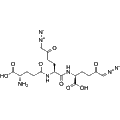
Synonyms: NSC-56654
Azotomycin is an L-glutamine analog that exhibits antitumor activity through the modulation of cellular metabolism and signaling pathways. This compound serves as a valuable tool in cancer research, particularly in studies focusing on glutamine metabolism and its implications in tumor growth and proliferation. Researchers may utilize Azotomycin to investigate therapeutic strategies targeting glutamine-dependent cancer cells.
Out of stock
All 3 sizes
NSC 303861 is an L-glutamine receptor antagonist that selectively inhibits glutamine-dependent enzymes involved in purine nucleotide synthesis while sparing pyrimidine synthase. This compound exhibits significant cytotoxic effects against liver cancer 3924A cells, with an LC50 of 6 µM. NSC 303861 is valuable for cancer research, particularly in studies focused on targeting metabolic pathways in malignancies.
Out of stock
All 3 sizes
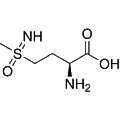
Synonyms: MSX; MSO
L-Methionine-DL-sulfoximine is a highly specific and irreversible inhibitor of glutamine synthetase, which significantly affects astroglial metabolism and morphology. This compound also demonstrates potent convulsant properties. L-Methionine-DL-sulfoximine has been utilized in research to inhibit glutamine-dependent neuronal toxicity in vitro and to study the mechanisms underlying convulsive seizures. Additionally, it enhances the rate of fixed nitrogen release in cyanobacteria, making it a valuable tool for applications in biofertilizer research.
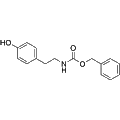
Synonyms: N-CBZ-Tyramine
N-Carbobenzoxytyramine is a competitive inhibitor of glutaminase, an enzyme involved in amino acid metabolism. It demonstrates potential in biochemical research for studying the role of glutaminase in various physiological and pathological processes. This compound is useful in applications related to cancer metabolism and neurodegenerative diseases, providing insights into metabolic regulation and therapeutic interventions.
TRG-192 is a potent and selective inhibitor of glutaminase (GLS) with an IC50 of 68 nM. By effectively decreasing intracellular glutamate levels, TRG-192 serves as a valuable tool for investigating metabolic pathways in non-small cell lung cancer. Its specificity towards GLS makes it particularly useful for exploring the role of glutamine metabolism in cancer cell growth and survival.
Out of stock
All 3 sizes
Synonyms: Compound 968
Glutaminase C-IN-1 is an allosteric inhibitor of Glutaminase C. This compound effectively inhibits the growth of cancer cells while sparing normal cells, making it a valuable tool for cancer research. Its selective targeting of Glutaminase C positions it as a potential therapeutic candidate in the treatment of various malignancies.
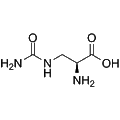
L-Albizziin is a potent inhibitor of glutamase, acting through the modification of sulfhydryl groups. It has demonstrated significant activity in the context of cancer research, making it a valuable tool in studies focused on tumor metabolism and therapeutic targeting of glutamatergic pathways. Its application extends to investigating the roles of glutamate in various cancer types.
Glutaminase-IN-3 is a selective inhibitor of glutaminase 1 (GLS1), demonstrating a potent inhibitory activity with an IC50 of 0.24 μM. This compound is designed for research applications focusing on metabolic processes and cellular metabolism dysregulation often seen in cancer and other metabolic disorders. Glutaminase-IN-3 can facilitate the study of glutamine dependency in various tumor types and provide insights into therapeutic strategies targeting glutaminase.
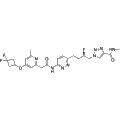
IPN60090 is a potent and selective inhibitor of glutaminase 1 (GLS1), exhibiting an IC50 of 31 nM, with no significant activity against GLS-2. This compound demonstrates favorable physicochemical and pharmacokinetic properties in vivo. IPN60090 is suitable for research into solid tumors, including lung and ovarian cancers, by targeting metabolic pathways critical for tumor progression.
GLS1 Inhibitor-1 is a potent, orally active inhibitor of glutaminase 1 (GLS1) with an IC50 of 0.021 μM. This compound effectively inhibits the proliferation of PC-3 prostate cancer cells, demonstrating an IC50 of 0.3 nM. Additionally, GLS1 Inhibitor-1 shows significant antitumor efficacy against NCI-H1703 lung cancer cells, with a GI50 of 0.011 μM. The compound also possesses moderate pharmacokinetic properties, making it a valuable tool for researching cancer metabolism and therapeutic strategies.
Suvigletistat is a potent glutaminase inhibitor, demonstrating an IC50 value of less than 0.5 µM. This compound is designed to disrupt the activity of transglutaminase 2 (TG2), which plays a crucial role in various metabolic processes. Research applications include studying metabolic dysregulation and the potential therapeutic effects in cancer and neurodegenerative diseases.
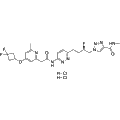
IPN60090 dihydrochloride is a highly selective inhibitor of glutaminase 1 (GLS1) with an IC50 of 31 nM, demonstrating no significant activity against GLS2. This compound exhibits favorable physicochemical and pharmacokinetic properties, making it suitable for in vivo studies. IPN60090 dihydrochloride is primarily utilized in research targeting solid tumors, including lung and ovarian cancers, thereby contributing to the understanding of metabolic pathways in cancer biology.