- Cat. No.
- A11847
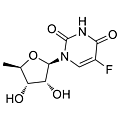
Doxifluridine
Synonyms: Ro 21-9738; 5-Fluoro-5'-deoxyuridine; 5'-DFUR
Doxifluridine is a thymidine phosphorylase activator for PC9-DPE2 cells with IC50 of 0.62 μM.
Search by product name, CAS, target or catalog number. Press Down Arrow to reach product suggestions, Tab to move between links, and Escape to close suggestions.
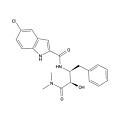
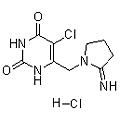
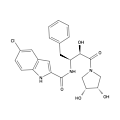
Phosphorylase inhibitors act on glycogen and thymidine phosphorylases, which cleave bonds by phosphorolysis. Glycogen phosphorylase releases glucose 1-phosphate from glycogen and controls the rate of glycogen breakdown in liver and muscle. CP-91149, reported in 1998, inhibits human liver glycogen phosphorylase and lowered blood glucose in diabetic mice. Ingliforib, BAY R3401 and GPi688 are further glycogen phosphorylase inhibitors for studies of hepatic glucose output. Thymidine phosphorylase converts thymidine to thymine and was identified in 1992 as the angiogenic platelet-derived endothelial cell growth factor. Tipiracil hydrochloride inhibits this enzyme, whereas doxifluridine is a fluoropyrimidine prodrug that thymidine phosphorylase activates.
Synonyms: Ro 21-9738; 5-Fluoro-5'-deoxyuridine; 5'-DFUR
Doxifluridine is a thymidine phosphorylase activator for PC9-DPE2 cells with IC50 of 0.62 μM.
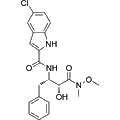
CP-91149 is a selective glycogen phosphorylase inhibitor.
Tipiralacil hydrochloride, also known as TPI, is a thymidine phosphorylase inhibitor (TPI).
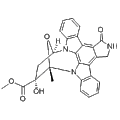
K252a is a highly potent cell permeable inhibitor of CaM kinase and phosphorylase kinase (IC50 = 1.8 and 1.7 nmol/L, respectively).
Out of stock
All 3 sizes
Synonyms: CP 368296; GPi 296
Ingliforib is a glycogen phosphorylase inhibitor, with IC50s of 52, 352 and 150 nM for liver, muscle and brain glycogen phosphorylase, and has cardioprotective activity.
Synonyms: GPi 819
CP-316819 is a potent inhibitor of glycogen phosphorylase (GPase), demonstrating significant antihyperglycemic activity with IC50 values of 17 nM and 34 nM against human skeletal muscle glycogen phosphorylase (huSMGPa) and liver glycogen phosphorylase (huLGPa), respectively. This compound promotes glycogen accumulation under normoglycemic conditions while allowing glycogen utilization during low glucose availability. Additionally, CP-316819 has been shown to prevent neuronal cell death and sustain brain electrical activity, making it a valuable tool for research into metabolic regulation and neuroprotection.
Glycogen phosphorylase-IN-1 is a potent inhibitor of human liver glycogen phosphorylase (hlGPa), demonstrating IC50 values of 53 nM for the enzyme and 380 nM for glucose production from hepatocyte glycogen. This compound is particularly relevant for research applications targeting type 2 diabetes, as it effectively reduces glycogen-derived glucose production in hepatocytes, thereby influencing glucose homeostasis.
BAY R3401 is an orally active inhibitor of glycogen phosphorylase, demonstrating irreversible and non-selective inhibition of hepatic glycogenolysis. This compound effectively inhibits glycogenolysis in liver cells, exhibiting IC50 values of 27.06 μM in HL-7702 cells and 52.83 μM in HepG2 cells. BAY R3401 serves as a valuable tool for research focused on type 2 diabetes and its associated metabolic pathways.
Out of stock
All 3 sizes
GPi688 is a potent and orally active inhibitor of glycogen phosphorylase (GPa), demonstrating IC50 values of 19 nM, 61 nM, and 12 nM for human liver GPa, rat liver GPa, and human skeletal muscle GPa, respectively. This compound effectively inhibits glucagon-mediated glucose output in rat primary hepatocytes. GPi688 is a valuable tool for investigating glucagon-mediated hyperglycemia and related metabolic disorders in research applications.
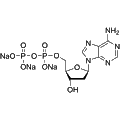
Deoxyadenosine diphosphate sodium is a nucleoside diphosphate that functions as a phosphorylase inhibitor. It plays a crucial role in DNA synthesis and repair processes by inhibiting polynucleotide phosphorylase, thereby interfering with the polymerization of ADP and CDP. This compound is valuable for research applications focused on understanding DNA metabolism and enzymatic regulation in cellular systems.
TK-112690 is a selective inhibitor of uridine phosphorylase 1 (UPP1). It demonstrates inhibitory effects on murine small intestinal uridine phosphorylase with an IC50 of 12.5 μM and on human small intestinal UPP1 with an IC50 of 20.0 μM in vitro. By increasing plasma uridine concentration in mice, TK-112690 can be utilized to explore therapeutic avenues in cancer research and pulmonary fibrosis studies.