
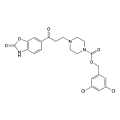
- Cat. No.
- A11527
PF-8380
PF-8380 is a potent and specific autotaxin inhibitor with an IC50 value of 2.8 nM.
In stock
View Details
Search by product name, CAS, target or catalog number. Press Down Arrow to reach product suggestions, Tab to move between links, and Escape to close suggestions.
Autotaxin inhibitors act on the secreted enzyme that produces the lipid mediator lysophosphatidic acid (LPA). Autotaxin, also called ectonucleotide pyrophosphatase/phosphodiesterase 2 (ENPP2), is a lysophospholipase D that releases LPA from lysophosphatidylcholine. LPA signals through G protein-coupled receptors to regulate cell proliferation, migration and survival. Autotaxin has therefore been studied in cancer cell motility, fibrosis and inflammation. In mouse models, autotaxin expression in the lung contributes to the development of pulmonary fibrosis. Compounds in this category include PF-8380, HA130, PAT-505 and Autotaxin-IN-1, for studies of the autotaxin-LPA axis.
PF-8380 is a potent and specific autotaxin inhibitor with an IC50 value of 2.8 nM.
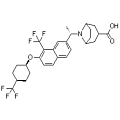
BIO-32546 is a novel modulator of the activity of the autotaxin (ATX) enzyme
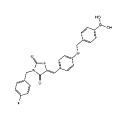
HA130 is a selective autotaxin (ATX) inhibitor with an IC50 of 28 nM.
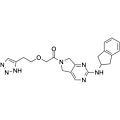
Autotaxin-IN-1 is a potent autotaxin inhibitor, which has favorable potency (IC50=2.2 nM), PK properties, and a robust PK/PD relationship. Autotaxin-IN-1 is used in treatment of osteoarthritis pain.
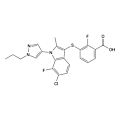
PAT-048 is a potent, selective and orally active autotaxin inhibitor, inhibits IL-6 mRNA expression, but shows no effect on autotaxin protein and pulmonary lysophosphatidic acid (LPA) production in lung fibrosis model.
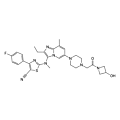
Synonyms: GLPG1690
Ziritaxestat (GLPG1690) is a first-in-class autotaxin (ATX) inhibitor, with an IC50 of 131 nM and Ki of 15 nM.
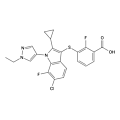
PAT-505 is a potent, selective, noncompetitive and orally available autotaxin inhibitor, with an IC50 of 2 nM in Hep3B cells, 9.7 nM in human blood and 62 nM in mouse plasma.
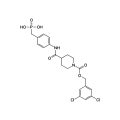
ATX inhibitor 1 is a potent ATX (IC50=1.23 nM, FS-3 and 2.18 nM, bis-pNPP) inhibitor.
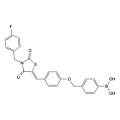
Synonyms: HA-155; HA 155. Autotaxin Inhibitor IV
HA155, also known as Autotaxin Inhibitor IV, is a boronic acid-based compound that inhibits autotaxin (IC50 = 5.7 nM) by selectively binding to its catalytic threonine.
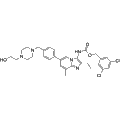
ATX Inhibitor 13 is a potent inhibitor targeting autotaxin (ATX) with an IC50 value of 3.4 nM. This compound effectively inhibits cell proliferation and migration, and induces apoptosis along with G2 phase cell cycle arrest in RAW264.7 cells. Additionally, ATX Inhibitor 13 suppresses tumor cell colony formation, making it a valuable tool for research in cancer biology and inflammation studies.
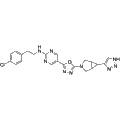
Autotaxin-IN-8 is a potent inhibitor of Autotaxin, exhibiting an IC50 of 14.2 nM against human Autotaxin. This compound effectively inhibits Autotaxin activity, leading to the modulation of MAPK activation, LPAR1, and p-ERK1/2, while also decreasing phosphorylation levels of JNK and p38. In preclinical studies, Autotaxin-IN-8 demonstrated a reduction in collagen deposition in a mouse model of pulmonary fibrosis, making it a valuable tool for research on fibrotic diseases and related pathways.
Out of stock
All 3 sizes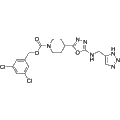
ATX Inhibitor 26 is a potent Autotaxin (ATX) inhibitor, exhibiting an IC50 of 57 nM in human plasma. This compound effectively inhibits cell migration and collagen gel contraction, demonstrating significant anti-fibrotic activity. Notably, ATX Inhibitor 26 reduces collagen deposition in models of pulmonary fibrosis induced by Bleomycin, making it a valuable tool for research into fibrosis-related processes and therapeutic interventions.
Out of stock
All 3 sizes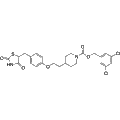
EL244 is a dual inhibitor of Autotaxin (ATX), with an IC50 of 50 nM, and a selective agonist of PPARγ, exhibiting an IC50 of 1.3 μM. This compound shows low cytotoxicity in human HepG2 cells, with an EC50 of 81.2 μM, and minimal inhibition of the cardiac hERG potassium channel (12% at 25 μM). EL244 effectively reduces pulmonary Lysophosphatidic Acid (LPA) levels, mitigates fibrosis, and enhances respiratory function in vivo, making it a valuable tool for the study of idiopathic pulmonary fibrosis and interstitial lung disease (ILD).
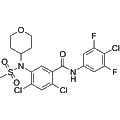
ATX Inhibitor 22 is a selective inhibitor of autotaxin (ATX), demonstrating an IC50 of 218 nM. This compound effectively blocks ATX activity, which is significant in lysophosphatidate signaling pathways. Due to its mechanism of action, it is valuable for research applications focused on cell migration, cancer metastasis, and various inflammatory conditions, though it does not inhibit LPAR1.
Out of stock
All 3 sizes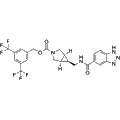
BI-2545 is a selective autotaxin (ATX) inhibitor that demonstrates potent activity in reducing lysophosphatidic acid (LPA) levels, with IC50 values of 2.2 nM for human ATX and 3.4 nM for rat ATX. This compound serves as a valuable tool for exploring ATX's role in various biological processes, including inflammation and cancer progression. Its application in research can provide insights into the therapeutic potential of targeting autotaxin in relevant disease models.
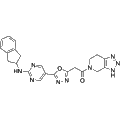
Autotaxin-IN-3 is a potent inhibitor of Autotaxin (ATX) with an IC50 value of 2.4 nM. This compound selectively targets the ATX enzyme, which plays a critical role in the synthesis of lysophosphatidic acid, a bioactive lipid involved in various physiological processes. Autotaxin-IN-3 is valuable for research applications focused on understanding ATX-related pathways and the role of lysophosphatidic acid in cancer, inflammation, and fibrosis.
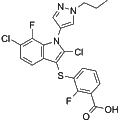
Synonyms: BLD-0409; PAT-409
Cudetaxestat is a potent noncompetitive inhibitor of autotaxin (ATX), targeting the enzyme responsible for the production of lysophosphatidic acid (LPA). By inhibiting ATX activity, Cudetaxestat diminishes LPA synthesis and interferes with the ATX-LPA signaling pathway. This compound retains nanomolar-level efficacy even in the presence of elevated lysophosphatidylcholine (LPC) concentrations. Cudetaxestat is applicable in preclinical research related to conditions such as fibrosis, tumor metastasis, inflammation, and other autoimmune disorders.
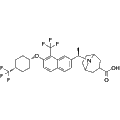
Autotaxin Modulator 1 is a potent inhibitor of the autotaxin (ATX) enzyme, identified from patent WO 2014018881 A1, Compound Example 12b. This compound is primarily utilized in research related to demyelination caused by injury or disease, as well as in studies of proliferative disorders, including cancer. Its ability to modulate ATX activity makes it a valuable tool for investigating the molecular mechanisms underlying these conditions.
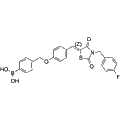
HA155 is a potent and selective inhibitor of autotaxin (ATX), exhibiting an IC50 of 5.7 nM. This compound is valuable in research applications focused on lysophosphatidic acid (LPA) signaling pathways and associated diseases, including cancer and fibrosis. By effectively reducing ATX activity, HA155 provides insights into the role of autotaxin in modulation of intercellular communication and tumor progression.
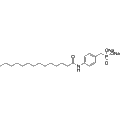
S32826 disodium is a potent inhibitor of autotaxin, exhibiting an IC50 of 8.8 nM. This compound effectively inhibits various isoforms of autotaxin (α, β, and γ) and demonstrates a significant reduction in lysophosphatidic acid (LPA) release from adipocytes. S32826 disodium is a valuable tool for research into autotaxin-related pathways and their implications in various biological processes and disease states.
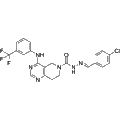
ATX Inhibitor 5 is a potent and orally bioavailable inhibitor of autotaxin (ATX), exhibiting an IC50 of 15.3 nM. This compound demonstrates significant anti-hepatofibrosis properties, effectively reducing levels of hepatic fibrosis in CCl4-induced models. Its utility in research encompasses the investigation of fibrotic diseases and related therapeutic pathways.
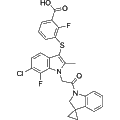
PAT-347 is an inhibitor of Autotaxin (ATX), a secreted enzyme that catalyzes the hydrolysis of lysophosphatidylcholine (LPC) to produce lysophosphatidic acid (LPA). By modulating LPA levels, PAT-347 enables the investigation of ATX's role in various biological processes, including cell proliferation, migration, and differentiation. This compound is useful in research related to cancer, inflammation, and other pathophysiological conditions where ATX and LPA signaling are implicated.
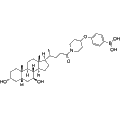
Autotaxin-IN-6 is a potent inhibitor of autotaxin, displaying an IC50 value of 30 nM. This compound has been shown to significantly reduce cell migration, thereby highlighting its potential in anticancer research. It serves as a valuable tool for investigating the role of autotaxin in tumor progression and metastasis.
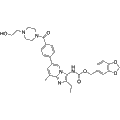
ATX Inhibitor 11 is a potent inhibitor of autotaxin, exhibiting an IC50 value of 2.7 nM. This compound effectively mitigates the severity of fibrotic tissue formation and reduces the levels of the fibrotic biomarker α-SMA in murine models of fibrosis. ATX Inhibitor 11 is a valuable tool for investigating the mechanisms underlying lung fibrosis and developing therapeutic strategies against this condition.
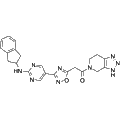
Autotaxin-IN-4 is a potent inhibitor of autotaxin, targeting the enzyme responsible for lysophosphatidic acid production. This compound exhibits promising biological activity in the modulation of fibrosis processes, making it a candidate for research in conditions such as idiopathic pulmonary fibrosis. It serves as a valuable tool for studies aimed at understanding the role of autotaxin in fibrotic diseases and exploring therapeutic interventions.