
- Cat. No.
- A12797
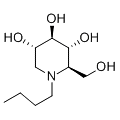
Miglustat hydrochloride
Synonyms: NB-DNJ
Miglustat hydrochloride is an orally active α-glucosidase I and II and ceramide-specific glycosyltransferase inhibitor.
Search by product name, CAS, target or catalog number. Press Down Arrow to reach product suggestions, Tab to move between links, and Escape to close suggestions.
Glucosylceramide synthase (GCS) inhibitors block the first step in glycosphingolipid synthesis. The enzyme, encoded by the ceramide glucosyltransferase gene (UGCG), transfers glucose to ceramide on the cytosolic face of the Golgi. Glucosylceramide is the precursor of lactosylceramide and of most complex glycosphingolipids, including gangliosides. Blocking its formation lowers glycolipid storage in models of Gaucher disease and other lysosomal storage disorders, an approach known as substrate reduction. Because GCS also consumes ceramide, inhibitors are used to study ceramide signaling and drug resistance in cancer cells. Listed compounds include the ceramide analogs D-threo-PDMP, Genz-123346 and eliglustat, the iminosugar miglustat hydrochloride, and ibiglustat.
Synonyms: NB-DNJ
Miglustat hydrochloride is an orally active α-glucosidase I and II and ceramide-specific glycosyltransferase inhibitor.
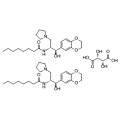
Synonyms: GENZ-112638
Commonly used as the tartrate salt, Eliglustat is believed to work by inhibition of glucosylceramide synthase.
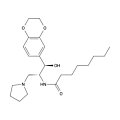
Synonyms: Genz-99067
Eliglustat is a specific and potent inhibitor of glucosylceramide synthase.
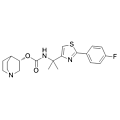
Synonyms: Venglustat; SAR402671; GZ402671
Ibiglustat (Venglustat), a potential therapy for PD Parkinson’s disease, SRT in Fabry’s and Gaucher’s, is a selective, allosteric inhibitor of glucosylceramide synthase (GCS) with ability to cross the blood-brain barrier.
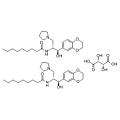
Genz-123346 is a potent, orally available glucosylceramide synthase inhibitor.
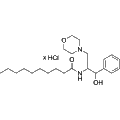
PDMP hydrochloride is a potent inhibitor of glucosylceramide synthase (GCS). This compound has been shown to induce apoptosis in K562/A02 cells, making it a valuable tool for studying cancer biology, particularly in leukemia research. PDMP hydrochloride's ability to disrupt glycosphingolipid metabolism provides insights into therapeutic strategies targeting GCS in cancer treatment.
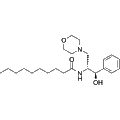
D-threo-PDMP is a potent inhibitor of glucoceramide synthase (GCS), effectively reducing the synthesis of glycosphingolipids such as GM3 and GD3. This compound is instrumental in studying cellular mechanisms, as it decreases axon length and branching while inhibiting neurite outgrowth. Additionally, D-threo-PDMP mitigates the adhesion of B16 melanoma cells and protects liver cells from TNF-α-induced apoptosis. Its applications extend to various research areas focusing on glycosphingolipid metabolism and related diseases.
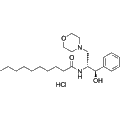
DL-threo-PDMP hydrochloride is a competitive inhibitor of glucosylceramide synthase (GCS), demonstrating significant potential in antimalarial research. This compound effectively inhibits GCS activity, leading to restored sensitivity to cisplatin in cisplatin-resistant testicular germ cell tumor cells. Additionally, DL-threo-PDMP hydrochloride has been shown to impede the growth of ring-stage Plasmodium falciparum parasites, making it a valuable tool for studying malaria and its treatment.
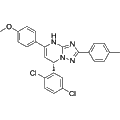
Glucosylceramide synthase-IN-6 is a selective inhibitor of glucosylceramide synthase (GCS), targeting the enzymatic pathway involved in the synthesis of glucosylceramide. This compound is valuable for investigating the role of GCS in various diseases, particularly lysosomal storage disorders. Its application in research facilitates a better understanding of GCS activity and its implications in cellular metabolism and pathology.
Out of stock
All 3 sizes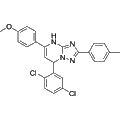
Glucosylceramide synthase-IN-5 is a potent inhibitor of glucosylceramide synthase (GCS). This compound is instrumental in the exploration of diseases and disorders linked to GCS activity, particularly lysosomal storage disorders. Its ability to modulate GCS activity makes it a valuable tool in biochemical research aimed at understanding sphingolipid metabolism and related pathologies.
Out of stock
All 3 sizes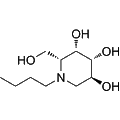
Synonyms: NB-DGJ; N-(n-Butyl)deoxygalactonojirimycin
Lucerastat is a potent inhibitor of glucosylceramide synthase (GCS), specifically in its galactose form derived from Miglustat. This compound exhibits significant biological activity in modulating glycosphingolipid metabolism and has potential applications in the investigation of Fabry disease. Researchers may employ Lucerastat to explore therapeutic avenues and understand the pathophysiology associated with GCS-related disorders.
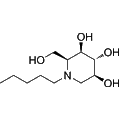
Synonyms: ACT-519276; OGT2378
Sinbaglustat is a dual inhibitor of glucosylceramide synthase (GCS) and non-lysosomal glucosyl ceramidase (GBA2). This N-alkyl iminosugar is orally bioavailable and capable of penetrating the blood-brain barrier, making it a valuable tool for investigating central neurodegenerative disorders linked to lysosomal dysfunction. Its unique properties facilitate research into potential therapeutic strategies for conditions such as Gaucher disease and other lysosomal storage disorders.
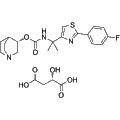
Synonyms: Venglustat (L-Malic acid); SAR402671 (L-Malic acid); GZ402671 (L-Malic acid)
Ibiglustat (L-Malic acid) is a potent inhibitor of glucosylceramide synthase (GCS), demonstrating oral bioavailability and the ability to penetrate the blood-brain barrier. This compound is instrumental for research into various lysosomal storage disorders, including Gaucher disease type 3, Parkinson's disease linked to GBA mutations, Fabry disease, GM2 gangliosidosis, and autosomal dominant polycystic kidney disease. Its selective inhibition of GCS makes it a valuable tool for studying the biochemical pathways associated with these conditions.
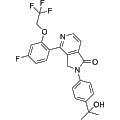
Synonyms: Glucosylceramide synthase-IN-1
TP-060 is a glucosylceramide synthase (GCS) inhibitor, exhibiting potent inhibitory activity with IC50 values of 31 nM for human GCS and 51 nM for mouse GCS. This compound is orally active and capable of penetrating the blood-brain barrier, making it a valuable tool for investigating GCS-related pathways. TP-060 is particularly relevant for research into Gaucher's disease and other conditions associated with GCS dysregulation.
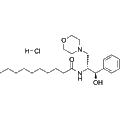
D-threo-PDMP hydrochloride is a potent inhibitor of glucoceramide synthase (GCS), effectively reducing glycosphingolipids such as GM3 and GD3 on the cell surface. This compound impairs glycosylation processes, leading to reduced axonal growth and branching, as well as decreased adhesion of B16 melanoma cells, effectively mimicking the effects of hyperglycemia and TGF-β1. Additionally, D-threo-PDMP hydrochloride protects hepatocytes from TNF-α-induced apoptosis by inhibiting GD3 synthesis. This reagent is valuable for research into diseases associated with glycosphingolipid metabolism.
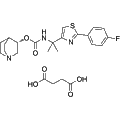
Synonyms: Venglustat succinate; SAR402671 succinate; GZ402671 succinate
Ibiglustat succinate is a potent glucosylceramide synthase (GCS) inhibitor with oral bioavailability and the ability to penetrate the blood-brain barrier. This compound is primarily used in research focused on Gaucher disease type 3, Parkinson's disease linked to GBA mutations, Fabry disease, GM2 gangliosidosis, and autosomal dominant polycystic kidney disease. Its inhibitory action on GCS has potential implications for understanding and treating these neurodegenerative and lysosomal storage disorders.
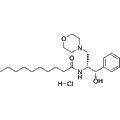
D,L-erythro-PDMP hydrochloride is an inhibitor of UDP-glucose:ceramide glucosyltransferase, exerting its effects through the targeting of glycosphingolipid biosynthesis. This compound demonstrates significant growth inhibition of cultured rabbit skin fibroblasts, making it a valuable tool for studying sphingolipid metabolism and its implications in cellular growth and differentiation. D,L-erythro-PDMP hydrochloride is useful in research related to cancer, neurodegenerative diseases, and other conditions where glycosphingolipid metabolism is altered.
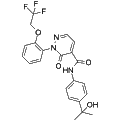
Glucosylceramide synthase-IN-2 is a potent, orally bioavailable inhibitor of glucosylceramide synthase (GCS), demonstrating IC50 values of 15 nM for human GCS and 190 nM for mouse GCS. This compound functions as a noncompetitive inhibitor in the presence of C8-ceramide and UDP-glucose. Glucosylceramide synthase-IN-2 is particularly useful for research into Gaucher's disease, offering valuable insights into the modulation of glycosphingolipid metabolism.
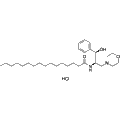
D-threo-PPMP hydrochloride is a potent inhibitor of glucosylceramide (GlcCer) synthase, effectively disrupting the synthesis of glucosylceramide. This compound has been shown to block karyokinesis and reduce cyst production, making it a valuable tool for studying lipid metabolism and related pathophysiological conditions. Its application extends to research on lysosomal storage disorders and other diseases associated with glycolipid accumulation.
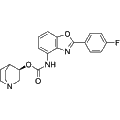
Glucosylceramide synthase-IN-3 is a potent inhibitor of glucosylceramide synthase (GCS), demonstrating an IC50 of 16 nM for human GCS. This compound is brain-penetrant and orally active, making it suitable for in vivo studies. Glucosylceramide synthase-IN-3 is primarily used in research focused on Gaucher's disease and related glycosphingolipid metabolism disorders.
Alpha-1,2-Fucosyltransferase (α1,2FucT) is a rate-limiting enzyme that catalyzes the synthesis of the Lewis y carbohydrate antigen, which is predominantly found on cell membranes. This enzyme plays a crucial role in the glycosylation processes relevant to cancer biology and cell adhesion mechanisms. α1,2FucT is utilized in biochemical studies to investigate its impact on tumor progression, cellular interactions, and the formation of cancer-associated carbohydrate antigens.
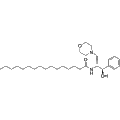
D-threo-PPMP is a potent inhibitor of glucosylceramide (GlcCer) synthase, a critical enzyme in sphingolipid metabolism. Inhibition of GlcCer synthase by D-threo-PPMP has been shown to block karyokinesis and decrease cyst production, making it valuable for research into lysosomal storage disorders and related pathologies. This compound is essential for studies aimed at elucidating the role of GlcCer in cellular processes and disease mechanisms.
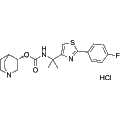
Synonyms: Venglustat hydrochloride; SAR402671 hydrochloride; GZ402671 hydrochloride
Ibiglustat hydrochloride is a potent glucosylceramide synthase (GCS) inhibitor that effectively penetrates the blood-brain barrier. This compound is primarily used in research related to Gaucher disease type 3, Parkinson's disease linked to GBA mutations, Fabry disease, GM2 gangliosidosis, and autosomal dominant polycystic kidney disease. Its mechanism of action contributes to the modulation of glucocerebroside metabolism, offering a valuable tool for studies focused on lysosomal storage disorders and related neurodegenerative conditions.
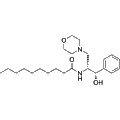
D,L-erythro-PDMP is the erythro isomer of PDMP and acts as an inhibitor of UDP-glucose:ceramide glucosyltransferase. This compound exhibits significant growth inhibition of cultured rabbit skin fibroblasts, making it a valuable tool for studying glycosphingolipid metabolism and its effects on cell proliferation. D,L-erythro-PDMP is useful in research applications focused on lipid biology and associated diseases.
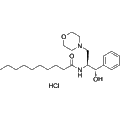
(−)-L-threo-PDMP hydrochloride is a potent inhibitor of glucosylceramide synthase (GCS). This compound has been shown to promote the proliferation of cultured aortic smooth muscle cells and elevate levels of lactosylceramide (LacCer) in B16 melanoma cells. Its unique activity profile makes it a valuable tool for research applications related to glycosphingolipid metabolism and cellular signaling pathways.