All Dyes

All Dyes is the single product list for the Fluorescent Dyes, Probes & Stains section. Many dyes here have no application or dye-family subcategory, so the list is the broadest way to browse the range. It suits searches by product name when the required dye is already known. Examples range from the near-infrared cyanine indocyanine green and the ratiometric calcium indicator Fura-2 pentapotassium to the nucleic acid stains Hoechst 33258 trihydrochloride and SYBR Green II. Classical stains such as hematoxylin, reactive labeling dyes and enzyme substrates are listed alongside them. For selection by task or by core structure, the parent Fluorescent Dyes, Probes & Stains page groups dyes by application and dye family.

Items 2026-2050 of 2505

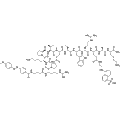
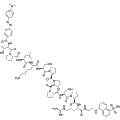
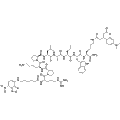
  • NBD-Arg-Pro-Lys-Pro-Leu-Ala-Nva-Trp-Lys-(DMC)-NH2
    Cat. No.
    A76873

    NBD-Arg-Pro-Lys-Pro-Leu-Ala-Nva-Trp-Lys-(DMC)-NH2

    NBD-Arg-Pro-Lys-Pro-Leu-Ala-Nva-Trp-Lys-(DMC)-NH2 is a substrate specifically designed for the hydrolysis by matrix metalloproteinase-3 (MMP-3). This compound can be effectively detected using fluorescence with excitation and emission wavelengths of 350 nm and 465 nm, respectively. Its application is particularly valuable in studies involving extracellular matrix remodeling and tissue remodeling processes. Researchers can utilize this substrate to investigate MMP-3 activity in various biological contexts.

    Out of stock

    All 3 sizes
  • MMP-8/MMP-26 Fluorogenic substrate
    Cat. No.
    A76877

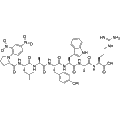
    MMP-8/MMP-26 Fluorogenic substrate

    MMP-8/MMP-26 Fluorogenic Substrate (DNP-Pro-Leu-Ala-Tyr-Trp-Ala-Arg) is a substrate specifically designed for the detection of matrix metalloproteinase-8 (MMP-8) activity. This substrate exhibits key biological activity by releasing a fluorophore upon enzymatic cleavage, making it suitable for quantitative measurements in various biological assays. Research applications include investigating the role of MMP-8 in conditions such as atherosclerosis, pulmonary fibrosis, and sepsis, thereby aiding in the understanding of these pathologies.

    Out of stock

    All 3 sizes
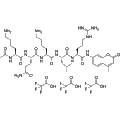
  • Ageladine A dihydrochloride
    Cat. No.
    A76886

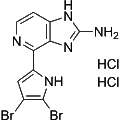
    Ageladine A dihydrochloride

    Ageladine A dihydrochloride is a potent matrix metalloproteinase (MMP) inhibitor derived from the marine sponge Agelas nakamurai, exhibiting anti-angiogenic properties. It effectively targets multiple MMPs, including MMP-1, MMP-2, MMP-8, MMP-9, MMP-12, and MMP-13, with varying IC50 values indicating strong inhibitory effects. Additionally, Ageladine A dihydrochloride functions as a pH-sensitive, membrane-permeable fluorescent dye, emitting blue-green fluorescence upon UV excitation, making it a valuable tool for monitoring intracellular pH changes in biological research.

    Out of stock

    All 3 sizes
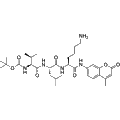
  • TNO003
    Cat. No.
    A76889

    TNO003

    TNO003 is a selective fluorogenic substrate that specifically targets stromelysin-1 (MMP-3). This reagent exhibits superior selectivity for MMP-3 over other matrix metalloproteinases, including MMP-1, MMP-2, MMP-7, MMP-8, MMP-9, and MMP-13. TNO003 is suitable for quantitative determination of stromelysin activity and can be utilized in fluorescence-based assays at an excitation/emission wavelength of 360/490 nm.

    Out of stock

    All 3 sizes
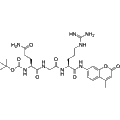
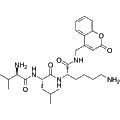
  • D-Val-Leu-Lys-AMC
    Cat. No.
    A77014

    D-Val-Leu-Lys-AMC

    D-Val-Leu-Lys-AMC is a selective fluorogenic peptide substrate for plasmin, enabling the quantification of its enzymatic activity. This compound exhibits increased fluorescence upon cleavage, facilitating studies in fibrinolysis and related processes. It is suitable for applications in enzyme activity assays, offering high sensitivity with excitation at 360-380 nm and emission at 440-460 nm.

    Out of stock

    All 3 sizes
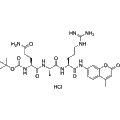
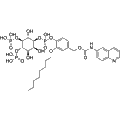
  • WH-15
    Cat. No.
    A77139

    WH-15

    WH-15 is a fluorogenic phospholipase C (PLC) reporter that exhibits Km values of 49, 30, and 86.1 µM for PLC-γ1, PLC-δ1, and PLC-β2, respectively. This compound undergoes a cascade reaction to produce a fluorescent 6-aminoquinoline, enabling sensitive detection of PLC activity. WH-15 is primarily utilized for real-time imaging of PLC activity in live cells, with excitation and emission wavelengths of approximately 344 nm and 530 nm.

    1 mg
    $1,345.00
    5 mg
    $3,035.00
    All 3 sizes
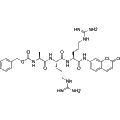
  • Z-Ala-Arg-Arg-AMC
    Cat. No.
    A77300

    Z-Ala-Arg-Arg-AMC

    Synonyms: Fluorogenic Proteasome Substrate; Z-ARR-AMC

    Z-Ala-Arg-Arg-AMC is a fluorogenic proteasome substrate designed to specifically assay the trypsin-like activity of the proteasome. Its unique structure allows for sensitive detection of proteolytic activity, making it a valuable tool for studying protein degradation and turnover in cellular processes. This substrate is widely utilized in research applications focused on proteasome function and its implications in various diseases.

    5 mg
    $105.00
    10 mg
    $170.00
    All 2 sizes
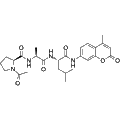
  • Ac-PAL-AMC
    Cat. No.
    A77303

    Ac-PAL-AMC

    Ac-PAL-AMC is a fluorogenic substrate specifically designed for the 20S proteasome LMP2/β1i activity. It is utilized in biochemical assays to monitor proteasomal degradation processes, facilitating research into protein turnover and associated cellular functions. This substrate can enable real-time measurement of protease activity, making it an essential tool for studies in cancer, neurodegeneration, and other diseases linked to proteostasis.

    1 mg
    $90.00
    5 mg
    $300.00
    All 3 sizes
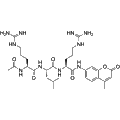
  • Ac-RLR-AMC
    Cat. No.
    A77314

    Ac-RLR-AMC

    Synonyms: Ac-Arg-Leu-Arg-AMC

    Ac-RLR-AMC is a fluorogenic substrate specifically designed for the 26S proteasome pathway. Upon proteolytic cleavage, the release of 7-amino-4-methylcoumarin (AMC) generates fluorescence, facilitating the quantification of trypsin-like activity within the proteasome. This reagent is valuable for research applications focused on proteasome function, cellular regulation, and related biochemical assays.

    1 mg
    $65.00
    5 mg
    $205.00
    All 4 sizes
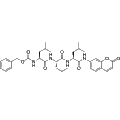
  • Z-Leu-Leu-Leu-AMC
    Cat. No.
    A77322

    Z-Leu-Leu-Leu-AMC

    Synonyms: Z-LLL-AMC

    Z-Leu-Leu-Leu-AMC is a fluorogenic substrate designed for the assessment of chymotrypsin-like protease activity in the 20S proteasome. It provides a sensitive and specific means to monitor proteasomal function and proteolytic activity. This reagent is valuable for research applications involving protein degradation, cellular homeostasis, and the study of proteasome-related diseases.

    1 mg
    $80.00
    5 mg
    $255.00
    All 2 sizes
  • Calpain substrate
    Cat. No.
    A77331

    Calpain substrate

    Calpain substrate is a fluorogenic substrate specifically designed for the assessment of calpain enzymatic activity. It is membrane non-permeable, ensuring precise measurement of calpain activity in biological samples. This reagent is suitable for applications in cellular signaling research and studies investigating calpain's role in various physiological and pathological processes.

    1 mg
    $105.00
    5 mg
    $260.00
    All 4 sizes
  • TEPC466
    Cat. No.
    A77405

    TEPC466

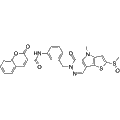
    TEPC466 is an innovative aggregation-induced emission (AIE) probe designed for the selective and sensitive detection of the PKM2 protein. This compound leverages the AIE effect to facilitate imaging applications, particularly in colorectal cancer cells, while maintaining low toxicity levels. TEPC466 serves as a valuable tool for cancer diagnosis and research, enabling enhanced understanding of PKM2's role in tumor biology.

    5 mg
    $100.00
    10 mg
    $160.00
    All 5 sizes
  • Dunnione
    Cat. No.
    A77447

    Dunnione

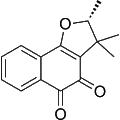
    Dunnione is a naturally occurring pigment derived from the leaves of Didymocarpus pedicellata. It demonstrates significant biological activity, particularly in its role as a coloring agent and potential antioxidant. Dunnione can be utilized in various research applications, including studies focused on plant metabolites and their biochemical properties.

    25 mg
    $1,275.00
    50 mg
    $1,625.00
    All 3 sizes
  • CU-6PMN
    Cat. No.
    A77503

    CU-6PMN

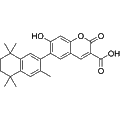
    CU-6PMN is a fluorescent retinoid X receptor (RXR) agonist that selectively activates human RXRα with an EC50 value of 22 nM and a Ki value of 230 nM. This compound exhibits a maximum absorption wavelength of 396 nm and an emission wavelength of 453 nm when dissolved in 0.1 N NaOH aqueous solution. CU-6PMN is valuable for research applications involving RXR ligand screening and provides a useful tool for studying RXR-mediated biological processes.

    25 mg
    $1,275.00
    50 mg
    $1,625.00
    All 3 sizes
  • Ac-KQKLR-AMC TFA
    Cat. No.
    A77639

    Ac-KQKLR-AMC TFA

    Synonyms: Cathepsin S substrate TFA

    Ac-KQKLR-AMC TFA is a substrate peptide for Cathepsin S, conjugated with the fluorescent indicator AMC (Excitation/Emission = 354 nm/442 nm). This reagent facilitates the measurement of Cathepsin S activity, enabling researchers to study proteolytic processes and assess enzyme function in various biological contexts. Its application is crucial for investigations into the role of Cathepsin S in physiological and pathological conditions.

    5 mg
    $110.00
    10 mg
    $185.00
    All 4 sizes
  • Boc-Val-Leu-Lys-AMC
    Cat. No.
    A77665

    Boc-Val-Leu-Lys-AMC

    Boc-Val-Leu-Lys-AMC is a sensitive fluorogenic substrate specifically designed for the enzyme plasmin. This compound also serves as a substrate for acrosin derived from the ascidian Halocynthia roretzi, as well as porcine calpain isozymes I and II, and papain. Its distinct properties make it an invaluable tool for studying proteolytic activity and enzyme kinetics in various biological research applications.

    5 mg
    $90.00
    10 mg
    $160.00
    All 4 sizes
  • Boc-Gln-Gly-Arg-AMC
    Cat. No.
    A77696

    Boc-Gln-Gly-Arg-AMC

    Boc-Gln-Gly-Arg-AMC is a fluorogenic substrate specifically designed for the serine proteases factor XIIa and trypsin. Upon cleavage of the amide bond between arginine and the methylcoumarin amide moiety, it releases the fluorescent compound 7-Amino-4-methylcoumarin, enabling sensitive detection. This substrate is instrumental in studying proteolytic activity and can be utilized in various biochemical assays to monitor enzyme function.

    1 mg
    $95.00
    5 mg
    $245.00
    All 3 sizes
  • Boc-Gln-Ala-Arg-AMC hydrochloride
    Cat. No.
    A77704

    Boc-Gln-Ala-Arg-AMC hydrochloride

    Boc-Gln-Ala-Arg-AMC hydrochloride is a fluorogenic substrate specifically designed for the enzyme trypsin. It serves as an effective tool for measuring proteolytic activity, including that of TMPRSS2. This compound is valuable in various biochemical assays and research applications focused on proteolysis and enzyme activity analysis.

    1 mg
    $40.00
    5 mg
    $115.00
    All 6 sizes
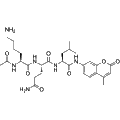
  • Ac-KQL-AMC
    Cat. No.
    A77720

    Ac-KQL-AMC

    Ac-KQL-AMC is a fluorogenic substrate designed to quantify Trypsin-like activity. Upon cleavage by the proteasome, it produces a detectable fluorescence, making it a valuable tool for studying proteolytic activities in various biological contexts. This compound is particularly useful in research applications focused on protein degradation and turnover mechanisms.

    Out of stock

    All 3 sizes
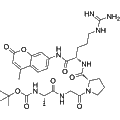
  • Boc-Ala-Gly-Pro-Arg-AMC
    Cat. No.
    A77746

    Boc-Ala-Gly-Pro-Arg-AMC

    Boc-Ala-Gly-Pro-Arg-AMC is a fluorogenic substrate designed for monitoring protease activity, particularly within serine proteases. This substrate is ideal for assessing enzymatic function in research applications involving protease activity, such as studying the oligopeptide enzyme B of Trypanosoma brucei. Its fluorescence allows for sensitive detection of enzymatic events, making it a valuable tool in biochemical and molecular biology studies.

    Out of stock

    All 3 sizes
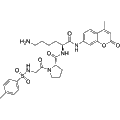
  • Tos-Gly-Pro-Lys-AMC
    Cat. No.
    A77748

    Tos-Gly-Pro-Lys-AMC

    Tos-Gly-Pro-Lys-AMC is a fluorogenic peptide substrate specifically designed for tryptase enzyme activity. This compound facilitates the detection and quantification of tryptase activity through fluorescence, making it a valuable tool in research related to protease biology and inflammation. Its application in biochemical assays allows for the exploration of tryptase's role in various physiological and pathological processes.

    Out of stock

    All 3 sizes
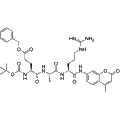
  • Boc-Glu(OBzl)-Ala-Arg-AMC
    Cat. No.
    A77750

    Boc-Glu(OBzl)-Ala-Arg-AMC

    Boc-Glu(OBzl)-Ala-Arg-AMC serves as a fluorogenic substrate specifically for coagulation factor XIa and trypsin. The enzymatic cleavage of the amide bond located between arginine and the methylcoumarin amide moiety leads to the release of the fluorescent compound 7-Amino-4-methylcoumarin. This reagent is valuable for research applications focused on protease activity detection and the study of coagulation pathways.

    Out of stock

    All 3 sizes
  • Z-Gly-Pro-Arg-4MβNA
    Cat. No.
    A77943

    Z-Gly-Pro-Arg-4MβNA

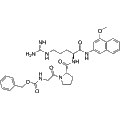
    Z-Gly-Pro-Arg-4MβNA is a fluorescent substrate specifically designed for the detection of thrombin activity through substrate cleavage. The cleavage releases free 4-methoxy-2-naphthylamine (4MβNA), which can subsequently be captured by 5-nitrosalicylaldehyde, generating a yellow fluorescent product. This characteristic makes Z-Gly-Pro-Arg-4MβNA a valuable tool for studying thrombin activity and related processes in biochemical assays and research applications.

    Out of stock

    All 3 sizes
  • Z-Gly-Gly-Arg-AMC TFA
    Cat. No.
    A77971

    Z-Gly-Gly-Arg-AMC TFA

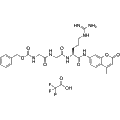
    Z-Gly-Gly-Arg-AMC TFA is a thrombin-specific fluorogenic substrate that enables the assessment of thrombin generation in both platelet-rich plasma (PRP) and platelet-poor plasma (PPP). This TFA salt form enhances its utility as a fluorescent dye, emitting at 480 nm when excited at 390 nm. It is particularly valuable in research applications focused on coagulation and hemostasis mechanisms.

    1 mg
    $65.00
    5 mg
    $145.00
    All 7 sizes
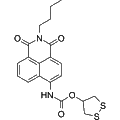
  • TRFS-green
    Cat. No.
    A77986

    TRFS-green

    TRFS-green is a selective fluorescent probe designed for the imaging of thioredoxin reductase (TrxR) in living cells. Upon activation by TrxR, TRFS-green exhibits a significant shift in its maximum absorbance from approximately 373 nm to around 440 nm. This property enables enhanced visualization of selenoprotein activity, making TRFS-green a valuable tool in cellular and biochemical research focused on redox biology and oxidative stress.

    1 mg
    $55.00
    5 mg
    $190.00
    All 3 sizes

Items 2026-2050 of 2505

Added to your cart

View Cart Checkout

    Loading...